Licensed plumbers in all 50 states Written price before any work starts
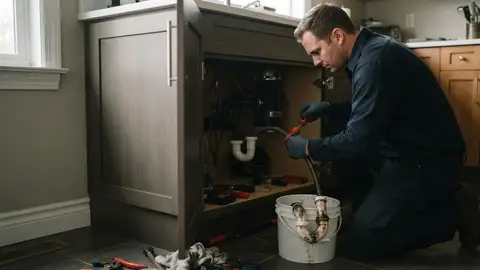
Licensed plumber working on home plumbing
Licensed plumbers serving Phoenix, AZ

Affordable Plumbers in Phoenix, AZ

Licensed and insured plumbers Written price before work

Slab leak, clogged drain or no hot water in midsummer? Our plumbers in Phoenix, AZ find the cause and fix it, with a written price before work starts. We work across 518 square miles and 653,065 homes, from 1920s bungalows to new subdivisions. Hard water and summer heat affect every one of them, but the pipes behind the walls depend a lot on when and where the house was built. Here is what our plumbers see in Phoenix homes, and how we fix it across 14 plumbing services.

Written price firstYou approve it before we start
Licensed and insuredPlumbers licensed for the work
Permits handledWe pull them and book inspections
Warranty in writingLabor guaranteed on every job

Local snapshot

Phoenix at a Glance for Plumbing

The local conditions that shape plumbing work in Phoenix.

  • ElevationAbout 1,100 feet, in the low Sonoran Desert.
  • ClimateSummer highs above 110°F, sudden monsoon storms in summer and mild winters.
  • Water sourceThe Salt and Verde rivers and the Colorado River through the Central Arizona Project, plus some groundwater. All of it is hard.
  • SoilDesert soil that shifts with irrigation and monsoon rain, which wears on copper lines under slabs.
  • LocationAn incorporated city in Maricopa County, covering 518.3 square miles of land.
  • Residents and homes1,642,323 residents in 653,065 homes; 57% of occupied homes are lived in by their owners.
  • Typical housingThe median home was built in 1985. The busiest building period was the 1970s, with 19% of today's homes.
  • Older plumbing42% of homes were built before 1980. Those are the homes most likely to still have their original supply lines and cast iron drains.
  • Heating fuel23% of homes heat with natural gas and 74% with electricity, which shapes water heater and gas line work.

Elevation, climate, water source and soil: published local references and utility information. Housing and population: U.S. Census Bureau, American Community Survey 2020–2024 and 2024 Gazetteer.

About Phoenix

What our plumbers keep in mind when they work here.

Phoenix is the largest city in Arizona and the seat of Maricopa County, with about 1,642,323 residents according to the Census Bureau's 2020–2024 American Community Survey. The city stretches from Ahwatukee in the south to Deer Valley and Desert Ridge in the north, and from Laveen and Maryvale in the west to Arcadia in the east. Because it is so large, plumbing conditions change from one part of town to another.

About 57% of occupied homes are owner-occupied, so a large share of Phoenix residents rent. Renters usually report plumbing problems to a landlord or property manager first, while owners deal with plumbers directly. Roughly 26% of homes are in buildings with five or more units, where one leak can reach several apartments and the building's own maintenance staff often handles the first response.

Common problems

What Our Plumbers Fix Most in Phoenix

01

Slab leaks

Most Phoenix houses sit on concrete slabs with water lines underneath. Hard water, soil movement and decades of heating and cooling wear pinholes in copper. A warm spot on the floor or a jump in the water bill are the usual first signs. See leak detection and slab leak repair.

02

Short-lived water heaters

Sediment from hard water and garage heat often end a tank's life early. Flushing it once or twice a year helps. See water heater repair.

03

Slow drains and sewer backups

Grease, scale and roots from mature trees in older neighborhoods narrow drain lines, and monsoon rains test them. See drain cleaning.

04

Failing supply pipe

Galvanized pipe in older homes and polybutylene in some 1980s–90s homes lead many owners to replace the supply lines entirely. See repiping.

05

Irrigation and backflow problems

Yards on drip or flood irrigation have backflow devices and valves that crack, leak or freeze on the few cold nights each winter. See backflow testing.

By age of home

When Phoenix Homes Were Built, and What That Means for the Pipes

The median Phoenix home was built in 1985, but the spread is wide. The figures below come from Census estimates for the city.

Before 1960

14%of Phoenix homes

Galvanized steel water lines, cast iron drains, older clay sewer laterals

1960s

9%of Phoenix homes

Copper supply lines, cast iron drains, slab foundations become standard

1970s

19%of Phoenix homes

Copper under the slab, cast iron or early ABS drains

1980s

17%of Phoenix homes

Copper or polybutylene supply, ABS drains

1990s

13%of Phoenix homes

Polybutylene in some early-90s homes, then copper and CPVC

2000 or later

28%of Phoenix homes

PEX supply lines, PVC or ABS drains

Older central neighborhoods, including historic districts near downtown and midtown, hold most of the pre-1960 housing. Galvanized pipe there narrows with rust over time, which shows up as weak pressure and brown water after the tap sits unused. About 31% of homes date from the 1980s and 1990s, the years when polybutylene supply pipe was installed in parts of the Valley. Gray plastic pipe stamped "PB" is worth having a plumber look at before it fails.

Phoenix Water and the Desert Climate

City of Phoenix Water Services draws most of its supply from the Salt and Verde rivers and from the Colorado River through the Central Arizona Project canal, with a smaller share from groundwater. All of these sources are hard. Scale builds up in water heaters, on faucet aerators and inside tankless units, and many homeowners add a softener or a reverse osmosis system at the kitchen sink.

The heat matters as much as the water. Summer highs above 110°F push garage temperatures well past that, which is hard on water heater gas valves, anode rods and plastic parts. In July and August, cold-water pipes buried shallowly or run through the attic can deliver warm water at the tap. Summer monsoon storms bring sudden heavy rain that can overwhelm clogged roof drains and older sewer laterals.

About 74% of occupied homes heat with electricity and 23% with natural gas, so electric water heaters are common. Homes with gas service add gas line inspections and leak checks to the list when appliances are replaced.
Renters, Condos and HOA Communities

If you rent, report leaks to your landlord in writing right away and shut off the fixture or the main valve if water is spreading. Arizona's landlord-tenant law requires landlords to keep plumbing in working order, and prompt notice protects you if damage spreads.

In condos and townhome communities, the association's rules decide who repairs which pipes. Lines inside your walls are usually yours, while main lines and shared sewer connections may belong to the association. Check before calling a plumber for a leak between units.

Through the year

A Phoenix Plumbing Calendar

The Phoenix year has its own rhythm, and timing small jobs around it heads off the most common emergency calls.

01

March to May

Flush the water heater and look at the anode rod before the heat arrives. Test irrigation lines and replace cracked drip emitters as watering schedules change.

02

June to August

Check that the water heater's relief valve discharge line is not dripping, a sign of overheating or high pressure. Clear roof drains and scuppers before monsoon storms.

03

September to October

Look for slow leaks that summer evaporation hid, such as damp baseboards, a musty cabinet or a meter that moves with everything turned off.

04

November to February

Cover hose bibs, backflow devices and pool equipment on nights forecast below freezing, and disconnect garden hoses.

If you leave Phoenix for part of the summer, shut off the main water valve, set the water heater to vacation mode and have someone check the house. A small leak in an empty, closed-up house can grow into mold and flooring damage before anyone notices.

Our services

Our Plumbing Services in Phoenix

Choose a service to see how we handle it in Phoenix homes, what usually causes the problem here and what affects the price.

Drain Cleaning & Clog Removal by a licensed plumber

Drains and sewer

Drain Cleaning & Clog Removal

  • Drain cleaning
  • Clogged drain repair
  • Hydro jetting

Sewer Line Repair & Replacement

  • Sewer line repair
  • Sewer line replacement
  • Sewer camera inspection
Leak Detection & Repair by a licensed plumber

Leaks and slabs

Leak Detection & Repair

  • Leak detection
  • Water leak repair
  • Burst pipe repair
  • Frozen pipe repair

Slab Leak Repair

  • Slab leak detection
  • Slab leak repair
  • Line rerouting
Repiping & Water Line Replacement by a licensed plumber

Pipes and gas lines

Repiping & Water Line Replacement

  • Pipe repair
  • Whole-house repiping
  • Water line repair
  • Water line replacement

Gas Line Repair & Installation

  • Gas leak repair
  • Gas line installation
  • Appliance hookups
Water Softeners & Filtration by a licensed plumber

Water quality

Water Softeners & Filtration

  • Water softener installation
  • Whole-house filtration
  • Reverse osmosis

Backflow Testing & Prevention

  • Annual backflow testing
  • Backflow preventer installation
  • Backflow repair
Toilet, Faucet & Fixture Repair by a licensed plumber

Fixtures and pumps

Toilet, Faucet & Fixture Repair

  • Toilet repair and installation
  • Faucet repair and installation
  • Sinks
  • Showers and tubs
  • Garbage disposals
  • Kitchen and bathroom remodel plumbing

Sump Pump Repair & Installation

  • Sump pump repair
  • Sump pump installation
  • Battery backup pumps
Septic Tank Services by a licensed plumber

Septic systems

Septic Tank Services

  • Septic pumping
  • Septic inspection
  • Drain field repair
Emergency Plumbing by a licensed plumber

Emergency and commercial

Emergency Plumbing

  • Burst pipes
  • Sewage backups
  • No water
  • Gas odors

Commercial Plumbing

  • Restaurants and grease traps
  • Offices and retail
  • Multi-unit buildings

Service area

Phoenix Neighborhoods and ZIP Codes

  • Downtown
  • Midtown
  • Ahwatukee
  • Arcadia
  • Camelback East
  • Deer Valley
  • Desert Ridge
  • Encanto
  • Laveen
  • Maryvale
  • North Mountain
  • Paradise Valley Village
  • South Mountain
  • Estrella

We serve every part of the city, including downtown and midtown, Ahwatukee, Arcadia, Camelback East, Deer Valley, Desert Ridge, Encanto, Laveen, Maryvale, North Mountain, Paradise Valley Village, South Mountain and Estrella. Most Phoenix addresses use ZIP codes beginning with 850. When you call, give your full address and nearest cross streets so we can send a plumber who works your part of town.

Pricing

What Affects Plumbing Prices in Phoenix

Every job gets a written price before work starts. In Phoenix, these are the things that move that price most.

Age of the home

Pre-1960 homes with galvanized lines and cast iron drains often need more than a spot fix, and we price the options side by side.

Slab foundations

Most Phoenix homes sit on slabs, so reaching a hidden leak can mean opening concrete or rerouting a line through the attic.

Apartments and condos

Shared walls, building rules and access through other units can add time, which we include in the quote.

Summer demand

Summer is the busiest season for water heater and slab leak repairs, so booking planned work earlier in the year helps.

Permits

Water heater, gas line and repiping jobs usually need a City of Phoenix permit, and the fee is included in our quote.

The quote lists labor, parts, permit fees and any drywall or concrete repair separately, so you can see what you are paying for.

Why choose us

Why Phoenix Homeowners Call Expert Plumber Now

What you can count on every time one of our plumbers comes to your door.

Licensed, insured plumbers

Every job is handled by a plumber who holds the license your state or city requires, backed by liability insurance.

Price before we start

Our plumber explains the problem and the options, and you approve a written price before any work begins.

Help when it can't wait

Burst pipes, sewage backups and failed water heaters get priority scheduling, including nights and weekends.

Work done to code

We pull permits when the job needs one and schedule the inspection, so the work holds up when you sell.

Our work is guaranteed

Repairs and installations come with a written warranty on labor, on top of the manufacturer's warranty on parts.

Local know-how

Our pages and plumbers account for your area's water, soil, climate and the age of the homes around you.

Nearby

We Also Serve Cities Near Phoenix

  • Glendale6.3 mi
  • Paradise Valley7.5 mi
  • Sun City11.5 mi
  • Youngtown12.4 mi
  • Tolleson12.8 mi
  • El Mirage13.7 mi
  • Scottsdale15.3 mi
  • Tempe15.6 mi
  • Guadalupe16 mi
  • Litchfield Park16.3 mi

FAQ

Phoenix plumbing questions

Anything else? Call us at (833) 733-2357.

What affects the price of plumbing work in Phoenix?

The age of the home, slab access, building rules in apartments and condos, the season and any permit. Each part appears separately in our written quote.

Can the quoted price change?

Not without your approval. If we open a wall or slab and find more damage, we stop, show you photos and give you a written price for the extra work.

What does our plumber check first on a visit?

The problem you called about, then water pressure, shut-off valves and the age of nearby pipes, so the repair fixes the cause and not only the symptom.

I rent my home in Phoenix. Can I call you directly?

About 43% of Phoenix homes are rented. Tell your landlord first; owners and property managers can call us and approve the work.

Is warm water from the cold tap in summer a problem?

Usually not. Cold lines buried shallowly or run through the attic heat up in July and August. If it is hot rather than warm, call us to rule out a leak or crossed lines.

How long does a water heater replacement take in Phoenix?

Most tank replacements take three to five hours, including hauling the old tank away. Tankless installs take longer when a gas line or venting has to change.

How do I protect pipes during the few Phoenix freezes?

Cover hose bibs and backflow devices on nights forecast below freezing, and disconnect garden hoses. Exposed irrigation lines are the ones that crack most often.

When is a plumbing problem an emergency in Phoenix?

A burst pipe, sewage backing up, a gas smell or a leaking water heater tank. Shut off the water or gas if you can, then call us; these calls get priority.

Who issues plumbing permits in Phoenix?

The City of Phoenix Planning and Development Department inside city limits; county islands go through Maricopa County. We pull the permit and book the inspection.

Why do Phoenix water heaters wear out so fast?

Hard water fills tanks with sediment, garages pass 120°F in summer and some areas have high water pressure. A yearly flush and a pressure check help a heater last.

Call a plumber · (833) 733-2357