Roots in clay and cast iron sewer lines
Older Georgia neighborhoods have clay and cast iron laterals, and the oaks, pines and magnolias that shade them send roots into every joint. We clear, camera and repair or replace these lines.
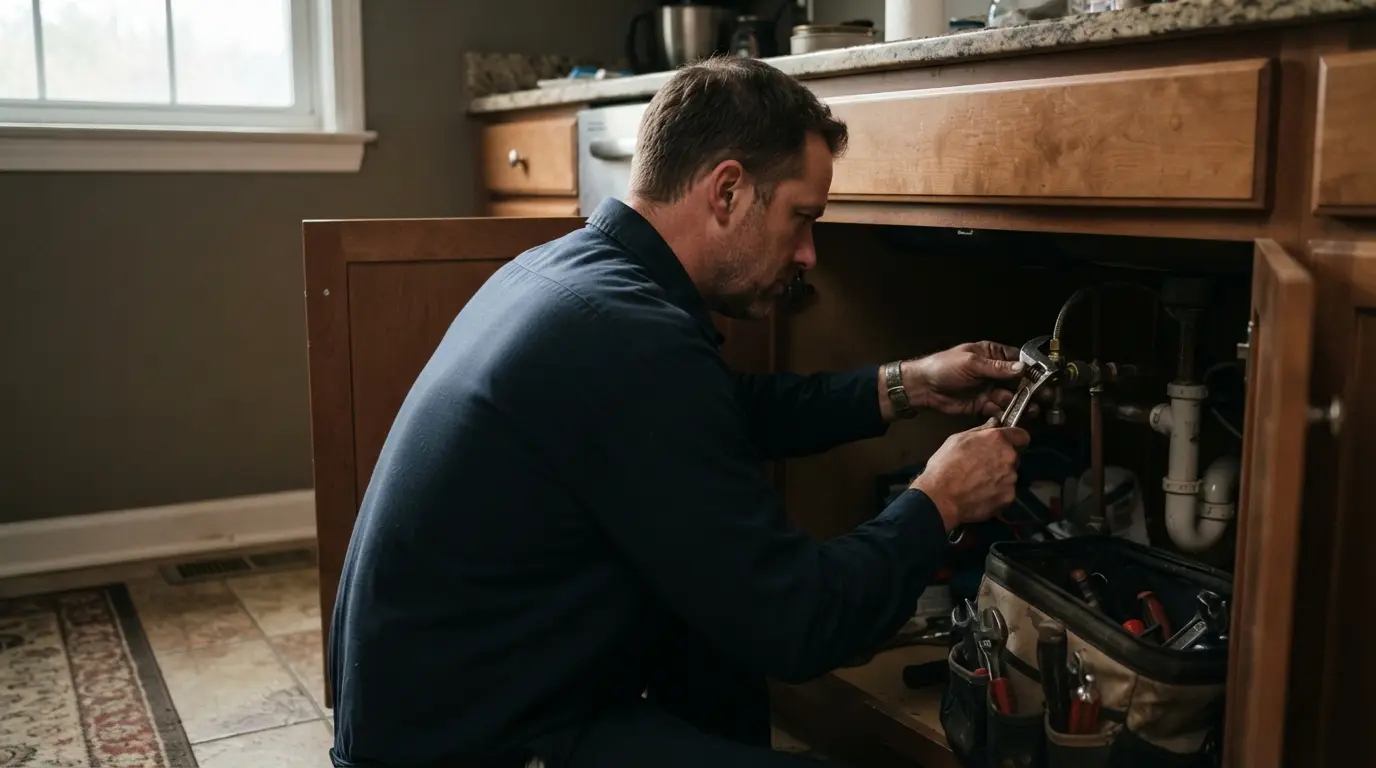
Roots choking a clay sewer line, or old gray pipe ready to burst? Our plumbers in Georgia find the cause and fix it. We work from metro Atlanta and the North Georgia foothills through Macon, Augusta and Columbus to Savannah, the coast and the farm towns of South Georgia. Georgia plumbing deals with red clay that shifts and holds water, aging pipe in older city neighborhoods, polybutylene in suburbs built in the 1980s and 1990s, occasional hard freezes in the north and hard well water in the south. Here is what we fix and where we serve.
Plumbing in Georgia
Our Census data covers 5,469,171 Georgians in 2,389,665 homes across 675 places. 38% of those homes predate 1980, with far higher shares in older cities: 63% in Albany, 64% in East Point and 59% in Savannah. 33% were built in 2000 or later, much of it in North Atlanta suburbs such as Milton, where the median home dates from 2002.
58% of homes heat with electricity and 39% with utility gas, with gas far more common in metro Atlanta. Renters occupy 45% of homes, and 24% are in buildings with five or more units, from Midtown towers to college-town apartments in Athens and Statesboro.
Counts from the U.S. Census Bureau 2024 Gazetteer.
Explore our servicesWhat our plumbers see
Older Georgia neighborhoods have clay and cast iron laterals, and the oaks, pines and magnolias that shade them send roots into every joint. We clear, camera and repair or replace these lines.
Many homes built in the 1980s and early 1990s, common across suburban Atlanta, have gray polybutylene supply pipe that turns brittle and fails without warning. Older homes have galvanized steel. We repipe in PEX or copper.
Georgia red clay holds water, swells and shrinks. Water and sewer lines crossing it settle and separate, and crawl spaces stay damp.
Hard freezes are not common but do happen, especially in the mountains and north metro. Pipes in crawl spaces, exterior walls and unheated garages split.
Electric heaters dominate in much of the state and gas heaters in metro Atlanta. Hard well water in South Georgia shortens their life.
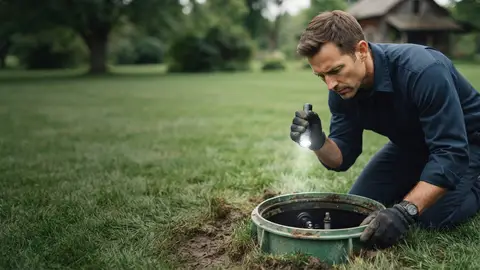
Many suburban and rural homes are on septic, often in clay soil that drains slowly. We pump, inspect and repair systems.
Our services
Each service page explains how we handle that work in Georgia homes and businesses.
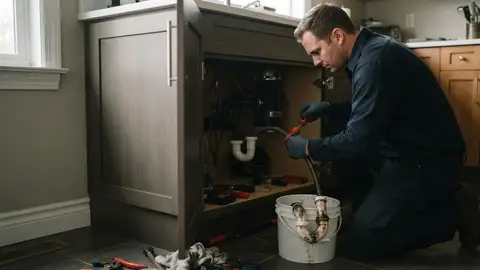
Sewer Line Repair & Replacement
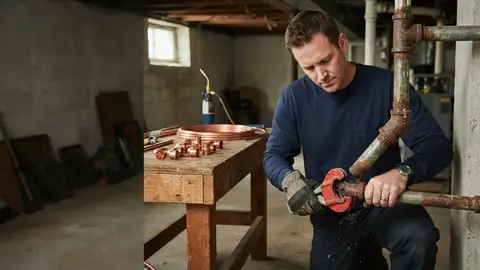
Repiping & Water Line Replacement
Gas Line Repair & Installation
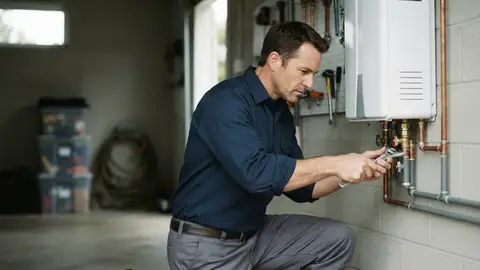
Water Heater Repair & Replacement
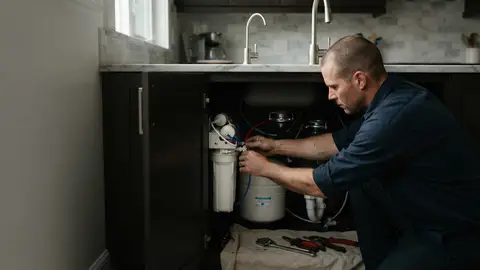
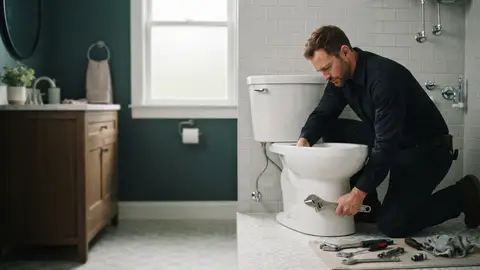
Toilet, Faucet & Fixture Repair
Sump Pump Repair & Installation
Across the state
Homes and main places: Atlanta (265,899 homes), Sandy Springs, Roswell, Marietta, Johns Creek
What our plumbers see: Polybutylene, gas water heaters, root-filled laterals, condos
Homes and main places: Gainesville, Dalton, Rome and mountain towns
What our plumbers see: Freeze damage, wells, septic on slopes
Homes and main places: Macon-Bibb (71,962 homes), Warner Robins, Columbus, Augusta
What our plumbers see: Older cast iron and galvanized, clay soil, septic
Homes and main places: Savannah (68,174 homes), Brunswick, St. Marys
What our plumbers see: Historic homes, high water table, hard water, storms
Homes and main places: Albany, Valdosta, Waycross, Thomasville
What our plumbers see: Hard well water, older homes, manufactured homes
Georgia licenses master and journeyman plumbers through the State Construction Industry Licensing Board, administered by the Secretary of State. Our Georgia work is performed by plumbers holding the licenses it requires, under the state minimum standard codes as adopted locally.
Permits are issued by city or county building departments. Water heater replacements, repiping, sewer and water line work, gas piping and remodel plumbing generally need a permit and inspection. We pull permits and schedule inspections in the jurisdiction where you live.
Metro Atlanta and much of North Georgia draw water from rivers and reservoirs such as the Chattahoochee and Lake Lanier, and that water is usually soft. South and coastal Georgia rely more on groundwater from the Floridan aquifer, which is often hard, and private wells there can carry sulfur or iron.
Homes without sewer use onsite sewage systems permitted by county environmental health offices under state rules. Clay soils drain slowly, so system design and maintenance matter. Confirm requirements with your county before planning work; we handle the permit on repairs we perform.
Gas heat is common in metro Atlanta suburbs: 75% of homes in Johns Creek, 73% in Peachtree Corners and 71% in Roswell. Elsewhere it is much less common, at 13% in Warner Robins and 11% in Valdosta. We repair and install gas piping and gas water heaters. If you smell gas, leave the house and call your gas company from outside; we repair the piping once it is safe.
Renters occupy 59% of homes in Athens-Clarke County, 78% in Statesboro and 54% in Atlanta. Apartments and rental houses see heavy use, frequent turnovers and shared drain lines. We work with owners and property managers on repairs, water heaters and turnover work. Tenants should report problems to the owner or manager, who arranges the visit.
Savannah's historic districts, Macon's older neighborhoods and in-town Atlanta have many homes built long before modern plumbing standards. In Brunswick 72% of homes predate 1980 and in Waycross 69%. These homes often combine galvanized supply lines, cast iron drains and clay laterals, sometimes with decades of patches. We look at the whole system before recommending work and price a repipe or new lateral alongside the next repair, so you can compare.
Manufactured homes make up 4% of Georgia housing in our data and 9% in Waycross. Their plumbing runs under the floor in the skirted space and can freeze when skirting is damaged. We repair supply and drain lines, water heaters and connections to wells and septic.
Service area
Our largest service areas by population:
Every Georgia place in our data, grouped by county:
Appling County
Atkinson County
Bacon County
Baker County
Baldwin County
Banks County
Barrow County
Bartow County
Ben Hill County
Berrien County
Bibb County
Bleckley County
Brantley County
Brooks County
Bryan County
Bulloch County
Burke County
Butts County
Calhoun County
Camden County
Candler County
Carroll County
Catoosa County
Charlton County
Chatham County
Chattahoochee County
Chattooga County
Cherokee County
Clarke County
Clay County
Clayton County
Clinch County
Cobb County
Coffee County
Colquitt County
Columbia County
Cook County
Coweta County
Crawford County
Crisp County
Dade County
Dawson County
DeKalb County
Decatur County
Dodge County
Dooly County
Dougherty County
Douglas County
Early County
Echols County
Effingham County
Elbert County
Emanuel County
Evans County
Fannin County
Fayette County
Floyd County
Forsyth County
Franklin County
Fulton County
Gilmer County
Glascock County
Glynn County
Gordon County
Grady County
Greene County
Gwinnett County
Habersham County
Hall County
Hancock County
Haralson County
Harris County
Hart County
Heard County
Henry County
Houston County
Irwin County
Jackson County
Jasper County
Jeff Davis County
Jefferson County
Jenkins County
Johnson County
Jones County
Lamar County
Lanier County
Laurens County
Lee County
Liberty County
Lincoln County
Long County
Lowndes County
Lumpkin County
Macon County
Madison County
Marion County
McDuffie County
McIntosh County
Meriwether County
Miller County
Mitchell County
Monroe County
Montgomery County
Morgan County
Murray County
Muscogee County
Newton County
Oconee County
Oglethorpe County
Paulding County
Peach County
Pickens County
Pierce County
Pike County
Polk County
Pulaski County
Putnam County
Quitman County
Rabun County
Randolph County
Richmond County
Rockdale County
Schley County
Screven County
Seminole County
Spalding County
Stephens County
Stewart County
Sumter County
Talbot County
Taliaferro County
Tattnall County
Taylor County
Telfair County
Terrell County
Thomas County
Tift County
Toombs County
Towns County
Treutlen County
Troup County
Turner County
Twiggs County
Union County
Upson County
Walker County
Walton County
Ware County
Warren County
Washington County
Wayne County
Webster County
Wheeler County
White County
Whitfield County
Wilcox County
Wilkes County
Wilkinson County
Worth County
How it works
We ask about the symptoms, the age of the home and whether water or gas should be shut off.
Burst pipes, sewage backups and gas odors get priority scheduling.
Camera inspection, leak detection or testing comes before recommendations.
Options and costs are laid out before work starts.
Work is tested and inspected where required.
Have a plumbing problem in Georgia?
Call Expert Plumber Now and tell us what is happening. We’ll send a licensed plumber.
Pricing
We price each job on what we find. These factors move the price most:
Polybutylene, galvanized and cast iron often need replacement rather than repair.
Digging in wet clay or North Georgia rock slows excavation.
Crawl spaces give access; slabs need leak location and rerouting.
Rural systems add tanks, pumps and treatment.
Fees vary between cities and counties.
After-hours calls cost more.
You receive a written price before work begins.
Season by season
In North Georgia and metro Atlanta, insulate crawl space pipes, disconnect hoses and open cabinets on cold nights.
Heavy rain saturates clay; watch for slow drains, wet crawl spaces and septic odors.
Roots grow fast and seek water in dry spells; slow drains are a warning. On the coast, prepare for storm season.
Flush the water heater, check sump pumps and service septic systems before winter.
Why choose us
What you can count on every time one of our plumbers comes to your door.
Every job is handled by a plumber who holds the license your state or city requires, backed by liability insurance.
Our plumber explains the problem and the options, and you approve a written price before any work begins.
Burst pipes, sewage backups and failed water heaters get priority scheduling, including nights and weekends.
We pull permits when the job needs one and schedule the inspection, so the work holds up when you sell.
Repairs and installations come with a written warranty on labor, on top of the manufacturer's warranty on parts.
Our pages and plumbers account for your area's water, soil, climate and the age of the homes around you.
Each job is priced on what our plumber finds: the problem, pipe material, access, permits and timing. You approve a written price before any work starts.
It depends on home size, fixture count and access. Crawl space homes are usually simpler. We give you a written price after a survey.
We ask what is happening, tell you what to shut off and schedule our plumber, with burst pipes, backups and gas odors first.
Yes. We pull the permit from your city or county building department and schedule the inspection.
Leave the house without using switches and call your gas company or 911 from outside. We repair the piping once it is safe.
Lining or a spot repair is often done in a day; full replacement can take a few days. We give a timeline with the price.
Insulate crawl space and exterior wall pipes, disconnect hoses, open cabinets on cold walls and let faucets drip on the coldest nights.
Close the main shutoff, turn off the water heater and call us. Burst pipes get priority scheduling.
Yes. Our Georgia work is done by plumbers holding licenses from the State Construction Industry Licensing Board.
It varies. River and reservoir water in North Georgia is usually soft, while groundwater in South and coastal Georgia is often hard.