Flooded basements
Heavy rain overloads sewers and drain tile. Water comes through floor drains and foundation cracks. We install sump pumps, backups, backwater valves and overhead sewer conversions.
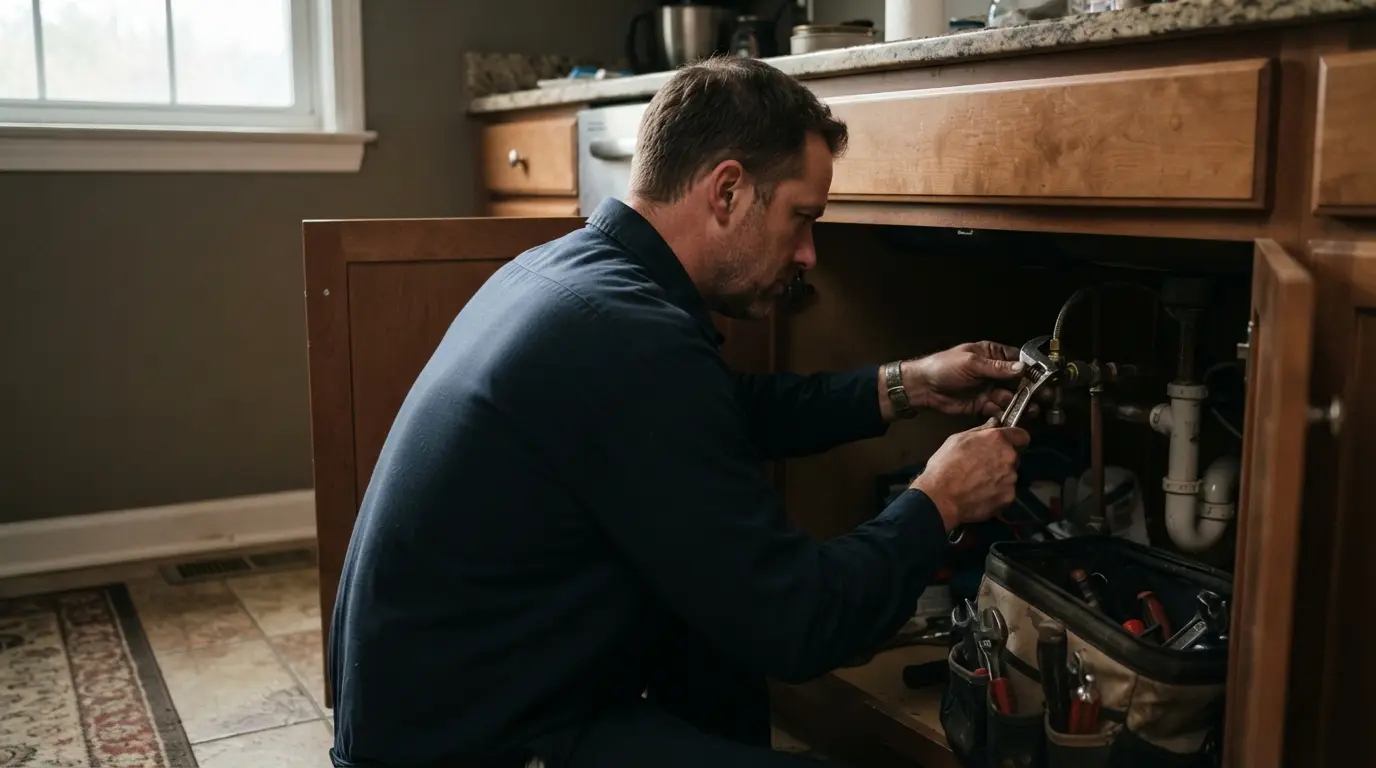
Basement flooding in a summer storm, or old pipe failing in a cold snap? Our plumbers in Illinois find the cause and fix it. We work in Chicago bungalows and two-flats, suburban ranch homes and split-levels, college-town rentals in Champaign and Normal, and farm towns and river cities downstate. Illinois plumbing deals with old housing stock, lead service lines, combined sewers that back up into basements, hard winters and hard water in much of the state. Here is what we fix and where we serve.
Plumbing in Illinois
Our Census data covers 11,237,385 Illinoisans in 4,835,978 homes across 1,461 places. Illinois housing is old: 64% of homes predate 1980 and 39% predate 1960. In Chicago the median home was built in 1953, and in Cicero and Berwyn in 1938. Newer suburbs such as Naperville (median 1990) and Aurora are the exception.
78% of homes heat with utility gas, so gas water heaters and gas piping are a large part of our work. Renters occupy 35% of homes statewide and 54% in Chicago, and 24% of homes are in buildings with five or more units.
Counts from the U.S. Census Bureau 2024 Gazetteer.
Explore our servicesWhat our plumbers see
Heavy rain overloads sewers and drain tile. Water comes through floor drains and foundation cracks. We install sump pumps, backups, backwater valves and overhead sewer conversions.
Many older homes, especially in Chicago, still have lead service lines. State law now requires utilities to replace them over time. We replace lines and the plumbing inside the house.
Subzero cold freezes pipes in exterior walls, crawl spaces and unheated porches, common in two-flats and older houses.
Old laterals crack and fill with roots from parkway trees. We camera, clean and repair or replace them.
Gas heaters in basements are standard. Hard water outside Lake Michigan service shortens their life.
Rural homes rely on septic and private wells. We pump, inspect and repair systems and service well plumbing.
Our services
Each service page explains how we handle that work in Illinois homes and businesses.
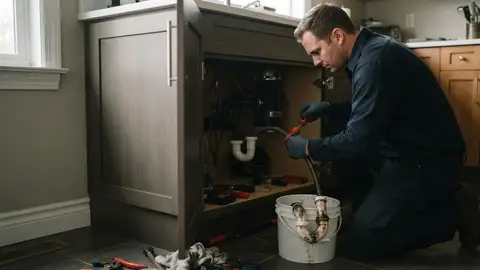
Sewer Line Repair & Replacement
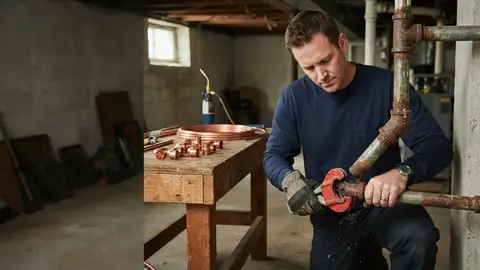
Repiping & Water Line Replacement
Gas Line Repair & Installation
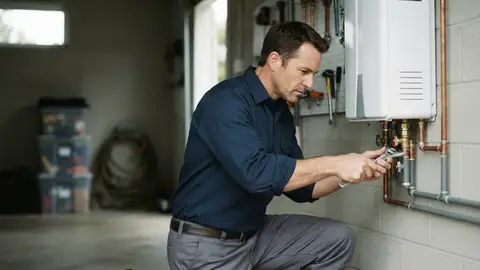
Water Heater Repair & Replacement
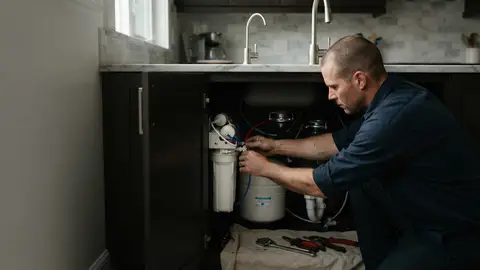
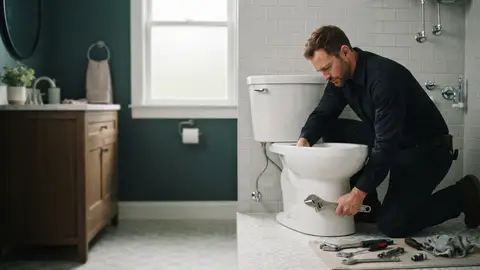
Toilet, Faucet & Fixture Repair
Sump Pump Repair & Installation
Across the state
Homes and main places: 1,277,054 homes in the city
What our plumbers see: Lead service lines, combined sewers, two-flats, old cast iron
Homes and main places: Cicero, Berwyn, Oak Park, Evanston, Skokie
What our plumbers see: Prewar bungalows, basement flooding, overhead sewers
Homes and main places: Aurora (63,763 homes), Naperville, Joliet, Elgin
What our plumbers see: Sump pumps, newer homes, hard water
Homes and main places: Rockford (67,423 homes), DeKalb, Quad Cities
What our plumbers see: Older homes, freezes, hard well water
Homes and main places: Springfield, Peoria (54,010 homes), Champaign, Bloomington
What our plumbers see: Campus rentals, older homes, septic outside towns
Homes and main places: Carbondale, Marion, Mount Vernon, Metro East
What our plumbers see: Older river towns, septic, wells, flooding
Illinois licenses plumbers through the Illinois Department of Public Health, which also enforces the Illinois State Plumbing Code. Our Illinois work is done by plumbers holding the state licenses required.
Permits come from your city, village or county building department. Chicago runs its own building code and permit process. Water heater replacement, repiping, sewer and service line work, gas piping and remodels generally need a permit. We pull it and schedule the inspection.
Chicago and many northeastern suburbs drink treated Lake Michigan water, which is moderately hard. Much of the rest of the state relies on groundwater or rivers, and groundwater is often hard, sometimes with iron. Private well water should be tested regularly.
Chicago and many older suburbs have combined sewers that carry storm water and sewage together, which is why heavy rain can push water into basements. Homes beyond sewer use private sewage systems regulated by the state health department and county health departments. Confirm requirements locally; we handle permits on the work we perform.
Buildings with five or more units hold 49% of homes in Evanston and 47% in Oak Park, and Chicago is full of two-flats and three-flats with shared risers, stacks and boilers. We work with owners, condo associations and property managers on stack and riser repairs, water heaters, leak tracing and repiping, planning shutoffs so tenants get notice.
Renters occupy 56% of homes in Champaign, 63% in Urbana, 74% in Carbondale and 58% in DeKalb. Student housing sees heavy use and empty winter breaks. We handle repairs and turnovers for owners and managers. Tenants should report problems to the owner or manager, who arranges our visit.
Older homes are the norm, not the exception: 93% of Berwyn homes, 92% of Kankakee homes and 86% of Danville homes predate 1980. In Cairo the figure is 95%. These homes often combine galvanized supply, cast iron drains, clay laterals and lead service lines. We look at the whole system and price a repipe or new line alongside the next repair.
A 2021 Illinois law requires water utilities to inventory and replace lead service lines over the coming years. Chicago has more lead service lines than any other U.S. city. Ask your water utility whether your line is lead, and how its program works. We replace service lines and the interior plumbing they connect to, and we flush the system afterward.
Heavy summer storms are the most common reason Illinois owners call us. In combined-sewer areas such as Chicago, Cicero and Berwyn, the sewer in the street fills and water rises through the floor drain. Elsewhere, groundwater overwhelms the sump pump. The fix depends on which is happening: a backwater valve or an overhead sewer conversion for sewer backups, and a larger pump with a battery backup for groundwater. Some municipalities offer cost-sharing programs for flood control work; ask your village or city what is available before you start, since some programs require approval in advance.
Service area
Our largest service areas by population:
Every Illinois place in our data, grouped by county:
Adams County
Alexander County
Bond County
Boone County
Brown County
Bureau County
Calhoun County
Carroll County
Cass County
Champaign County
Christian County
Clark County
Clay County
Clinton County
Coles County
Cook County
Crawford County
Cumberland County
De Witt County
DeKalb County
Douglas County
DuPage County
Edgar County
Edwards County
Effingham County
Fayette County
Ford County
Franklin County
Fulton County
Gallatin County
Greene County
Grundy County
Hamilton County
Hancock County
Hardin County
Henderson County
Henry County
Iroquois County
Jackson County
Jasper County
Jefferson County
Jersey County
Jo Daviess County
Johnson County
Kane County
Kankakee County
Kendall County
Knox County
LaSalle County
Lake County
Lawrence County
Lee County
Livingston County
Logan County
Macon County
Macoupin County
Madison County
Marion County
Marshall County
Mason County
Massac County
McDonough County
McHenry County
McLean County
Menard County
Mercer County
Monroe County
Montgomery County
Morgan County
Moultrie County
Ogle County
Peoria County
Perry County
Piatt County
Pike County
Pope County
Pulaski County
Putnam County
Randolph County
Richland County
Rock Island County
Saline County
Sangamon County
Schuyler County
Scott County
Shelby County
St. Clair County
Stark County
Stephenson County
Tazewell County
Union County
Vermilion County
Wabash County
Warren County
Washington County
Wayne County
White County
Whiteside County
Will County
Williamson County
Winnebago County
Woodford County
How it works
We ask about symptoms, the building and whether water or gas should be shut off.
Flooded basements, burst pipes and gas odors get priority scheduling.
Camera inspection, leak detection or testing comes before recommendations.
Options and costs come before work starts.
Work is tested and inspected where required.
Have a plumbing problem in Illinois?
Call Expert Plumber Now and tell us what is happening. We’ll send a licensed plumber.
Pricing
We price each job on what we find. These factors move the price most:
Galvanized, cast iron and lead often need replacement.
Breaking concrete for sewers and sump pits adds labor.
Chicago and other cities have their own rules and fees.
Winter excavation takes longer.
Shared risers need coordination.
After-hours calls cost more.
You receive a written price before work begins.
Season by season
Keep heat on, open cabinets on outside walls, disconnect hoses and insulate pipes on porches and in crawl spaces.
Test sump pumps and backups before storm season; check floor drains and backwater valves.
Heavy thunderstorms flood basements; keep the sump discharge clear and gutters flowing.
Flush the water heater, shut off outdoor faucets and have older sewer lines camera-checked.
Why choose us
What you can count on every time one of our plumbers comes to your door.
Every job is handled by a plumber who holds the license your state or city requires, backed by liability insurance.
Our plumber explains the problem and the options, and you approve a written price before any work begins.
Burst pipes, sewage backups and failed water heaters get priority scheduling, including nights and weekends.
We pull permits when the job needs one and schedule the inspection, so the work holds up when you sell.
Repairs and installations come with a written warranty on labor, on top of the manufacturer's warranty on parts.
Our pages and plumbers account for your area's water, soil, climate and the age of the homes around you.
Each job is priced on what our plumber finds: the problem, pipe material, access, permits and timing. You approve a written price before work starts.
It depends on the basement layout, fixtures and city rules. It is a major project, and we price it in writing after a visit.
We ask what is happening, tell you what to shut off and schedule our plumber, with flooding, burst pipes and gas odors first.
Yes. We pull permits from the City of Chicago or your suburb and schedule the inspections.
Leave without using switches and call your gas company or 911 from outside. We repair the piping once it is safe.
Usually a few hours in an existing pit. A new pit or backup system takes longer.
Keep heat on, open cabinets on outside walls, disconnect hoses and let faucets drip on the coldest nights.
Stay away from water near electrical equipment and call us. Flooding gets priority scheduling.
Yes. Our Illinois work is done by plumbers licensed through the Illinois Department of Public Health.
Many older Illinois homes do. Ask your water utility, which must inventory lines. We can replace yours.