Crawl space leaks and freezes
Most homes run pipes through a crawl space. We find leaks, repair them and protect lines from cold snaps.
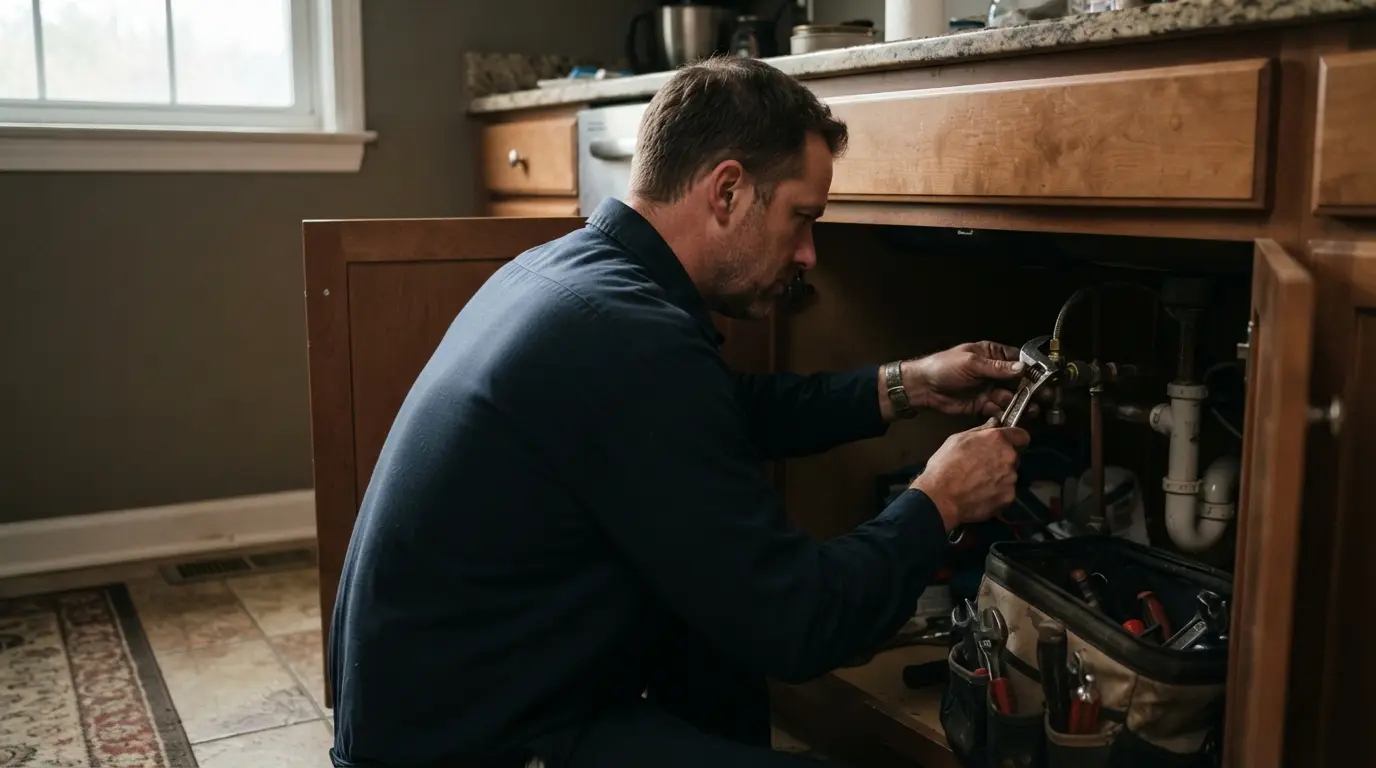
Crawl space pipe leaking, or a septic system backing up? Our plumbers in North Carolina find the cause and fix it, with a written price before work starts. We work in Charlotte and its suburbs, Raleigh, Durham, Cary and the Triangle, Greensboro, Winston-Salem and High Point in the Triad, Fayetteville and the Sandhills, Wilmington and the southern coast, the Outer Banks and Crystal Coast, eastern towns from Greenville to Goldsboro, and the mountains from Asheville to Boone. North Carolina plumbing means crawl spaces, red clay, electric water heaters, private wells and one of the highest shares of septic systems in the country. Here is what we fix and where.
Plumbing in North Carolina
Our Census data covers 6,711,478 people in 3,058,155 homes across 776 places in North Carolina's 100 counties. 552 are incorporated cities and towns, and 224 are census-designated communities. Much of the housing is new: 37% of homes were built since 2000, and Fuquay-Varina's median home dates from 2011. Older stock remains in eastern and mill towns, where 75% of Kinston homes predate 1980.
Electricity heats 62% of North Carolina homes, most with heat pumps, and utility gas 33%. Electric heat is nearly universal at the coast, 91% in Jacksonville and 91% in Nags Head. In the mountains propane takes over, heating 42% of homes in Blowing Rock. Renters occupy 42% of homes, 74% in Boone and 67% in Greenville.
Counts from the U.S. Census Bureau 2024 Gazetteer.
Explore our servicesWhat our plumbers see
Most homes run pipes through a crawl space. We find leaks, repair them and protect lines from cold snaps.
About half of North Carolina homes use septic. We pump, inspect and repair systems in clay and sand.
Most homes heat water with electricity. We replace elements, tanks and install heat pump models.
Homes from the 1980s and 1990s often have polybutylene. We repipe with PEX or copper.
Private wells are common. We repair pumps and tanks and install filters for iron, acidity and more.
Hurricanes flood the east and mountains. We restore plumbing and install sump pumps.
Our services
Each service page explains how our plumbers handle that work in North Carolina homes and businesses.
Sewer Line Repair & Replacement
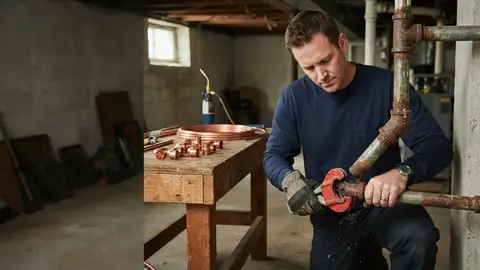
Repiping & Water Line Replacement
Gas Line Repair & Installation
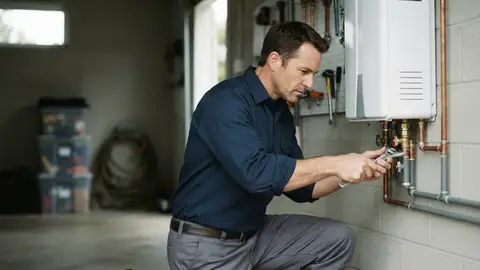
Water Heater Repair & Replacement
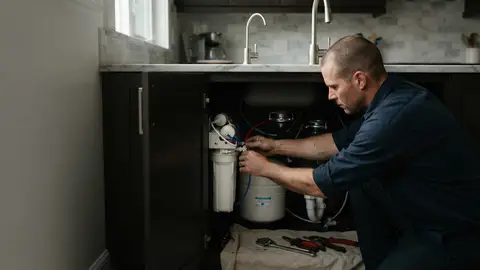
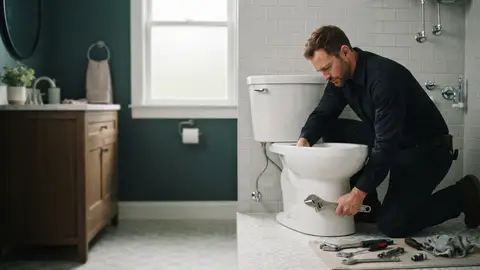
Toilet, Faucet & Fixture Repair
Sump Pump Repair & Installation
Across the state
Homes and main places: Charlotte (399,305 homes), Concord, Gastonia, Huntersville
What our plumbers see: Fast growth, slab and crawl homes
Homes and main places: Raleigh (224,853 homes), Durham, Cary, Apex
What our plumbers see: New subdivisions, older core homes
Homes and main places: Greensboro (135,665 homes), Winston-Salem, High Point
What our plumbers see: Mill-era houses, polybutylene
Homes and main places: Fayetteville (91,985 homes), Southern Pines, Pinehurst
What our plumbers see: Military rentals, sandy soil
Homes and main places: Wilmington (62,836 homes), Carolina Beach, Ocean Isle Beach
What our plumbers see: Storms, salt air, vacation homes
Homes and main places: Nags Head, Kill Devil Hills, Emerald Isle, Morehead City
What our plumbers see: Homes on pilings, septic, rentals
Homes and main places: Greenville (45,767 homes), Goldsboro, Kinston, Rocky Mount
What our plumbers see: Flooding, older homes, wells
Homes and main places: Asheville (50,034 homes), Boone, Waynesville
What our plumbers see: Freezes, wells, steep lots
North Carolina licenses plumbing contractors statewide through the State Board of Examiners of Plumbing, Heating and Fire Sprinkler Contractors. Our plumbers work under the state licenses each job requires.
Work follows the North Carolina State Building Code, including its plumbing code, and permits and inspections come from city or county inspections departments. Water heater replacements, repiping, sewer and water service work and gas piping usually need a permit. We pull it and schedule the inspection.
Cities draw water from rivers and reservoirs such as the Catawba, the Neuse and the Cape Fear, while millions of rural residents rely on private wells. Well water in the Piedmont and mountains is often acidic and may carry iron or manganese, and some wells in the central slate belt contain natural arsenic or uranium. In Wilmington, the water utility added advanced filtration to remove PFAS compounds such as GenX from Cape Fear River water.
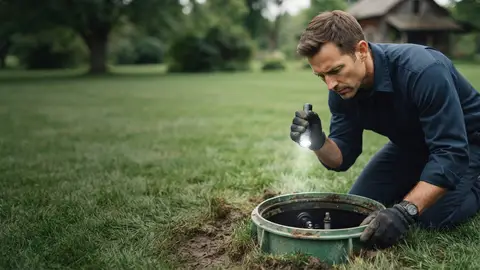
Roughly half of North Carolina households use septic systems, one of the highest shares in the nation. County health departments permit systems under state rules, and Piedmont clay, coastal sand and high water tables each call for different designs. We service and repair systems and work with county staff when a new one is needed.
Most North Carolina homes are built over crawl spaces, with supply and drain lines running under the floor. Winters are usually mild, so pipes are often uninsulated, and a hard cold snap freezes them quickly. Vents left open and doors left off make it worse. In the mountains, Waynesville and Boone see far colder nights. We repair frozen and leaking lines, insulate pipes, close off drafts and fix sagging drains under the house.
Fayetteville sits beside Fort Liberty, and Jacksonville beside Camp Lejeune. Renters occupy 53% of Fayetteville homes and 61% of Jacksonville homes, and families move often. Manufactured homes make up 90% of housing in Dudley near Goldsboro. We work with landlords and property managers on fast turnovers, water heater swaps and repairs between tenants.
Close crawl space vents in cold snaps, insulate exposed pipes and disconnect garden hoses.
Check the crawl space for leaks and moisture and pump the septic tank if it is due.
Prepare for hurricane season: test sump pumps and know how to shut off water and gas.
Flush the water heater, service the well pump and winterize mountain and beach homes.
Service area
Our largest North Carolina service areas by population:
Every North Carolina place in our data, grouped by county:
Alamance County
Alexander County
Alleghany County
Anson County
Ashe County
Avery County
Beaufort County
Bertie County
Bladen County
Brunswick County
Buncombe County
Burke County
Cabarrus County
Caldwell County
Camden County
Carteret County
Caswell County
Catawba County
Chatham County
Cherokee County
Chowan County
Clay County
Cleveland County
Columbus County
Craven County
Cumberland County
Currituck County
Dare County
Davidson County
Davie County
Duplin County
Durham County
Edgecombe County
Forsyth County
Franklin County
Gaston County
Gates County
Graham County
Granville County
Greene County
Guilford County
Halifax County
Harnett County
Haywood County
Henderson County
Hertford County
Hoke County
Hyde County
Iredell County
Jackson County
Johnston County
Jones County
Lee County
Lenoir County
Lincoln County
Macon County
Madison County
Martin County
McDowell County
Mecklenburg County
Mitchell County
Montgomery County
Moore County
Nash County
New Hanover County
Northampton County
Onslow County
Orange County
Pamlico County
Pasquotank County
Pender County
Perquimans County
Person County
Pitt County
Polk County
Randolph County
Richmond County
Robeson County
Rockingham County
Rowan County
Rutherford County
Sampson County
Scotland County
Stanly County
Stokes County
Surry County
Swain County
Transylvania County
Tyrrell County
Union County
Vance County
Wake County
Warren County
Washington County
Watauga County
Wayne County
Wilkes County
Wilson County
Yadkin County
Yancey County
How it works
What is happening, whether the home has a crawl space, well or septic, and what to shut off.
Gas odors, sewage backups, burst pipes and no water come before routine work.
Crawl space inspections, pressure tests and cameras show what failed.
We explain the options, and nothing starts until you agree.
We pull the local permit when needed and book the inspection.
Have a plumbing problem in North Carolina?
Call Expert Plumber Now and tell us what is happening. We’ll send a licensed plumber.
Pricing
We price each job after we see it. These factors matter most:
Low or wet crawl spaces take more time.
Polybutylene and old galvanized often need replacing.
Pumps, tanks and fields add equipment.
Red clay and rock slow digging in the Piedmont and mountains.
Fees vary by county and city.
Evening and weekend calls cost more.
You get a written price before work begins.
Season by season
Matthew in 2016 and Florence in 2018 flooded eastern North Carolina, including Kinston, Goldsboro, Lumberton and New Bern. In 2024, Helene brought catastrophic flooding to the mountains, and Asheville's water system was knocked out for weeks. 72% of Emerald Isle homes and 85% of Ocean Isle Beach homes stand vacant on a typical day, many of them vacation homes. We restore flooded plumbing, replace water heaters and pumps and help owners rebuild with equipment raised above flood levels.
Why choose us
What you can count on every time one of our plumbers comes to your door.
Every job is handled by a plumber who holds the license your state or city requires, backed by liability insurance.
Our plumber explains the problem and the options, and you approve a written price before any work begins.
Burst pipes, sewage backups and failed water heaters get priority scheduling, including nights and weekends.
We pull permits when the job needs one and schedule the inspection, so the work holds up when you sell.
Repairs and installations come with a written warranty on labor, on top of the manufacturer's warranty on parts.
Our pages and plumbers account for your area's water, soil, climate and the age of the homes around you.
We look at the problem, crawl space or slab access, well or septic work and any permit, then give you a written price. Work starts only after you approve it.
Access matters. Homes with open crawl spaces repipe faster than those on slabs or with finished basements. We explain the route and price before starting.
We ask what is happening, tell you what to shut off and book our plumber, with gas odors, sewage and burst pipes first. We keep you updated on timing.
Yes. Where your city or county requires a permit, we pull it and schedule the inspection.
Leave without using switches or phones and call your gas utility, propane supplier or 911 from outside. We repair the piping once it is safe.
A standard electric or gas tank swap takes a few hours. Heat pump water heaters and relocations take longer.
Most North Carolina households need pumping every three to five years, more often with a large family or a garbage disposal.
Insulate exposed pipes, close vents and crawl space doors during cold snaps and drain outdoor faucets. We can add heat cable where pipes freeze often.
Yes. Our work is done under North Carolina plumbing contractor licenses issued by the state board, as state law requires.
Yes. Many North Carolina wells are acidic or carry iron, and some contain arsenic or uranium. Test every year or two and treat as needed.