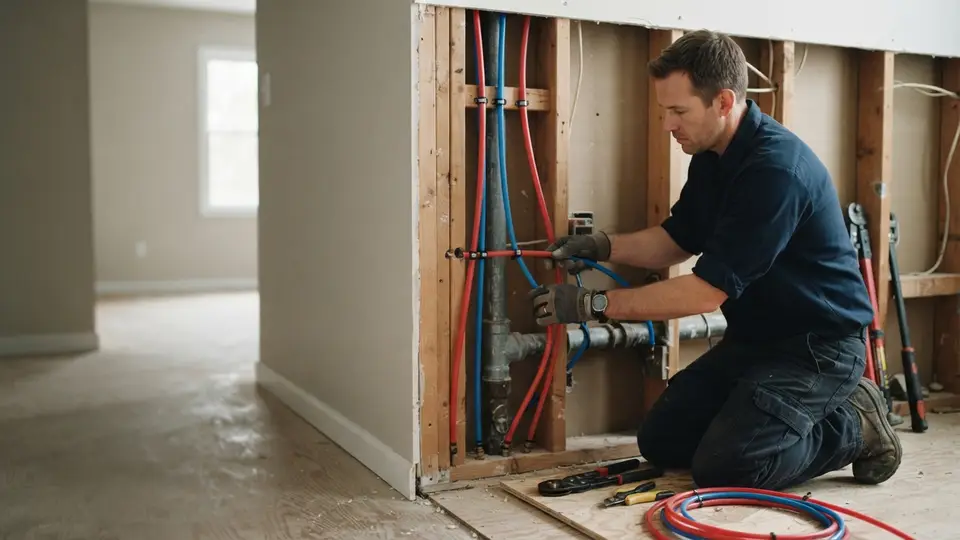
Polybutylene
Found in: Many 1980s to mid-1990s homes
What we do: Replace with PEX
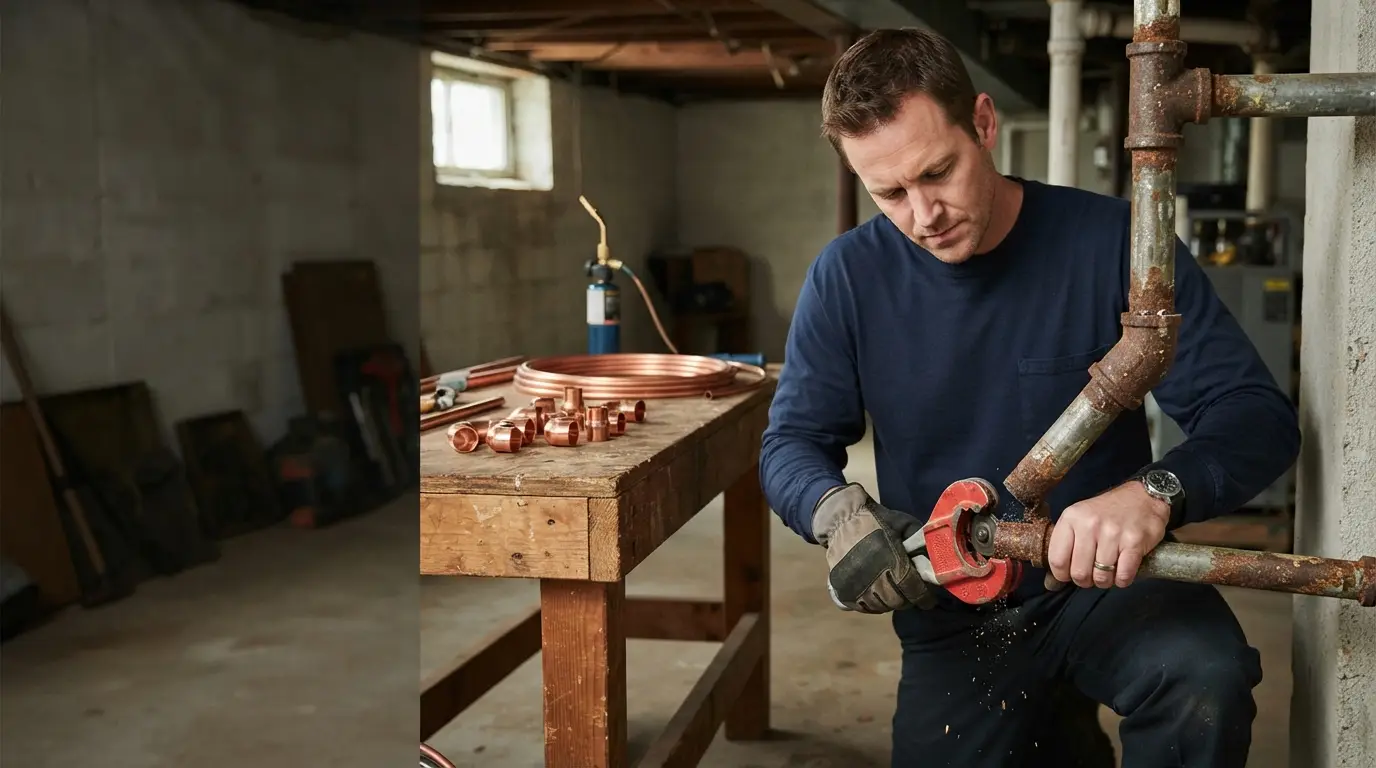
Polybutylene pipe in the walls, or a third slab leak this year? We handle repiping and water line replacement in Nevada. Our plumbers repair failing sections, replace all the supply piping in a home and repair or replace the service line from the meter to the house. Many Las Vegas Valley homes from the 1980s and early 1990s still have polybutylene, older homes have copper worn thin under the slab, and northern Nevada towns have galvanized steel. We plan a repipe that runs overhead and avoids the slab, and give you a written price first.
The service
Nevada housing is mostly young, but age is not the only issue. Homes in Sunrise Manor (median build year 1991), Spring Valley and parts of Henderson were built when polybutylene was common. Older Las Vegas, Paradise and Winchester homes, where 55% predate 1980, have copper that has spent decades under slabs. In Ely (76% built before 1980) and Hawthorne, galvanized steel remains.
Pipe we replace and install
Found in: Many 1980s to mid-1990s homes
What we do: Replace with PEX
Found in: Older valley homes
What we do: Reroute overhead
Found in: Older northern and rural homes
What we do: Replace with PEX or copper
Found in: Some 1990s and 2000s homes
What we do: Repair or replace brittle sections
Found in: Our usual repipe choice
What we do: Flexible, few joints, handles hard water
Why Nevada
Polybutylene and its fittings degrade with age and disinfectants and crack suddenly.
Abrasion and hard water wear copper laid in the ground.
Attic and wall temperatures age plastic pipe and fittings faster.
Older steel pipe in northern and rural towns rusts from inside.
Warning signs
Our process
For a single failed section, we cut it out, replace it and pressure test. On polybutylene, we explain why repairs may only buy time.
We run new PEX or copper through the attic and walls to every fixture, abandon the old lines in the slab and patch the openings. Most homes are done in a few days.
We locate and repair leaks in the service line from the meter box to the house.
We replace old or leaking service lines, digging through caliche where needed or boring under walkways and landscaping.
Typical cost
Before we inspect, any figure is an estimate only. The final price depends on:
You get a written price before work begins.
Get a written price: (833) 733-2357More fixtures and bathrooms mean more pipe.
PEX usually costs less than copper.
Low or tight attics take more time.
Drywall and stucco openings must be repaired.
Digging through caliche adds work.
Benefits
New lines run overhead.
Polybutylene gone before it fails.
Many insurers prefer homes without polybutylene.
Buyers ask about pipe type.
Polybutylene was widely used in Las Vegas Valley homes from the late 1970s until the mid-1990s. It looks like grey or blue flexible plastic and is often stamped PB. It does not fail gradually; fittings and pipe can split suddenly and flood a room. Many insurers ask about it. In North Las Vegas (94,470 homes), Whitney, Sunrise Manor and parts of Henderson, we replace it with PEX, routed overhead so nothing new goes under the slab.
In a slab home, the original supply lines usually run under the concrete. When we repipe, we leave those lines in place, capped, and run new pipe through the attic and down interior walls to each fixture. Any future problem is then in a wall or attic, not under the floor. We insulate attic runs against summer heat and route through interior walls where possible.
Reno (123,756 homes), Sparks and Carson City have older neighborhoods with galvanized and copper pipe, crawl spaces and occasional freeze damage. Ely, Hawthorne and other rural towns have even older homes. We repipe them with PEX, keep new lines away from cold exterior walls and insulate where needed.
In Paradise (94,312 homes), Winchester and the older parts of Las Vegas, copper supply lines have spent forty years or more in the ground beneath slabs. Hard water, heat cycles and rubbing against caliche wear them thin. After the second or third slab leak, a full repipe overhead usually costs less than continuing to cut floors and chase leaks. We look at the leak history and the condition of exposed copper before recommending it.
Some homes built in the 1990s and 2000s used CPVC plastic for supply lines. In hot attics and walls, older CPVC can become brittle and crack when bumped or when a fixture is replaced. If we find brittle CPVC, we repair carefully and may recommend replacing the most exposed runs, especially in the attic, with PEX.
If you are buying a home built between about 1978 and 1995 in the Las Vegas Valley, check for polybutylene before closing. If the home is older, ask about past slab leaks. We can identify the pipe type, look for repairs and give you a written price for a repipe, which helps you plan your budget or negotiate the price with the seller.
If a pipe is leaking, close the main shutoff and turn off the water heater. Collect water and move belongings away.
Note where you have had leaks before and find the pipe at the water heater so we can see what you have. Then call us.
Repiping and service line replacement usually need a permit from Clark County, the city or your local building department. We pull permits and schedule inspections. Our plumbers hold the licenses each job requires.
Why choose us
What you can count on every time one of our plumbers comes to your door.
Every job is handled by a plumber who holds the license your state or city requires, backed by liability insurance.
Our plumber explains the problem and the options, and you approve a written price before any work begins.
Burst pipes, sewage backups and failed water heaters get priority scheduling, including nights and weekends.
We pull permits when the job needs one and schedule the inspection, so the work holds up when you sell.
Repairs and installations come with a written warranty on labor, on top of the manufacturer's warranty on parts.
Our pages and plumbers account for your area's water, soil, climate and the age of the homes around you.
Service area
We repipe homes in 132 Nevada communities, including Las Vegas (267,654 homes) and Henderson (141,297 homes). Find yours:
It depends on the size of the home, number of fixtures, attic access and patching. We inspect first and give you a written price.
PEX usually costs less, installs faster and handles hard water well. Copper costs more but some owners prefer it.
Yes. It is priced separately because it involves digging, often through caliche, from the meter to the house.
We run new lines through the attic and walls, cap the old lines in the slab and patch openings.
Usually, yes. We restore water at the end of most days and tell you in advance when it will be off.
We identify the pipe type, check the water heater and attic and plan routes before giving a written price.
It is not toxic, but it can fail suddenly and flood a room. That is why we recommend replacing it.
Look for grey or blue flexible pipe marked PB at the water heater or under sinks. We can confirm it.
Most homes take two to four days, plus inspection and drywall patching.
Usually a day. Heavy caliche can add time.
PEX and copper installed today should last decades with moderate pressure and softened or reasonable water.
In the Las Vegas Valley, often yes. It protects new fittings, fixtures and the water heater from scale.
Close the main shutoff, turn off the water heater and call us. We repair it first and plan the rest afterward.
Many ask about it. Replacing it can make coverage easier to get.
We insulate attic runs and use interior walls where possible to protect pipes and keep cold water cool.