Age
Copper supply lines are now 50 to 60 years old in most of the community. Copper lasts a long time, but its walls thin gradually from the inside.
Warm spot on the floor, or a water bill that jumped? We handle slab leak repair in Sun City, AZ, and find the leak before we cut into anything. Most homes here sit on 1960s and 1970s slabs with copper lines underneath. After half a century of hard water and shifting desert soil, those lines are where many of the community's most expensive leaks start. Here is how to recognize a slab leak in a Sun City home, how our plumbers find and fix it, and how we help you choose between a spot repair, a reroute and a repipe.
Why Sun City
About 87% of Sun City's 26,626 homes were built in the 1960s and 1970s, and the median home dates from 1973. Builders of that era in the Phoenix area poured slab foundations and ran soft copper water lines under them, usually through a bed of sand or gravel. Several local conditions wear those lines down over time.
Copper supply lines are now 50 to 60 years old in most of the community. Copper lasts a long time, but its walls thin gradually from the inside.
Minerals in the local water build scale inside pipes, and changes in water chemistry can make copper corrode unevenly, producing pinholes.
Hot water lines expand and contract every time they heat and cool. Where a pipe touches concrete, rock or another pipe, that movement wears through the wall over thousands of cycles.
Desert soils shift with irrigation, monsoon rain and long dry spells. Small movements stress pipes at the points where they rise out of the slab.
Pressure above about 80 psi, or a failed pressure-reducing valve, puts extra stress on old lines.
Warning signs
Before we arrive
Find the main shut-off valve. If the leak is hot water, you can often stop it by closing the cold-water inlet valve on top of the water heater and leaving the main on for cold water.
Turn off the water heater (gas to pilot or vacation, electric at the breaker) if you shut off its supply.
Take photos of the meter, warm spots, damp flooring and any damage. Your insurer will want them.
Move rugs, furniture and stored items away from wet areas.
Call us for leak detection so we can locate the leak before any concrete is broken.
Our process
A careful slab leak job has two parts: find the leak precisely, then choose the repair that makes sense for the whole supply system, since the rest of an old line may be close to failing too.
Our plumber first isolates the hot and cold sides of the system and pressure-tests each to confirm which line is leaking. Then we trace the line's route under the slab using a pipe locator, listen through the floor with acoustic equipment that picks up the hiss of escaping water, and often use a thermal camera to see warm water spreading under the surface. This narrows the leak to an area of about a square foot.
Once the location is known, we walk you through the options below, then either open the slab at that spot, abandon the leaking section and run a new line around it, or replace the supply piping in the house. After the repair, the system is pressure-tested again to confirm there are no other leaks.
You get the detection report, photos and the exact location of the repair. If we open concrete, we patch it and let it cure before flooring goes back down. We also point out anything wet that needs drying.
Your options
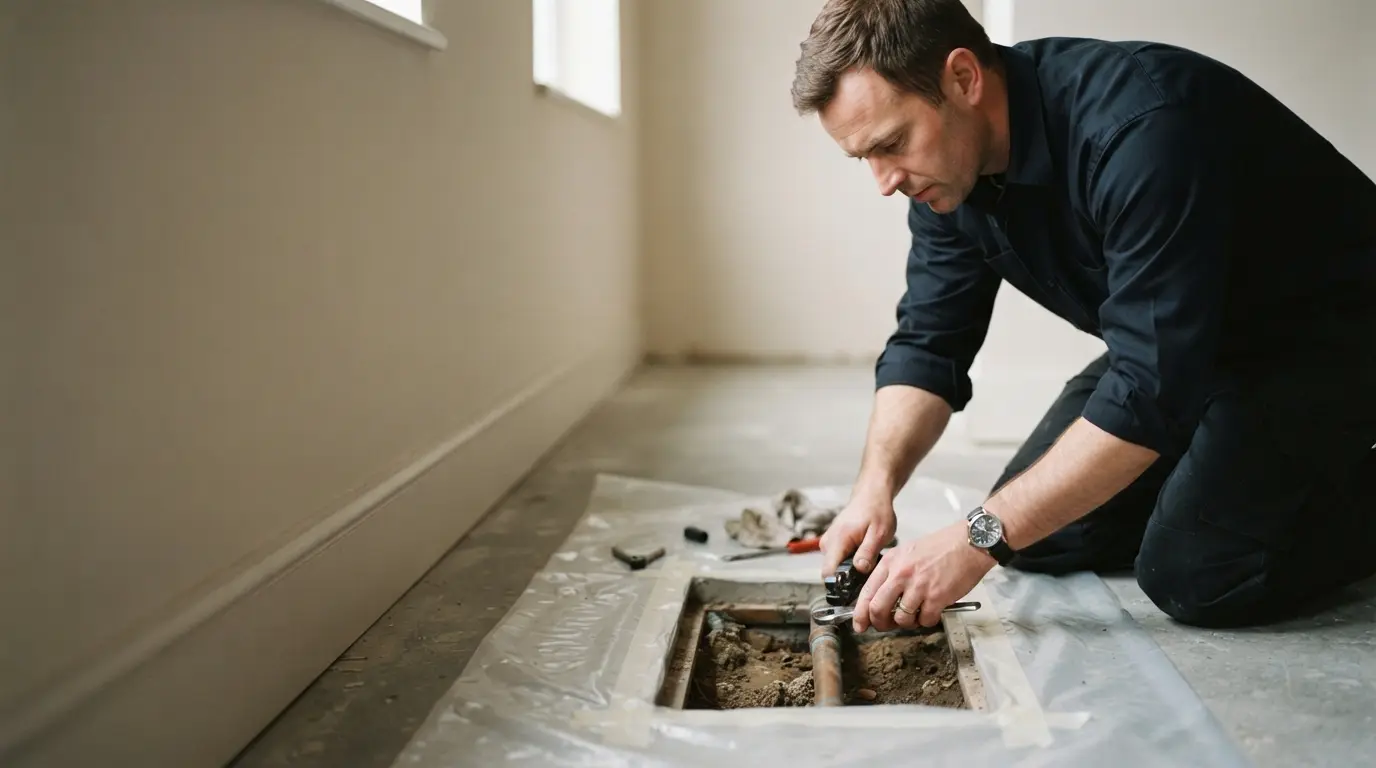
What it involves: Break the concrete at the leak, replace the damaged section, patch the floor
Best when: The first leak in otherwise sound pipe, in an easy-to-reach spot
Trade-offs: Floor damage and repair; does not prevent the next leak elsewhere on the same old line
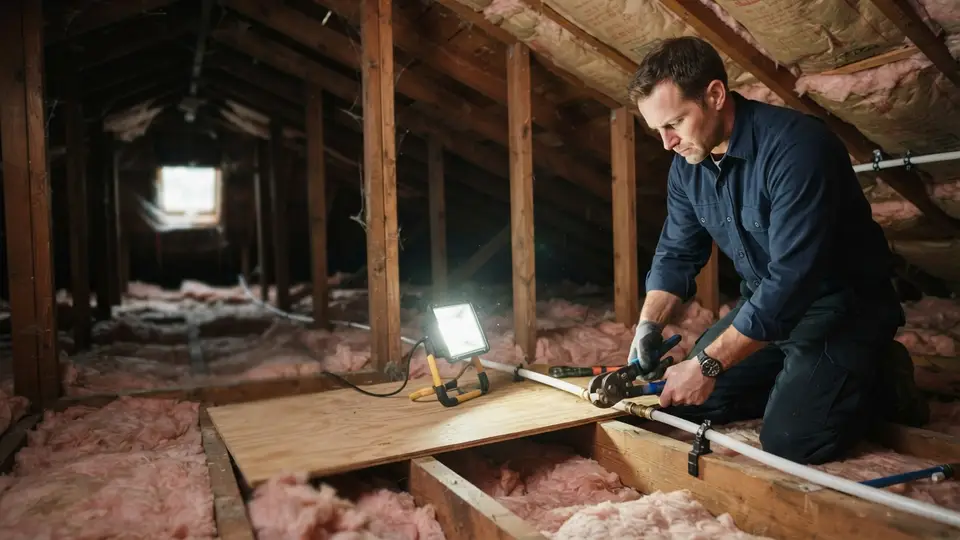
What it involves: Abandon the leaking line under the slab and run new PEX or copper through the walls or attic
Best when: The leaking line is long, under expensive flooring, or has leaked before
Trade-offs: Some drywall openings; attic lines must be insulated against Arizona heat
What it involves: Replace all supply piping, usually with PEX run overhead
Best when: Repeated leaks, or 1960s–70s copper showing wear throughout
Trade-offs: Highest upfront cost, but ends slab leaks in the supply system
What it involves: Coat the inside of the existing pipe with epoxy
Best when: Limited cases where access is very difficult
Trade-offs: Not suitable for every pipe; ask about warranty and local acceptance
Typical cost
Typical price ranges (estimates only)
Treat these Phoenix-area ranges as a rough guide until we have located the leak and given you a written quote.
Get a written price: (833) 733-2357Tile, stone and hardwood are expensive to remove and match; this is often the biggest hidden cost of a spot repair.
A leak under a kitchen island or a closet is easier to reach than one under a main hallway.
Single-story homes with open attics, which are common in Sun City, make rerouting and repiping simpler.
Repiping and some reroutes need a county permit and inspection.
Drying and restoring wet materials is usually a separate cost.
Benefits
We show you how we located the leak and give you the report and photos.
We tell you whether the rest of the line is likely to leak again and what we would do in our own home.
The written price covers concrete, drywall patching, flooring coordination and permits, so there are no surprises.
After the repair, we pressure-test the whole system to confirm there are no other leaks.
Our labor is guaranteed in writing, on top of the manufacturer's warranty on parts.
Sun City is unincorporated, so permits come from Maricopa County, not a city. A simple spot repair of a leaking section often does not need a permit, while rerouting lines and repiping a house generally do. We pull the permit and schedule the inspection, and our Arizona work is done under a plumbing contractor license from the Arizona Registrar of Contractors.
About 27% of Sun City homes are attached, such as duplexes, quads and townhouses. In these buildings a water line can serve more than one unit, and a leak under one home can show up in the neighbor's floor. Before work starts, find out from the association documents who owns the leaking line and who pays for repairs. A reroute in an attached home may also need the association's approval if it involves shared walls or roof space.
Why choose us
What you can count on every time one of our plumbers comes to your door.
Every job is handled by a plumber who holds the license your state or city requires, backed by liability insurance.
Our plumber explains the problem and the options, and you approve a written price before any work begins.
Burst pipes, sewage backups and failed water heaters get priority scheduling, including nights and weekends.
We pull permits when the job needs one and schedule the inspection, so the work holds up when you sell.
Repairs and installations come with a written warranty on labor, on top of the manufacturer's warranty on parts.
Our pages and plumbers account for your area's water, soil, climate and the age of the homes around you.
Related services
 Leak Detection & Repair
 Repiping & Water Line Replacement
 Water Heater Repair & Replacement
 Water Softeners & Filtration
 Toilet, Faucet & Fixture Repair
 Emergency Plumbing
Service area
See also slab leak repair across Arizona.
Rough Phoenix-area ranges: detection about $150 to $500, a spot repair or single reroute about $1,000 to $4,000, and a PEX repipe more. Your written quote is exact.
Many policies pay to reach the leak and repair water damage, but not to replace the pipe. Call your insurer early; we provide the report and photos.
Tile, stone and hardwood are hard to remove and match, so opening a floor can cost more than the pipe repair. Rerouting often avoids that.
We pressure-test each side, trace the line with a locator, listen with acoustic equipment and often use a thermal camera, narrowing the leak to about a square foot.
For original 1960s and 1970s copper, rerouting through the walls or attic is often better, because the rest of that line is likely to leak again.
Not always. If the rest of the piping looks sound, a reroute may be enough. After more than one leak, repiping usually costs less over time.
Use as little as possible. For a hot-side leak, close the water heater's cold supply valve to stop it while keeping cold water on.
Water spreading under flooring can lead to mold and swollen baseboards, and a long-running leak can wash out soil under the slab, so finding it fast matters.
Detection usually takes a few hours. A spot repair or reroute often takes one or two days; a repipe takes several days plus the county inspection.
Usually not. Water is off for parts of each working day, and in most single-story homes we restore it before we leave in the evening.
Keep water pressure under about 80 psi, soften hard water, check the meter every few months with everything off and keep irrigation away from the foundation.
Every few months and before leaving for the summer. Turn off all water, then watch the meter's leak indicator for 15 minutes.
When water is spreading across the floor or you cannot shut it off. Close the valves you can and call us; it gets priority.
Rerouting and repiping generally need a permit from Maricopa County, since Sun City is unincorporated. A simple spot repair may not. We handle it either way.
Most homes were built in the 1960s and 1970s with copper under the slab. Fifty years of hard water, soil movement and contact with concrete wear pinholes in it.