Direct spot repair
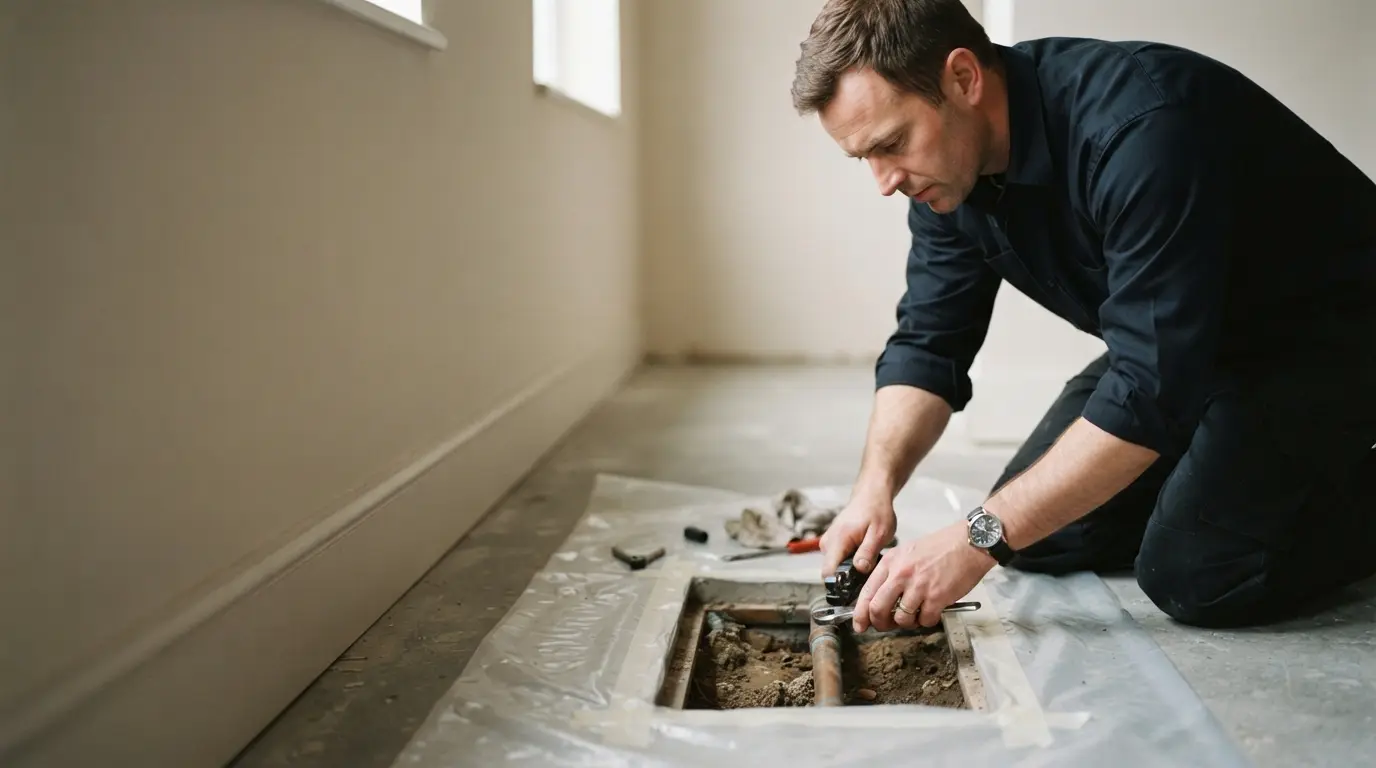
How it works: Open the slab over the leak and replace the damaged section
Best when: A single leak in otherwise sound pipe
Warm spot on the tile or the sound of water with every tap off? Slab leak repair in Arizona is one of the jobs our plumbers do most. Most homes in the Phoenix and Tucson areas sit on concrete slabs with water lines running under or through them, and those lines can wear through after enough years of hard water and shifting soil. Here we explain how slab leaks start, how we locate them, the three ways we repair them and what decides the price.
The service
A slab leak is a leak in a water or drain pipe that runs below or inside the concrete foundation. Hot water lines are the most common culprit, since heat speeds corrosion and makes the pipe expand and contract against the concrete or gravel around it. Water from a slab leak can travel under the floor for a long distance before it shows up, which is why finding it takes equipment rather than guesswork.
Three ways we fix a slab leak
How it works: Open the slab over the leak and replace the damaged section
Best when: A single leak in otherwise sound pipe
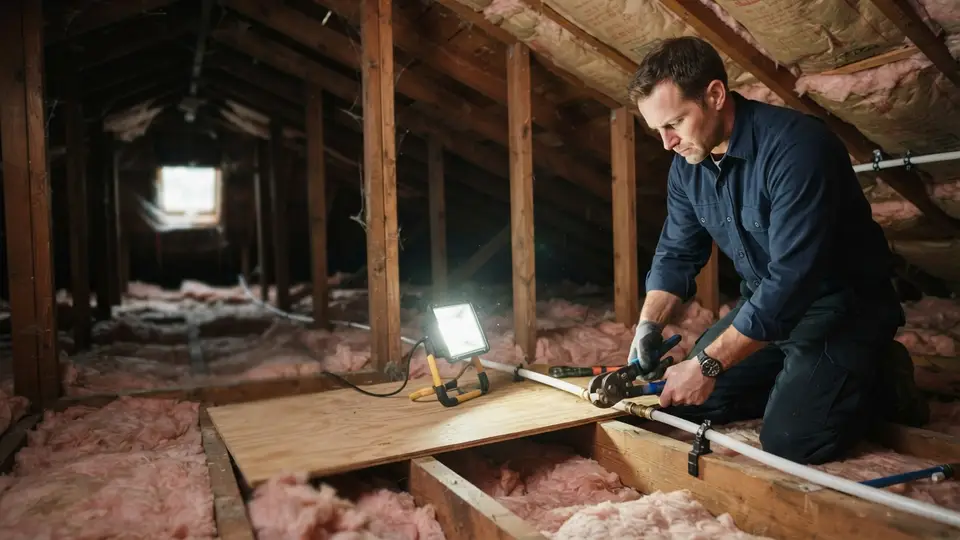
How it works: Abandon the under-slab line and run new pipe through walls or the attic
Best when: Pipe is aging, or leaks have repeated
How it works: Replace all water lines with new pipe above the slab
Best when: Several leaks and widespread corrosion
Why Arizona
Arizona grew fast after 1970, and builders put most of those homes on slabs. 64% of homes in our Arizona Census data are single-family detached houses, and the median home in cities like Glendale (1986), Scottsdale (1991) and Chandler (1997) is old enough that its original copper has seen decades of service.
Hard, mineral-heavy water and changes in disinfectant chemistry can thin copper from the inside, leading to pinholes. Hot water lines suffer first.
Expansive clay soils swell and shrink with moisture, and the slab moves slightly with them. Pipes under the concrete flex, rub against gravel or rebar and eventually wear through.
Kinked pipe, missing sleeves where pipe passes through concrete, and fittings buried under the slab all create weak points that show up years later.
Warning signs
Our process
We confirm the leak at the meter, then isolate hot and cold lines to see which one is leaking. Acoustic equipment lets us hear water escaping through the concrete, and thermal imaging shows the warm trail of a hot water leak. We mark the spot on the floor so any opening is as small as possible.
For a direct repair, we cut a small opening in the slab, dig to the pipe, replace the damaged section, pressure test it and then backfill and patch the concrete. Flooring on top, such as tile, has to be lifted and replaced, which we discuss with you beforehand.
Often the better choice in Arizona is to stop using the under-slab line entirely. We run new PEX or copper through walls or the attic to the fixtures the old line served, cap the old pipe and patch small openings in the drywall. Rerouted lines in the attic are insulated against summer heat.
Typical cost
After detection, you get a written price for each method that fits your home, so you choose with full costs in view.
Get a written price: (833) 733-2357A spot repair, a reroute and a repipe are very different jobs.
Opening tile, stone or hardwood adds more restoration than carpet or bare concrete.
A leak under a cabinet, tub or wall is harder to reach than one under an open floor.
Single-story homes with attic access are usually simpler to reroute than two-story homes.
Reroutes and repipes often need a permit, which is part of your quote.
Benefits
Water under a slab can wash out soil and cause settling.
Rerouting old pipe out of the slab removes the risk of the next pinhole there.
Hot water slab leaks waste both water and the energy used to heat it.
Drying out the area early limits damage to floors and walls.
If you suspect a slab leak, check the meter with all water off. If it moves and you hear water, you can turn off the water heater's cold supply valve to see whether the leak stops; if it does, the leak is likely on a hot water line.
If water is coming up through the floor, shut off the main valve and turn off power to any outlets near the wet area. Take photos for your insurance, move furniture and rugs, and call us.
Many homeowners policies cover the cost of opening the slab and some water damage, but not always the pipe repair itself. Coverage varies widely. We document the leak with photos and readings so you have what you need for a claim.
Rerouting water lines and repiping usually need a plumbing permit from the city or county. Our plumbers work under an Arizona Registrar of Contractors plumbing contractor license, and we pull permits and book inspections so the work is on record.
Why choose us
What you can count on every time one of our plumbers comes to your door.
Every job is handled by a plumber who holds the license your state or city requires, backed by liability insurance.
Our plumber explains the problem and the options, and you approve a written price before any work begins.
Burst pipes, sewage backups and failed water heaters get priority scheduling, including nights and weekends.
We pull permits when the job needs one and schedule the inspection, so the work holds up when you sell.
Repairs and installations come with a written warranty on labor, on top of the manufacturer's warranty on parts.
Our pages and plumbers account for your area's water, soil, climate and the age of the homes around you.
Service area
We repair slab leaks in 467 Arizona communities, from the largest metros to small towns.
It depends on the method, the flooring and where the leak is. After locating the leak, we give you written prices for each option that fits your home.
Sometimes, especially when the leak is under tile or cabinets. A reroute also takes the old pipe out of service, which prevents future leaks in that line.
Many policies cover access and some water damage but not the pipe. Coverage varies, so we document the leak for your claim.
We isolate hot and cold lines, then use acoustic listening and thermal imaging to trace the leak and mark the spot before any concrete is cut.
Usually PEX or copper, chosen for the route and your home. Lines in the attic are insulated against Arizona summer heat.
Only over the repair spot for a direct repair. A reroute through walls or the attic usually leaves floors untouched.
It can damage the foundation, grow mold and put water near outlets. Turn off the water and power to wet areas until we arrive.
A long-running leak can wash out or swell the soil under the slab and contribute to settling and cracks, which is why early repair matters.
A spot repair is often done in a day. A reroute typically takes one to two days, and a full repipe several days.
We shut it off only while working on the affected line and restore it at the end of each day where possible.
Turn off the cold supply valve at the water heater. If the meter stops moving, the leak is likely on a hot water line.
Keep pressure below about 80 psi, soften hard water and keep soil moisture even around the house. Rerouting old lines removes the risk.
When water is coming through the floor, yes: shut off the main and call us. A slow leak should still be found and fixed soon.
Most homes sit on slabs with copper lines underneath, and hard water and moving clay soils wear those pipes over decades.
Spot repairs may not, but reroutes and repipes usually do. We pull the city or county permit and schedule the inspection for you.