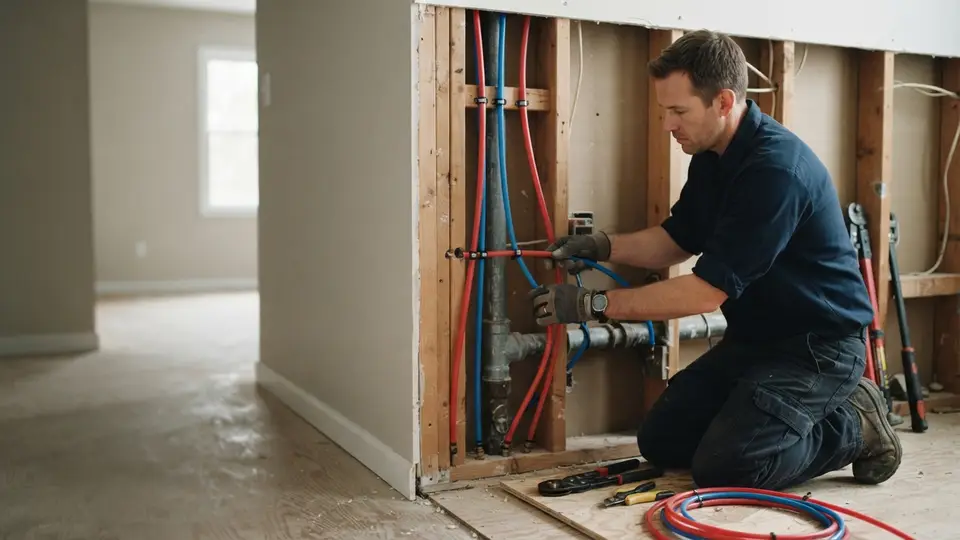
Galvanized steel
Common in: Homes before about 1970
Why it is replaced: Rust, low pressure, leaks
Rusty water from galvanized pipe, or gray polybutylene that keeps failing? We handle repiping and water line replacement in Mississippi. Our plumbers replace worn supply piping throughout the house and the water service from the meter to your home. Older homes in Jackson, the Delta and the river towns still have galvanized steel, many 1980s and 1990s homes and manufactured homes have polybutylene, and clay soil keeps working on underground lines. We plan the job so you keep water as much as possible.
The service
49% of Mississippi homes in our data were built before 1980. In Natchez that share is 82%, in Moss Point 80% and in Clarksdale 76%. Homes from that period were often plumbed with galvanized steel or early copper. Homes built in the late 1970s through the mid-1990s, including many manufactured homes, may have gray polybutylene, which is known for sudden failures.
Supply pipe in Mississippi homes
Common in: Homes before about 1970
Why it is replaced: Rust, low pressure, leaks
Common in: Many late 1970s to mid-1990s homes
Why it is replaced: Brittle pipe and fittings that burst
Common in: Many homes since the 1960s
Why it is replaced: Pinholes, slab leaks
Common in: Some newer homes
Why it is replaced: Brittleness with age and heat
Common in: What we usually install
Why it is replaced: Flexible, few joints, freeze tolerant
Why Mississippi
Galvanized pipe rusts from the inside and narrows over decades.
This plastic becomes brittle with age and chlorine exposure.
Expansive clay stresses service lines and pipes under slabs.
Pipes in very hot attics age faster, especially plastic.
Warning signs
Our process
We cut out the failed section and replace it with PEX or copper using proper transition fittings.
In slab homes, we usually run new lines through the attic and down the walls to each fixture, abandoning the old under-slab pipe. We insulate attic lines and patch openings.
We locate leaks in the service line from the meter to the house and repair them with a targeted dig.
We replace the service line by trench or boring, using pipe that tolerates soil movement, and coordinate with the water utility at the meter.
Typical cost
Repiping prices are estimates only until we see the house. These factors matter:
You approve a written price before work starts.
Get a written price: (833) 733-2357More bathrooms mean more pipe.
Low or crowded attics take longer.
Drywall or plaster to patch.
PEX and copper differ in cost.
And soil conditions.
Benefits
Fixtures run together without dropping.
No more rust from galvanized pipe.
No more polybutylene or slab leak worries.
Updated plumbing helps at inspection.
Most Mississippi homes sit on slabs, so the original water lines run under the floor. Repiping through the attic avoids breaking concrete and removes pipe from the shifting clay that causes slab leaks. In Jackson (74,871 homes) and Pearl, this is often the most lasting fix. Attic lines must be insulated against both summer heat and rare hard freezes, and we route them to stay inside the insulated envelope where possible.
Polybutylene was widely used in homes and manufactured homes built from the late 1970s to the mid-1990s. Manufactured homes make up 14% of homes in Gautier and 10% in Pearl in our data. Polybutylene can split without warning and flood a home. Some insurers ask about it. We replace it with PEX, usually in one or two days, and document the work for insurers and buyers.
Natchez, Vicksburg (median year 1967) and Columbus have historic homes, many raised on piers, with galvanized and early copper lines and plumbing that has been altered many times. We plan routes that protect plaster, trim and original features, often running new pipe under the house and up through closets.
Greenville (13,918 homes), Clarksdale and Indianola have older housing on heavy clay, where service lines and under-slab pipes take a beating. We replace galvanized lines and old services and use flexible pipe that handles soil movement better.
Rusty or discolored water can come from the city main or from your own pipes. If only the hot water is discolored, the water heater may be the source. If the cold water clears after running, old galvanized pipe is likely. In Jackson, where the city system has had well-known problems, owners often want to rule out their own plumbing. We test, check pipe material and explain where the problem lies.
Mississippi homes were rarely built with freezing in mind, and the February 2021 and December 2022 cold snaps showed what that costs. When we repipe, we plan for the next hard freeze: lines stay out of exterior walls where possible, attic runs sit under the insulation rather than above it, and pipes under raised homes get insulation and protection from wind. PEX also tolerates freezing better than copper or CPVC, so a freeze that would split older pipe is less likely to cause a flood.
Some Mississippi homes built in the 1990s and 2000s were plumbed with CPVC, a cream-colored rigid plastic. In hot attics and over many years, CPVC can become brittle, and fittings may crack when bumped or during a freeze. If your home has CPVC that has started to crack, patching often leads to more breaks nearby. We look at its condition and tell you whether spot repairs or a repipe makes more sense.
If a pipe is leaking, close the main shutoff. If you have polybutylene, check that the main valve turns freely.
Clear access to the attic hatch and under sinks, and note which fixtures have weak pressure or discolored water. Then call us.
Repiping and service line replacement may require a plumbing permit depending on your city or county. We pull permits where required and schedule inspections. Our plumbers hold the licenses each job requires.
Why choose us
What you can count on every time one of our plumbers comes to your door.
Every job is handled by a plumber who holds the license your state or city requires, backed by liability insurance.
Our plumber explains the problem and the options, and you approve a written price before any work begins.
Burst pipes, sewage backups and failed water heaters get priority scheduling, including nights and weekends.
We pull permits when the job needs one and schedule the inspection, so the work holds up when you sell.
Repairs and installations come with a written warranty on labor, on top of the manufacturer's warranty on parts.
Our pages and plumbers account for your area's water, soil, climate and the age of the homes around you.
Service area
We repipe homes and replace water lines in 427 Mississippi communities, including Meridian (17,677 homes), Laurel (7,805 homes) and Columbus (11,850 homes). Find yours:
It depends on the size of the home, fixture count, attic access and pipe material. We give you a written price after we see the house.
Yes. PEX is flexible, has few joints, handles soil movement and tolerates freezing better than rigid pipe.
Some insurers ask about polybutylene or charge more for it. Replacing it and documenting the work can help. Check with your insurer.
We usually run new lines through the attic and down the walls, abandoning the old under-slab pipe.
Yes. We replace the line from the meter to the house and coordinate with the water utility.
Yes. We replace old lines under the home with PEX and protect them from freezing.
It can release rust and sometimes metals from older connections. Replacing it removes the source.
It becomes brittle with age and chlorine exposure, and pipe or fittings can split without warning.
Many homes take two to four days. Larger homes or historic houses can take longer.
Mostly yes, with short scheduled shutoffs while we connect new lines.
We insulate every attic line and route it inside the insulated envelope where possible.
Keep pressure normal, insulate exposed pipe and keep soil moisture steady around the foundation.
Close the main valve and call us. We fix the break right away and include it in the plan.
Look for gray plastic pipe marked PB, often at the water heater or under sinks. We can check during a visit.
It depends on your city or county. We check local rules and pull a permit where one is required.