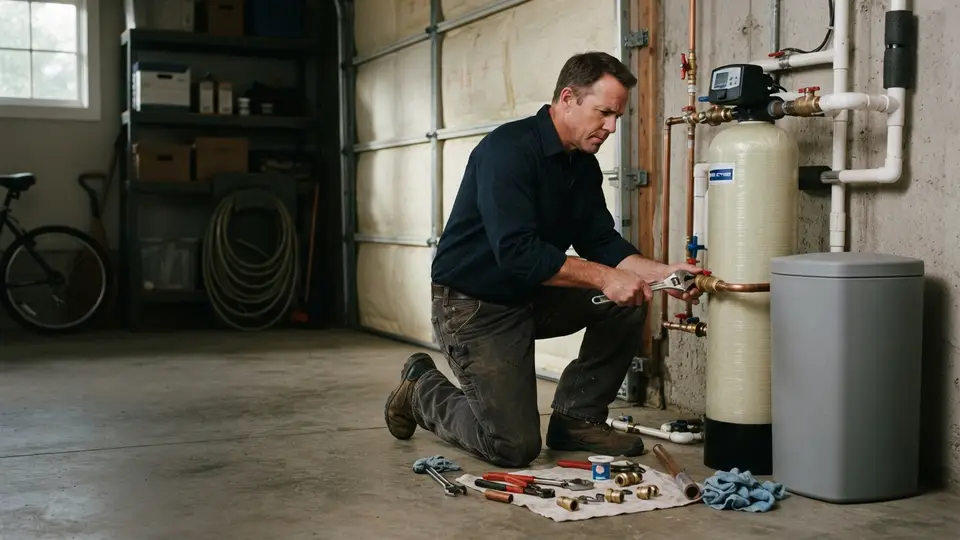
Water softener
Treats: Calcium and magnesium hardness
Common for: Homes with harder water
Orange iron stains in the sink, or water that smells like sulfur? We handle water softeners and filtration in Mississippi. Our plumbers test your water, then install softeners, iron filters, sulfur treatment, whole-house carbon filters and reverse osmosis systems. Mississippi water varies widely: some city water is soft but carries iron or a chlorine taste, Delta wells often have iron, and some homeowners simply want a backup layer of filtration after boil-water notices. We install only what your water test shows you need.
The service
Most Mississippi cities and rural water associations pump groundwater from deep aquifers, and Jackson draws largely from surface water. Groundwater in much of the state is soft to moderately hard, but iron is common, especially in the Delta and some southern areas, and some wells carry hydrogen sulfide that smells like rotten eggs. Treatment depends on what is actually in your water, which a test will show.
Treatment systems we install
Treats: Calcium and magnesium hardness
Common for: Homes with harder water
Treats: Orange and brown staining
Common for: Delta and well water
Treats: Rotten-egg odor
Common for: Some wells
Treats: Chlorine taste and odor, some chemicals
Common for: City water
Treats: Dissolved solids and many contaminants
Common for: Drinking water at the sink
Why Mississippi
Iron dissolves from aquifer sediments and stains everything it touches.
Some wells produce sulfur odors, often worse in hot water.
Old mains and pressure problems can bring sediment and discoloration.
Chlorine or chloramine used to treat water affects taste.
Warning signs
Our process
We test hardness and iron, size the softener to your use, install it with a bypass and drain and program regeneration.
We install sediment, iron, sulfur and carbon filters in the right order where water enters the house, usually in the garage or utility room.
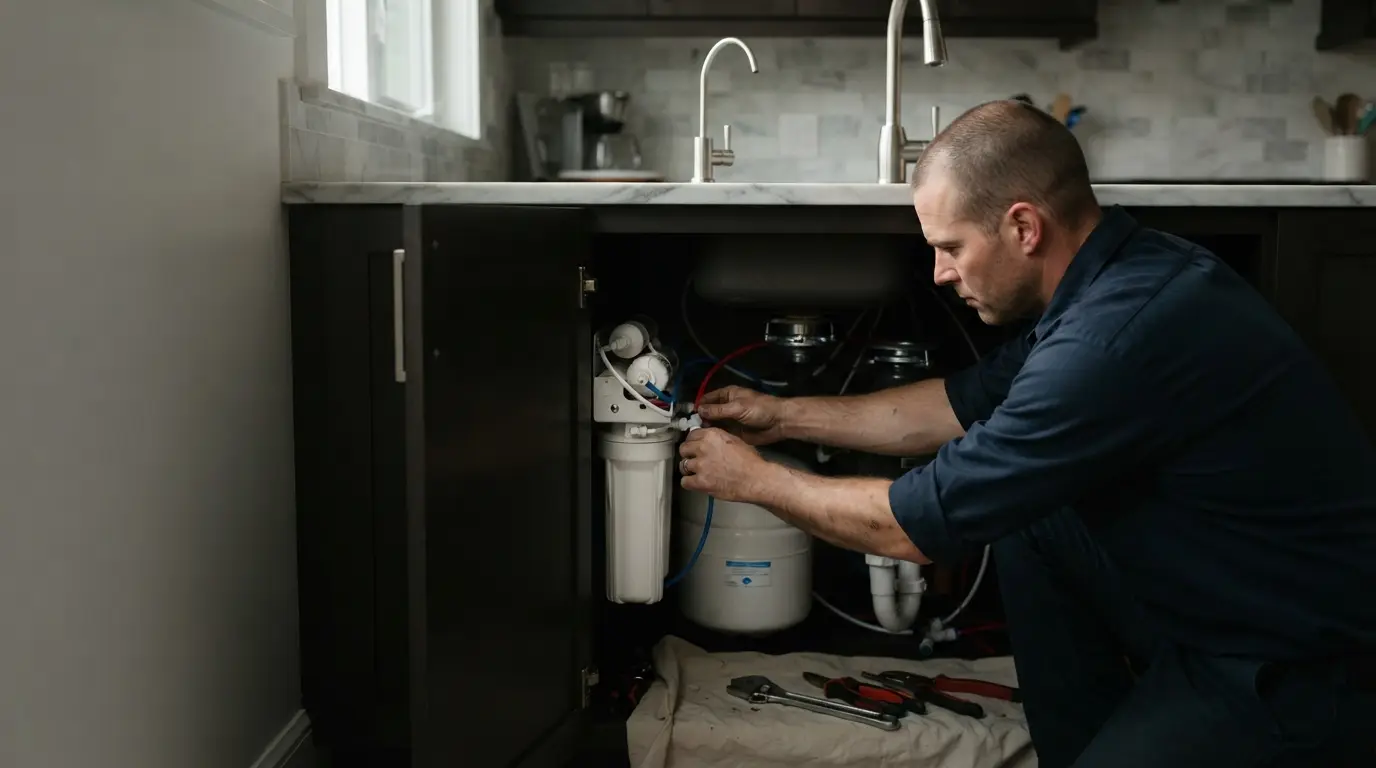
We install an under-sink reverse osmosis system with its own faucet for drinking and cooking water, and explain filter changes.
Typical cost
Prices are estimates only until we have test results. These factors matter:
You approve a written price before we start.
Get a written price: (833) 733-2357Iron, sulfur, hardness and other contaminants.
Bigger homes need larger systems.
Filters, softener and RO.
Garage, utility room or outdoor enclosure.
Salt, filters and media.
Benefits
Iron removed before it reaches fixtures.
Odor treated at the source.
Chlorine and sediment filtered.
Less buildup in heaters and machines.
Jackson (74,871 homes) residents have lived through repeated boil-water notices and the 2022 water system crisis, and many want an extra layer of protection at home. A whole-house sediment and carbon filter improves taste and catches sediment, and a reverse osmosis system provides drinking water at the kitchen sink. These do not replace following official notices. We help you choose certified equipment and keep it maintained.
Greenville (13,918 homes), Clarksdale, Cleveland and Indianola draw groundwater that can carry iron, and private wells in the Delta often have more. Iron leaves orange stains and clogs fixtures and water heaters. A softener can handle low iron, but higher levels need a dedicated iron filter ahead of it. We test, size the system and set it up so it does not foul quickly.
Hydrogen sulfide gives water a rotten-egg smell. If the odor is only in hot water, the water heater's anode rod may be reacting with the water, and replacing it with a different type often helps. If both hot and cold smell, the source is the water itself. We test, then treat the water or adjust the water heater, depending on the cause.
Some rural Mississippi homes still use private wells rather than a rural water association. Private wells are not tested by anyone unless the owner tests them. We recommend testing for bacteria, nitrate and other contaminants with a certified lab, then treating for iron, sulfur or sediment as needed. We install treatment systems and well-related plumbing.
Iron and sediment shorten the life of water heaters, dishwashers and washing machines, and tankless heaters in newer homes in Southaven (median year 1998) and Gluckstadt (2005) are sensitive to scale. When we install a new heater, we check the water and recommend treatment if needed to protect it and keep its warranty valid.
Gulfport (33,837 homes), Biloxi and other coast cities pump groundwater from deep aquifers. It is generally soft, so softeners are rarely needed there, but some homes notice a sulfur smell, a slight color or a chlorine taste. Owners rebuilding or renovating often add a whole-house sediment and carbon filter and a reverse osmosis system for drinking water. After hurricanes and flooding, private wells near the coast should be disinfected and retested before the water is used for drinking.
Tupelo, Columbus (11,850 homes) and nearby towns draw from aquifers and surface sources that can be moderately hard in places, and rural water associations across the region vary in iron and mineral content. Your water supplier's annual quality report lists hardness and other measures. We help you read it, test anything it does not cover, and choose treatment that fits. For many homes a sediment and carbon filter is enough; others with harder or iron-bearing water benefit from a softener or iron filter.
If you are on a well, get a lab test and keep the results handy. Note any stains, odors or discoloration, and whether it is hot water only.
Clear space where the water line enters the house, and find the nearest drain and outlet. Then call us.
Installing treatment on the main water line may need a plumbing permit depending on your city or county, and softener discharge must be routed properly, especially on septic. We pull permits where required. Our plumbers hold the licenses each job requires.
Why choose us
What you can count on every time one of our plumbers comes to your door.
Every job is handled by a plumber who holds the license your state or city requires, backed by liability insurance.
Our plumber explains the problem and the options, and you approve a written price before any work begins.
Burst pipes, sewage backups and failed water heaters get priority scheduling, including nights and weekends.
We pull permits when the job needs one and schedule the inspection, so the work holds up when you sell.
Repairs and installations come with a written warranty on labor, on top of the manufacturer's warranty on parts.
Our pages and plumbers account for your area's water, soil, climate and the age of the homes around you.
Service area
We install softeners and filters in 427 Mississippi communities, including Tupelo (17,578 homes), Meridian (17,677 homes) and Hattiesburg (23,300 homes). Find yours:
It depends on your water chemistry and household size. After reviewing a water test, we give you a written price for the right system.
A softener handles low iron. Higher iron needs a dedicated filter ahead of it. Your test results tell us which you need.
Mainly salt, filter cartridges and occasional media replacement. We explain them before installation.
We start with a water test and match treatment to what it shows, installed in the right order.
Yes. We install under-sink systems with a dedicated faucet and can connect the refrigerator.
Most home filters are not certified for that. Follow the notice until it is lifted.
Only testing can tell. Test for bacteria, nitrate and other contaminants with a certified lab.
The water heater anode may be reacting with the water. Replacing it with a different type often helps.
A single system takes a few hours. Multi-stage systems may take most of a day.
Every year for bacteria and nitrate, and every few years for other contaminants.
Sediment and carbon cartridges often every few months, depending on your water and use.
A properly sized and set softener adds limited water. We set it to regenerate efficiently.
On city water, contact your utility; main work often stirs sediment. On a well, call us to check the well and treatment.
Treatment stops new stains. Existing stains need cleaning, but they will not come back.
Many areas have soft to moderately hard water, so not always. A test tells us whether a softener or other treatment is the better choice.