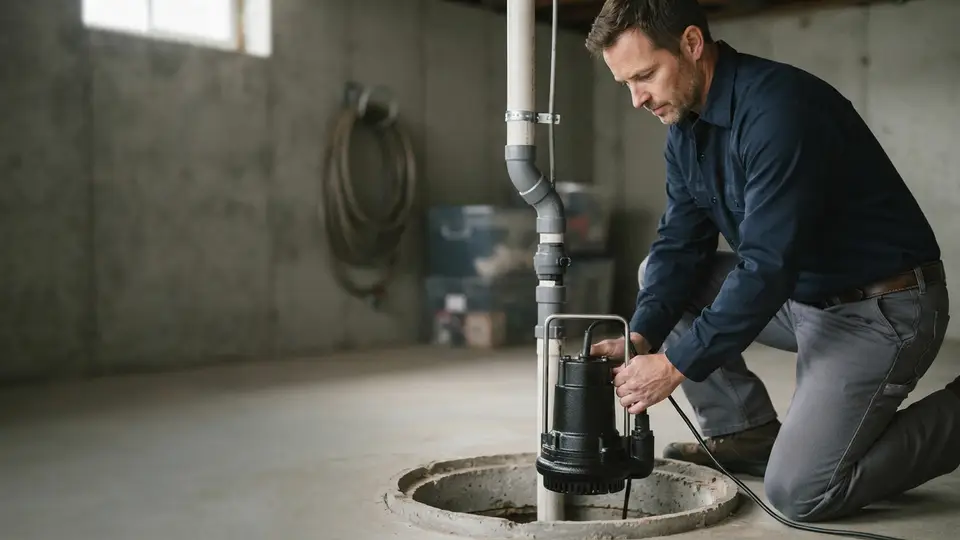
Submersible pump
How it works: Sealed pump sits in the pit
Best for: Crawl spaces and basements
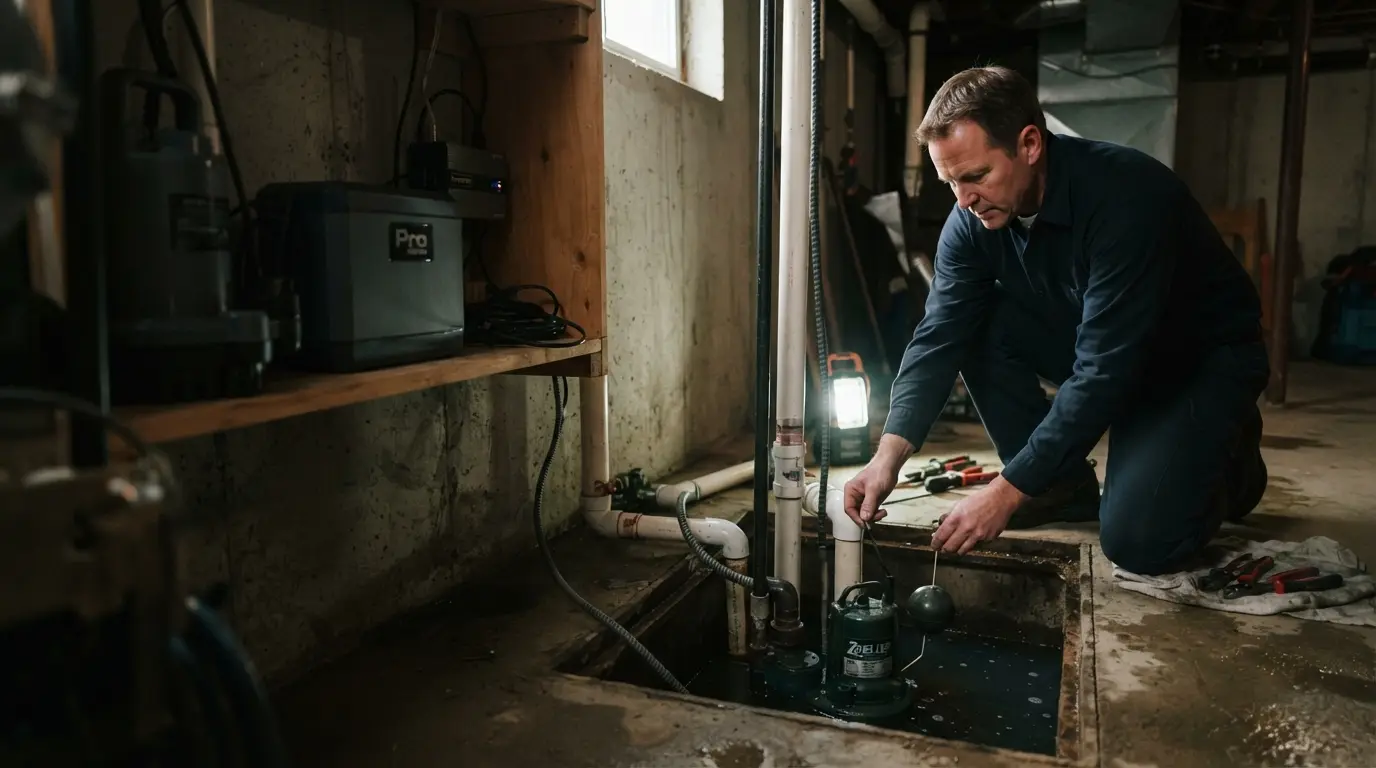
Crawl space flooding after storms, or a sump pump that quit in heavy rain? We handle sump pump repair and installation in Mississippi. Basements are uncommon here, but crawl spaces, raised homes, low lots and some basements in hilly areas still collect water. Mississippi gets some of the heaviest rainfall in the country, along with tropical storms and river flooding. Our plumbers repair failed pumps, install new pits and pumps sized for your space and add battery backups for storm outages.
The service
A sump pump collects water in a pit and pumps it away from the house. In Mississippi, most pumps serve crawl spaces under raised and pier-and-beam homes, the few basements in hilly towns like Vicksburg and Natchez, and low garages or utility rooms. Standing water in a crawl space raises humidity, rots wood framing and invites termites and mold, so keeping it dry matters even without a basement.
Sump pump options we install
How it works: Sealed pump sits in the pit
Best for: Crawl spaces and basements
How it works: Motor above the pit
Best for: Shallow pits
How it works: Second pump on a battery
Best for: Storm outages
How it works: Perimeter drain to a pit
Best for: Chronically wet crawl spaces
Why Mississippi
Mississippi receives a lot of rain each year, often in intense storms.
Hurricanes and tropical systems bring days of rain and power outages.
Dense clay sheds water toward foundations and crawl spaces.
Delta and river towns have high water tables during flood seasons.
Warning signs
Our process
We test the float, switch and motor, clean the pit and intake and check the check valve and discharge line.
We dig and line a pit at the low point, set a properly sized pump, install a check valve and route discharge away from the house.
We add a battery-powered backup pump with a charger and alarm, so water keeps moving during outages.
Typical cost
Prices are estimates only until we see the space. These factors matter:
You approve a written price before we begin.
Get a written price: (833) 733-2357A switch costs less than a new pump.
Digging in a tight crawl space takes time.
Perimeter drains add labor and materials.
Battery backups and alarms.
Long or buried lines add work.
Benefits
Framing stays dry.
The house feels more comfortable.
Backups run in outages.
Dry spaces attract fewer termites.
Older homes in Jackson (74,871 homes), Meridian and Columbus often sit on crawl spaces where rainwater collects after storms. Standing water there feeds mold and wood rot and makes the whole house damp. We install a pit at the low point, often with a perimeter drain, and a pump that removes water before it soaks the soil under the floor. We work with crawl space encapsulation contractors when owners seal the space.
Vicksburg (10,478 homes), Natchez and Greenville sit along or near the Mississippi River, and some homes in the hills have basements. High river stages raise groundwater, and heavy rain runs downhill toward foundations. We size pumps for flood season, add backups and route discharge so it does not flow back toward the house.
On the coast, Gulfport (33,837 homes), Biloxi and Pascagoula have a high water table, heavy rain and tropical storms. Many raised homes have open space underneath, but enclosed ground-level areas and garages can collect water. Storms often knock out power for days. We install pumps with battery backups and help owners prepare before hurricane season.
Some newer homes in Southaven (median year 1998), Oxford and Tupelo are built on sloped lots with partial basements or low garages. Water from uphill lots and heavy rain can collect at the foundation. We install sump pits and pumps where water gathers and recommend grading and drainage changes with your landscaper when needed.
Sump discharge should go far enough from the house that it does not soak back into the clay around the foundation. Many cities do not allow discharge into the sanitary sewer. We route discharge to the yard, a ditch or a storm drain where allowed, and add extensions or buried lines so the water stays away from the house.
In Mississippi's humid climate, a wet crawl space is more than a nuisance. Moisture rising into the house makes air conditioning work harder, encourages mold on floor joists and attracts termites. In Hattiesburg (23,300 homes) and other towns with many older raised homes, a working sump pump combined with a vapor barrier keeps the space under the house dry.
Nobody checks a crawl space every day, so a failed pump can go unnoticed for weeks while water sits under the house. A high-water alarm in the pit, or a Wi-Fi monitor that sends a phone alert when the pump stops or water rises, solves that. We install alarms with new pumps and recommend them for any home where the pump is out of sight.
Check that the pump is plugged in and the breaker or GFCI outlet has not tripped. Lift the float gently to see if the pump runs.
Do not enter a flooded crawl space with electrical equipment nearby. Move stored items to higher ground and call us.
Replacing a sump pump usually needs no permit, but new discharge connections or plumbing changes may, depending on your city. We check local rules and pull permits when needed. Our plumbers hold the licenses each job requires.
Why choose us
What you can count on every time one of our plumbers comes to your door.
Every job is handled by a plumber who holds the license your state or city requires, backed by liability insurance.
Our plumber explains the problem and the options, and you approve a written price before any work begins.
Burst pipes, sewage backups and failed water heaters get priority scheduling, including nights and weekends.
We pull permits when the job needs one and schedule the inspection, so the work holds up when you sell.
Repairs and installations come with a written warranty on labor, on top of the manufacturer's warranty on parts.
Our pages and plumbers account for your area's water, soil, climate and the age of the homes around you.
Service area
We repair and install sump pumps in 427 Mississippi communities, including Tupelo (17,578 homes), Columbus (11,850 homes) and Greenville (13,918 homes). Find yours:
It depends on access, pit location, pump size and the discharge route. We give you a written price before any work begins.
Yes, especially on the coast and anywhere storms knock out power. A backup keeps water moving when the main pump cannot run.
Tight crawl spaces take more time to work in, and perimeter drains add materials. We explain the costs up front.
We look at how fast water collects, how high it must be lifted and how far it travels, then pick a pump to match.
We dig and line the pit, set the pump, install a check valve and discharge line and test it with water.
If water collects in your crawl space or low areas after rain, a pump helps keep the house dry and healthy.
It can cause mold, rot and electrical hazards. Stay out if wiring is nearby and call us.
Only after unplugging the pump, and never while standing in water near electrical connections.
A replacement takes a few hours. A new pit and drain in a crawl space can take a day or more.
Often seven to ten years, less if they run constantly in wet seasons.
Before spring storms and before hurricane season, by pouring water into the pit.
Well away from the house, to the yard, a ditch or a storm drain where allowed, not into the sanitary sewer.
Stay safe first. Once it is safe, call us and we will repair or replace the pump.
Yes. Removing standing water from a crawl space lowers moisture rising into the house.
A drier crawl space is less attractive to termites, though you still need regular pest inspections.