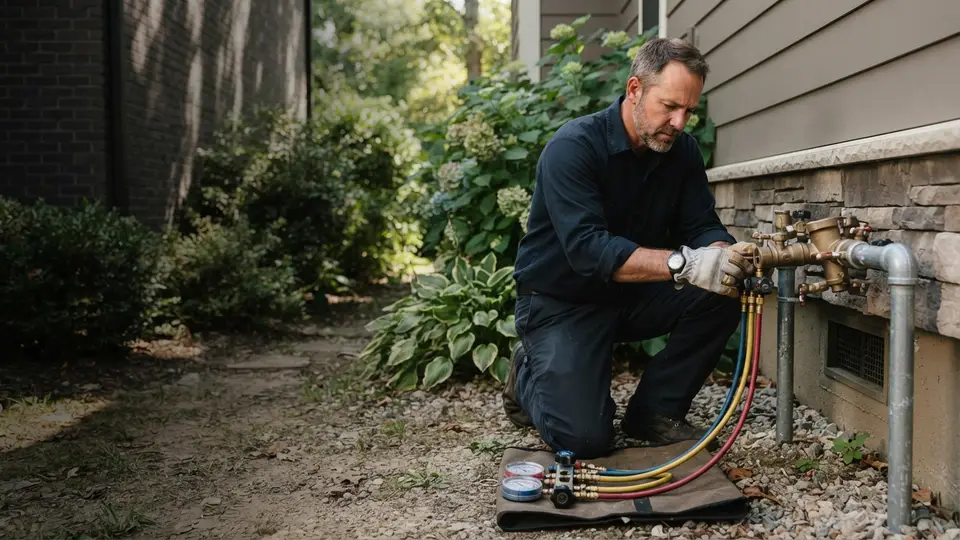
Pressure vacuum breaker (PVB)
Where used: Lawn sprinklers
Notes: Must be above the highest head; needs winterizing
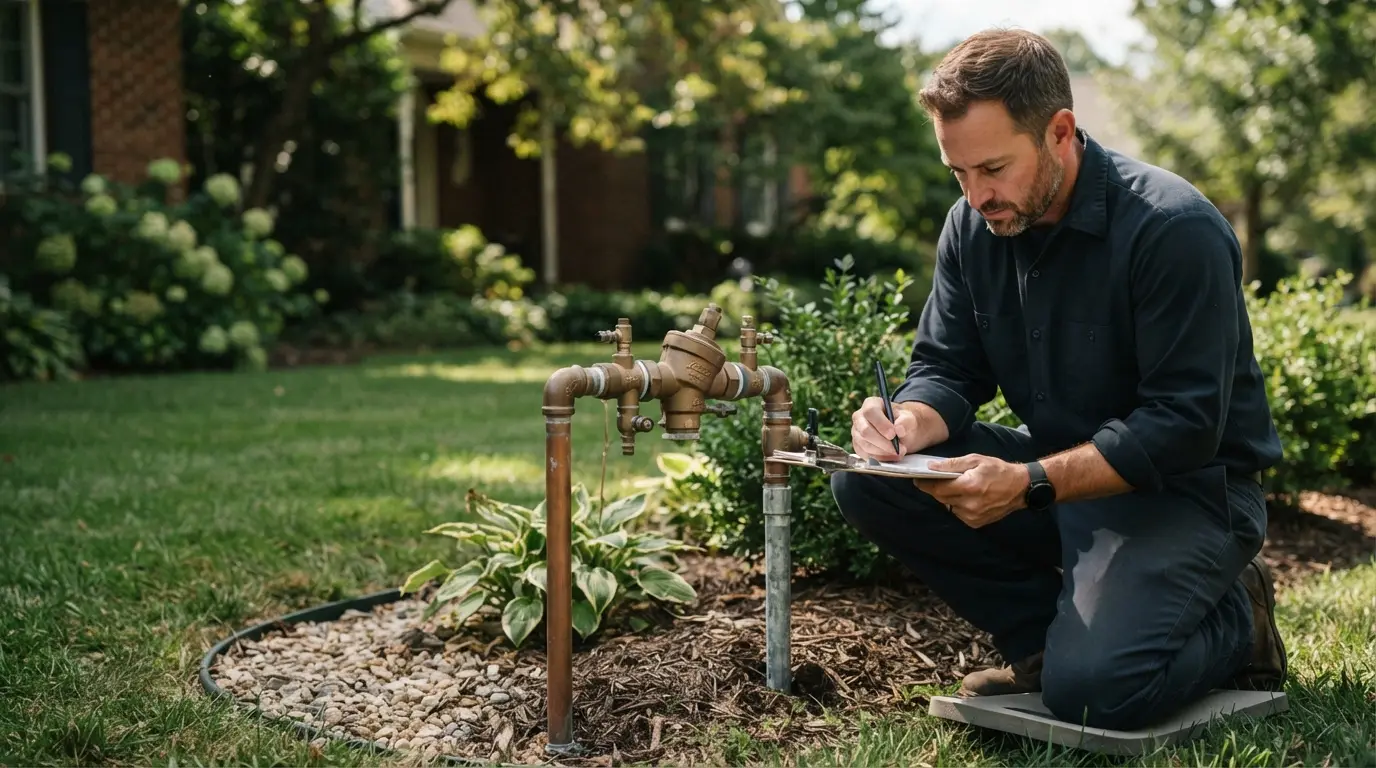
Annual test notice from your water system, or a sprinkler backflow leaking? We do backflow testing and prevention in Idaho for homes, businesses and HOAs. Idaho public water systems run cross-connection control programs that require approved backflow assemblies on certain connections and regular tests. Lawn sprinklers are the big one here, especially where homes have both city water and pressurized irrigation. We test, install, repair and winterize assemblies, and send results to your water system where required.
The service
Backflow is water flowing the wrong way, from a home or business back into the public supply. A pressure drop from a main break or firefighting can pull water back; a pump can push it. Sprinkler systems are a common risk because their lines sit in soil with fertilizer, pesticides and standing water. A backflow assembly stops that flow. Under Idaho Department of Environmental Quality rules, each public water system decides which connections need protection and how often assemblies are tested.
Common backflow devices
Where used: Lawn sprinklers
Notes: Must be above the highest head; needs winterizing
Where used: Fire lines, some irrigation
Notes: Often in a box below ground
Where used: High-hazard commercial uses
Notes: Strongest protection; needs drainage
Where used: Outdoor faucets
Notes: Simple, low-cost protection
Why Idaho
Above-ground sprinkler assemblies left full of water crack in the first hard freeze. It is the most common repair we make each spring.
Sand, scale and hard water deposits keep check valves from sealing.
Seals and springs wear with time and temperature swings.
Water hammer from fast-closing sprinkler valves stresses devices.
Warning signs
Our process
Our certified tester connects gauges to the test cocks, checks each valve and relief opening against required values, records the results and submits the report where required.
We install the assembly your water system requires, where it can be tested, drained and protected from freezing, with a permit.
We rebuild failed assemblies with new checks, seals and springs, or replace cracked bodies, then retest.
Typical cost
You approve a written price before work begins.
Get a written price: (833) 733-2357Several at one site cost less per device.
Large RP assemblies take longer.
A rebuild kit costs less than a new body.
Blowouts and spring startups are priced separately.
New installations need one.
Benefits
Your sprinklers cannot contaminate the supply.
Tests submitted on time.
Proper winterizing saves replacements.
Reports kept for every assembly.
Before the first hard freeze, the sprinkler system must be shut off, the backflow drained and the lines blown out. We close the supply, open test cocks to drain the assembly, blow out the zones and leave valves in the right positions. In spring we restore the system and test the assembly. Skipping this step is the most common reason Idaho owners replace a backflow device.
Many Treasure Valley subdivisions in Meridian (49,586 homes), Nampa, Caldwell and Eagle have pressurized irrigation from canal water for lawns, separate from drinking water. The two systems must never connect. A cross-connection, such as a hose or pipe joining them, can push canal water into drinking water lines. We trace piping, separate any cross-connections and install the protection your water system requires.
Restaurants, clinics, car washes, food processors and buildings with fire sprinklers in Boise (106,279 homes), Twin Falls and Idaho Falls need backflow protection and regular tests. We test every assembly on site in one visit, keep records and remind you before the next test is due.
In Magic Valley farm communities such as Jerome (4,432 homes) and Burley, wells and water lines feed livestock troughs, sprayers and chemical injection systems. These connections need strong protection to keep chemicals and animal waste out of drinking water. We install and test the assemblies that fit each use.
Homeowner associations run sprinklers for parks, entrances and common areas, often with several assemblies. We test them together, winterize and restart them each season and give the board a single report.
Fire sprinkler systems hold stagnant water that must not mix with drinking water. Their assemblies are tested like others and are often in heated rooms or vaults to prevent freezing. We coordinate with the fire protection contractor when a system must be shut down.
A sprinkler PVB must sit above the highest head, which puts it outdoors and exposed to cold. In Idaho Falls (26,531 homes) and Coeur d'Alene, an insulated cover helps during fall cold snaps before winterizing, but it does not replace draining. When we install a new system, we place the assembly where it is easy to drain, test and protect.
Spring is the busiest time for sprinkler backflows. We open the supply slowly to avoid water hammer, check the assembly for cracks and leaks from winter, test it and submit results if your water system requires it. Combining startup with the annual test saves a visit and catches freeze damage before it floods a yard or basement.
When a backflow assembly is installed on the main service line, the home becomes a closed system. Water heated in the tank expands and has nowhere to go, so the water heater relief valve may drip or pipes may bang. An expansion tank at the water heater solves it, and we check for one whenever we install a device on the main line.
Water systems track every assembly they require, and a missed test can lead to a notice and, eventually, a service shutoff. We keep a record of each device we test, with its location, size, serial number and results, and we send a reminder before the next test is due. For businesses and HOAs with several assemblies, that list makes it easy to show the water system that everything is current.
If a sprinkler backflow is spraying, close the irrigation shutoff, usually in the basement, crawl space or a box near the meter.
Find your test notice and clear access to the assembly. Then call us.
New backflow assemblies need a permit and must be types your water system approves. Tests are done by certified testers. Our plumbers hold the licenses Idaho requires.
Why choose us
What you can count on every time one of our plumbers comes to your door.
Every job is handled by a plumber who holds the license your state or city requires, backed by liability insurance.
Our plumber explains the problem and the options, and you approve a written price before any work begins.
Burst pipes, sewage backups and failed water heaters get priority scheduling, including nights and weekends.
We pull permits when the job needs one and schedule the inspection, so the work holds up when you sell.
Repairs and installations come with a written warranty on labor, on top of the manufacturer's warranty on parts.
Our pages and plumbers account for your area's water, soil, climate and the age of the homes around you.
Service area
We test and install backflow assemblies in 236 Idaho communities. Choose yours:
It depends on the number, size and type of assemblies. Testing several at one site lowers the cost per device.
A cracked body usually means a new assembly. Size and type set the price, which you approve first.
Yes. Blowouts and spring startups are priced on their own, and we often combine them with the annual test.
Our certified tester attaches gauges to the test cocks and checks each valve and relief opening.
Yes, where required. You also get a copy.
Yes. We drain the backflow, blow out the zones and restart the system in spring.
Yes. It can draw fertilizer, pesticides or bacteria into drinking water lines.
Never. Canal irrigation water and drinking water must stay completely separate.
Usually under an hour per assembly.
Your water system sets the schedule, usually yearly. Check your notice.
Before the first hard freeze in fall, which comes early in many parts of Idaho.
When they fail a test or show wear. Many go several years between rebuilds.
Close the irrigation shutoff and call us. We repair it promptly.
Public water systems, under Department of Environmental Quality rules.
Water left in an outdoor assembly freezes and splits the body.