Vitrified clay
Era: Before about 1970
Common trouble: Roots at joints, cracking
Main line clogging every spring, or sewage in the basement drain? We handle sewer line repair and replacement in Idaho for homes on city sewer. Older Idaho neighborhoods still run on clay and cast iron laterals laid decades ago. Roots from big shade trees split the joints, frost heave and settling create sags, and cast iron rusts through. We put a camera in the line first, find the exact problem and repair only what needs repair, by trench or by trenchless methods where they fit.
The service
The lateral carries waste from your house to the city main. In most Idaho cities the owner is responsible for it, often all the way to the main in the street. 39% of Idaho homes in our data predate 1980, rising to 66% in Pocatello, 66% in Blackfoot and 82% in Rupert. Many of those homes still have their original lateral.
Sewer pipe we find in Idaho
Era: Before about 1970
Common trouble: Roots at joints, cracking
Era: 1940s to 1980s
Common trouble: Rust, scale, split bottoms
Era: Some 1950s and 1960s homes
Common trouble: Deforms and collapses
Era: Newer homes
Common trouble: Joint separation, sags from settling
Why Idaho
Mature cottonwoods, silver maples and willows grow aggressive roots that find every joint in clay and cast iron pipe.
Deep frost and settling backfill shift shallow lines, creating sags where waste collects and joints that open.
Cast iron rusts from the inside, and hard water scale narrows it further.
Basalt on the Snake River Plain and rocky soil elsewhere can press against pipe and make repairs harder.
Warning signs
Our process
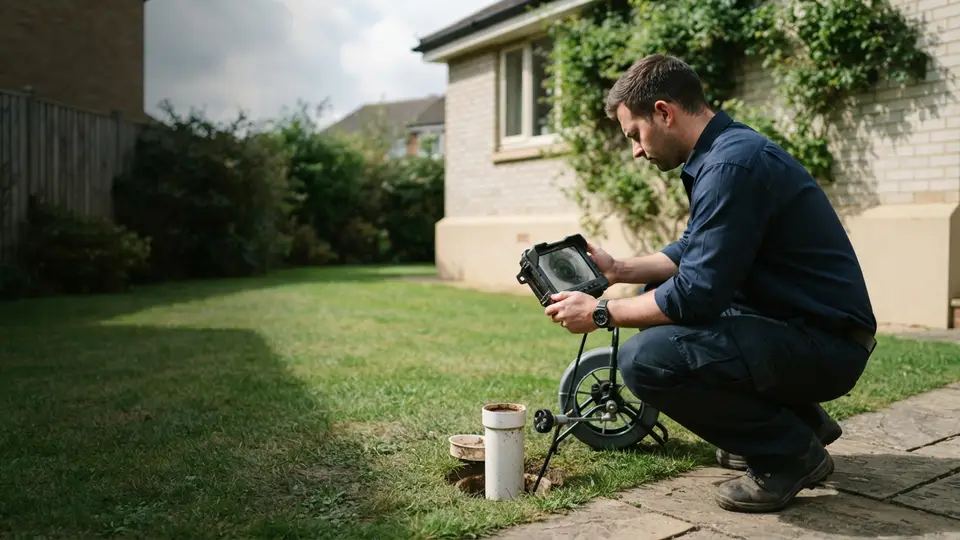
We run a camera from the cleanout to the main, locate each defect from the surface and show you the video.
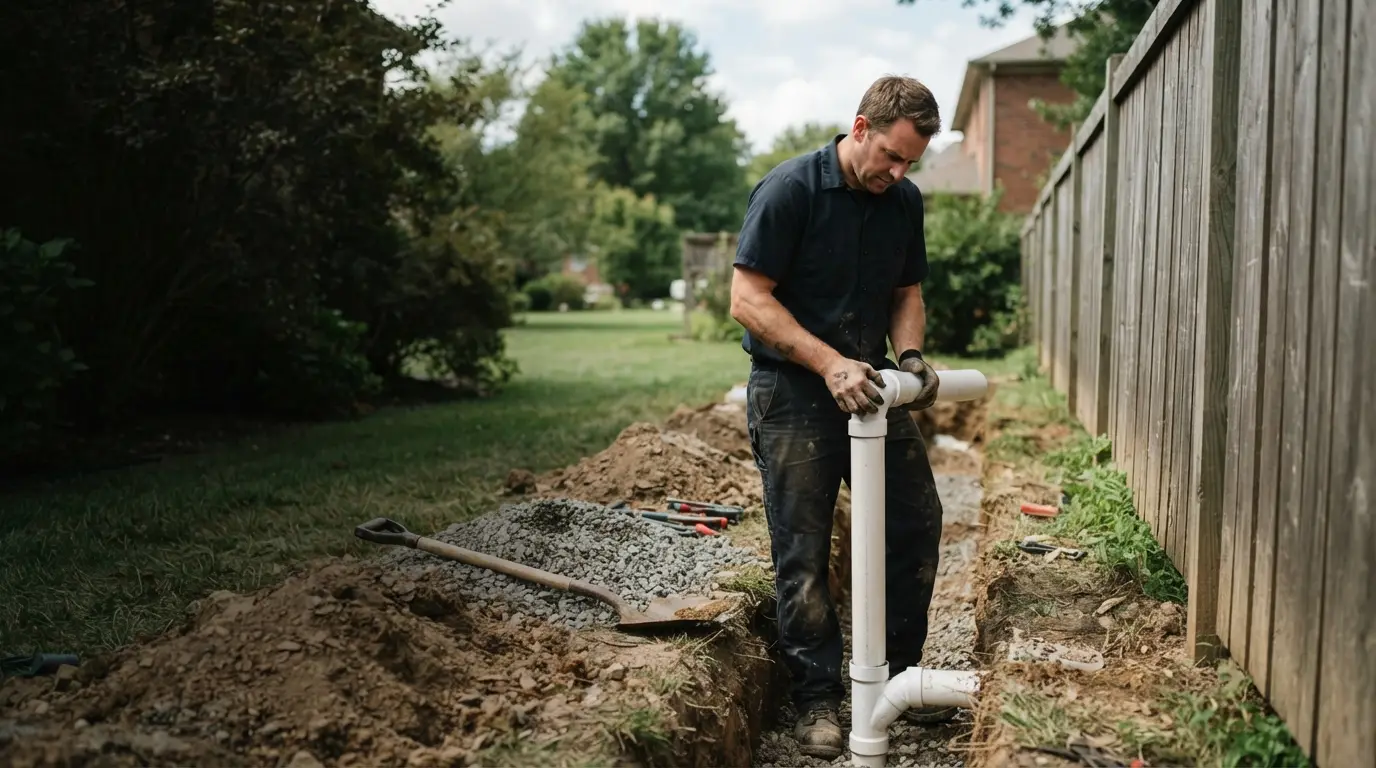
We dig at the damaged point and replace that section, or install a liner patch where digging is costly.
We replace a failed lateral by open trench, pipe bursting or lining, depending on depth, soil and what is above it.
Typical cost
We show you the camera findings, and you approve a written price before we dig.
Get a written price: (833) 733-2357A spot repair costs far less than a full lateral.
Deep lines, rock and frozen ground slow digging.
Trenchless methods save restoration but need special equipment.
Connections at the main may need a city permit and traffic control.
Driveways, sidewalks and landscaping add cost.
Benefits
Fixing the defect stops the cleaning cycle.
A sound lateral keeps sewage out.
Video and permits help at resale.
New pipe resists roots and corrosion.
Lining installs a new resin pipe inside the old one, and pipe bursting pulls new pipe through the old path. Both save driveways, mature landscaping and sidewalks. They do not fix every line: collapsed sections and severe sags still need digging. We recommend a method after the camera shows the line's condition.
Frozen ground slows excavation, and some cities limit street cuts in winter. When a line fails in January, we often clear it to keep the house usable, then plan the permanent repair. Trenchless methods help in winter because they need only small access pits.
In Wallace, the median home was built in 1938, and in Kellogg in 1950. Steep lots, narrow streets and old pipe make sewer work there slow. Local rules about soil in this historic mining area can also affect excavation, so we check requirements before we dig.
Homes with basements in Idaho Falls (26,531 homes) and Twin Falls are the first to flood when a lateral clogs or the city main surcharges. A backwater valve on the lateral lets waste out but stops it from flowing back. We install them where the layout and code allow.
A sewer camera inspection before closing tells buyers what they are getting, especially in older parts of Nampa (40,529 homes) and other growing cities with older cores. We provide video and a written summary you can share.
Many older Idaho homes have no outdoor cleanout, so every clog means pulling a toilet or working through a basement fitting. When we repair or replace a lateral, we add a two-way cleanout near the house where code allows. It makes future cleaning and camera work faster and cheaper, and it gives the city or a future owner a clear access point to the line.
In much of southern Idaho, yards are watered with canal irrigation water during summer. Heavy watering over a cracked lateral can wash soil into the pipe and speed root growth. If clogs get worse every irrigation season, the lateral likely has open joints, and a camera inspection will show where.
Stop using water and flushing toilets. Keep people and pets away from any sewage in the basement.
Do not open the cleanout cap while the line is full, since sewage can spray out. Then call us.
Sewer lateral repair and replacement need a plumbing permit, and work at the main may need a city right-of-way permit. We pull both and schedule inspections. Our plumbers hold the licenses Idaho requires.
We inspect and repair sewer lines in 236 Idaho communities. Choose yours:
Why choose us
What you can count on every time one of our plumbers comes to your door.
Every job is handled by a plumber who holds the license your state or city requires, backed by liability insurance.
Our plumber explains the problem and the options, and you approve a written price before any work begins.
Burst pipes, sewage backups and failed water heaters get priority scheduling, including nights and weekends.
We pull permits when the job needs one and schedule the inspection, so the work holds up when you sell.
Repairs and installations come with a written warranty on labor, on top of the manufacturer's warranty on parts.
Our pages and plumbers account for your area's water, soil, climate and the age of the homes around you.
Service area
Boise has 106,279 homes and a median build year of 1986, but its North End and East End hold much older housing. Pocatello (24,135 homes) and Lewiston, where 66% of homes predate 1980, have even more original laterals. In these areas we expect roots and cast iron problems and bring the equipment for both.
It depends on depth, the length of damaged pipe, soil, frozen ground and what sits above the line. We price it in writing after a camera inspection.
Often, once you count restoring driveways and lawns. Short, shallow runs in open yards can be cheaper to dig.
In many Idaho cities the owner is responsible to the main. Your city can confirm, and we include that work in the price when needed.
We run a camera through the cleanout, locate each defect from the surface and mark it, then show you the video.
Yes, when the rest of the pipe is sound. Widespread damage usually makes replacement the better value.
Yes. We pull the plumbing permit and any city right-of-way permit and schedule the inspections.
Yes. It carries bacteria. Keep away, avoid contact and stop using water until the line is cleared.
Yes, through dry traps or broken pipe. Run water in unused drains and call us if the smell remains.
A spot repair is often done in a day; a full replacement takes one to several days.
Yes, though frozen ground slows digging. We often clear the line first and plan the permanent repair.
Keep trees away from the line and replace cracked pipe. Root cutting helps only for a while.
Every few years for clay and cast iron, and before buying or selling.
Stop using water, stay away from it and call us. Backups get priority scheduling.
Settling backfill and frost movement shift the pipe, leaving low spots where waste collects.
In a basement home, often yes. It helps stop city sewer surcharges from flooding the basement.