Water softener
What it treats: Hardness minerals that cause scale
Good fit: Southern Idaho city and well water
White scale on every faucet, or well water you are unsure about? We install water softeners and filtration in Idaho for city water and private wells. Much of southern Idaho has hard groundwater that scales heaters and fixtures, and many rural wells carry iron, nitrates or naturally occurring arsenic. We test first, then fit the right system: a softener for hardness, filtration for taste and iron, or reverse osmosis for drinking water, sized for your household and installed to code.
The service
Most Idaho water comes from groundwater. The Eastern Snake River Plain Aquifer serves Idaho Falls (26,531 homes), Pocatello, Twin Falls and much of the Magic Valley, and that water is typically hard. Treasure Valley water is often moderately hard, and North Idaho's Rathdrum Prairie Aquifer supplies Coeur d'Alene. City water is treated and tested by the supplier; private wells are the owner's responsibility.
Systems we install
What it treats: Hardness minerals that cause scale
Good fit: Southern Idaho city and well water
What it treats: Sediment, chlorine taste, iron
Good fit: Wells and city water
What it treats: Arsenic, nitrates, dissolved solids
Good fit: Drinking water at the kitchen sink
What it treats: Bacteria in well water
Good fit: Wells with a positive bacteria test
Why Idaho
Groundwater moving through volcanic rock and sediment picks up calcium and magnesium.
In farm areas, fertilizer and animal waste can raise nitrate levels in shallow wells, a concern for infants.
Some wells, particularly in southwest Idaho, have naturally occurring arsenic.
Some wells carry iron that stains fixtures or sulfur that smells of rotten eggs.
Warning signs
Our process
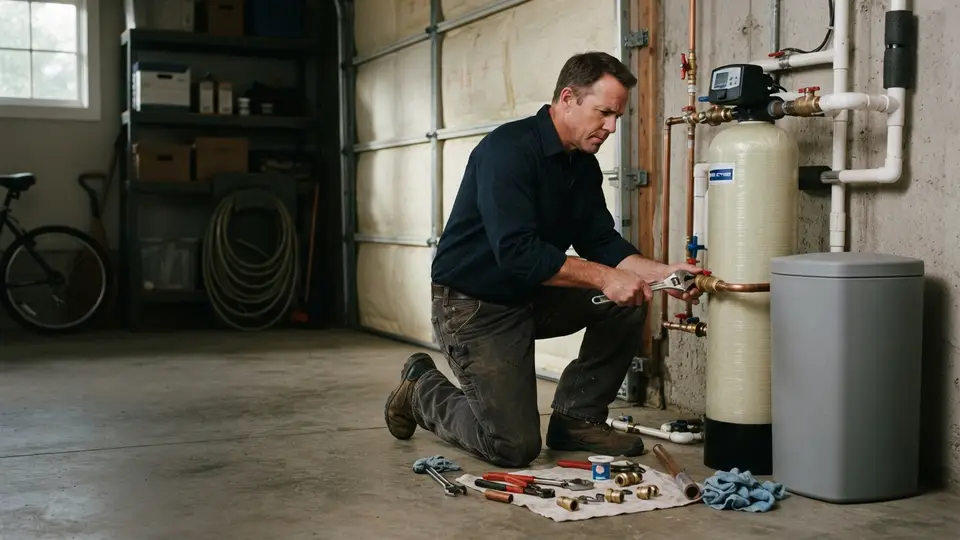
We test hardness, size the softener to your household, install it with a bypass and drain, and set efficient regeneration.
We install sediment, carbon or iron filters at the main line with valves for easy changes.
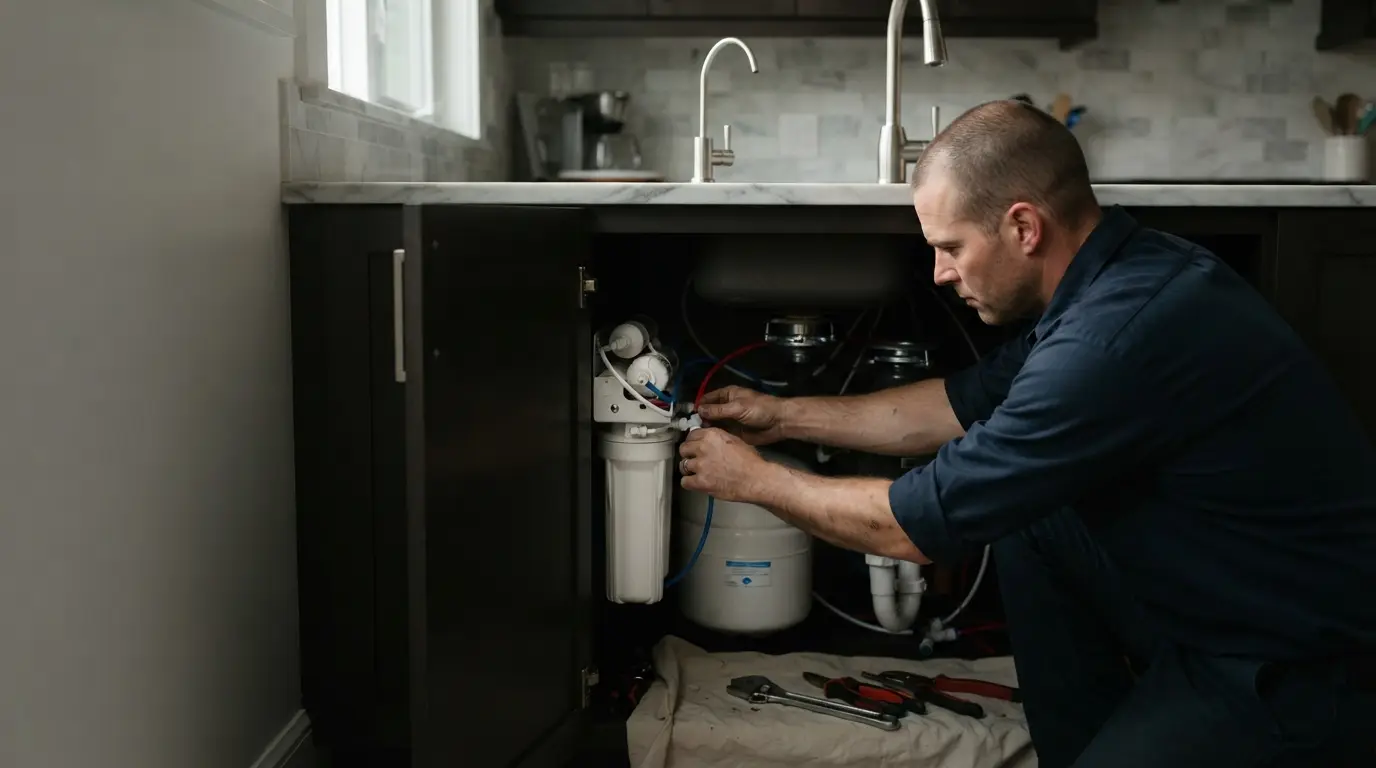
We mount a reverse osmosis unit under the kitchen sink with its own faucet, which reduces arsenic, nitrates and many dissolved solids in drinking water.
Typical cost
You approve a written price before installation.
Get a written price: (833) 733-2357The problem decides the equipment.
Multi-stage and specialty filters cost more.
Larger homes need larger units.
Loop availability, drains and space affect labor.
Salt, filters and membranes need replacing.
Benefits
Heaters, fixtures and appliances last longer.
Reverse osmosis reduces arsenic and nitrates.
Iron filters stop orange marks.
Scale-free heaters work efficiently.
Twin Falls (21,838 homes), Jerome, Burley and Rupert sit over the aquifer, and hardness is the norm. Many homes there also have private wells near farmland. We test for hardness, nitrates and bacteria, and often install a softener for the house and reverse osmosis for drinking water.
Idaho does not require routine testing of private household wells, so owners need to do it themselves. Test at least yearly for bacteria and nitrates, and test once for arsenic and other local concerns. Your regional health district can point you to accredited labs. We read the results with you and recommend only the treatment that addresses what was found.
Hard water is the main reason heaters fail early in Pocatello (24,135 homes), Blackfoot and Idaho Falls. A softener stops scale in tanks and tankless units, cuts fuel waste and reduces the need for flushing and descaling.
Boise (106,279 homes), Kuna and Mountain Home receive water that ranges from moderately hard to hard depending on the source well. Many owners want a softener for appliances and a carbon or reverse osmosis filter for taste. We test at the tap before recommending anything.
Coeur d'Alene (26,142 homes) and Post Falls draw from the Rathdrum Prairie Aquifer, and many rural North Idaho homes use wells or lake water. Some need only a sediment filter; lake-water systems need filtration and disinfection. We match the system to the source.
Softener regeneration adds water to a septic system. Modern, efficient softeners that regenerate on demand keep that volume low. We size and set them with your septic tank in mind.
Some owners prefer a salt-free conditioner, which changes how minerals behave rather than removing them. These can reduce scale in some situations but do not soften water, and results vary with very hard water. If you are on a low-sodium diet, a reverse osmosis faucet for drinking water alongside a standard softener is another choice. We explain the trade-offs honestly before you buy.
Iron leaves orange stains in toilets, sinks and laundry, and it can foul a softener over time. Sulfur gives water a rotten-egg smell, sometimes only from the hot tap. Iron filters with air injection or oxidizing media handle both in many wells. When the smell is only in hot water, it often comes from the water heater anode reacting with the water, and replacing the anode can fix it without whole-house treatment.
Dishwashers, washing machines, ice makers and coffee makers all suffer from scale. Softened water lets them work as designed and cuts the soap and detergent you need. Glass shower doors and fixtures stay clear longer, and cleaning gets easier. Many owners notice the difference in laundry within the first week, with softer towels and brighter colors.
A softener is sized by water hardness and how much water the household uses. Too small, and it regenerates constantly, wasting salt and water; too large, and the resin can sit unused. In very hard areas such as Twin Falls, Burley and Rupert, we size for hardness first, then set the valve to regenerate only when needed.
Some owners only want better water for drinking and cooking. A reverse osmosis system at the kitchen sink is a cost-effective way to get it, and it can also supply the refrigerator. In homes near farmland around Jerome and Rupert, where nitrates may be a concern in private wells, reverse osmosis is often the first system we install, sometimes with a softener ahead of it to protect the membrane. We confirm results with a follow-up test so you know it is working.
If a well test shows high nitrates or bacteria, use bottled water for drinking, cooking and infant formula until treatment is installed.
Gather any recent water test or your city's water quality report, then call us.
Installations that change plumbing may need a permit, which we pull. Our plumbers hold the licenses Idaho requires.
Why choose us
What you can count on every time one of our plumbers comes to your door.
Every job is handled by a plumber who holds the license your state or city requires, backed by liability insurance.
Our plumber explains the problem and the options, and you approve a written price before any work begins.
Burst pipes, sewage backups and failed water heaters get priority scheduling, including nights and weekends.
We pull permits when the job needs one and schedule the inspection, so the work holds up when you sell.
Repairs and installations come with a written warranty on labor, on top of the manufacturer's warranty on parts.
Our pages and plumbers account for your area's water, soil, climate and the age of the homes around you.
Service area
We install and service water treatment in 236 Idaho communities. Choose yours:
It depends on hardness, household size and installation. We test first and give a written price.
Mainly filter and membrane changes, usually once or twice a year.
Efficient demand-regenerating softeners use little water. Savings on heaters and soap often offset it.
Yes. We test hardness and basics on site and recommend a lab test for wells.
Yes. We add the plumbing needed, usually near the main line or water heater.
Yes. We repair valves, replace resin and filters and adjust settings.
High nitrates are a particular risk for infants. Use bottled water for formula until treated.
It reduces many forms of arsenic. Testing after installation confirms results.
Most softeners and filters take a few hours.
Right after the first regeneration and flushing, usually the same day.
Check monthly and keep the tank at least partly full.
At least yearly for bacteria and nitrates, and after floods or well work.
Stop drinking it, use bottled water and call us or your water supplier.
Much of southern Idaho has hard groundwater; North Idaho is often moderately hard.
Not when sized and set efficiently. We account for your tank when installing.