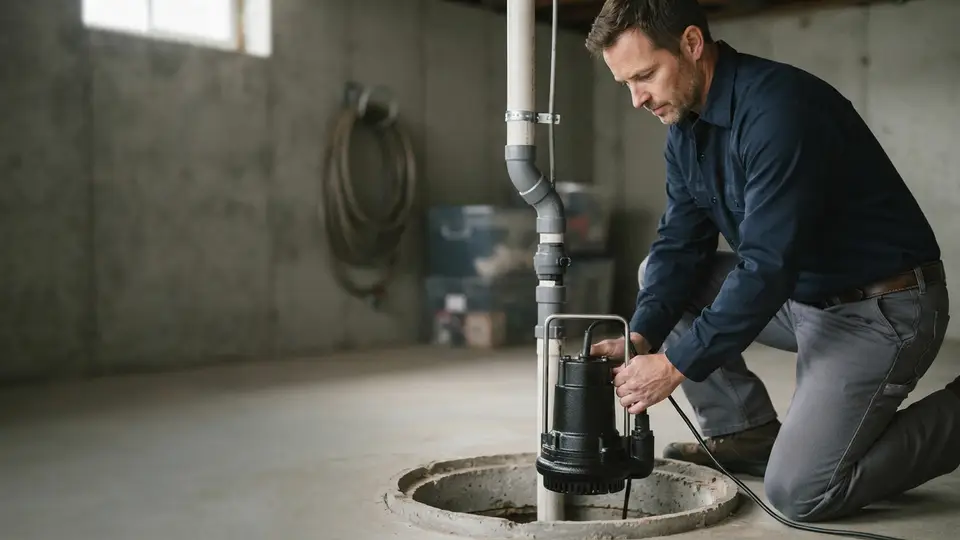
Submersible sump pump
Where: Most basement pits
Points to know: Quiet; sits in the water
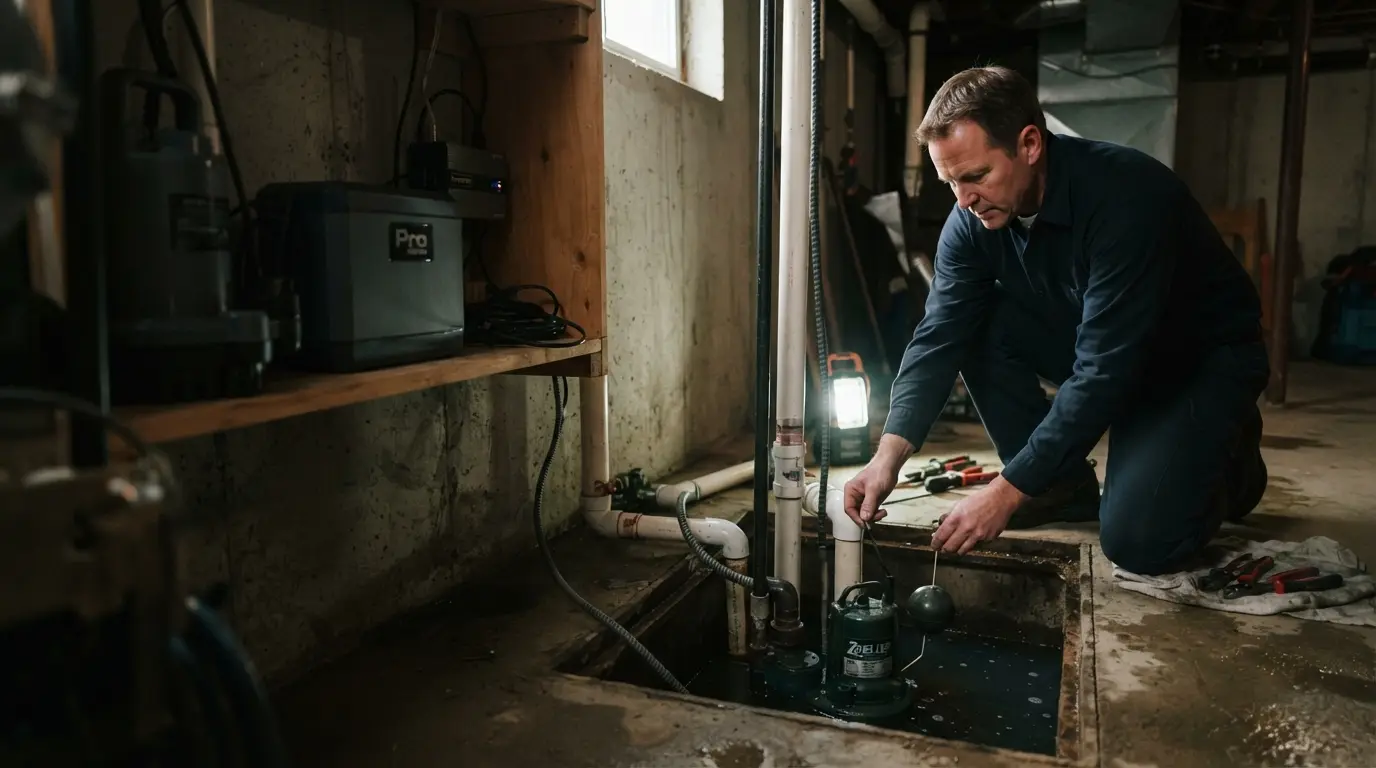
Basement taking water during snowmelt, or a sump pump that just hums? We do sump pump repair and installation in Idaho for homes and businesses. Basements are common in eastern Idaho and North Idaho, and spring snowmelt, irrigation season and rising groundwater push water toward foundations. In winter, discharge lines freeze and pumps burn out trying to push against ice. We repair and replace pumps, add battery backups and set up discharge lines that keep working when it is ten below.
The service
A sump pump collects groundwater from drain tile around the foundation and pumps it out before it reaches the basement floor. Basement homes are common in Idaho Falls (26,531 homes), Ammon, Rexburg and Pocatello, and in North Idaho towns such as Sandpoint and Coeur d'Alene. In the Treasure Valley, fewer homes have basements, but those that do often sit near canals or a high water table.
Pumps we service
Where: Most basement pits
Points to know: Quiet; sits in the water
Where: Small or shallow pits
Points to know: Motor above the pit, easy to service
Where: Paired with the main pump
Points to know: Runs during power outages
Where: Basement bathrooms below the sewer
Points to know: Sealed, vented basin with alarm
Why Idaho
Water left in a discharge line freezes, and the pump runs against the blockage until it burns out.
A fast spring melt or rain on snow sends a surge of groundwater that overwhelms small or worn pumps.
Canal water and heavy lawn watering raise groundwater in summer, keeping some pumps running for months.
In dry stretches, a pump may sit for months, and floats and seals stick when it is finally needed.
Warning signs
Our process
We test the motor, float, check valve and discharge line, clean the pit and replace the failed part.
We size the pump to the inflow and lift, set it in a clean pit with a sealed lid, add a check valve and alarm and run a discharge that drains between cycles.
We add a second pump with its own float and battery so the pit keeps draining in outages.
Typical cost
You approve a written price before work starts.
Get a written price: (833) 733-2357A float costs less than a pump.
Higher lift and capacity cost more.
Cutting a pit into a basement floor adds work.
A second pump and battery add cost.
Long or buried runs add labor.
Benefits
Water leaves before it reaches the floor.
Discharge lines built not to freeze.
Backups keep running.
Dry basements stay healthy.
The most common winter failure we see is a frozen discharge. We slope lines so they drain completely after each cycle, keep buried sections below frost depth or above ground where they can drain, and add a freeze-relief fitting near the house that lets water escape if the outer line freezes. Pointing the outlet away from walkways also keeps ice off sidewalks and driveways.
Idaho Falls, Ammon (6,720 homes), Rexburg and Blackfoot sit near the Snake River and its canals. Groundwater rises in spring and during irrigation season, and many basements rely on their sump pumps for months each year. We recommend a heavy-duty pump, a backup and a yearly check before snowmelt.
Sandpoint (4,326 homes), Coeur d'Alene and Bonners Ferry get more precipitation than southern Idaho, and rain-on-snow events can flood basements quickly. Lake and river homes often have higher water tables. We size pumps for those surges and make sure backups and alarms work.
Finished basements often add a bathroom below the sewer line, which needs an ejector pump in a sealed, vented basin. When it fails, sewage backs up into the basement. We repair and replace ejectors, basins and alarms.
Spring windstorms and winter storms can knock out power just when groundwater is highest. A battery backup keeps pumping for hours, and a water-level alarm warns you before the basement floods. We test both on every visit.
Cabins and second homes around McCall (4,562 homes) and Island Park sit empty during snowmelt, when pumps work hardest. A Wi-Fi alarm on the pit and a backup pump let owners know about trouble before the basement floods.
Much of the water a sump pump handles starts on the roof. Downspouts that dump next to the foundation, and soil that slopes toward the house, send snowmelt straight into the drain tile. Extending downspouts and fixing grading can cut pump run time in half. In older Pocatello (24,135 homes) and Chubbuck neighborhoods, we often recommend these simple changes along with any pump work.
An open sump pit lets damp air, odors and soil gases into the basement. Parts of Idaho have elevated radon, and many radon mitigation systems draw from beneath the slab through the sump. We install sealed, gasketed lids with a viewing port and fittings for the discharge and any radon pipe, so the pit stays closed while the pump still works.
A flooded finished basement means ruined carpet, drywall and furniture. If you are finishing a basement, upgrade the pump and add a backup before the walls go up, since access is harder later. A water alarm near the pit, wired to your phone, adds early warning when no one is downstairs.
If water is rising near outlets or appliances, stay out of it and switch off power at the breaker only from a dry spot. Move valuables up.
Check the pump is plugged in and the breaker is on, and look for ice at the outlet, but do not reach into a powered pit. Then call us.
New pits, ejector systems and discharge changes may need a permit, which we pull. Our plumbers hold the licenses Idaho requires.
Why choose us
What you can count on every time one of our plumbers comes to your door.
Every job is handled by a plumber who holds the license your state or city requires, backed by liability insurance.
Our plumber explains the problem and the options, and you approve a written price before any work begins.
Burst pipes, sewage backups and failed water heaters get priority scheduling, including nights and weekends.
We pull permits when the job needs one and schedule the inspection, so the work holds up when you sell.
Repairs and installations come with a written warranty on labor, on top of the manufacturer's warranty on parts.
Our pages and plumbers account for your area's water, soil, climate and the age of the homes around you.
Service area
We repair and install sump pumps in 236 Idaho communities, from Boise (106,279 homes) to Rexburg. Choose yours:
It depends on the failed part, the pump type and access. A float switch costs much less than a new pump. You approve a written price first.
In basement homes with high spring groundwater, yes. Storms often cut power exactly when the pump is needed.
Cutting the floor, digging the pit and running discharge add up. We price it after looking at the basement.
We look at how much water enters the pit, the lift height and the discharge length.
Away from the foundation, sloped to drain, and not into the sewer where that is prohibited.
Yes. We thaw it, then reroute or regrade it and add a freeze-relief fitting.
Yes. Stay out of it and switch off power only from a dry spot.
Yes. Keep away, stop using water and call us.
A few hours in an existing pit. A new pit takes longer.
Before snowmelt if it is near the end of its life or fails a test.
Every few months, and always before spring snowmelt.
Make sure it slopes to drain and the outlet is clear of snow and ice. We can add a freeze-relief fitting.
Stay safe, cut power from a dry spot if needed and call us. Flooding gets priority scheduling.
During spring snowmelt, rain on snow and in some areas during irrigation season.
Most do not, but basements near canals or with a high water table often do.