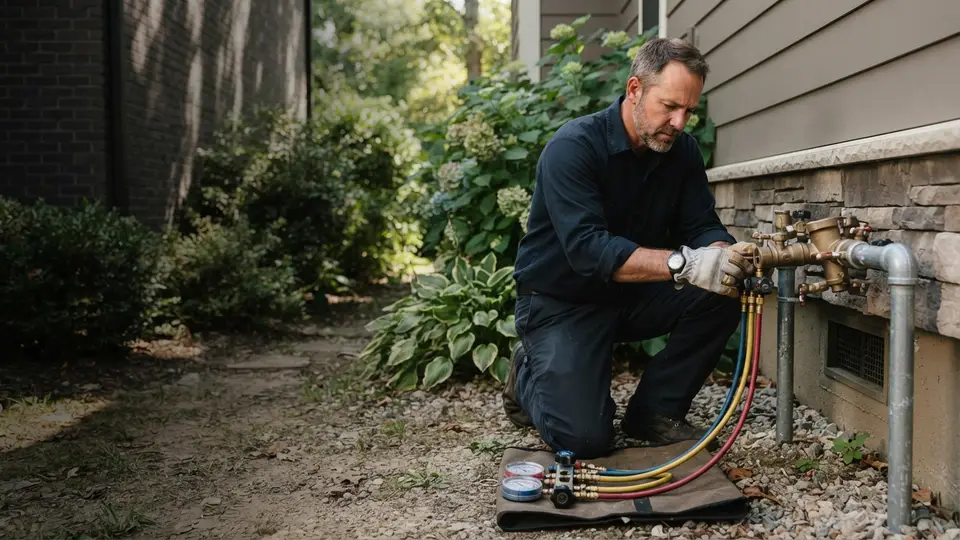
Double check valve (DCVA)
Typical use: Homes with reclaimed water or wells, fire sprinklers
Notes: Common at Florida meters
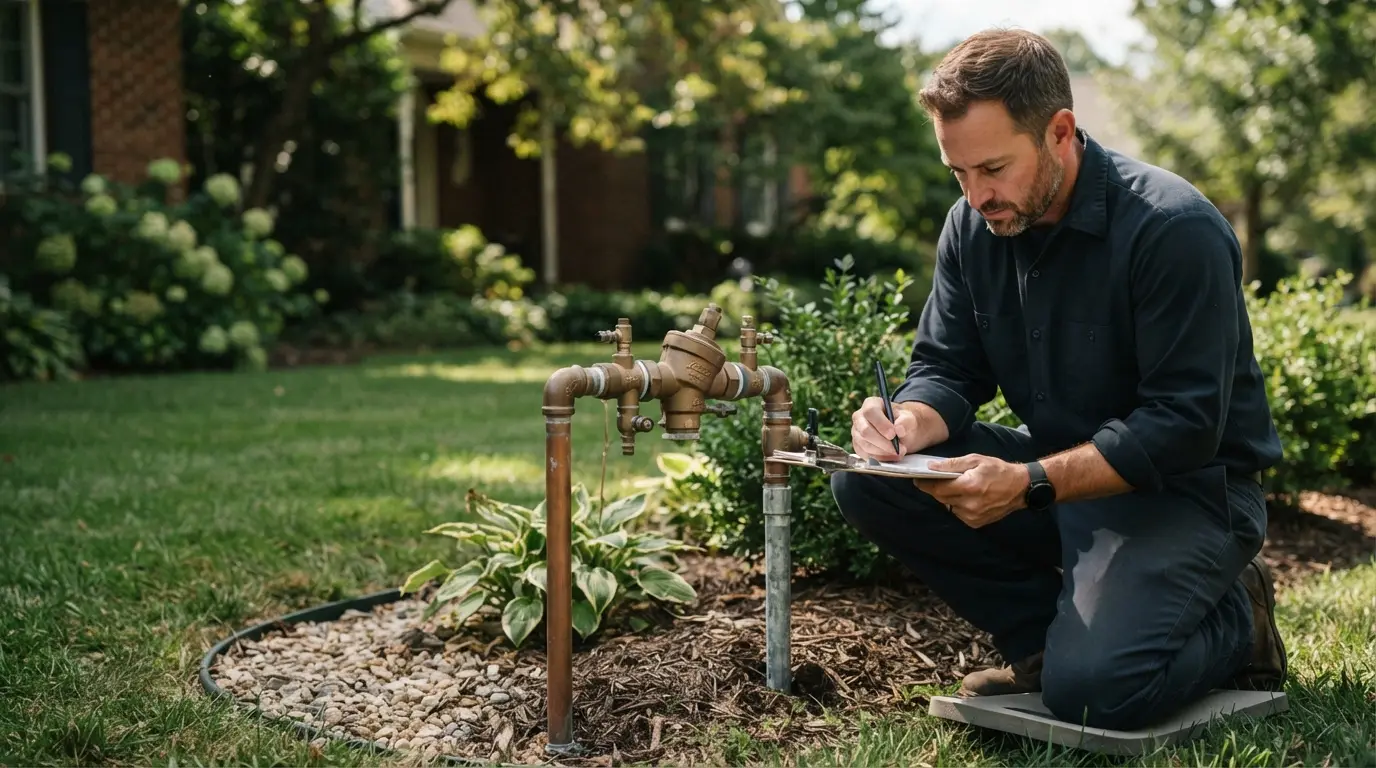
Annual test notice from the utility, or a device leaking by the meter? We handle backflow testing and prevention in Florida for homes and businesses. Florida relies heavily on irrigation, and many communities pipe reclaimed water for lawns, so keeping non-potable water out of the drinking supply matters. Florida water utilities run cross-connection control programs under state drinking water rules, and testable assemblies must be checked by a certified tester. We test, repair, replace and install them and send reports to your utility.
The service
Backflow is water flowing backward, from a property into the public main. A main break or firefighting can drop pressure and siphon water back; a pump, boiler or pressure from a reclaimed water system can push it back. Without protection, irrigation water, pool water, chemicals or reclaimed water could reach other customers.
Backflow preventers are valve assemblies with check valves and, on some types, a relief valve. Because their springs and seals wear, they are tested on a schedule and after any repair.
Assemblies used in Florida
Typical use: Homes with reclaimed water or wells, fire sprinklers
Notes: Common at Florida meters
Typical use: Medical, food service, car washes, high-hazard sites
Notes: Relief valve discharges when checks fail
Typical use: Irrigation on potable water
Notes: Above-ground near the irrigation line
Typical use: Fire lines with meter bypass
Notes: Detects unauthorized use
Why Florida
Many Florida utilities supply reclaimed water, in purple pipes, for lawn irrigation. Homes that receive both reclaimed and drinking water usually need a backflow preventer on the drinking water service so the two can never mix.
Many homes irrigate with a private shallow well while using city water inside. Utilities typically require protection at the meter in case the systems are ever cross-connected.
Fast-growing places such as Port St. Lucie (median home built 2002), Riverview (2006), Palm Coast and Lehigh Acres have thousands of homes with irrigation and many with reclaimed water.
Restaurants, medical offices, car washes and buildings with fire sprinklers need assemblies sized to the hazard and tested on schedule.
Warning signs
Our process
Our certified tester connects a calibrated test kit, checks each check valve and relief valve against required readings and records the results. We submit the report to your utility in its required format and give you a copy.
We install the assembly your utility and the hazard require, usually at the meter or on the irrigation line, with test cocks accessible. New devices are tested at installation.
Failed assemblies are rebuilt with new seals, springs and check parts, or replaced when the body is damaged. Every repair is retested and reported.
Typical cost
We give you a written price before testing or repairs.
Get a written price: (833) 733-2357RPZ and fire line devices take longer.
Several on one visit lowers the cost per test.
Rubber kits cost less than replacement.
New devices may need piping changes and a permit.
Overgrown or buried devices take more time.
Benefits
Devices keep reclaimed and irrigation water out of the supply.
Missed tests can bring notices and possible service action under utility rules.
Testing finds worn parts before failure.
We test, repair and file.
Large properties in cities like Orlando (148,754 homes in our data) and Tampa may have dozens of assemblies on irrigation, domestic and fire services. We keep an inventory with serial numbers, locations and due dates, test on one schedule where possible and file every report. For fire lines, we coordinate with your fire protection contractor before closing valves.
Florida backflow devices sit outdoors year-round in sun, rain and, near the coast, salt air. Seals and plastic parts age faster, and mowers and string trimmers damage test cocks. We recommend protective covers or enclosures, keeping landscaping trimmed back and checking for drips between tests.
Many Florida homeowners first learn they have a backflow device when the utility sends a test notice. The device is usually a double check valve at the meter, installed because the home receives reclaimed water or has an irrigation well, or a vacuum breaker on the irrigation line. The notice lists the device serial number and due date. If you are unsure what you have, the utility can tell you, and we can identify it during any visit. Testing intervals for residential devices vary by utility, so follow the schedule on your notice.
Reclaimed water is treated for irrigation but not for drinking. Its pipes, hose bibs and valves are purple or marked, and they must never be connected to household plumbing, pools or hoses used for drinking. When we work on irrigation or plumbing in homes with reclaimed service, we check that the two systems are fully separate and that the backflow device at the meter is in place and working.
A new or repaired device must pass a test before going back into service, and utilities want that report on file. We test right after the work and send it in.
Flooding and debris can damage devices near the meter. After a storm, check yours for cracks or leaks and call us if it looks damaged.
Clear landscaping around the device and unlock any cover. Keep the utility notice handy; it lists the serial number and due date.
If a device is leaking heavily, close the meter-side valve if you can do so safely. Do not remove or bypass an assembly. Call us.
Florida drinking water rules require public water systems to maintain cross-connection control programs, and each utility sets which assemblies it requires, how often they are tested and which tester certifications it accepts. Our testers hold certifications recognized in Florida, and our Florida work is done under the required plumbing contractor license. New installations may need a permit, which we pull.
Why choose us
What you can count on every time one of our plumbers comes to your door.
Every job is handled by a plumber who holds the license your state or city requires, backed by liability insurance.
Our plumber explains the problem and the options, and you approve a written price before any work begins.
Burst pipes, sewage backups and failed water heaters get priority scheduling, including nights and weekends.
We pull permits when the job needs one and schedule the inspection, so the work holds up when you sell.
Repairs and installations come with a written warranty on labor, on top of the manufacturer's warranty on parts.
Our pages and plumbers account for your area's water, soil, climate and the age of the homes around you.
Service area
We test and repair backflow devices in 956 Florida places, from Tampa (182,425 homes) to Palm Coast and Lehigh Acres. Choose yours:
It depends on the assembly type and size and how many devices we test on one visit. You get a written price before the test.
Many repairs need only a rubber kit and labor. Damaged bodies need replacement, which costs more.
Yes. Testing everything on one visit lowers the cost per device, which helps HOAs and businesses.
Our certified tester attaches a calibrated gauge, tests each check and relief valve and records the results.
Yes. We file it in the required format and give you a copy.
It keeps reclaimed water from ever entering the drinking water system if pipes are cross-connected or pressure drops.
Yes. During pressure drops, water from irrigation, wells or equipment can be drawn into the main without a working device.
No. Removing or bypassing a required device violates utility rules and endangers the water supply.
Most residential tests take under an hour. Commercial devices take longer.
Promptly after the test, so it reaches your utility before the due date.
Your utility sets the schedule; many require testing at least once a year or every few years for residential devices, and after repair.
Use a cover, keep landscaping and lawn equipment away, and watch for drips between tests.
Close the supply valve if safe and call us. Heavy discharge usually means a fouled check or relief valve.
Utilities usually require one at the meter when a home has both a private well and public water.
State drinking water rules require cross-connection control, and each utility sets the details for its customers.