Yard or patio drainage pump
Typical use: Low lots, courtyards, pool decks that flood
What we check: Float, pump, discharge route
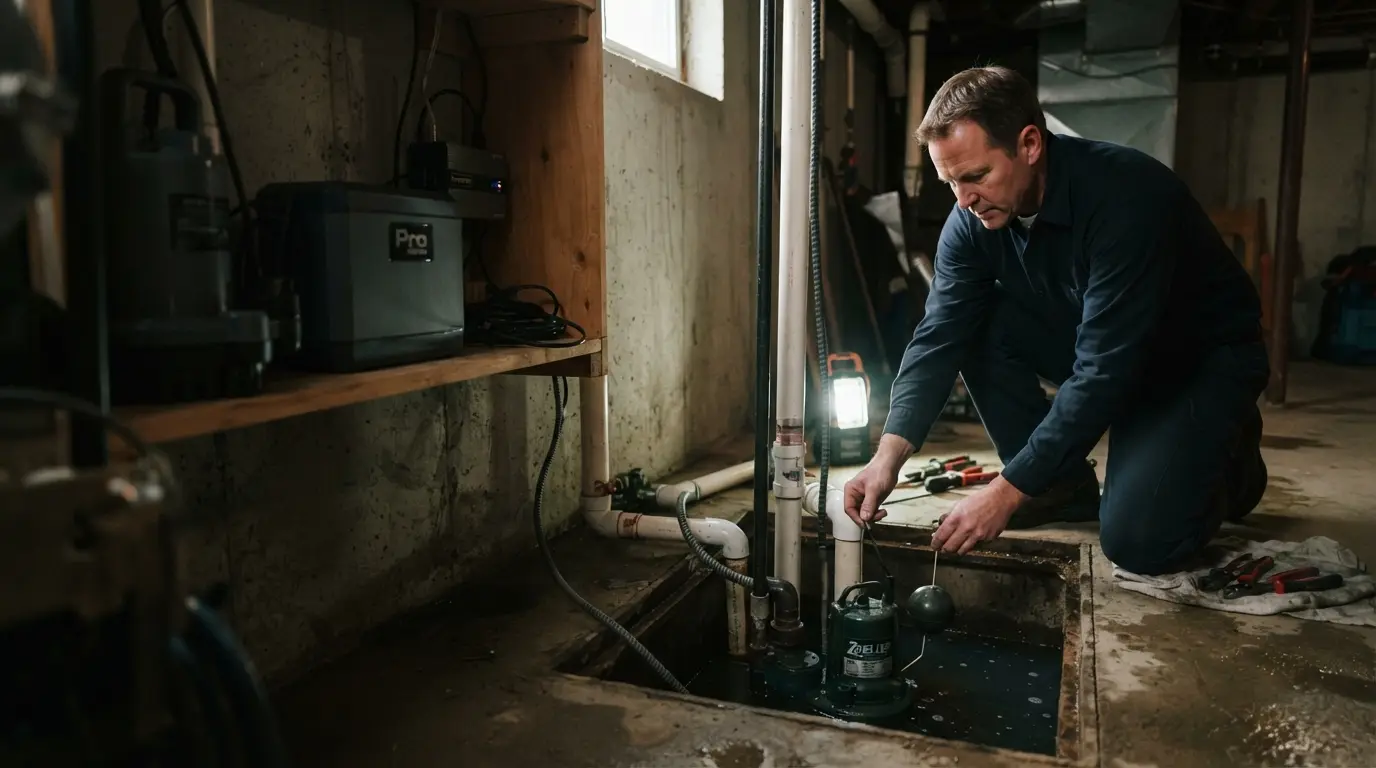
Water pooling against the house after every summer storm? We do sump pump repair and installation in Florida for yards, garages and below-grade spaces. Basements are rare here, so Florida pumps do different jobs: clearing standing water from low yards and patios, keeping water out of sunken garages and lower levels, lifting wastewater from homes below the sewer, and running grinder stations where gravity sewer is not available. Heavy rain, a high water table and storm outages test them all. We repair, replace and install pumps and add backups.
The service
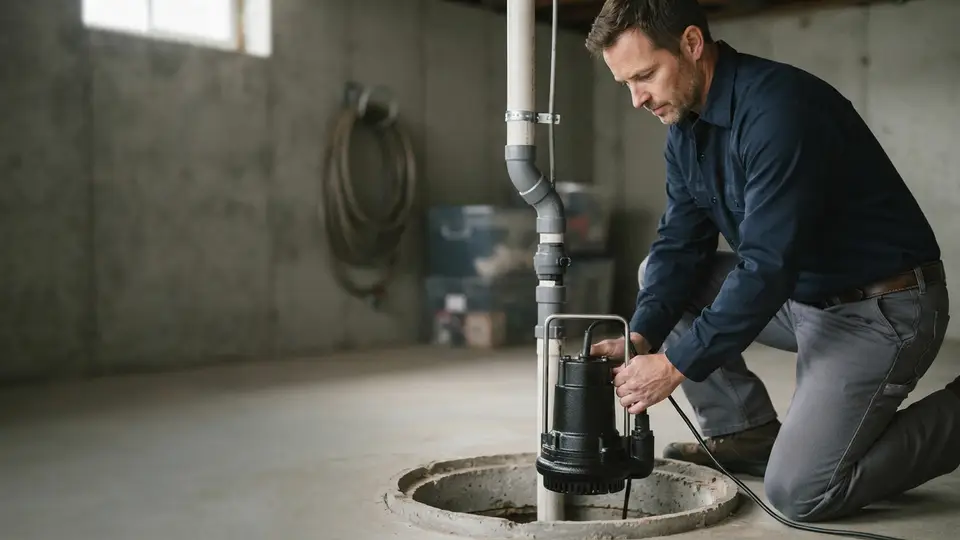
A sump pump sits in a basin at a low point and pushes collected water away through a discharge line when a float switch rises. In Florida, most homes are on slabs and never need one. The homes that do usually have a low spot where rainwater collects, a garage or living area below grade, or a sewer connection that cannot rely on gravity.
Pump systems we service
Typical use: Low lots, courtyards, pool decks that flood
What we check: Float, pump, discharge route
Typical use: Sunken garages, split-level and hillside homes
What we check: Pit, pump, check valve, backup
Typical use: Fixtures below the sewer line
What we check: Sealed basin, pump, vent, alarm
Typical use: Homes on pressure sewer systems
What we check: Pump, controls, alarm, check valves
Typical use: Any pump needed during outages
What we check: Battery, charger, transfer, alarm
Why Florida
Summer storms can drop several inches in an hour, and much of Florida has groundwater just below the surface. On low lots, water has nowhere to soak in and pools against slabs and in garages.
Coastal cities such as Miami, Fort Lauderdale, St. Petersburg and Key West sit only a few feet above sea level, and high tides and storm surge push groundwater higher. 65% of Key West homes predate 1980, built long before current drainage expectations.
Some Florida neighborhoods, especially flat or waterfront areas, are served by low-pressure sewer systems in which each home has a grinder pump that pushes wastewater into the main.
Hurricanes and summer storms cut power when pumps are needed most.
Warning signs
Our process
We test floats, motors, impellers and controls, clear sand and debris from basins, replace check valves and inspect discharge lines. Burned-out pumps are replaced with units sized to the inflow.
For yard drainage, we set a basin at the low point, connect collection drains and route discharge to an approved outlet. For lower levels, we install a lined pit with check valve and discharge. Ejector and grinder systems get sealed, vented basins and alarms.
Battery backup pumps take over during outages. For homes with standby generators, we make sure critical pumps are on the generator circuit, coordinating with your electrician.
Typical cost
You receive a written price before work begins.
Get a written price: (833) 733-2357A float or check valve costs less than a pump.
Ejector and grinder systems cost more than drainage pumps.
Digging and drain pipe add labor.
Batteries or generator connections add equipment.
Long or buried lines add materials.
New systems may need one.
Benefits
Less water against the house means fewer leaks under doors and walls.
Stored items and equipment stay dry.
Working ejector and grinder pumps keep drains flowing.
Standing water does not linger.
In a pressure sewer system, the grinder pump grinds wastewater and pushes it into a small-diameter main. When the alarm sounds, wastewater is not being pumped, and the basin has limited reserve. Cut water use and call. Ownership of grinder stations varies: in some systems the utility maintains them, in others the homeowner does. Check with your utility; where the homeowner is responsible, we repair and replace grinder pumps and controls.
A pump can only remove water that reaches it. Gutters that dump next to the slab, patios sloped toward the house and blocked swales all send water where you do not want it. We look at how water moves around the house, extend downspouts, add collection drains feeding the pump basin and route discharge to the street drain, swale or retention area where local rules allow.
Homes with a bathroom, laundry or kitchen below the level of the sewer line need an ejector pump to lift wastewater up to the main. In Florida these show up in split-level and hillside homes, converted garages and some waterfront houses. When an ejector fails, fixtures on that level back up. We repair and replace ejector pumps, check valves and alarms, and make sure the basin is sealed and vented to prevent odors.
After a storm, pumps may be clogged with sand and debris, damaged by flooding or burned out from running on low voltage. We inspect, clean and test pumps and controls, replace damaged parts and restore backups.
Battery backups suit most homes; a generator circuit suits longer outages. We help you choose based on how long your pump must run during a storm.
Check that the pump is plugged in and its breaker or GFCI has not tripped. For a grinder or ejector alarm, cut water use right away; do not keep flushing.
Do not open a sealed sewage basin, and stay out of standing water near electrical equipment. Then call us.
Replacing a pump in an existing basin usually needs no permit. New ejector systems, grinder connections and drainage tied to the street often do, and discharge rules vary by city and county. Our Florida work is done under the required plumbing contractor license, and we check local rules first.
Why choose us
What you can count on every time one of our plumbers comes to your door.
Every job is handled by a plumber who holds the license your state or city requires, backed by liability insurance.
Our plumber explains the problem and the options, and you approve a written price before any work begins.
Burst pipes, sewage backups and failed water heaters get priority scheduling, including nights and weekends.
We pull permits when the job needs one and schedule the inspection, so the work holds up when you sell.
Repairs and installations come with a written warranty on labor, on top of the manufacturer's warranty on parts.
Our pages and plumbers account for your area's water, soil, climate and the age of the homes around you.
Service area
We repair and install pumps in 956 Florida places, from Jacksonville (430,825 homes) to Cape Coral and the Keys. Choose yours:
Many repairs, such as a float or check valve, are modest. A burned-out pump means replacement. We give you a written price before work starts.
It depends on the basin, collection drains, pump size and discharge route. We price it after looking at how water moves on your lot.
Grinder pumps cost more than drainage pumps. If your utility maintains the station, call them first; if you own it, we price the repair.
Most slab homes do not. Low lots, sunken garages and lower levels that collect water are the usual exceptions.
We estimate the inflow and how far and high water must go, then choose a pump with enough capacity.
To a swale, street drain or retention area where local rules allow, never into the sanitary sewer.
No. It contains sewage and electrical parts. Cut water use and call us or your utility.
Ground-fault protection is commonly required for outdoor and garage pumps. We check what your location needs.
Usually one to three hours. New systems with drains take a day or more.
Stop using water immediately and call. The basin has limited reserve before it backs up.
Before hurricane season and after long dry spells.
Often seven to ten years, less with sand or heavy use.
Check pump power, keep away from water near electrical equipment and call us. Flooding gets priority scheduling.
Yes, if it is wired to a generator circuit. We coordinate with your electrician.
Heavy rain on low, flat lots with a high water table has nowhere to soak in, so it collects against slabs and in garages.