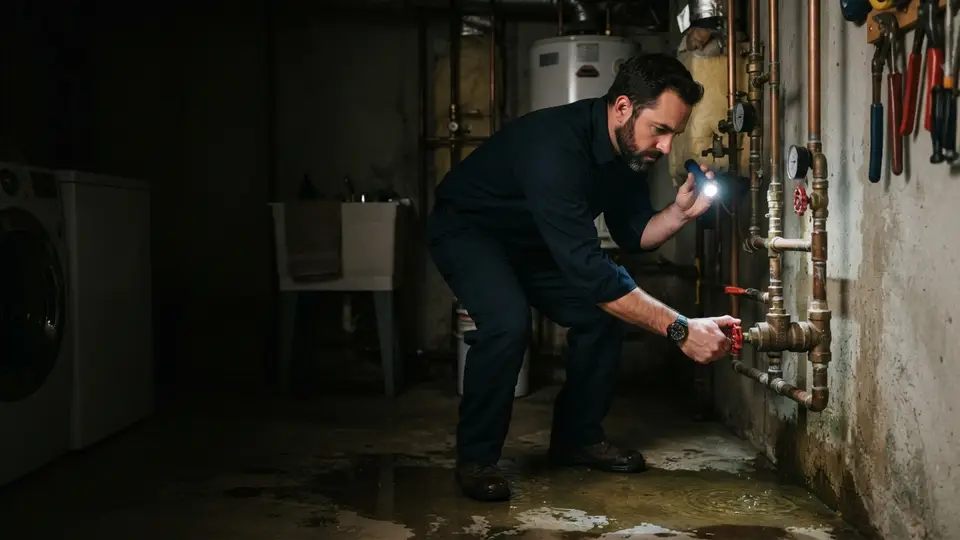
Burst supply line or fitting
Your first step: Close the main shutoff
What we do: Repair the break, check nearby pipe
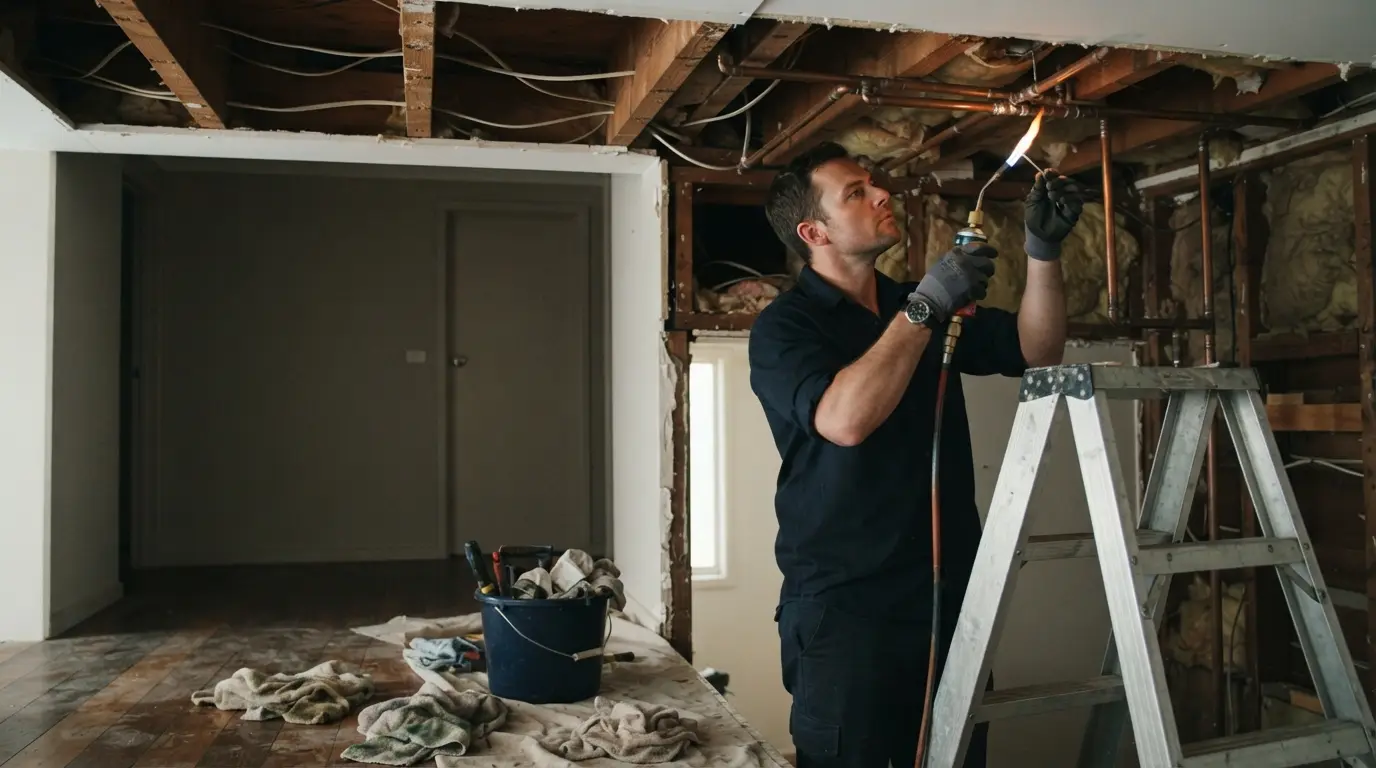
Supply line burst under the sink, or sewage rising in the shower? Call us for emergency plumbing in Florida; urgent problems are scheduled first. Florida plumbing emergencies come from failing polybutylene and old cast iron, slab leaks that surface through tile, water heaters bursting in interior closets, and the backups, flooding and outages that come with summer storms and hurricanes. Condos add the risk of water reaching the unit below. We stop the damage, find the cause and repair it after you approve a written price.
The service
We treat a call as an emergency when water or sewage is damaging the home right now, there is a gas hazard, or you have no water or working toilet. These calls are scheduled ahead of routine work. When you call, we tell you what to shut off while we are on the way.
Common emergencies and first steps
Your first step: Close the main shutoff
What we do: Repair the break, check nearby pipe
Your first step: Stop all water use
What we do: Clear the line, camera it, plan repairs
Your first step: Close the main between uses
What we do: Locate and repair or reroute
Your first step: Close the cold supply; switch off power or gas
What we do: Repair or replace, add a drain pan
Your first step: Leave and call the utility
What we do: Repair the leak once safe
Your first step: Close your main; tell management
What we do: Find the source and stop it
Why Florida
Polybutylene supply pipe in homes from the late 1970s to mid 1990s fails suddenly, and cast iron drains under older slabs collapse. Both cause many urgent calls.
Heavy rain and storm surge overload sewers and septic systems, flood garages and push sewage into homes, often with power out.
65% of Fort Lauderdale homes and 67% of Pompano Beach homes predate 1980. Old valves, risers and drains fail without much warning.
Census counts 53% of Marco Island homes as not occupied year-round. A leak in an empty home can run for days or weeks.
Warning signs
Our process
We tell you which valve to close or breaker to switch off.
Emergencies go ahead of routine work, and we keep you updated on timing.
Our plumber stops the leak, backup or hazard on arrival.
We explain the cause and give you a written price before repairing.
The repair is tested, and you get notes and photos for insurance.
Typical cost
You approve a written price before the repair, even in an emergency.
Get a written price: (833) 733-2357Nights, weekends and holidays cost more.
A fitting is simpler than a collapsed drain under the slab.
Slab, tile and condo coordination add time.
Water heaters and pumps cost more than fittings.
Sometimes we stabilize first and finish later.
Benefits
Drywall, cabinets and flooring absorb water quickly.
Florida humidity lets mold grow within days.
Sewage and gas need immediate attention.
Prompt repair with documentation supports claims.
We repair the failed pipe or fitting, check nearby pipe of the same material, and if it is polybutylene, price a repipe so the next failure does not catch you off guard.
We clear the line from a cleanout and camera it to find roots, collapsed cast iron or a blocked lateral. In septic homes, we check the tank and drainfield.
We check for broken service lines, failed valves and, in well homes, a failed pump, pressure switch or tank.
The utility or propane supplier responds first. Once safe, we locate and repair the leak and relight appliances.
Before a storm, know where your main shutoff is, fill containers with drinking water, and if you evacuate, close the main and switch off the water heater. After the storm, do not use plumbing if sewers or septic systems are flooded, check for gas odors before using gas appliances and look for leaks before restoring full water use. We inspect storm damage, repair broken lines and restore service as quickly as conditions allow.
28% of Florida homes are in buildings with five or more units. When water reaches the unit below, close your main, call building management and call us. We find the source, stop it, coordinate access with the association and document whether it came from a unit fixture or a common pipe.
In homes on septic or pressure sewer, a pump alarm means wastewater is not leaving the basin. Stop using water and call us the same day, before the basin fills and backs up into the house.
Many Florida owners live elsewhere part of the year. If a neighbor or manager reports a leak, have them close the main and call us; with your permission and access, we stop the damage and send photos and a summary.
Know where your main shutoff is, often near the meter at the street or where the line enters the house. For leaks, close it and switch off the water heater breaker. For sewage, stop all water use. For gas, leave and call the utility.
Stay clear of water near electrical outlets. Move belongings, take photos and run fans if safe. Then call us.
Emergency repairs are made right away. When work needs a permit, such as a water heater replacement or sewer repair, we file it and schedule inspection as local rules allow. Our Florida work is done under the required plumbing contractor license.
Why choose us
What you can count on every time one of our plumbers comes to your door.
Every job is handled by a plumber who holds the license your state or city requires, backed by liability insurance.
Our plumber explains the problem and the options, and you approve a written price before any work begins.
Burst pipes, sewage backups and failed water heaters get priority scheduling, including nights and weekends.
We pull permits when the job needs one and schedule the inspection, so the work holds up when you sell.
Repairs and installations come with a written warranty on labor, on top of the manufacturer's warranty on parts.
Our pages and plumbers account for your area's water, soil, climate and the age of the homes around you.
Service area
We take emergency calls in 956 Florida places, from Jacksonville (430,825 homes) and Tampa to Miami. Choose yours:
The time of the call, the repair, access and parts set the price. After we stop the damage, you approve a written price for the repair before we start.
Yes. After-hours work costs more than regular hours, and we tell you the price before making the repair.
Sometimes. If it is safe, we stop the leak now and schedule the permanent repair during regular hours.
We tell you how to stop the damage, schedule you ahead of routine work and keep you updated on arrival.
Yes. You get notes on the cause, photos and an itemized invoice for your claim.
Yes. We find and stop the source, coordinate with management and document the cause.
Leave, avoid switches and phones inside and call your gas utility or 911 from outside. We repair the leak once it is safe.
Yes. Sewage carries bacteria. Keep everyone away, stop using water and let us clear the line before cleanup.
Immediately, by closing the main shutoff. We then repair it, usually within a few hours of arriving.
Many repairs restore water the same visit. Slab and sewer repairs may take longer, and we give a timeline.
Know your shutoff, store drinking water, and if you evacuate, close the main and turn off the water heater.
Yes. Find it, label it and turn it once a year. We replace valves that stick.
Stop the water at the fixture valve or main shutoff, switch off the water heater and call us.
They become brittle with age and chlorine exposure, and fittings can crack without warning.
Not if sewers or the septic system are flooded. Wait until they drain and have the system checked.