White scale, spotty dishes
Usual cause: Hardness from limestone
Typical treatment: Water softener
Scale crusting every faucet, or well water that smells like rotten eggs? We install water softeners and filtration in Florida after testing your water. Florida groundwater moves through limestone, so both city water and private wells are often hard. Wells also commonly carry hydrogen sulfide, iron or tannins that tint water yellow. City water is disinfected with chlorine or chloramine, which some households want filtered. We test, explain the results and install softeners, sulfur and iron filters, carbon systems or reverse osmosis that match what we find.
The service
Each kind of equipment solves a different problem. Softeners remove hardness. Oxidizing filters remove sulfur and iron. Tannin systems remove the tea-colored tint from some wells. Carbon removes chlorine or chloramine taste. Reverse osmosis at the kitchen sink makes highly filtered drinking water. Many homes need one or two of these, not all.
Problems and treatments
Usual cause: Hardness from limestone
Typical treatment: Water softener
Usual cause: Hydrogen sulfide in well water
Typical treatment: Oxidizing or aeration system
Usual cause: Iron
Typical treatment: Iron filter
Usual cause: Tannins from decaying vegetation
Typical treatment: Tannin removal system
Usual cause: City disinfection
Typical treatment: Carbon or catalytic carbon filter
Usual cause: High dissolved solids
Typical treatment: Reverse osmosis at the tap
Why Florida
Florida's main aquifers sit in limestone, which dissolves into the water as calcium and magnesium. Hard water is common in city supplies such as Tampa (182,425 homes in our data) and Orlando, and in private wells across Central Florida.
Many Florida wells contain hydrogen sulfide, the rotten-egg smell. It corrodes metal, tarnishes silver and stains fixtures black, and can react with water heater anodes.
Iron stains fixtures orange, and tannins from swampy ground tint water yellow, especially in shallow wells.
City water is safely disinfected, but chlorine or chloramine taste bothers some households. Catalytic carbon handles chloramine.
Warning signs
Our process
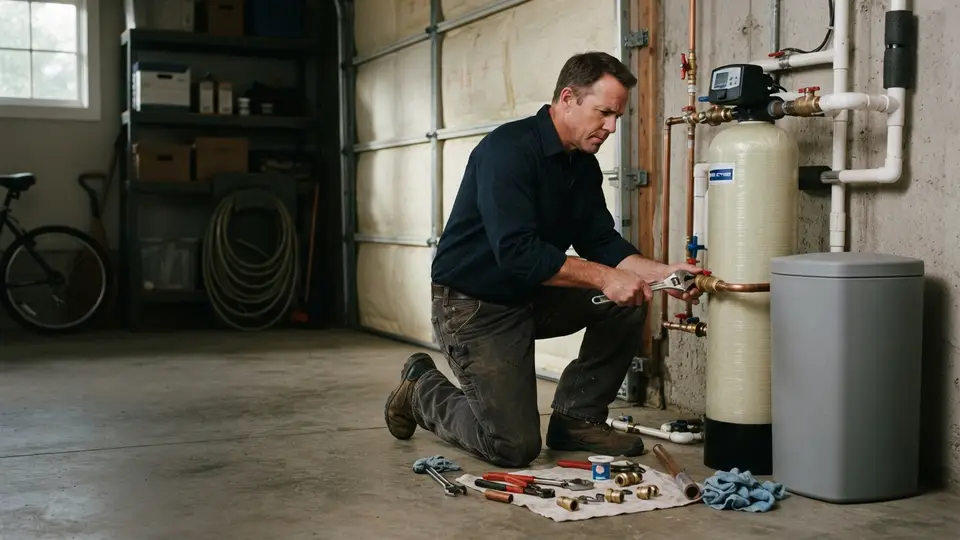
We test hardness and iron, size the softener to your household and install it with a bypass valve and an air-gapped drain. Outdoor faucets can stay on unsoftened water.
We install sulfur, iron, tannin, sediment or carbon systems at the point where water enters, in the right order so each stage works.
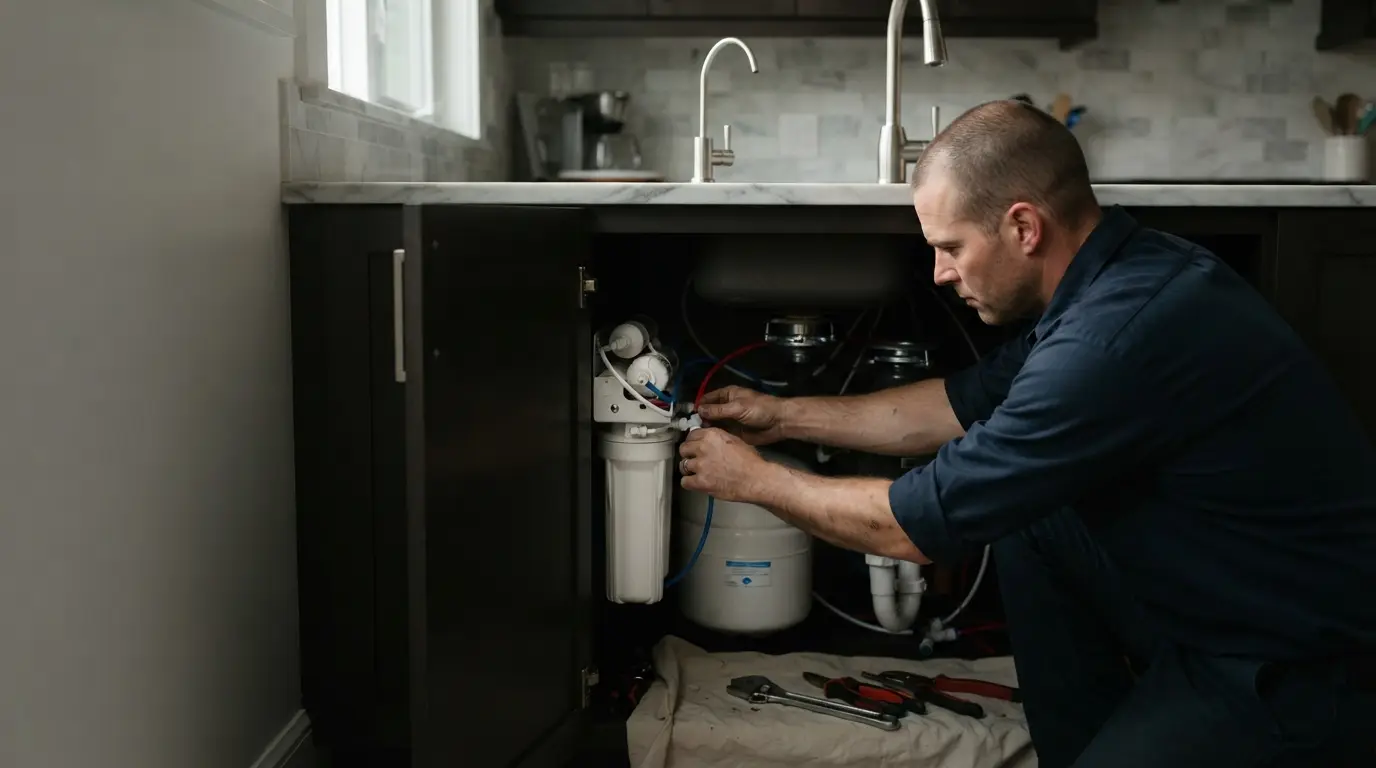
We mount the unit under the kitchen sink with a dedicated faucet and set a filter change schedule.
Typical cost
You receive a written price and a maintenance plan before we install.
Get a written price: (833) 733-2357Sulfur and iron treatment cost more than softening alone.
Some wells need two or three systems.
Larger households need more capacity.
Garages near the main line are simplest.
Salt, media and filters are recurring.
Benefits
Less scale on elements and in tanks.
Sulfur filters remove the odor.
Iron and tannin systems keep fixtures clean.
Carbon and reverse osmosis improve drinking water.
Our data includes 545 unincorporated Florida communities, many with homes on private wells, including large areas around Spring Hill, Ocala and Lehigh Acres. Well owners are responsible for their own water quality. We test for treatment basics, and we recommend a certified lab test for bacteria and other contaminants; your county health department can advise on testing.
Most Florida water heaters are electric, and hard water coats their elements with scale until they burn out. Sediment builds in the tank and reduces capacity. Softening or conditioning the water, or flushing the heater on schedule, protects it. Tankless units need regular descaling in hard water areas.
A softener removes hardness minerals, so spots disappear and soap lathers, but it uses salt and sends brine to the drain or septic system. A salt-free conditioner reduces scale on heaters and pipes without salt but leaves minerals in the water. If protecting the water heater and plumbing is the main goal, a conditioner may be enough; for the full soft-water feel, choose a softener. We explain both after testing.
If the rotten-egg smell appears only in hot water, the cause is often a reaction between sulfate-reducing bacteria in the water and the magnesium anode rod in the water heater, not sulfur in the well itself. Replacing the anode with an aluminum-zinc or powered anode, and sometimes sanitizing the tank, usually fixes it without whole-house treatment. We test cold and hot water separately to tell which problem you have.
Softeners and backwashing filters send water, and for softeners salt, to the drain during regeneration. In septic homes, efficient units and correct settings limit the extra load on the drainfield, which matters during Florida's rainy season. We set regeneration to what your water actually needs.
28% of Florida homes are in buildings with five or more units, where whole-house treatment is usually not possible. A reverse osmosis unit or carbon filter at the kitchen sink and a filtered shower head improve water inside a single unit. Renters should get the owner's approval first.
Equipment in homes left empty for months needs attention on return. We flush and sanitize filters, break up salt bridges and set systems back to normal operation.
Shallow wells in low, wooded or swampy areas can draw water tinted yellow or brown by tannins from decaying vegetation. It is mostly a cosmetic problem, but it stains laundry and fixtures. A tannin removal system, often a special resin that regenerates with salt, clears the color. We test for tannins separately from iron, since the two look similar but need different treatment.
Pool fill lines usually skip the softener; we can route them separately to save salt and capacity.
If you have a recent well test or your utility's water quality report, keep it ready. Note when smells or stains appear, hot or cold, and clear access to the main line or well tank.
If equipment is leaking, put it in bypass, unplug it and call us. Do not add chemicals to the well yourself.
Many treatment installations need no permit, though some jurisdictions require one for new connections. Our Florida work is done under the required plumbing contractor license, and every drain connection includes an approved air gap.
Why choose us
What you can count on every time one of our plumbers comes to your door.
Every job is handled by a plumber who holds the license your state or city requires, backed by liability insurance.
Our plumber explains the problem and the options, and you approve a written price before any work begins.
Burst pipes, sewage backups and failed water heaters get priority scheduling, including nights and weekends.
We pull permits when the job needs one and schedule the inspection, so the work holds up when you sell.
Repairs and installations come with a written warranty on labor, on top of the manufacturer's warranty on parts.
Our pages and plumbers account for your area's water, soil, climate and the age of the homes around you.
Service area
We test and treat water in 956 Florida places, from Orlando to Naples. Choose yours:
It depends on hardness, household size, installation location and whether other treatment is needed. We test first and give you a written price.
Often, yes. Sulfur needs oxidizing media or aeration, and strong sulfur may need its own system ahead of a softener.
Mainly filter and membrane replacements on a set schedule, which we explain at installation.
Yes. We test at your tap and review your utility report or well test before recommending anything.
Usually in the garage near where the main line enters, with a drain and outlet nearby.
Yes. We can route the system so hose bibs and irrigation skip the softener.
For most people, yes. It adds a little sodium; a reverse osmosis tap gives low-sodium drinking water.
Treatment tests do not cover bacteria and other contaminants. Have a certified lab test your well.
Most single systems take a few hours; multi-stage well systems can take most of a day.
Treated water is immediate. Existing scale and stains need cleaning but will not keep coming back.
Often every month or two, depending on hardness and use.
Every year or two, and whenever taste, smell or color changes.
Put it in bypass, unplug it and call us.
Hydrogen sulfide, common in Florida wells. An oxidizing filter or aeration system removes it.
Often, yes. Both city and well water drawn from limestone aquifers tend to be moderately hard to hard.