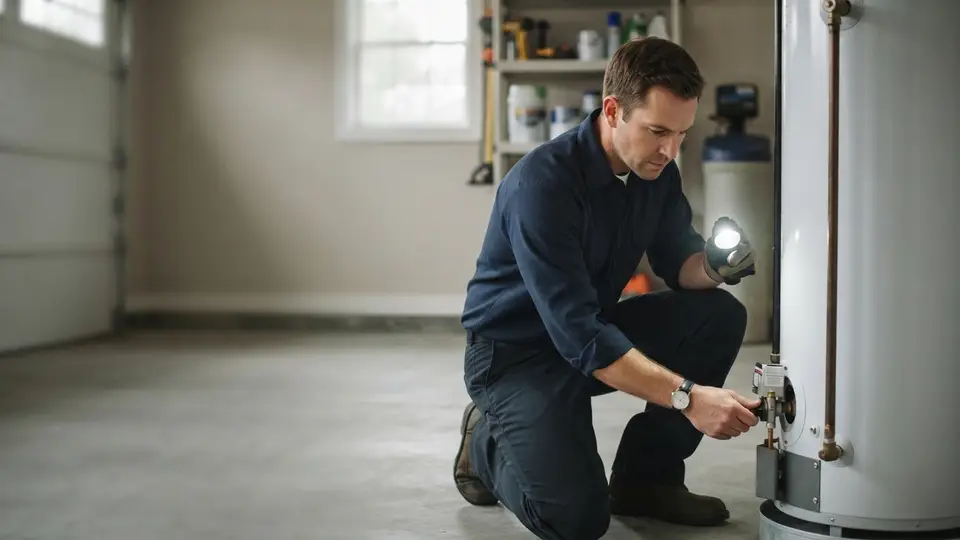
Electric tank
Good fit: Most Florida homes
Points to know: Simple; elements and thermostats are common repairs
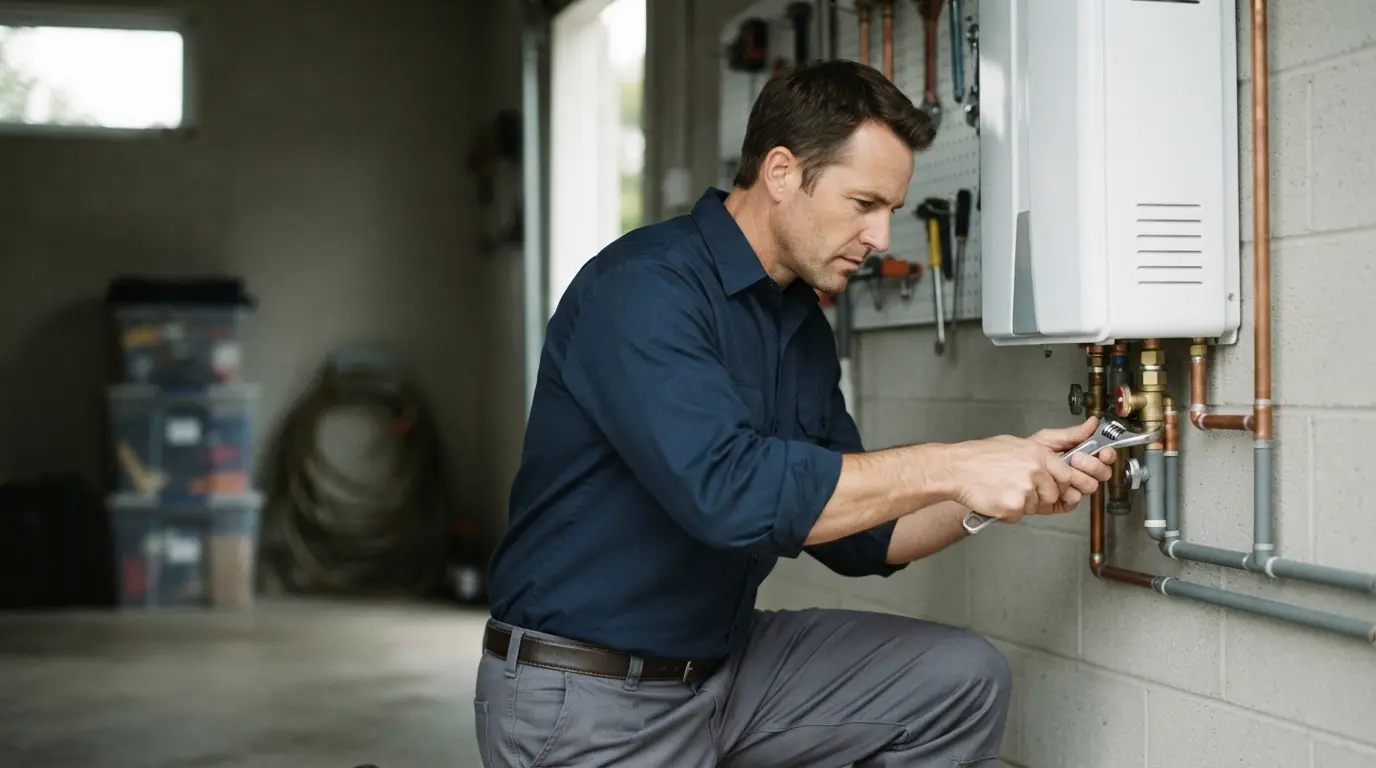
Water barely warm, or a leaking tank? We handle water heater repair and replacement in Florida for electric, heat pump, gas and tankless units. Most Florida homes heat water with electricity, so failed elements and thermostats are everyday repairs. Hard water from the limestone aquifer fills tanks with scale, and heaters tucked into interior closets can flood floors when they fail. Florida's warm climate also makes heat pump water heaters a strong option. We repair what is worth repairing and replace what is not.
The service
Electricity heats 90% of Florida homes in our Census data and utility gas only 5%, so most water heaters are electric. Gas is more common in North Florida, at 20% of homes in Gainesville, 27% in Pensacola and 13% in Tallahassee, and in some newer communities such as The Villages (35%).
Water heater options in Florida
Good fit: Most Florida homes
Points to know: Simple; elements and thermostats are common repairs
Good fit: Garages and utility rooms
Points to know: Much lower electricity use in a warm climate; needs airflow and a condensate drain
Good fit: Homes with gas service
Points to know: Needs proper venting and gas supply
Good fit: High demand, tight spaces
Points to know: Electric tankless may need a larger electrical service
Good fit: Some homes with suitable roofs
Points to know: Uses a backup element; collectors need upkeep
Why Florida
Limestone aquifer water is often hard. Minerals coat electric elements and settle as a crust in the tank, causing elements to burn out and reducing capacity.
Many Florida heaters sit in interior closets, laundry rooms or garages. A failed tank in a closet floods surrounding floors and walls unless there is a proper drain pan and drain line.
Power surges and outages during storms damage thermostats and controls. Flooding can ruin heaters in garages.
Wells with sulfur-reducing bacteria can react with the magnesium anode and cause a rotten-egg smell in hot water.
Warning signs
Our process
We test and replace elements, thermostats, high-limit switches, gas controls and relief valves, flush sediment and check the anode rod. For smelly hot water, we can install an anode type that reduces the reaction.
We size the replacement to your household, install it with a drain pan and drain line where required, a relief valve discharge line, an expansion tank where the system needs one, and correct wiring or venting. The old heater is hauled away.
Electric tankless units can need a large electrical service; gas tankless units need adequate gas supply and venting. We check both before recommending one, and add isolation valves for descaling in hard water.
Typical cost
You receive a written price before work starts.
Get a written price: (833) 733-2357An element or thermostat costs far less than a new heater.
Heat pump and tankless units cost more upfront but less to run.
Closets and attics take more labor than garages.
Pans, drain lines, expansion tanks and wiring updates may be required.
Most Florida jurisdictions require one for replacement.
Benefits
Heat pump units cut water heating costs substantially.
Drain pans and sensors protect floors.
Flushing and water treatment fight scale.
Correct sizing for your household.
A heat pump water heater pulls heat from the surrounding air and uses far less electricity than a standard electric tank. Florida garages stay warm most of the year, which suits them well, and they cool and dehumidify the garage as they run. They are taller than many standard tanks and need a condensate drain and room for airflow. Utility programs sometimes offer rebates; check what is available for your address.
When a heater in an interior closet fails, water spreads under walls and tile. On replacements, we install a drain pan with a line to a safe location where possible, and we can add a leak sensor or an automatic shutoff valve that closes the cold supply when it detects water. For homeowners away for the season, turning the heater off and closing its supply valve is a simple precaution.
Many Florida homes sit empty part of the year. Cape Coral, with 100,679 homes in our data, and other Gulf Coast cities have many seasonal owners. Before leaving, switch off the heater breaker and close the cold supply. On return, open the supply first and let the tank fill before turning power on, or an electric element can burn out in seconds.
Lightning and power surges during Florida storms can burn out thermostats and the electronic controls on heat pump and tankless units. After an outage, if hot water does not return, a tripped high-limit switch or a damaged control is a common cause. We diagnose and replace the part, and in garages that flooded, we check whether the heater can be safely returned to service or must be replaced.
Where a backflow device or pressure regulator closes the system, heated water has nowhere to expand and the relief valve drips. An expansion tank fixes that, and we check for one on every replacement.
If the tank is leaking, close the cold water valve and switch off the breaker for an electric heater, or turn the gas control to off. If you smell gas, leave the house and call your gas utility from outside.
Do not cap the relief valve and do not drain a hot tank. Note the brand and age, then call us.
Water heater replacement generally requires a permit and inspection in Florida, and inspectors check relief lines, pans, wiring or venting. Our Florida work is done under the required plumbing contractor license, and we pull the permit and schedule the inspection.
Why choose us
What you can count on every time one of our plumbers comes to your door.
Every job is handled by a plumber who holds the license your state or city requires, backed by liability insurance.
Our plumber explains the problem and the options, and you approve a written price before any work begins.
Burst pipes, sewage backups and failed water heaters get priority scheduling, including nights and weekends.
We pull permits when the job needs one and schedule the inspection, so the work holds up when you sell.
Repairs and installations come with a written warranty on labor, on top of the manufacturer's warranty on parts.
Our pages and plumbers account for your area's water, soil, climate and the age of the homes around you.
Service area
We repair and replace water heaters in 956 Florida places, from Miami (223,826 homes) to Tallahassee. Choose yours:
Most repairs replace an element, thermostat or control, so the part and access set the price. We give you a written price before starting the work.
Often, yes. Warm garages suit them, and they use much less electricity than standard electric tanks, so savings add up.
Often, because it may need a larger electrical service. We check your panel before recommending one.
We look at household size, bathrooms and peak use, then choose a tank, heat pump or tankless unit to match.
Yes. Removal and disposal are included in the installation price.
Yes, on replacement and often on existing heaters, with a drain line to a safe location where possible.
Leave, avoid switches and call your gas utility from outside. We repair the problem once it is safe.
Usually a reaction between well water and the anode rod. A different anode or water treatment usually fixes it.
A standard tank swap takes a few hours. Heat pump or tankless conversions can take most of a day.
Most repairs are done on the first visit, and we give you a timeline for replacements.
Once a year for most homes, more often with hard water.
Many tanks last eight to twelve years. Hard water and surges shorten that.
Close the cold supply, switch off power or gas and call us. Leaking tanks get priority scheduling.
If power is turned on before the tank refills, an electric element burns out quickly. Always fill the tank first.
Yes. Our Census data shows about nine in ten Florida homes heat with electricity, and water heaters follow.