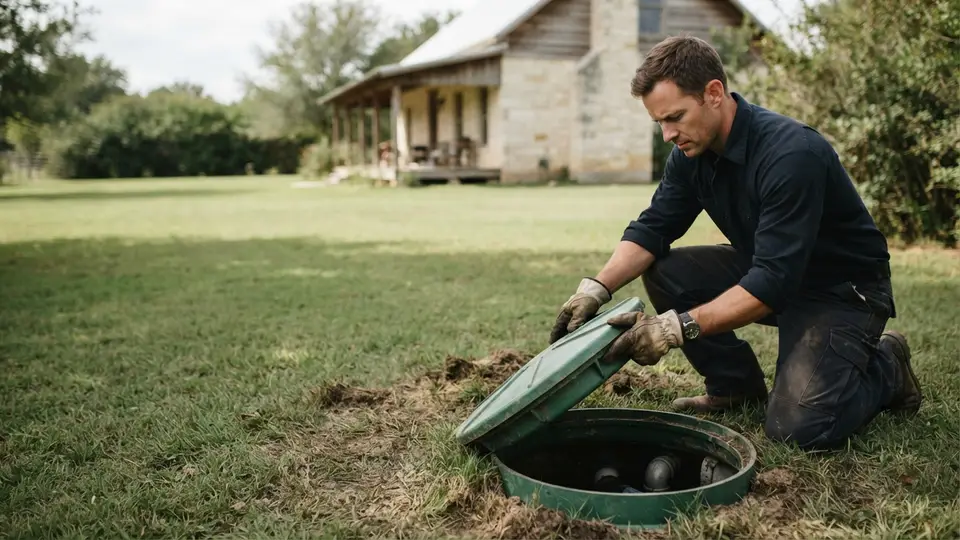
Septic pumping
When: Every few years or when sludge is high
What it includes: Uncover the lids, pump all compartments, check baffles and filter
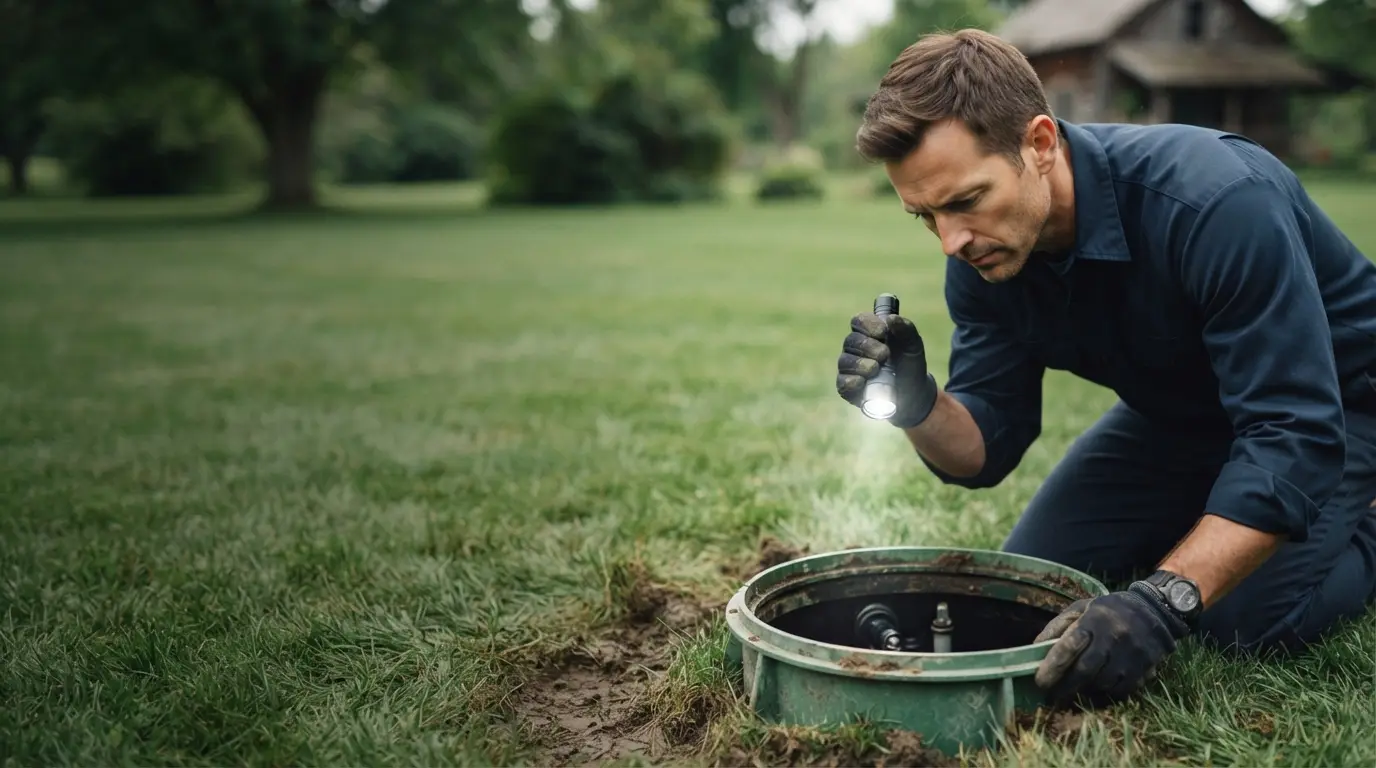
Toilets gurgling after a week of summer storms, or a wet, smelly spot over the drainfield? We provide septic tank services in Florida for homes on septic. Septic is common across the state, not only in rural areas but in large suburban developments built without sewer. Florida conditions are demanding: a water table close to the surface, sandy soil, heavy rainy-season downpours and, in many areas, rules to protect springs, rivers and estuaries. We pump, inspect and repair systems and handle the state permit when work needs one.
The service
A septic system has a tank, where solids settle and scum floats, and a drainfield, where the clarified effluent soaks into the soil for treatment. Because the water table is often high, many Florida drainfields are raised above the natural grade in mounds of fill, and some systems use pumps or nitrogen-reducing treatment units.
What we do
When: Every few years or when sludge is high
What it includes: Uncover the lids, pump all compartments, check baffles and filter
When: Home sale, refinance or problems
What it includes: Measure layers, inspect tank structure, check drainfield and pumps
When: Wet areas, odors, backups after pumping
What it includes: Locate and repair failed lines or distribution
When: Alarm on a pumped or mound system
What it includes: Test floats, pump, controls and alarm
Why Florida
In much of Florida groundwater sits only a few feet down, and in the summer rainy season it rises further. A drainfield in saturated soil cannot take effluent, so drains slow until the water drops.
Afternoon storms and tropical systems can drop inches of rain in hours, flooding drainfields and pushing water into tanks through loose lids.
Places such as Lehigh Acres (42,286 homes), Spring Hill (48,996), Palm Coast and North Port grew rapidly with many homes on septic. Systems from the 1980s and 1990s are now aging together.
Fast-growing landscaping sends roots into drainfield lines, and skipped pumping lets solids clog the field.
Warning signs
Our process
We locate the lids and dig if needed.
High liquid tells us the drainfield is not accepting water.
We pump every compartment and check baffles, filters and tank condition.
We look for surfacing water and test pumps, floats and alarms.
You receive findings and a written price for any repair.
Typical cost
You receive a written price before work begins.
Get a written price: (833) 733-2357More volume takes longer to pump.
Buried lids, landscaping and fences add time.
Lift pumps, mounds and treatment units add components.
Baffles, lids, filters and pumps add parts and labor.
Repair costs far less than replacement.
Needed for replacements and major repairs.
Benefits
Pumping keeps solids out of the costliest part to replace.
A working system keeps effluent out of drinking water.
Healthy systems release fewer nutrients.
An inspection report answers buyer and lender questions.
Some drainfield problems can be repaired: a crushed pipe, a clogged distribution box, a failed lift pump or roots in a line. When the soil itself has failed, the drainfield must be replaced, which requires a permit and a design that meets current separation from the water table. That often means a raised mound. We coordinate the permit and design and complete the work.
Nutrients from septic systems can reach groundwater and feed algae in springs, rivers and coastal waters. In some parts of Florida, especially near springs and impaired water bodies, new and replacement systems may need advanced, nitrogen-reducing treatment. Requirements depend on your location, so we check them before any replacement and explain the options.
Manufactured homes make up 5% of Florida housing in our data and more in places like Ocala, where 5% of homes are manufactured. Many sit on their own lots with individual septic systems. We service these systems and the plumbing connections under the home.
Pool backwash, water softener discharge and roof downspouts sending water toward the drainfield all reduce its capacity. Irrigation heads spraying over the field keep the soil wet. We look at what drains toward your system and recommend changes that keep extra water away from it, which can make a struggling drainfield work noticeably better during the rainy season.
Short-term rentals can send far more water to a septic system than its design assumed. We recommend pumping more often, posting a short guest notice about what not to flush, and checking pumps and alarms before the busy season.
Floodwater can fill a tank with silt and saturate the field. After the water recedes, limit use and have the system checked before returning to normal.
Cut water use: delay laundry, shorten showers and skip the dishwasher. If a pump alarm is sounding, silence it but leave the pump circuit on unless the breaker trips. Note whether problems began after heavy rain.
Never open or enter a septic tank; gases can kill quickly and old lids can collapse. Keep people and vehicles off the drainfield and call us.
Onsite sewage systems in Florida are regulated by the Florida Department of Environmental Protection, which permits new systems, repairs and modifications. Routine pumping does not need a permit; drainfield replacements and major repairs do. Our team holds the licenses the work requires and coordinates permits with the state. Requirements vary by area, so confirm them before planning new work.
Why choose us
What you can count on every time one of our plumbers comes to your door.
Every job is handled by a plumber who holds the license your state or city requires, backed by liability insurance.
Our plumber explains the problem and the options, and you approve a written price before any work begins.
Burst pipes, sewage backups and failed water heaters get priority scheduling, including nights and weekends.
We pull permits when the job needs one and schedule the inspection, so the work holds up when you sell.
Repairs and installations come with a written warranty on labor, on top of the manufacturer's warranty on parts.
Our pages and plumbers account for your area's water, soil, climate and the age of the homes around you.
Service area
Our Florida data includes 545 unincorporated communities, many with homes on septic, as well as cities like Palm Coast (44,254 homes) and North Port (38,930). Choose the nearest place:
Tank size, access to the lids, system type and what the inspection finds set the price. We give you a written price before we start pumping.
It needs a permit, a design meeting water table rules and often a raised mound of fill. Pumping and line repairs cost far less.
Yes. A failed drainfield is one of the costliest repairs on a Florida property, and an inspection shows its condition before you commit.
We pump and inspect the tank, measure layers, check baffles and filters, look over the drainfield and test pumps and alarms.
Yes. Risers bring the lids to grade so the tank can be pumped and inspected quickly.
Yes. For replacements and major repairs, we coordinate the permit and design with the state agency.
Yes. Gases inside can be fatal and old lids can give way. Leave tank work to our crew.
Yes. It carries pathogens and can reach wells and waterways. Keep people and pets away and call us.
Most home tanks are pumped and inspected in one to two hours, longer if lids are buried.
Construction usually takes a few days, but permitting and design come first. We give a realistic timeline.
Many households need it every three to five years. We suggest an interval after measuring your tank.
If your system struggles in summer, pumping before the rainy season gives it more capacity when the water table rises.
Stop using water and call us. Septic backups get priority scheduling, and pumping usually brings quick relief.
The Florida Department of Environmental Protection regulates onsite sewage systems and issues permits for new systems and repairs.
Heavy rain raises the water table into the drainfield, so it cannot absorb effluent until the water drops.