Old rowhouse plumbing
Baltimore rowhouses have cast iron stacks, galvanized supply and clay laterals under the sidewalk. We repipe and replace failing drains.
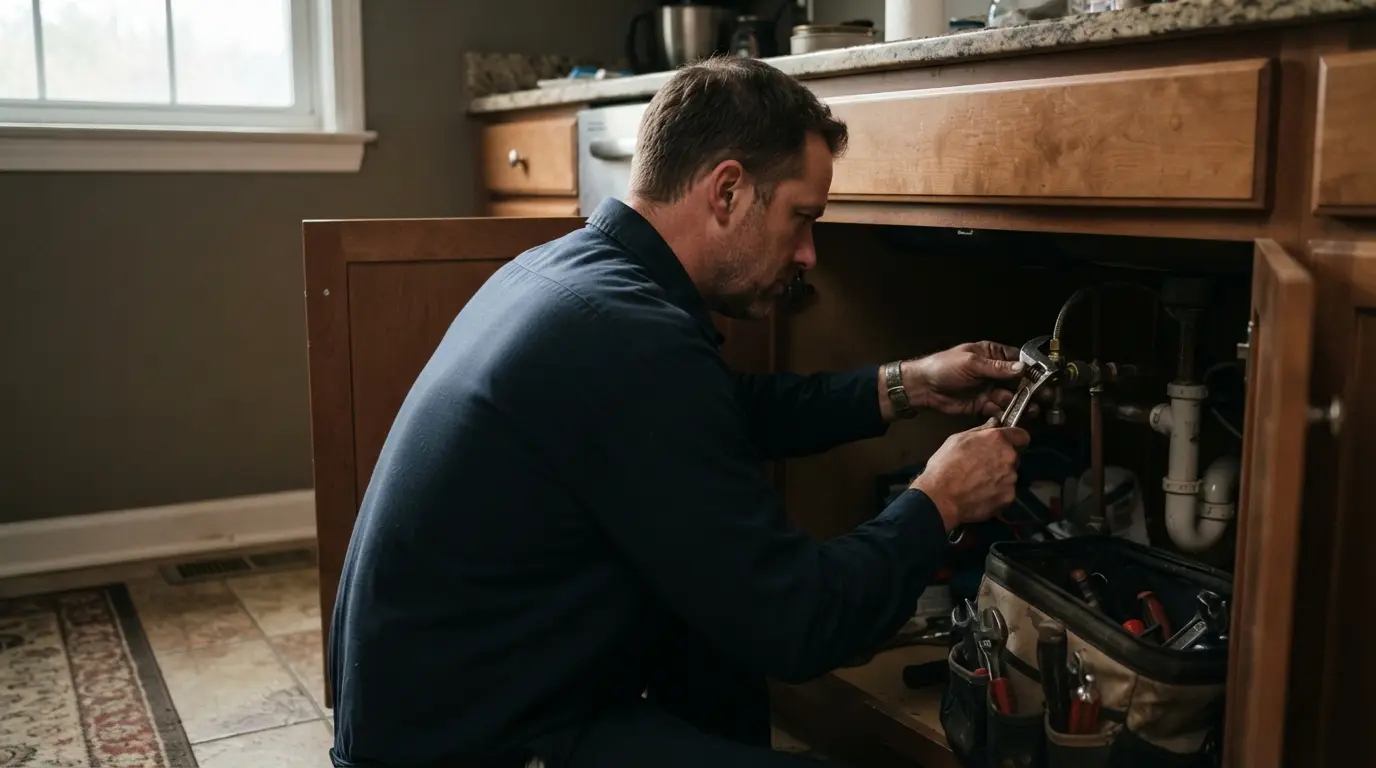
Rowhouse sewer backing up, or a water heater giving out? Our plumbers in Maryland find the cause and fix it. We work in Baltimore city and county, the Montgomery and Prince George's suburbs, Howard and Anne Arundel counties, Frederick and Hagerstown, Southern Maryland, the Eastern Shore and the mountains of Western Maryland. Maryland plumbing ranges from century-old rowhouses and aging city mains to new subdivisions, bay-side septic rules and seasonal beach homes. Here is what we fix and where.
Plumbing in Maryland
Our Census data covers 5,222,055 Marylanders in 2,166,188 homes across 536 places. 53% of those homes were built before 1980, rising to 82% in Baltimore and 85% in Dundalk. Growth in Frederick and Montgomery counties is much newer: the median home in Germantown dates from 1990 and in Monrovia from 2015.
Utility gas heats 48% of Maryland homes and electricity 43%. Apartments and condos are common: buildings with five or more units hold 26% of homes statewide and 60% in Silver Spring. Renters occupy 36% of homes.
Counts from the U.S. Census Bureau 2024 Gazetteer.
Explore our servicesWhat our plumbers see
Baltimore rowhouses have cast iron stacks, galvanized supply and clay laterals under the sidewalk. We repipe and replace failing drains.
Roots, aging laterals and storm-loaded public sewers push water into basement drains. We clear, camera and repair lines.
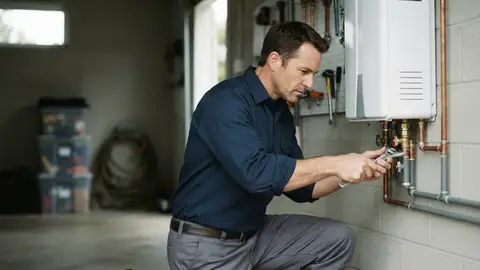
Gas and electric heaters in basements and closets wear out. We repair and replace them.
Heavy rain and high groundwater flood basements. We install sump pumps and backups.
Cold snaps freeze pipes in outside walls and crawl spaces, especially in Western Maryland.
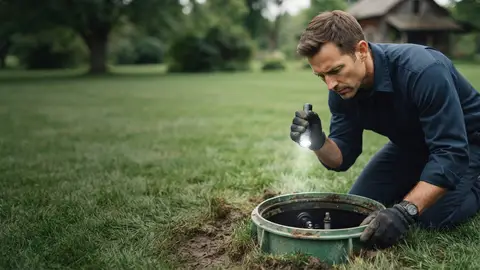
Rural and bay-area homes use septic and wells, often with nitrogen-reducing systems. We service them.
Our services
Each service page covers how we handle that work in Maryland homes and businesses.
Sewer Line Repair & Replacement
Repiping & Water Line Replacement
Gas Line Repair & Installation
Water Heater Repair & Replacement

Toilet, Faucet & Fixture Repair
Sump Pump Repair & Installation
Across the state
Homes and main places: Baltimore (295,032 homes), Dundalk, Towson, Glen Burnie
What our plumbers see: Rowhouses, old laterals, aging mains
Homes and main places: Silver Spring (35,774 homes), Germantown, Bethesda, Bowie
What our plumbers see: High-rises, postwar homes, new builds
Homes and main places: Columbia (43,280 homes), Ellicott City, Annapolis
What our plumbers see: Townhomes, planned communities, bay homes
Homes and main places: Frederick (35,421 homes), Hagerstown, Cumberland
What our plumbers see: Cold winters, older towns, wells
Homes and main places: Waldorf (31,417 homes), Leonardtown, La Plata
What our plumbers see: Fast growth, septic, wells
Homes and main places: Salisbury, Easton, Ocean City, Crisfield
What our plumbers see: High water tables, septic, seasonal homes
Maryland licenses plumbers and gas fitters statewide through the State Board of Plumbing. In Montgomery and Prince George's counties, WSSC Water also issues plumbing and gas permits and inspects work. Our Maryland work is done by plumbers holding the licenses each job requires.
Permits come from county or city agencies, or WSSC Water in its service area. Water heater replacement, repiping, sewer and water line work and gas piping usually need a permit. We pull it and schedule the inspection.
Most Marylanders get water from large public systems, including Baltimore City's system and WSSC Water in the Washington suburbs, which draw on rivers and reservoirs. Some mains and service lines are very old. Rural homes use private wells, which should be tested regularly; well water can be hard, acidic or iron-bearing depending on the region.
Homes beyond sewer use septic systems permitted by county health departments under state rules. Near the Chesapeake Bay and its tributaries, new and replacement systems often must use nitrogen-reducing technology. Confirm requirements with your county; we handle permits on repairs we perform.
Baltimore has 295,032 homes in our data, many of them brick rowhouses built before World War II, and 13% are vacant. Shared walls, narrow basements and long runs to the street make plumbing work tight. We replace cast iron stacks and galvanized lines, repair clay laterals under sidewalks and coordinate with neighbors when a line or wall is shared.
Buildings with five or more units hold 60% of homes in Silver Spring and 60% in North Bethesda. A leak in one unit can damage several below. We repair risers, shutoffs and fixtures and coordinate with building managers and condo boards.
Ocean City has 87% of homes vacant in our data and Ocean Pines 35%, nearly all seasonal. Flat land and high water tables make septic and drainage harder across the Shore, and salt air corrodes fixtures. We open and close seasonal homes, repair freeze damage and service septic systems.
Cumberland, where 87% of homes predate 1980, Hagerstown (67%) and the mountain towns see colder winters than the rest of the state. Pipes in outside walls and crawl spaces freeze, and many rural homes use wells. We thaw and repair lines and service well systems.
Waldorf, with a median build year of 1992, and towns like Leonardtown and Centreville have grown fast, and many homes beyond the sewer lines rely on wells and septic. Propane heats 32% of homes in Centreville and 32% in Leonardtown. Newer homes need water heater service, softeners for hard well water and septic care more than repiping. We handle all of it, along with the gas and propane lines that feed ranges, fireplaces and generators.
Wheaton, where 72% of homes predate 1980, Glen Burnie (64%) and Towson (69%) filled with brick ranches and split-levels after World War II. Their galvanized supply lines, cast iron drains and original water service lines are now reaching the end of their life. We camera sewers, repipe in stages and replace old service lines, starting with whatever is failing first so the work fits your budget.
Service area
Our largest Maryland service areas by population:
Every Maryland place in our data, grouped by county:
Allegany County
Anne Arundel County
Baltimore County
Baltimore city
Calvert County
Caroline County
Carroll County
Cecil County
Charles County
Dorchester County
Frederick County
Garrett County
Harford County
Howard County
Kent County
Montgomery County
Prince George's County
Queen Anne's County
Somerset County
St. Mary's County
Talbot County
Washington County
Wicomico County
Worcester County
How it works
What is happening, how old the house is and whether to shut off water or gas now.
Burst pipes, sewage backups and gas odors are scheduled ahead of routine work.
A camera, pressure test or leak locator shows the cause.
We explain options, and nothing starts until you agree.
The work is tested, and we schedule the county or WSSC inspection when required.
Have a plumbing problem in Maryland?
Call Expert Plumber Now and tell us what is happening. We’ll send a licensed plumber.
Pricing
We price each job after we see it. These factors matter most:
Rowhouses and high-rises need careful access.
Galvanized, cast iron and clay often need replacing.
County, city and WSSC requirements differ.
Wells and nitrogen-reducing septic add parts.
Dense neighborhoods slow some jobs.
Evening and weekend calls cost more.
You get a written price before work begins.
Season by season
Keep heat on, open cabinets on outside walls and disconnect hoses; drip faucets in hard freezes.
Test the sump pump before heavy rains and look for wet basement walls.
Storms overload sewers; keep the basement drain trap full and gutters clear.
Drain outdoor faucets, flush the water heater and close up shore homes properly.
Why choose us
What you can count on every time one of our plumbers comes to your door.
Every job is handled by a plumber who holds the license your state or city requires, backed by liability insurance.
Our plumber explains the problem and the options, and you approve a written price before any work begins.
Burst pipes, sewage backups and failed water heaters get priority scheduling, including nights and weekends.
We pull permits when the job needs one and schedule the inspection, so the work holds up when you sell.
Repairs and installations come with a written warranty on labor, on top of the manufacturer's warranty on parts.
Our pages and plumbers account for your area's water, soil, climate and the age of the homes around you.
Our plumber looks at the problem, pipe material, access and permits, then gives you a written price. Nothing starts until you approve it.
Sometimes. Tight basements, shared walls and long runs to the street can add time. We explain any added cost first.
We ask what is happening, tell you what to shut off and schedule our plumber, with burst pipes, backups and gas odors first. We keep you updated on timing.
Yes. We pull permits from your county, city or WSSC Water and schedule the inspection.
Leave without using switches or phones and call your gas utility or 911 from outside. We repair the piping once it is safe.
A like-for-like swap usually takes a few hours. Changes in fuel, size or location take longer, and an inspection may follow.
Keep heat on, open cabinets on outside walls, disconnect hoses and drip faucets during hard freezes.
Stay away from water near electrical equipment, stop using water if a sewer is backing up and call us. Flooding gets priority.
Yes. Our Maryland work is done by plumbers licensed through the State Board of Plumbing.
Often, yes. New and replacement systems near the Chesapeake Bay usually must reduce nitrogen. Your county health department sets the rules.