Clay tile
Era: Before the 1970s
Typical failure: Roots, cracked joints
Roots in the clay lateral, or sewage in the basement again? We handle sewer line repair and replacement in Maryland. Many Maryland laterals are clay or cast iron laid in the first half of the 1900s, running under sidewalks, alleys and old trees. In Baltimore and the inner suburbs, they are wearing out. We camera the line, mark the damage from above and repair it by digging or trenchless methods, working with the city, county or WSSC Water on permits.
The service
The lateral carries waste from the house to the public sewer, and owners are usually responsible for at least part of it. 28% of the 2,166,188 homes in our Maryland data were built before 1960. Dundalk (85% built before 1980), Wheaton (72%), Aspen Hill (70%) and Baltimore have many original laterals.
Sewer pipe under Maryland homes
Era: Before the 1970s
Typical failure: Roots, cracked joints
Era: Through the 1970s
Typical failure: Rust, split bottoms
Era: Postwar decades
Typical failure: Collapse and deformation
Era: Newer homes
Typical failure: Sags if bedding settles
Why Maryland
Old street trees grow into clay joints and fill the pipe.
Cast iron corrodes and fiber pipe from the postwar years collapses.
Clay soils and winter frost shift joints apart over time.
Utility work and new construction can crack nearby laterals.
Warning signs
Our process
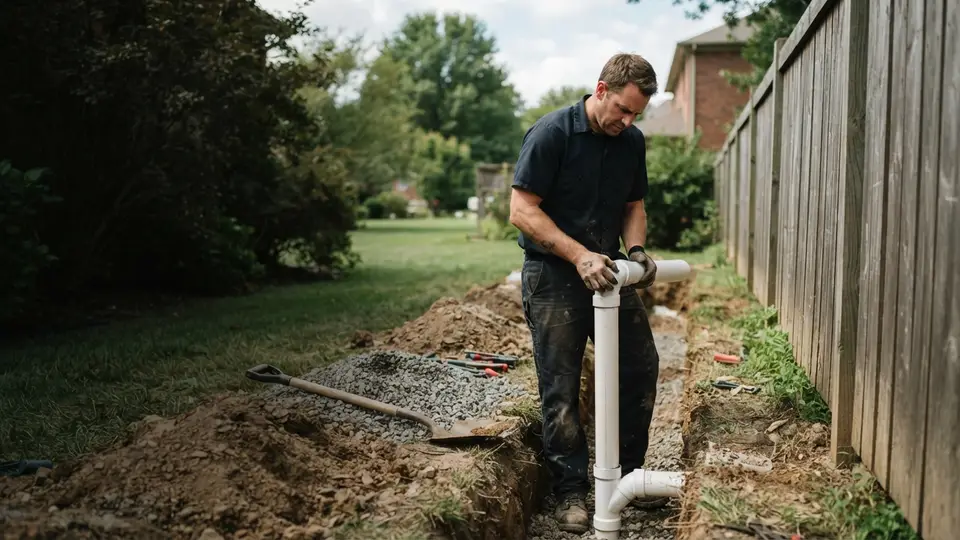
For a single break, we dig at the marked spot, replace the section and bed it properly.
For lines failing along their length, we replace them by open trench, pipe bursting or lining.
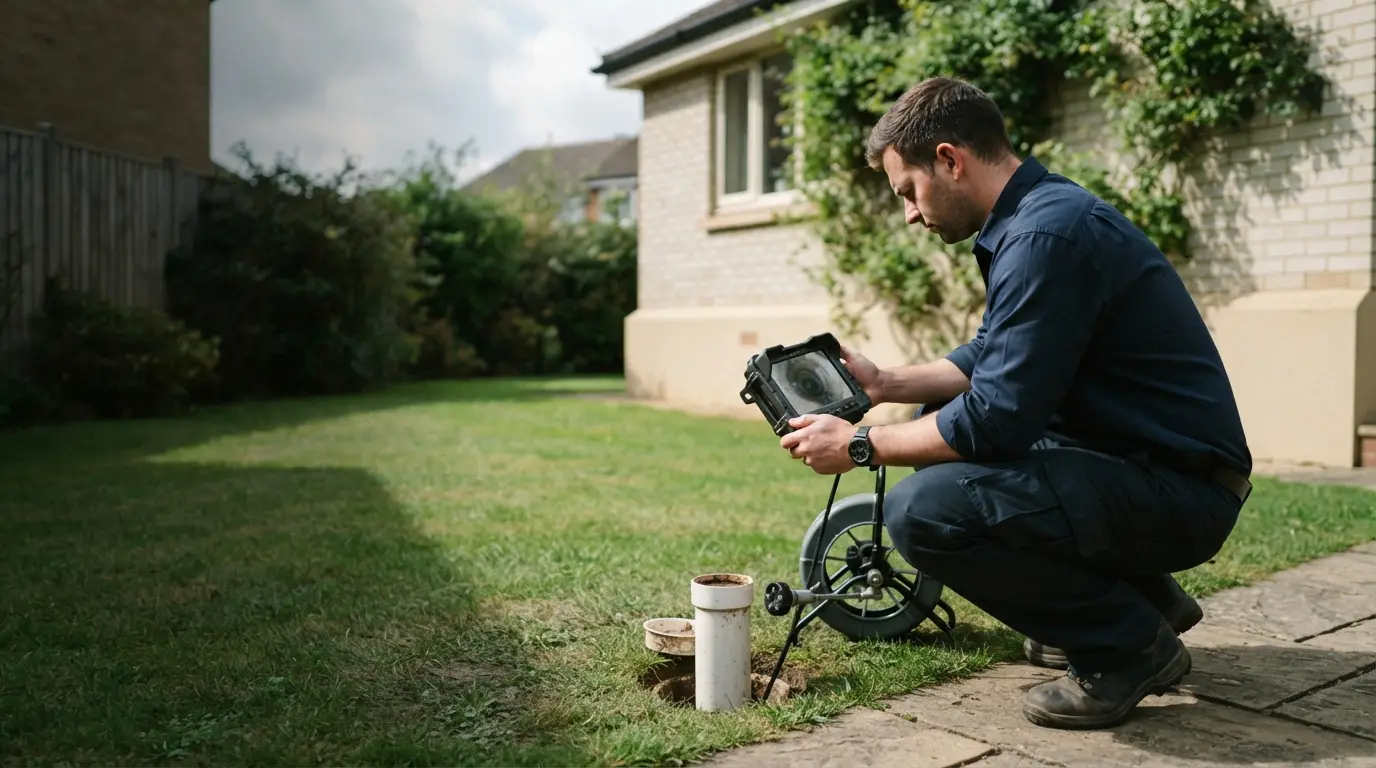
We record the line with a camera and locate breaks and their depth from the surface.
Typical cost
Any figure before the camera inspection is an estimate only. These factors set the final price:
You approve a written price before we dig.
Get a written price: (833) 733-2357Deeper or longer lines need more work.
Sidewalks, steps and trees affect the method.
Work in the street needs extra permits.
One break costs less than a full line.
County, city or WSSC fees apply.
Benefits
Sealed pipe stops roots.
Sewage stays in the pipe.
Buyers value a sound sewer.
Sealed joints keep rodents out.
Baltimore (295,032 homes) rowhouse laterals run from the basement under the front wall and sidewalk to the street, or out the back to an alley. Some are shared with neighbors. Repairs often involve cutting the sidewalk and working with the city on the public portion. Trenchless lining can avoid tearing up front steps and sidewalks when the pipe qualifies.
Catonsville (16,926 homes), Towson, Wheaton and Bethesda have postwar laterals under mature trees, some made of fiber pipe that has flattened. A camera inspection tells you whether cleaning will help or replacement is due, and the video gives you something concrete to compare against the price before you decide.
In Montgomery and Prince George's counties, WSSC Water owns the public sewer and issues plumbing permits. Responsibility for the lateral is split between the owner and WSSC at a defined point, usually near the property line. We camera the line, tell you which side the problem is on and handle permits and inspection for the part that is yours.
Lining forms a new pipe inside the old one, and bursting pulls a new line through while breaking the old one. Both avoid trenching under driveways, sidewalks and trees. Collapsed or badly sagging lines usually need excavation. We explain the options after the camera inspection.
In Hagerstown (19,679 homes) and Cumberland, where 87% of homes predate 1980, laterals run through rocky ground on hilly lots. We plan digging carefully and use trenchless methods where rock makes trenching slow and costly.
Home inspections seldom include the sewer. On an older house in Annapolis (19,598 homes), Baltimore or the suburbs, a camera check before closing can reveal a broken lateral. We give you the video and a written summary.
In newer areas like Odenton (median built 1999), PVC laterals can sag if backfill settles or catch construction debris. A camera shows the problem, and the footage helps if a warranty applies.
After an open-trench repair we compact backfill so it does not sink, and we coordinate sidewalk and driveway patches as part of the job. Trenchless work leaves only small access pits, usually one in the yard or basement and one near the street connection. We fill and level them when we finish and leave the area clean.
Heavy summer thunderstorms can overload older public sewers, and when that happens, sewage can rise through the lowest drain in the house even though your own lateral is clear. A camera inspection tells you whether your line is damaged or the backup came from the main. If your basement has flooded this way before, a backwater valve on the building sewer, where your county or WSSC allows one, closes when the public sewer surcharges and keeps that water out. We install and service backwater valves and add a cleanout so the valve can be checked.
Some Baltimore and older town properties drain to a sewer in the rear alley rather than the street, and a few share a single lateral with neighbors. Before we dig, we trace the route on camera and with a locator so the repair happens in the right place and everyone affected knows what is planned.
Stop using water if sewage is backing up and keep everyone away from it.
Clear access to the basement cleanout. Do not dig near the line yourself, then call us.
Sewer repair and replacement in Maryland need a permit from your county, city or WSSC Water, and street work may need extra approval. We handle the permits. Our plumbers hold Maryland plumbing licenses.
Why choose us
What you can count on every time one of our plumbers comes to your door.
Every job is handled by a plumber who holds the license your state or city requires, backed by liability insurance.
Our plumber explains the problem and the options, and you approve a written price before any work begins.
Burst pipes, sewage backups and failed water heaters get priority scheduling, including nights and weekends.
We pull permits when the job needs one and schedule the inspection, so the work holds up when you sell.
Repairs and installations come with a written warranty on labor, on top of the manufacturer's warranty on parts.
Our pages and plumbers account for your area's water, soil, climate and the age of the homes around you.
Service area
We repair sewer lines in 536 Maryland communities, including Towson (24,871 homes). Find yours:
It depends on depth, length, what lies above the line and whether street work is needed. We give you a written price after the camera inspection.
It can cost more per foot but avoids tearing up sidewalks, steps and driveways, which often saves money overall.
Yes. It is priced as its own service and shows exactly where the damage is.
We record the line with a camera and use a locator to mark the problem and its depth on the surface.
We call in utility locates, open the ground or set up trenchless equipment, replace the pipe, test it and arrange inspection.
Usually the owner up to a set point, often near the property line. The city, county or WSSC handles the public portion.
Yes. Sewage carries bacteria. Avoid contact, keep children and pets away and clean the area after the repair.
No. Utility lines may be nearby and trenches can collapse. Leave excavation to us.
Many lateral replacements take one to two days plus inspection. Street work can add time.
Only while the old pipe is out and the new one is being connected. We tell you when to stop and resume using water.
Plant trees away from the line, clean roots regularly and replace clay sections with sealed pipe.
A camera check every few years for clay or cast iron lines catches damage early.
Stop using water and call us. Sewage backups are scheduled ahead of routine work, and we keep you updated on timing.
Some do. A camera inspection shows how your line runs and whether a shared section is involved.
In Montgomery and Prince George's counties, yes. We pull WSSC permits and schedule its inspections.