Water softener
What it handles: Hardness, some iron
Notes: Regenerates with salt
Scale on every faucet, or well water leaving orange stains? We install water softeners and filtration in Maryland for city water and private wells. Water in Frederick and Washington counties runs through limestone and is often hard, wells in Southern Maryland and on the Eastern Shore can carry iron or be acidic, and city water carries disinfectant taste. We test your water first, then install the softener, filter, neutralizer or reverse osmosis system that fits what we find.
The service
Most Marylanders get water from large public systems such as Baltimore's (295,032 homes in the city) and WSSC Water, which draw on rivers and reservoirs. Rural homes rely on wells, and water quality varies by region. New homes in Monrovia (median built 2015), Germantown and Waldorf are often plumbed with a loop ready for a softener.
Treatment systems we install
What it handles: Hardness, some iron
Notes: Regenerates with salt
What it handles: Iron, manganese, stains
Notes: Common on Shore and Southern Maryland wells
What it handles: Low pH, corrosive water
Notes: Protects copper pipe
What it handles: Chlorine or chloramine taste
Notes: Whole house or drinking tap
What it handles: Dissolved solids, nitrate
Notes: Drinking water
Why Maryland
Frederick and Washington counties sit on limestone valleys that make water hard.
Wells in Southern Maryland and on the Eastern Shore often carry iron.
Some wells deliver soft, low-pH water that eats copper.
Public water is disinfected, and some households want less taste.
Warning signs
Our process
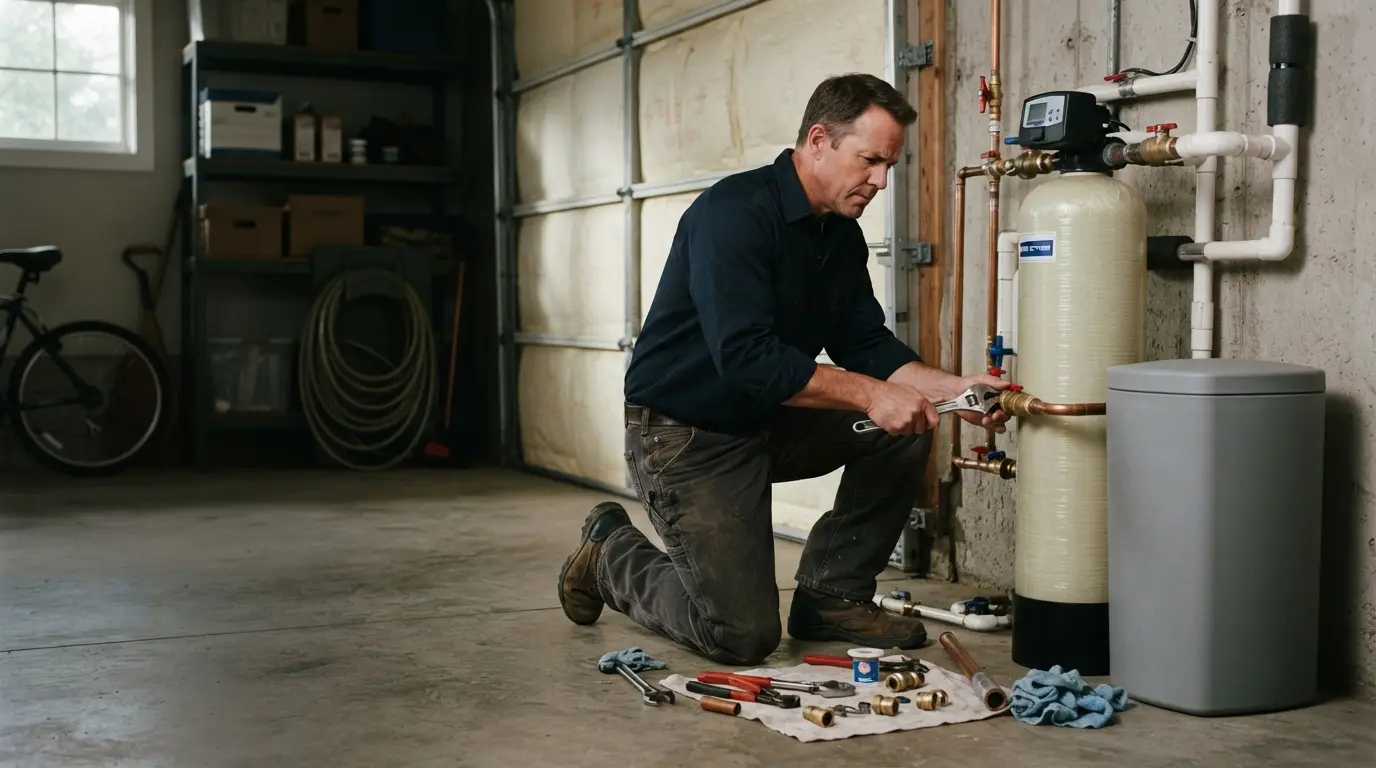
We test hardness and iron, size the softener for your household, install it with a bypass and connect the drain.
We install sediment, carbon, iron and neutralizing filters on the main line.
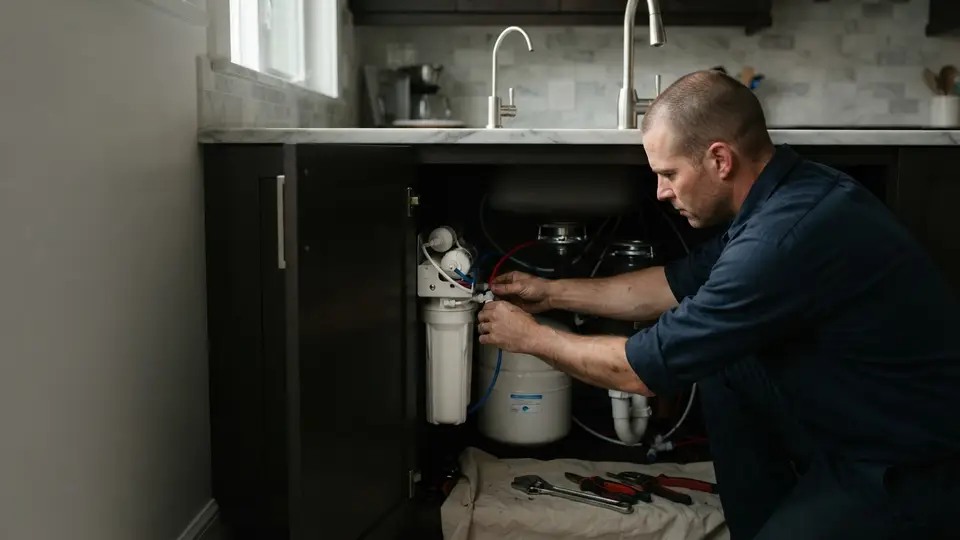
We install under-sink reverse osmosis with a dedicated faucet and can connect it to the refrigerator.
Typical cost
Any figure before we test is an estimate only. These factors determine the cost:
You approve a written price before we start.
Get a written price: (833) 733-2357Several problems need several stages.
Bigger families need bigger systems.
Adding a loop or drain takes labor.
RO, UV and neutralizers add cost.
Salt, filters and media are ongoing.
Benefits
Less scale in heaters and machines.
No white crust or orange stains.
Neutralizers stop copper corrosion.
Carbon and RO improve drinking water.
Frederick (35,421 homes), Hagerstown (19,679 homes) and the surrounding valleys sit on limestone, and both well and public water there tend to be hard. Scale shortens water heater life, clogs showerheads and leaves spots on everything. A softener sized to your hardness and household use protects fixtures and appliances.
Wells around Waldorf, Leonardtown (1,776 homes), Salisbury (14,658 homes) and Centreville often carry iron, sometimes manganese, and can be acidic. Iron stains fixtures and laundry; acidic water causes pinhole leaks in copper. An iron filter and a neutralizer, often ahead of a softener, solve these problems. We test first so each stage is needed.
Public water in Maryland meets drinking standards, but disinfectant taste bothers some households, and older mains and service lines can add sediment. A whole-house carbon filter improves taste and smell throughout the home, and a reverse osmosis tap gives the best drinking water. Your utility's annual water quality report shows what is in your water.
Test your well regularly for bacteria, nitrate and other contaminants, especially near farms or after flooding. A softener does not remove bacteria or nitrate; UV disinfection and reverse osmosis do. We install treatment based on your lab results and suggest a follow-up test to confirm it works.
Scale builds up fastest in water heaters, especially tankless units and electric elements. Iron stains fixtures and clogs aerators. Treated water helps heaters, dishwashers and washers last longer and keeps bathrooms cleaner.
Renters occupy 66% of homes in College Park, and buildings with five or more units hold 28% of Germantown homes. Owners can protect heaters and fixtures across units with a central system. We install and service treatment for owners and managers.
A softener that is too small regenerates constantly; one that is too large wastes money. We size from hardness, iron and household use and set demand-based controls. On septic, we route backwash where allowed so it does not overload the field.
A sulfur smell can come from the well or from the water heater. If only the hot water smells, the anode rod in the heater is often reacting with the water, and changing the anode or flushing the tank usually fixes it. If both hot and cold water smell, hydrogen sulfide is in the supply, more common on some coastal plain wells, and an oxidizing filter removes it before it reaches the taps. We test to find the source before recommending equipment, so you do not pay for a filter that will not fix the smell.
When a well needs more than one treatment, order matters. A sediment filter protects what follows, a neutralizer raises pH, iron and hardness come out next, and UV and reverse osmosis come last. We lay out each stage so it works well and is easy to service.
Traditional softeners use salt, and some households prefer potassium chloride. Salt-free conditioners reduce scale but do not remove hardness or iron. We explain how each would perform with your water and what yearly upkeep each one needs, so you can compare the real cost of owning them.
If you have city water, find your utility's water quality report. If you have a well, arrange a lab test or gather recent results.
Clear space near the main line or pressure tank. Then call us to test and plan the installation.
Installations that change plumbing may need a permit from your county, city or WSSC Water. We pull permits where required. Our plumbers hold Maryland plumbing licenses.
Why choose us
What you can count on every time one of our plumbers comes to your door.
Every job is handled by a plumber who holds the license your state or city requires, backed by liability insurance.
Our plumber explains the problem and the options, and you approve a written price before any work begins.
Burst pipes, sewage backups and failed water heaters get priority scheduling, including nights and weekends.
We pull permits when the job needs one and schedule the inspection, so the work holds up when you sell.
Repairs and installations come with a written warranty on labor, on top of the manufacturer's warranty on parts.
Our pages and plumbers account for your area's water, soil, climate and the age of the homes around you.
Service area
We install softeners and filters in 536 Maryland communities, including Waldorf (31,417 homes) and Centreville (1,986 homes). Find yours:
It depends on softener size, your water chemistry and installation needs. We test your water and give you a written price before starting.
An under-sink system costs less than whole-house treatment. The price depends on the unit and any refrigerator connection.
Salt, filters, membranes, neutralizer media and UV lamps. We explain them so there are no surprises.
We test for hardness, iron, pH and other issues, then recommend only the equipment your water needs.
We shut off the water, cut in a bypass, install the system, connect the drain, set it up and test it.
Yes. An iron filter removes iron before it reaches your fixtures, often ahead of a softener.
For most people, yes. It adds a little sodium. A reverse osmosis tap is a good option for drinking water.
No. Bacteria need UV disinfection and nitrate needs reverse osmosis or another approved treatment.
Most single systems take a few hours. Multi-stage systems take longer.
Many last ten to fifteen years or more with care. Media and valves need service over time.
It depends on hardness and use, often every month or two. Keep salt above the water level.
Acidic water is dissolving copper. A neutralizer protects your plumbing.
Put it in bypass, close the inlet valve and call us. Leaks that will not stop are scheduled ahead of routine work.
In the western valleys it often is. Elsewhere it varies, and many coastal wells carry iron instead. A test tells you.
Yes. A whole-house carbon filter or a reverse osmosis tap removes most disinfectant taste.