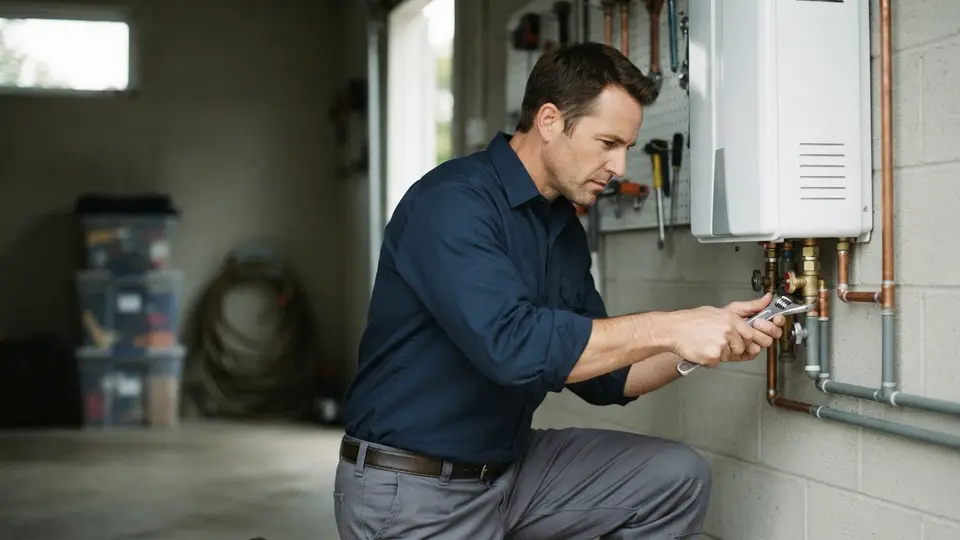
Gas tank
Fuel: Natural gas
Notes: Needs venting and combustion air
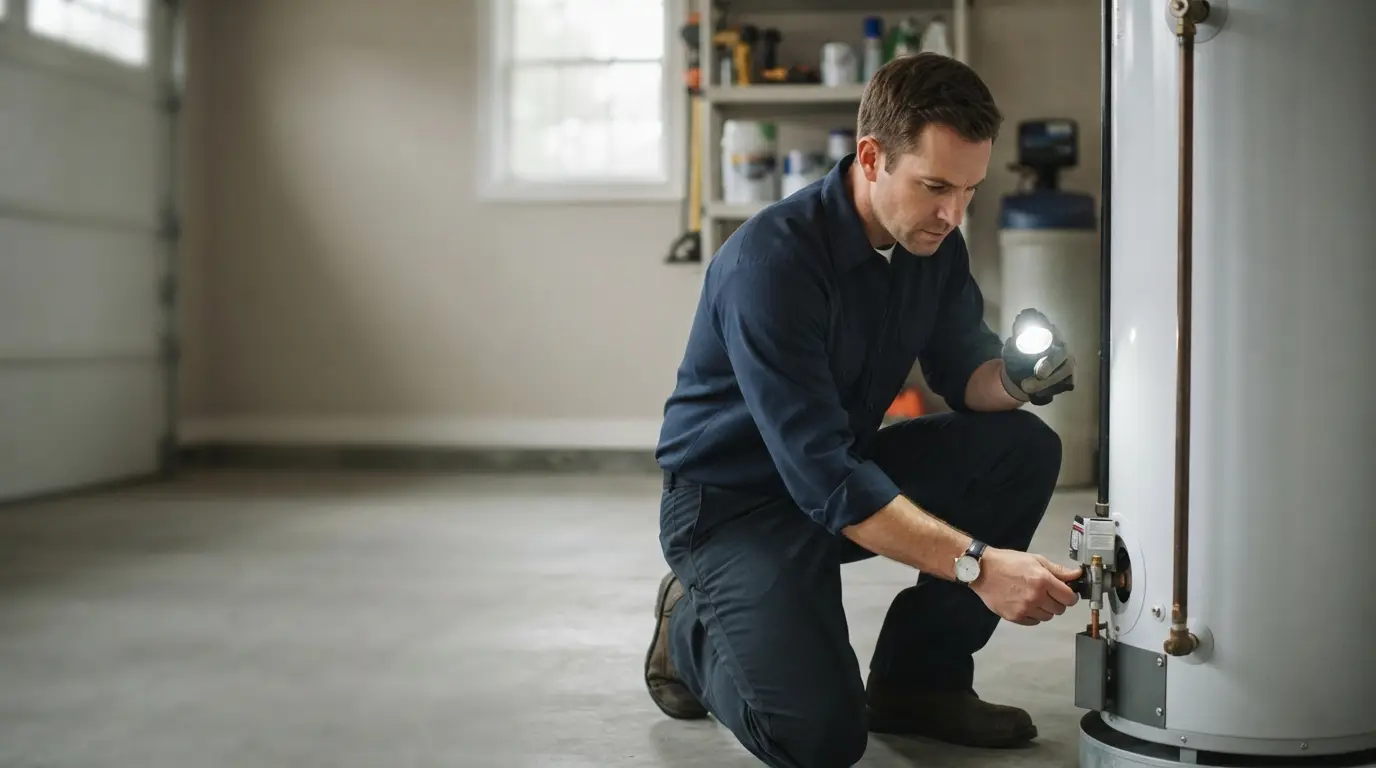
No hot water, or a tank leaking in the basement or condo closet? We handle water heater repair and replacement in Maryland. Maryland homes split between gas and electric heaters, from basement tanks in Baltimore rowhouses to closet units in suburban condos and propane heaters on rural lots. Old chimneys, tight spaces and high-rise rules all affect the job. We repair what makes sense and install properly sized replacements with safe venting, drain pans and expansion tanks.
The service
Utility gas heats 48% of the homes in our Maryland data and electricity 43%. Gas is most common in older areas like Dundalk (71%) and Potomac (68%), while electric heat is common in newer areas such as Waldorf (55%) and Germantown (56%). Propane serves rural homes, including 32% in Centreville and 32% in Leonardtown.
Water heaters we service
Fuel: Natural gas
Notes: Needs venting and combustion air
Fuel: Electricity
Notes: Elements and thermostats wear out
Fuel: Electricity
Notes: Efficient in basements and utility rooms
Fuel: Gas, propane or electric
Notes: Steady hot water, needs flushing
Fuel: Propane
Notes: Common on rural lots
Why Maryland
Minerals settle in tanks and coat elements, cutting efficiency.
Once the anode rod is used up, the tank begins to rust.
High street pressure and missing expansion tanks stress tanks.
Older chimneys may not draft properly for a new heater.
Warning signs
Our process
We test gas valves, thermocouples, igniters, elements and thermostats, replace failed parts and check the relief valve.
We size the heater, connect gas or power, set up venting, add an expansion tank and drain pan and remove the old unit.
We install tankless units with properly sized gas lines and venting, plus valves for yearly flushing.
Typical cost
Any figure before we see the heater is an estimate only. The price depends on:
You approve a written price before we start.
Get a written price: (833) 733-2357Parts cost far less than a new heater.
Heat pump and tankless units cost more upfront.
Liners and power vents add cost.
Rowhouse stairs and condo closets take longer.
Replacements usually need one.
Benefits
Sized for your household.
Exhaust leaves the home properly.
Drain pans and sensors in condos.
Expansion tanks and anodes protect the tank.
Baltimore (295,032 homes) rowhouses usually keep the water heater in a narrow basement reached by steep stairs, venting into an old masonry chimney shared with the furnace. When the furnace has been replaced with a high-efficiency model, that chimney may no longer draft properly for the heater alone. We check the flue, add a liner or switch to a power-vent heater when needed, and plan the swap so the old tank comes out and the new one goes in safely.
Buildings with five or more units hold 60% of homes in Silver Spring, and many condos have electric heaters in a closet above someone else's ceiling. Buildings often require a drain pan, a leak sensor or an automatic shutoff and may limit work hours. We follow building rules, coordinate access and install heaters that fit the closet and the building's requirements.
In all-electric homes, a heat pump water heater can cut water heating costs a great deal. Maryland basements and utility rooms often suit them well, and they dehumidify damp basements as a side benefit. They need space around the unit and a condensate drain. Utility rebates have been offered at times; ask your electric company what is available. We check your space and wiring before recommending one.
Tankless gas heaters save space and give steady hot water, but they usually need a larger gas line and new venting, and the unit must be sized for cold winter water. Electric tankless units need heavy electrical capacity most homes lack. We compare tankless with a tank or heat pump for your house.
Renters occupy 66% of homes in College Park and 57% in Hagerstown. Rental heaters run hard and are often undersized. We repair and replace them for owners and managers and can standardize models across units.
Rural homes in Southern Maryland, the Eastern Shore and Western Maryland often heat water with propane and draw from a well. Hard or iron-bearing well water scales tanks quickly. We service propane heaters, check regulators and connections and suggest water treatment when we see heavy buildup.
Homes with a pressure regulator or check valve need room for heated water to expand. Without it, pressure spikes, the relief valve drips and the tank wears out. We add a thermal expansion tank where needed and check incoming pressure, adding a regulator if the street pressure is high.
Electric tanks have an upper and a lower element, each with its own thermostat. When the upper element fails there is no hot water at all; when the lower one fails, hot water runs out fast. We test each part, replace what has failed and flush the tank so the new element lasts. If the tank itself is leaking or worn out, we compare a new electric tank with a heat pump model, which can cut the electric cost of hot water a great deal.
If the tank is leaking, close the cold water valve above it and turn the gas control off or switch off the breaker. In a condo, tell building staff.
If you smell gas, leave and call your gas utility from outside. Do not open the relief valve. Then call us.
Water heater replacement in Maryland usually needs a permit from your county, city or WSSC Water, and gas work needs a licensed gas fitter. We pull the permit and schedule the inspection. Our plumbers hold Maryland plumbing and gas licenses.
Why choose us
What you can count on every time one of our plumbers comes to your door.
Every job is handled by a plumber who holds the license your state or city requires, backed by liability insurance.
Our plumber explains the problem and the options, and you approve a written price before any work begins.
Burst pipes, sewage backups and failed water heaters get priority scheduling, including nights and weekends.
We pull permits when the job needs one and schedule the inspection, so the work holds up when you sell.
Repairs and installations come with a written warranty on labor, on top of the manufacturer's warranty on parts.
Our pages and plumbers account for your area's water, soil, climate and the age of the homes around you.
Service area
We repair and replace water heaters in 536 Maryland communities, including Columbia (43,280 homes). Find yours:
It depends on the type and size, venting, access and permit. We give you a written price before starting work.
Repair usually wins for a younger heater with a failed part. A leaking or very old tank is better replaced.
It costs more upfront than an electric tank but uses much less electricity over its life.
We shut off fuel or power and water, remove the old heater, set and connect the new one, add safety parts, fill it and test it.
We consider household size, bathrooms, large tubs and appliances, and cold winter water temperatures.
Yes. We follow building rules, add required pans and sensors and coordinate access with management.
Leave the home without using switches and call your gas utility or 911 from outside. We repair it once it is safe.
High pressure, high temperature or a worn valve can cause it. Never cap it; call us to find the cause.
A standard tank swap usually takes a few hours. Venting changes, heat pumps or tankless units take longer.
Many tanks last about eight to twelve years. Sediment and skipped maintenance shorten that.
Once a year is a good habit, more often on hard well water.
If your home has a pressure regulator or check valve, usually yes. Many local codes require one with a new heater.
Close the cold supply valve, shut off fuel or power and call us. Leaking heaters are scheduled ahead of routine work.
Sometimes. Older chimneys may need a liner or a power-vent heater instead. We check venting on every install.
Maryland utilities have offered rebates at times. Ask your electric company what is available now.