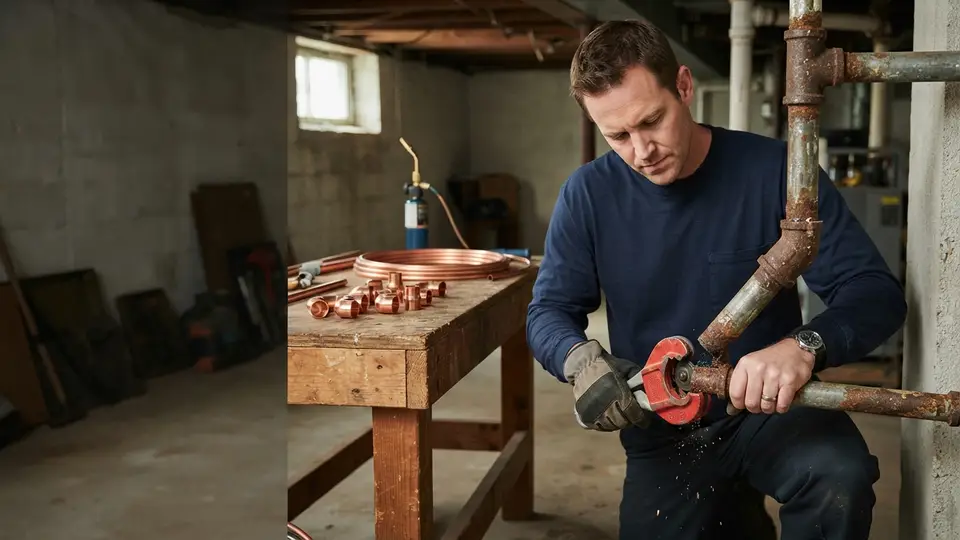
Galvanized steel
Era: Before about 1960
Typical issue: Rust buildup, low pressure
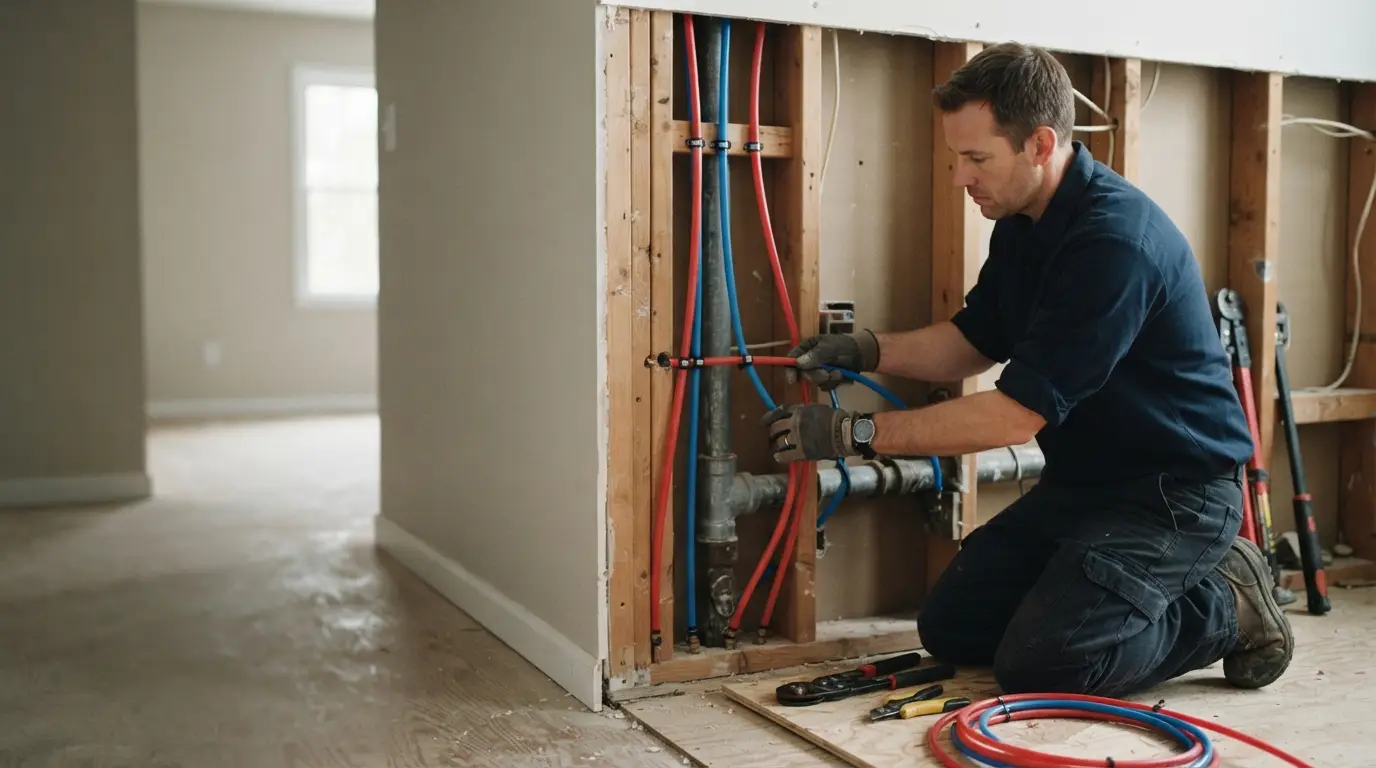
Rusty water, or pressure that drops when the dishwasher runs? We handle repiping and water line replacement in Maryland. We work in rowhouses, postwar suburbs, condos and small buildings. Many Maryland homes still carry galvanized steel from before 1960, and some old service lines and fittings contain lead. We replace old pipe with copper or PEX, keep water on each evening, patch the access openings and handle the permit with your county, city or WSSC Water.
The service
28% of the 2,166,188 homes in our Maryland data were built before 1960. In Baltimore 82% of homes predate 1980, in Dundalk 85%, in Wheaton 72% and in Aspen Hill 70%. Many of these homes have galvanized supply lines, often mixed with copper added during later repairs.
Pipe in Maryland homes
Era: Before about 1960
Typical issue: Rust buildup, low pressure
Era: Very old homes
Typical issue: Health concern, replace
Era: 1950s onward
Typical issue: Pinholes, worn joints
Era: Late 1970s to mid 1990s
Typical issue: Fitting failures
Era: Today
Typical issue: Long-lasting replacement
Why Maryland
Galvanized pipe from the early and mid 1900s rusts closed inside.
Copper joined directly to galvanized corrodes at the joint.
Pipes in outside walls weaken after repeated freezes.
High street pressure in some areas strains old pipe.
Warning signs
Our process
We replace damaged sections with new pipe and proper transition fittings.
We plan routes, run new supply to each fixture, pressure test and remove or abandon the old lines.
We repair leaks in the service line from the meter to the house.
We replace old service lines, coordinating with the utility on the public side.
Typical cost
Repiping figures are estimates only until we walk the home. The price depends on:
You approve a written price before we start.
Get a written price: (833) 733-2357More bathrooms and floors mean more pipe.
Copper and PEX differ in cost.
Unfinished basements help; plaster needs care.
Replacement to the street is separate work.
County, city or WSSC fees apply.
Benefits
No more rust.
Full flow on every floor.
New pipe ends repeat repairs.
Old lead-era parts are gone.
Baltimore (295,032 homes) rowhouses are narrow and deep, with plumbing stacked in a back corner or along a party wall. We run new mains along the basement ceiling and up through existing chases, opening plaster only where needed. The water service often enters under the front steps from the street, and replacing it may involve the sidewalk. We plan each step so the house has water each night.
Some older Maryland homes still have lead service lines or lead-era fittings. Water utilities across the state are identifying these lines, and some offer replacement programs. Check with Baltimore City, WSSC Water or your local utility. We replace the private side, coordinate on the public side and recommend testing your water afterward.
Catonsville (16,926 homes), Towson, Wheaton, Aspen Hill and Bethesda have brick ranches, Cape Cods and split-levels from the 1940s through the 1960s. Their galvanized lines are at the end of their life. Basements make repiping practical: new mains along the ceiling, branches up through interior walls.
Buildings with five or more units hold 60% of homes in Silver Spring. Older buildings may need riser replacement. We plan the work riser by riser with the building manager, give residents notice and keep water outages short and scheduled.
In Hagerstown (19,679 homes) and Cumberland, where 87% of homes predate 1980, older houses on hillsides have pipe in outside walls that freezes in hard winters. We route new pipe through warm interior spaces and insulate what must run near exterior walls.
Some Maryland homes and townhomes built from the late 1970s to the mid 1990s have gray polybutylene pipe. Its fittings can fail without warning, and some insurers ask about it. We replace it with copper or PEX, usually in a few days, and give you paperwork for your insurer.
During a repipe we install a main shutoff that turns easily, quarter-turn stops at each fixture and a shutoff for the water heater. We test street pressure and add a regulator if it runs high, protecting the new pipe and every fixture in the house.
We protect floors, shut off water and run new mains in the basement first. Over the next days we connect bathrooms, the kitchen, laundry and water heater, restoring water each evening. Then we pressure test, call for inspection and patch openings. In historic homes in Annapolis (19,598 homes) and Baltimore, we take extra care with plaster and trim.
Kitchen and bath remodels are the best time to replace old supply lines. With walls and floors open, new pipe costs far less than coming back later, and we can move lines away from cold exterior walls at the same time. In Baltimore rowhouse renovations, where entire floors are often opened up, we can rough in a complete new system, including a new water service, and schedule inspection so the drywall crew is not held up. We coordinate the order of work with your contractor from the start.
Even homes from the 1970s through the 1990s may need partial repiping, especially those with polybutylene or with copper that has started to pinhole. Townhomes often share walls and sometimes service lines with neighbors, so we confirm what serves each unit before we start and keep neighbors informed when shared lines are involved.
If a pipe is leaking, close the main shutoff and cut power to wet areas. Note which fixtures have low pressure or discolored water.
Clear space along basement walls where pipes run. Then call us to plan the work.
Repiping and service line replacement in Maryland need a permit from your county, city or WSSC Water and an inspection. We handle both. Our plumbers hold Maryland plumbing licenses.
Why choose us
What you can count on every time one of our plumbers comes to your door.
Every job is handled by a plumber who holds the license your state or city requires, backed by liability insurance.
Our plumber explains the problem and the options, and you approve a written price before any work begins.
Burst pipes, sewage backups and failed water heaters get priority scheduling, including nights and weekends.
We pull permits when the job needs one and schedule the inspection, so the work holds up when you sell.
Repairs and installations come with a written warranty on labor, on top of the manufacturer's warranty on parts.
Our pages and plumbers account for your area's water, soil, climate and the age of the homes around you.
Service area
We repipe homes in 536 Maryland communities, including Towson (24,871 homes) and Bethesda (30,095 homes). Find yours:
It depends on home size and layout, pipe material, access and the service line. We walk through and give you a written price before starting.
PEX usually costs less to install because it needs fewer fittings. Copper costs more but suits exposed runs.
Yes. Replacing the line from the meter to the house involves digging and is listed as its own item.
We run new mains along the basement ceiling and up through existing chases, opening plaster only where needed.
Usually, yes. We restore water each evening so you can live in the home throughout the work.
We patch access openings. Final paint and plaster finishing can be included or handled by your contractor.
Some older Maryland homes do. Your water utility can tell you what its records show, and testing your water helps confirm.
Rust itself is mostly a nuisance, but old pipes can carry other metals. Test your water if you are concerned.
Many homes take a few days. Larger or historic homes take longer.
Usually one to two days, depending on depth and whether sidewalk or street work is needed.
Keep the heat on and insulate any pipe near outside walls. We route new pipe away from cold spaces where we can.
Yes. Open walls make repiping much cheaper, and new fixtures get new pipe.
Close the main shutoff and call us. We repair the break first and schedule the repipe afterward.
A large share were built before 1960 with galvanized pipe that has now rusted inside.
Some Maryland utilities have replacement programs. Ask yours what applies to your address.