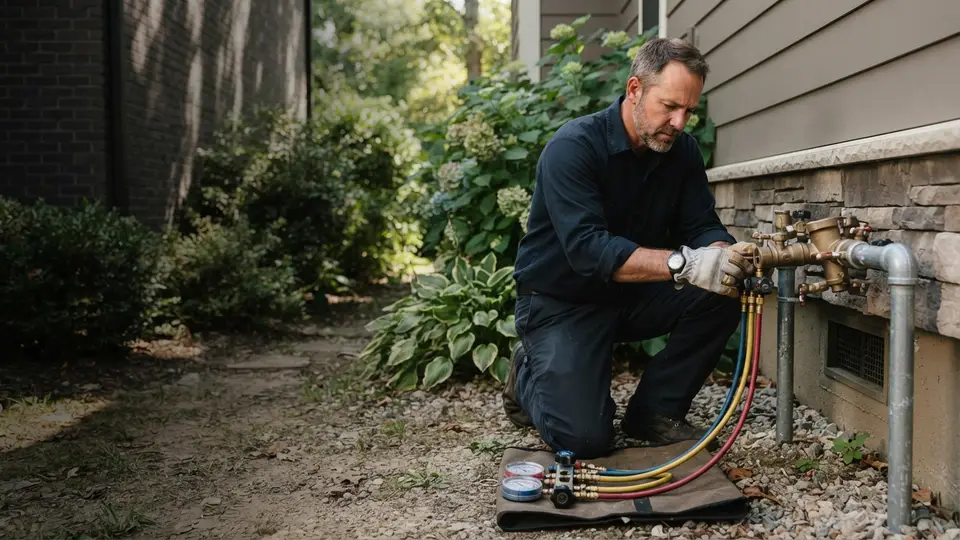
PVB (pressure vacuum breaker)
Where it goes: Lawn sprinkler mains
Hazard it covers: Back-siphonage
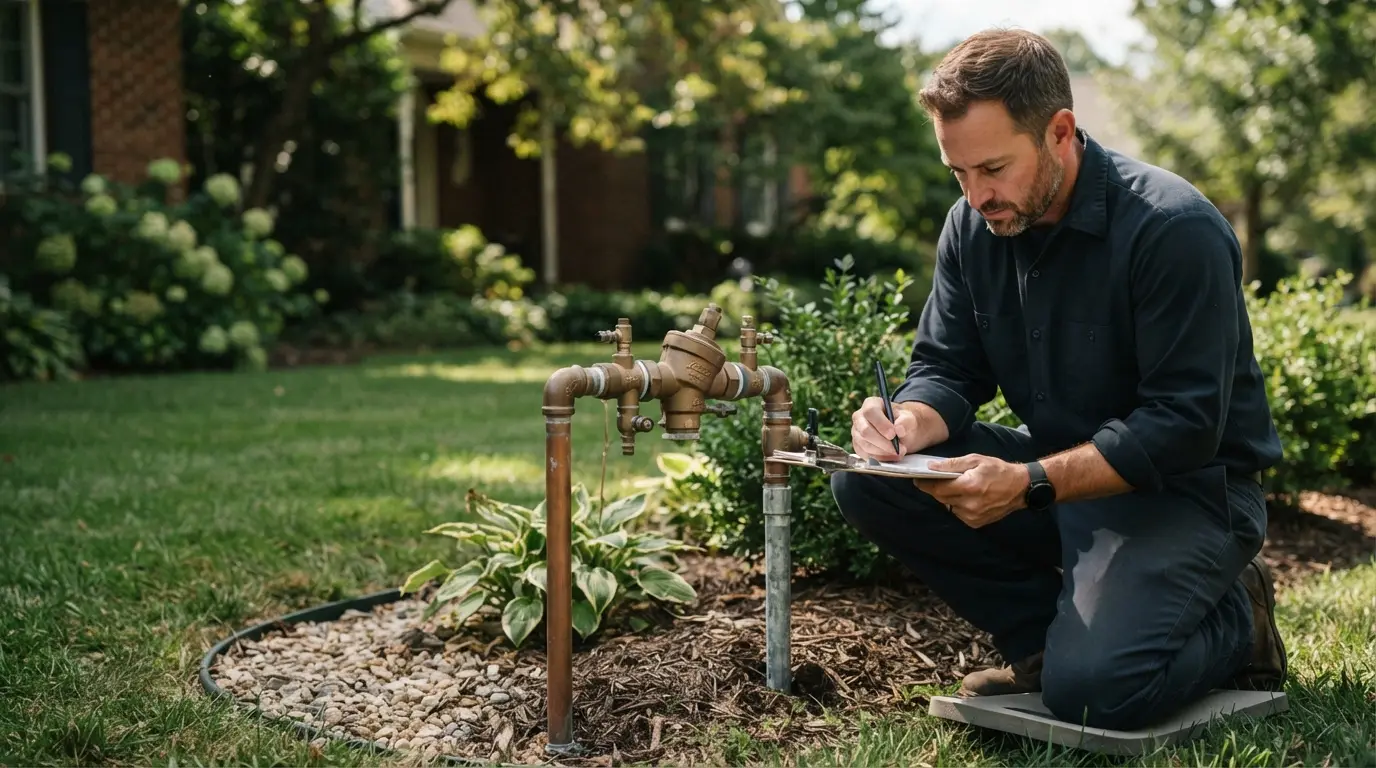
Backflow test letter in the mail, or a sprinkler valve cracked by an early frost? We handle backflow testing and prevention in Nebraska. Our plumbers test assemblies, install new preventers and rebuild ones that fail. Nebraska water systems guard against cross-connections, so lawn irrigation, fire sprinkler lines, boilers, chemical feeders and many commercial connections need a testable device checked on schedule. On farms, chemigation and livestock lines add their own risks. We test, send results to your water system where it asks for them and quote any repair in writing.
The service
Normally water flows one way, from the main into your building. Backflow reverses it. A main break or a fire hydrant opened nearby can drop the pressure and siphon water backward; a pump or boiler can push water backward by raising pressure on your side. Without a preventer, lawn chemicals, boiler water, stock tank water or soap concentrate could end up in the public supply.
Omaha's Metropolitan Utilities District, Lincoln Water and city systems in Grand Island, Kearney, Norfolk and other towns run cross-connection programs. Most ask for testable devices to be checked by a certified tester at least once a year, and rules vary between systems. Lawn sprinklers in Papillion (9,906 homes), Gretna and west Lincoln are among the most common devices we test.
Backflow devices we test and fit
Where it goes: Lawn sprinkler mains
Hazard it covers: Back-siphonage
Where it goes: Fire lines, low-risk service lines
Hazard it covers: Low hazard
Where it goes: Boilers, chemical feeds, car washes, clinics
Hazard it covers: High hazard
Where it goes: Outdoor faucets, utility sinks, stock tank hoses
Hazard it covers: Back-siphonage
Why Nebraska
A sudden hard frost catches irrigation assemblies still full of water and splits them.
Scale and sand stop check valves seating cleanly.
Discs, seats and diaphragms harden and tear over the years.
Fast-closing sprinkler valves send shock waves that damage internals.
Warning signs
Our process
A certified tester hooks a calibrated differential gauge to the test cocks, checks each check valve and relief valve against its required reading and records the results for your water system.
We fit the assembly your water system specifies for the hazard, at a height and location where it can be tested and drained, and file any permit.
Failed assemblies get a rebuild kit or, if the body is cracked, a new assembly, followed by a retest to show it passes.
Typical cost
Until we see the assembly, any figure is an estimate only. Price depends on:
Repairs are quoted in writing before we start.
Get a written price: (833) 733-2357A two-inch RPZ takes more work than a home PVB.
Several on one site share one trip.
A kit costs less than a new body.
Pits and vaults take longer to work in.
Rural sites add travel time.
Benefits
Your neighbours drink from it too.
Results reach your water system on time.
Proper fall draining saves the device.
Small rebuilds prevent big replacements.
Sprinkler systems are standard in many newer neighborhoods: Gretna (median build year 2002), Chalco, Papillion and the edges of Lincoln. Each has a backflow device near the house, usually a PVB. Nebraska often sees a hard freeze in October before people think about winterizing, and another in April after they have turned the water on. We test in spring, blow out lines in fall and replace bodies that split.
Nebraska farms inject fertilizer and chemicals through irrigation systems, a practice called chemigation, and the state requires specific safety equipment on those systems to keep chemicals out of the well and groundwater. Livestock tanks and sprayer fill stations connected to rural water systems need protection too. We install and test backflow protection on farm connections to public water and make sure wells and rural water lines are never cross-connected.
Restaurants, car washes, clinics and apartment buildings often have several assemblies on one site. In La Vista, 42% of homes are in buildings with five or more units, and those buildings usually have a fire line device plus RPZ valves on boilers. We set up a test calendar for each property and cover every device in one trip.
Fire sprinkler water sits in the pipes for years and is not fit to drink, so a double check or RPZ separates it from the city main. These large assemblies usually sit in a heated riser room, but in Nebraska an outside wall or a broken heater can still freeze them. We test them on schedule, work alongside fire sprinkler contractors when the system must be shut down and file the results.
Find the assembly and clear away plants, snow or boxes so we can reach the test cocks. If it is spraying, close the shutoff valve just upstream.
Leave the test cocks and internals alone; only a certified tester should test the device. Have your water system's notice ready and call us.
Backflow testers in Nebraska must be certified, and water systems keep lists of testers they accept. New assemblies may need a plumbing permit in cities with plumbing codes. We file permits where required, and our plumbers hold the local licenses each job requires.
Why choose us
What you can count on every time one of our plumbers comes to your door.
Every job is handled by a plumber who holds the license your state or city requires, backed by liability insurance.
Our plumber explains the problem and the options, and you approve a written price before any work begins.
Burst pipes, sewage backups and failed water heaters get priority scheduling, including nights and weekends.
We pull permits when the job needs one and schedule the inspection, so the work holds up when you sell.
Repairs and installations come with a written warranty on labor, on top of the manufacturer's warranty on parts.
Our pages and plumbers account for your area's water, soil, climate and the age of the homes around you.
Service area
We test and repair backflow devices in 593 Nebraska communities, including Omaha (213,023 homes) and Norfolk (11,786 homes). Find yours:
The price depends on the assembly type and size, how many are on site and travel. We quote in writing before testing.
Often not. A rebuild with new discs, seats and springs usually gets it to pass for much less than a new assembly.
Sending results is part of our service. Some water systems charge their own filing fee, and we tell you about it up front.
A calibrated gauge goes on the test cocks, and we check that each check valve holds and any relief valve opens at the right pressure difference.
We do, where the system asks for it, and you get a copy to keep with your property records.
Yes. We install the assembly your water system requires, placed so it can be tested each spring and drained each fall.
Yes. Fertilizer, pesticides, boiler chemicals and bacteria can be drawn into drinking water. Preventers exist to stop exactly that.
It is protecting the supply, but something inside needs attention. Call us to test it and replace the worn parts.
Usually well under an hour. Sites with several commercial assemblies take longer.
Most Nebraska water systems require a yearly test. The due date is on your notice, and we can remind you each year.
Shut the supply, blow out the zones and open the test cocks so the assembly drains. We can do it for you every fall.
With yearly testing and rebuilds as needed, often 15 years or longer. Frost damage is the usual reason they fail early.
Yes. We fit deadline repairs in quickly and retest so you can send the passing result in time.
Yes. Systems that inject chemicals through irrigation must have specific safety equipment to protect wells and groundwater.
Early fall and late spring freezes catch assemblies full of water. Draining them in time prevents most cracks.