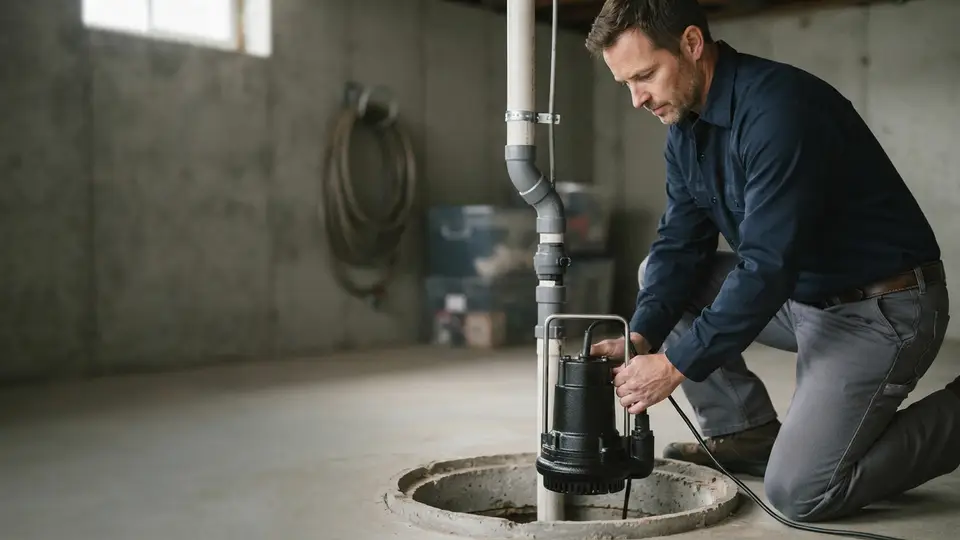
Submersible
Best for: Most finished basements
Notes: Quiet, sits in the pit
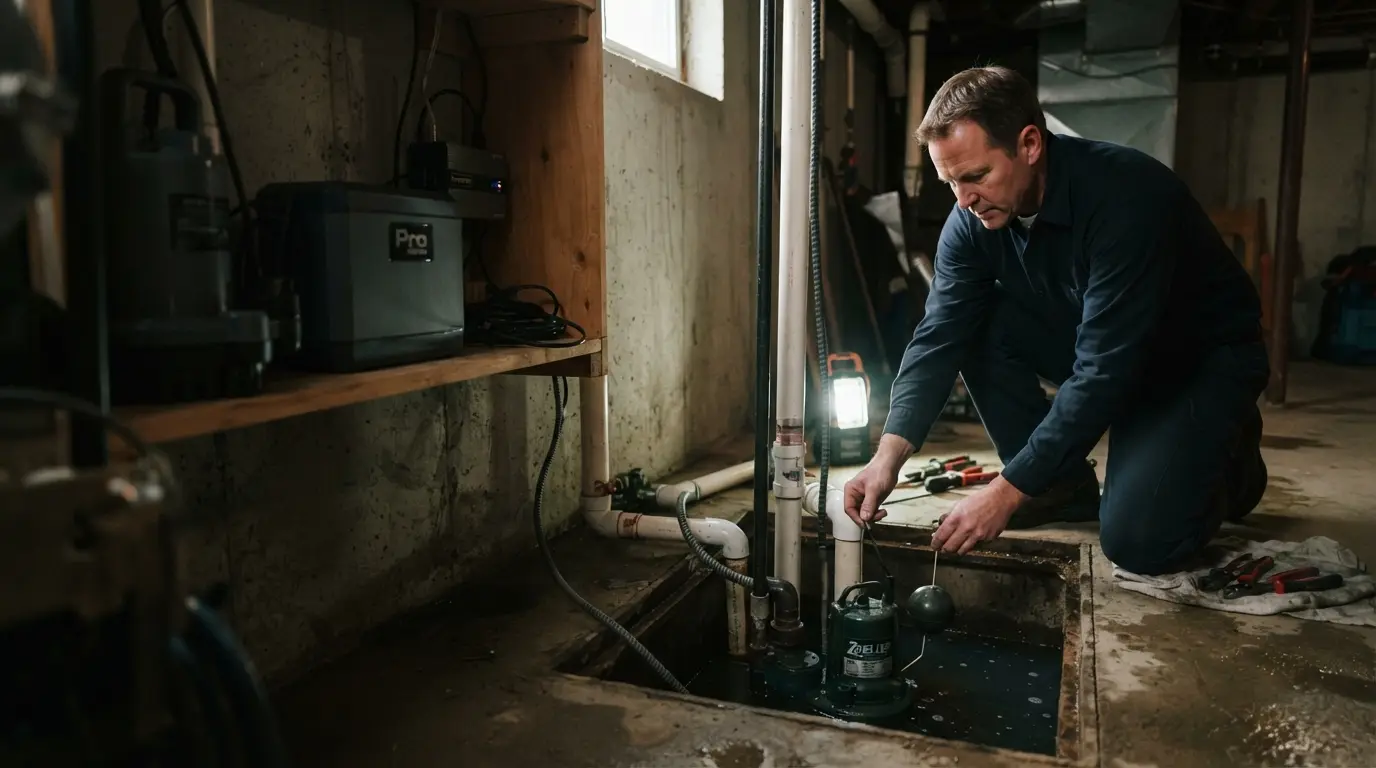
Sump pit overflowing in a spring storm, or a pump that never stops running? We handle sump pump repair and installation in Nebraska. Our plumbers repair failed pumps, install new primary pumps and add battery backup pumps for power outages. Nebraska basements take on water from spring snowmelt, heavy thunderstorms and high groundwater along the Platte, Elkhorn and Missouri rivers, and many suburban homes around Omaha and Lincoln rely on a sump pump to stay dry. We test the system, find the weak point and give you a written price before replacing anything.
The service
Most Nebraska homes have basements. Newer homes in Papillion (median build year 1991), Gretna and the edges of Lincoln usually have a drain tile around the foundation that empties into a sump pit, and a pump lifts that water outside. Older homes often had no pit, and owners added one after a wet spring. When the pump fails in a storm, the pit can overflow within hours.
Sump pump options we install
Best for: Most finished basements
Notes: Quiet, sits in the pit
Best for: Small or shallow pits
Notes: Motor above water
Best for: Storm outages
Notes: Runs when the main pump loses power
Best for: Homes on city water
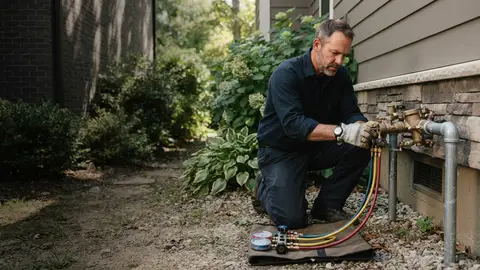
Notes: Uses water pressure, no battery
Why Nebraska
Thunderstorms can drop inches of rain in hours and push pumps past their capacity.
Near the rivers, pumps run for weeks in wet seasons and wear out.
Wind, hail and ice storms cut power when pumps are needed most.
Water trapped in outdoor discharge pipe freezes in winter.
Warning signs
Our process
We test the float, switch, check valve and motor, clean the pit and inlet and replace the failed part when the pump itself is sound.
We size the pump to the inflow, install a new check valve and discharge line and route water well away from the foundation.
We add a second, battery-powered pump with an alarm, so the basement stays dry if the power goes out or the main pump fails.
Typical cost
Figures before we check the system are estimates only. These factors decide the price:
You get a written price before work starts.
Get a written price: (833) 733-2357A float switch costs less than a new pump.
Higher-capacity pumps cost more.
Battery and water-powered backups add cost.
Rerouting or freeze protection adds work.
Cutting a pit into an existing floor is a larger job.
Benefits
Water leaves before it reaches the floor.
A backup pump keeps working.
Lower humidity in finished spaces.
Alarms tell you when water rises.
Papillion, La Vista (6,958 homes), Gretna, Bellevue and west Omaha have thousands of homes with finished basements and sump pits. Clay soils hold rainwater against foundation walls, and drain tile carries it to the pit. Many original pumps are now old enough to fail. We replace them, check that the discharge is not dumping water back against the house and add a backup.
Fremont (11,797 homes), Valley, Columbus and Grand Island sit near the Platte, Elkhorn and Loup, where the water table rises close to basement floors in wet years. Pumps there may run for weeks. During the 2019 floods many basements in these towns took on water. We install pumps sized for long run times, add backups and explain what a pump can and cannot protect against in a river flood.
A sump pump may run in a Nebraska winter during a thaw or where groundwater stays high. If the discharge line outside sags or lies flat, water sits in it and freezes, and the pump then pushes against ice until it burns out. We slope discharge lines so they drain completely, add a freeze-relief fitting near the house and keep the outlet away from snowbanks and driveways.
A flooded storage basement means a mop and a fan; a flooded finished basement means ruined carpet, drywall, furniture and possible mould. Many Nebraska families use the basement as bedrooms, a family room or an office, with the sump pit hidden in a closet. That pit still needs a sealed lid, room for the float to move, a working alarm and a discharge line that is not buried behind a new wall. We check all of these whenever we work on a finished basement.
Check that the pump is plugged in and the breaker or GFCI outlet has not tripped. Lift the float gently with a stick to see if the pump starts.
Never stand in water near cords or outlets. If water is rising, move belongings upstairs and call us.
Replacing a pump in an existing pit usually needs no permit. New pits, discharge changes and some electrical work may, and Nebraska cities generally do not allow sump water into the sanitary sewer. We follow local rules, pull any permits and our plumbers hold the local licenses each job requires.
Why choose us
What you can count on every time one of our plumbers comes to your door.
Every job is handled by a plumber who holds the license your state or city requires, backed by liability insurance.
Our plumber explains the problem and the options, and you approve a written price before any work begins.
Burst pipes, sewage backups and failed water heaters get priority scheduling, including nights and weekends.
We pull permits when the job needs one and schedule the inspection, so the work holds up when you sell.
Repairs and installations come with a written warranty on labor, on top of the manufacturer's warranty on parts.
Our pages and plumbers account for your area's water, soil, climate and the age of the homes around you.
Service area
We repair and install sump pumps in 593 Nebraska communities, including Omaha (213,023 homes) and Lincoln (128,449 homes). Find yours:
It depends on the pump type, capacity and any changes to the discharge line. We test the whole system first and give you a written price.
For finished basements, usually yes. Spring storms often knock out power exactly when the pump is needed, and a backup keeps water out.
Often, if the motor is sound. Floats, switches and check valves can be replaced for much less than a whole new pump.
We look at how fast water enters the pit, the pit depth and how high and far the water must be pumped to get it away from the house.
We set a second pump in the pit, connect it to the discharge with its own check valve and install the battery, charger and alarm.
Yes. We cut the floor, set a liner and pump and route the discharge outside, with permits where the city requires them.
Not if water may reach outlets, cords or appliances. Shut off power safely at the panel first, or wait for help to arrive.
Nebraska cities generally do not allow it. We route the discharge outside, away from your foundation and your neighbours.
Most replacements take a few hours. Adding a new pit or rerouting the discharge line takes longer.
Most last about 7 to 10 years. Pumps that run for weeks near the rivers may wear out sooner.
Every few months and before spring storms. Pour water into the pit and check that the pump starts and shuts off.
Give it a steady slope so it drains, add a freeze-relief fitting and keep the outlet clear of snow and ice.
Move belongings up, stay clear of electrical hazards and call us. A failed pump during a storm is an urgent call.
Clay soil holds rainwater against foundations. Drain tile collects it, and the sump pump removes it before it reaches the floor.
No. It handles groundwater, not floodwater pouring in. In flood areas we combine pumps with backwater valves and planning.