Galvanized steel
Found in: Homes before about 1960
What we do: Replace with PEX or copper
Rusty water from the tap, or pressure that drops whenever the washer runs? We handle repiping and water line replacement in Nebraska. Our plumbers repair failing pipe sections, replace all the supply piping in a house and repair or replace the service line from the curb stop or well to your basement. Many Nebraska homes in Omaha, Lincoln and the railroad towns still have galvanized steel from the early and middle 1900s, and hard water has worn early copper thin. We plan the work room by room and give you a written price before we start.
The service
33% of the 699,112 homes in our Nebraska data were built before 1960. The median home in Auburn dates from 1953, in North Platte from 1966 and in Beatrice from 1962. Homes from those years were plumbed in galvanized steel, sometimes with lead service connections, and many have had copper patches added over time. Galvanized narrows with rust until a full flow becomes a trickle.
Pipe we replace and install
Found in: Homes before about 1960
What we do: Replace with PEX or copper
Found in: Some older city homes
What we do: Replace with copper or approved plastic
Found in: 1950s to 1980s homes
What we do: Repair or replace thin sections
Found in: Some 1978 to 1995 homes
What we do: Replace before fittings fail
Found in: Our repiping choices
What we do: Chosen for the house and budget
Why Nebraska
Galvanized steel from the early 1900s has rusted from the inside.
Mineral scale narrows pipe and wears valves and fittings.
Copper joined directly to galvanized corrodes at the joint.
Pipe that has frozen more than once develops weak spots.
Warning signs
Our process
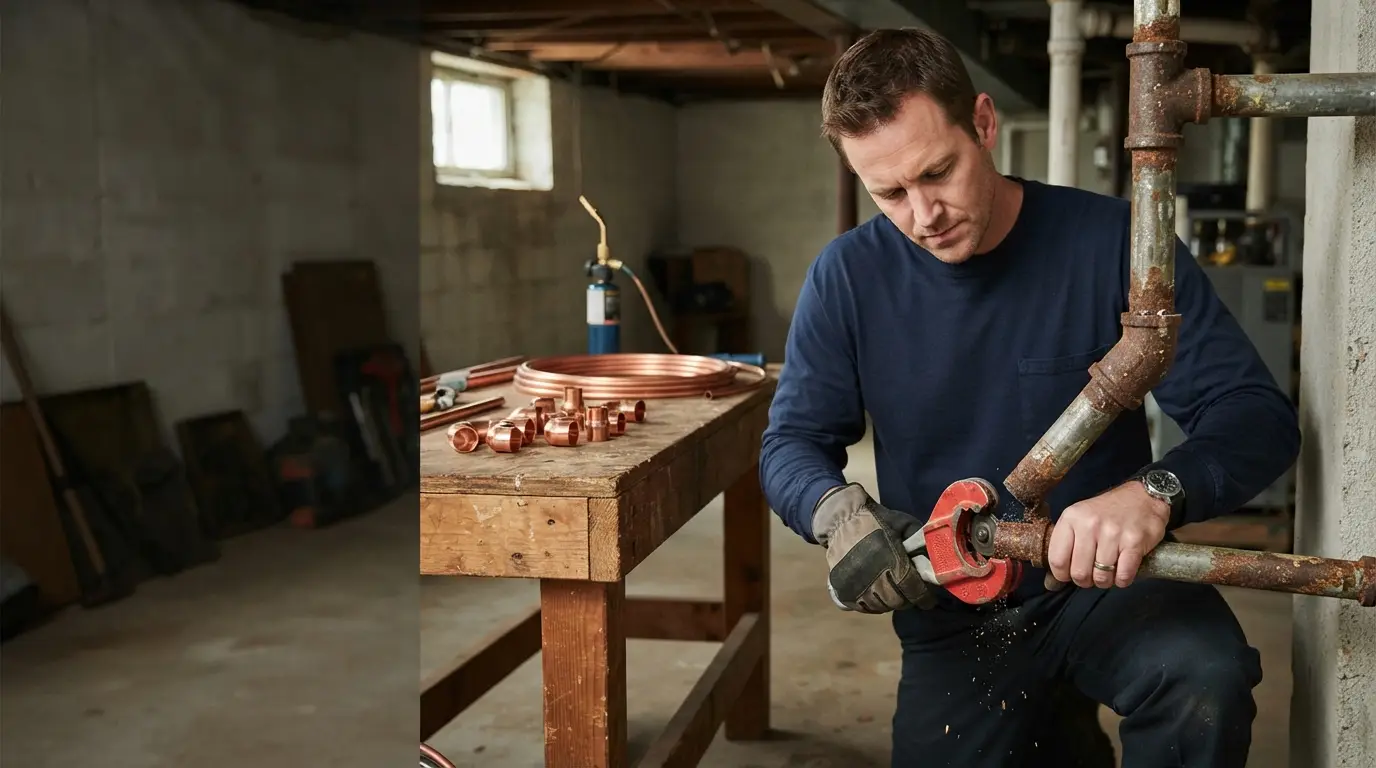
For one bad section, we cut out the damage, replace it and add a dielectric union where copper meets steel.
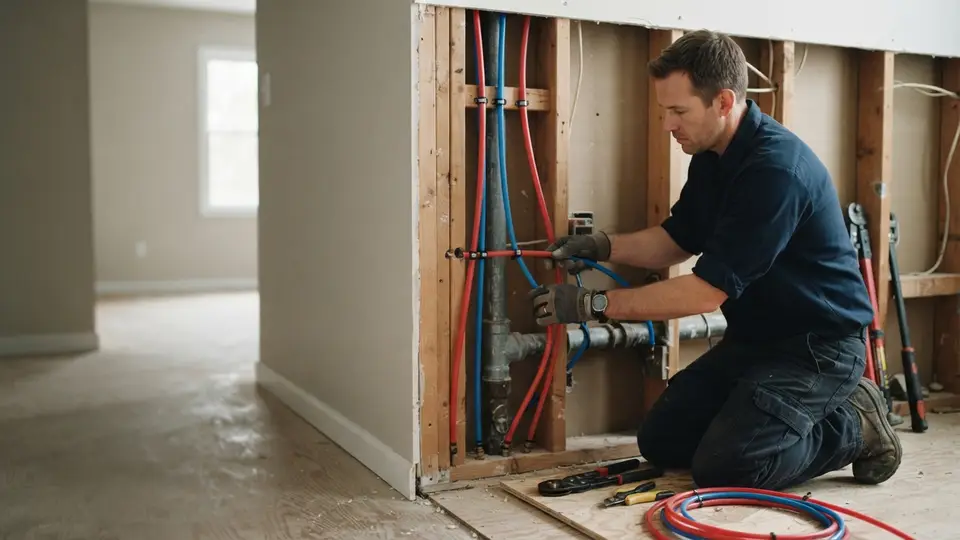
We run new supply lines to every fixture, working from the basement where we can and opening walls only where needed. Most homes stay livable during the work.
We locate and repair leaks in the service line between the curb stop or well and the house.
We replace old galvanized, lead or undersized service lines below frost depth, by trench or by boring under lawns and driveways.
Typical cost
Figures before we inspect the house are estimates only. These factors decide the final price:
You get a written price before work begins.
Get a written price: (833) 733-2357More fixtures and floors mean more pipe and labour.
PEX usually costs less than copper.
Open basements make the job easier than plaster walls or crawl spaces.
A long line from the street or well adds digging.
Repiping usually needs a permit and inspection in cities that issue them.
Benefits
Full-diameter pipe reaches every floor.
No more rust from corroded steel.
New pipe ends the cycle of patches.
Buyers prefer homes without galvanized or polybutylene.
Omaha (213,023 homes) and Lincoln (128,449 homes) have neighborhoods of early twentieth-century houses with galvanized risers and, in some cases, lead service lines. If your service line is lead, ask your water utility, such as Omaha's Metropolitan Utilities District, whether it offers any help before we price the private side. Inside, we replace galvanized with PEX or copper routed through the basement and closets to protect plaster walls.
North Platte (11,479 homes), Alliance, Kimball, Scottsbluff and Falls City have many homes built from the 1900s through the 1950s. Some have had partial repipes over the decades, leaving a mix of galvanized, copper and plastic. We test pressure at several fixtures, check every visible pipe and recommend either replacing the remaining galvanized or a full repipe, depending on what we find.
Some Nebraska homes and manufactured homes built from about 1978 to 1995 have grey polybutylene supply pipe. It can fail without warning, particularly at fittings, and some insurers ask about it. If we find it, we recommend replacing it with PEX, usually in a day or two because PEX bends around corners with few joints.
On farms and acreages, the water line runs from a well to a pressure tank in the basement. Old galvanized drop pipe, shallow lines and undersized pipe all reduce pressure. When we repipe a well home, we check the line from the well head, the pitless adapter and the pressure tank too, so the new piping inside is not let down by an old link outside.
If you are buying a house built before 1960 in Omaha, Lincoln or a county seat, look at the piping before closing. We check the service line material, what runs through the basement and whether past repairs mixed metals. A short visit tells you whether the house needs a few sections replaced or a full repipe, which helps you budget or negotiate.
If a pipe is leaking, close the main shutoff or switch off the well pump, and turn off the water heater. Collect water in buckets and move belongings away.
If you suspect a lead service line, run cold water for a few minutes before drinking and use a certified filter until it is replaced. Then call us.
Repiping and service line replacement usually need a permit in Omaha, Lincoln and other Nebraska cities with plumbing codes, and some need a utility inspection at the curb stop. We pull permits and schedule inspections. Our plumbers hold the local licenses each job requires.
Why choose us
What you can count on every time one of our plumbers comes to your door.
Every job is handled by a plumber who holds the license your state or city requires, backed by liability insurance.
Our plumber explains the problem and the options, and you approve a written price before any work begins.
Burst pipes, sewage backups and failed water heaters get priority scheduling, including nights and weekends.
We pull permits when the job needs one and schedule the inspection, so the work holds up when you sell.
Repairs and installations come with a written warranty on labor, on top of the manufacturer's warranty on parts.
Our pages and plumbers account for your area's water, soil, climate and the age of the homes around you.
Service area
We repipe homes in 593 Nebraska communities, including Grand Island (21,503 homes) and Hastings (11,408 homes). Find yours:
It depends on the size of the house, the number of fixtures, the pipe material and access. We inspect first and give you a written price before work starts.
PEX usually costs less and installs faster, especially in older homes with plaster walls. Copper costs more, but some owners prefer it and some layouts suit it.
Yes. The service line is priced separately because it involves digging or boring from the curb stop or well to the house, below frost depth.
We route pipe through basements, closets and floor cavities and open walls only where needed, keeping each opening small and neat.
Usually, yes. We restore water at the end of each day in most homes and tell you ahead of time when it will be off.
We test pressure, check every visible pipe and the service line and plan a route before giving you a written price.
Rust is not usually a health risk, but old galvanized can hold lead from past service lines. A water test tells you for certain.
Lead is dull grey, soft and scratches to a shiny silver. We can check where the line comes into your basement.
A typical house takes two to five days, depending on size and access. Inspections and wall patching follow.
Most are done in a day. Long lines, frozen ground or a street connection can add time.
Copper and PEX installed today should last decades with moderate pressure and reasonable water quality.
If your water is hard, as it is in much of Nebraska, a softener reduces scale on new pipe and fixtures. We test and advise.
Close the main shutoff, turn off the water heater and call us. We repair the break first and plan the repipe afterward.
Yes. Ask your water utility whether it replaces or helps with lead lines, then we can price the private side of the work for you.
Yes. Many homes built before about 1960, in Omaha and in small railroad towns, still have galvanized supply lines.