Water softener
Problem it solves: Hardness, scale, spots
Installed at: Main line entry
Crusty faucets and spotted dishes, or a private well that tested high for nitrate? We handle water softeners and filtration in Nebraska. Our plumbers install water softeners, whole-house filters and reverse osmosis drinking water systems. Almost all Nebraska water comes from the ground, and groundwater here is typically hard. In farming areas, many wells also carry nitrate, and some carry iron, manganese or uranium. We test first, explain what the numbers mean and recommend equipment that solves your actual problem, with a written price before installation.
The service
Omaha blends Missouri River water with water from Platte River wellfields; Lincoln draws from wellfields along the Platte near Ashland. Grand Island, Kearney, Hastings, North Platte and nearly every smaller town pump from wells, many tapping the High Plains aquifer. City systems treat water to meet drinking water standards, but they generally do not remove hardness, so scale is a common complaint.
On acreages around Hickman, Bennington and the other edges of Omaha and Lincoln, and on farms statewide, families drink from private wells. Nobody tests that water unless the owner does, and nitrate from fertilizer is a known problem in parts of the Platte Valley and other farming areas.
Water treatment we install
Problem it solves: Hardness, scale, spots
Installed at: Main line entry
Problem it solves: Orange and black staining
Installed at: Well systems
Problem it solves: Chlorine taste and odor
Installed at: City water main line
Problem it solves: Nitrate, uranium, arsenic, dissolved solids
Installed at: Kitchen sink
Problem it solves: Sand and grit
Installed at: Ahead of other equipment
Why Nebraska
Water picks up calcium and magnesium as it moves through sand, gravel and rock.
Nitrate seeps down from cropland and livestock areas into shallow aquifers.
Some aquifers carry naturally occurring uranium or arsenic.
Low-oxygen wells dissolve metals that stain fixtures.
Warning signs
Our process
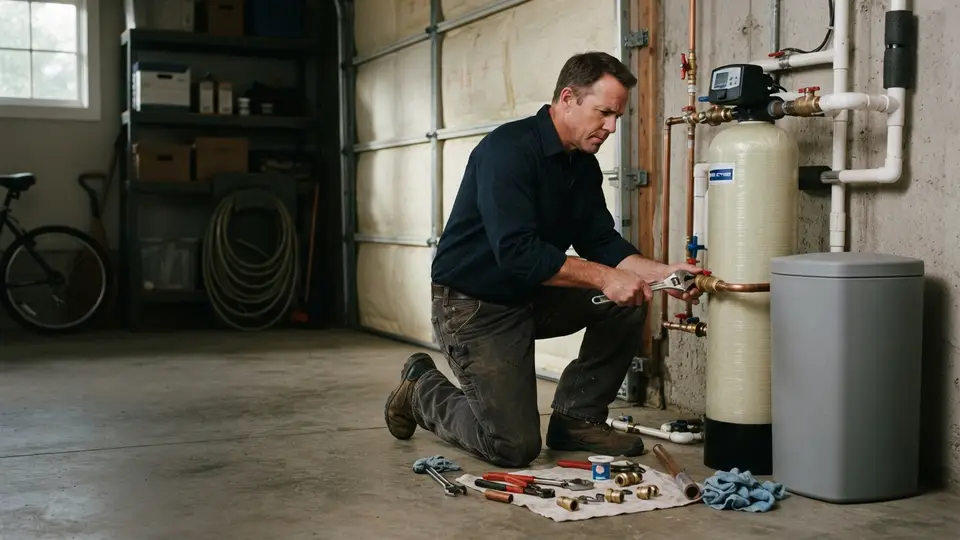
We measure hardness and iron, choose a softener sized for your household, plumb it with a bypass and drain and program it to regenerate by metered use rather than a timer.
Based on your results, we add sediment, carbon, iron or manganese filters on the main line, ahead of the softener when needed.
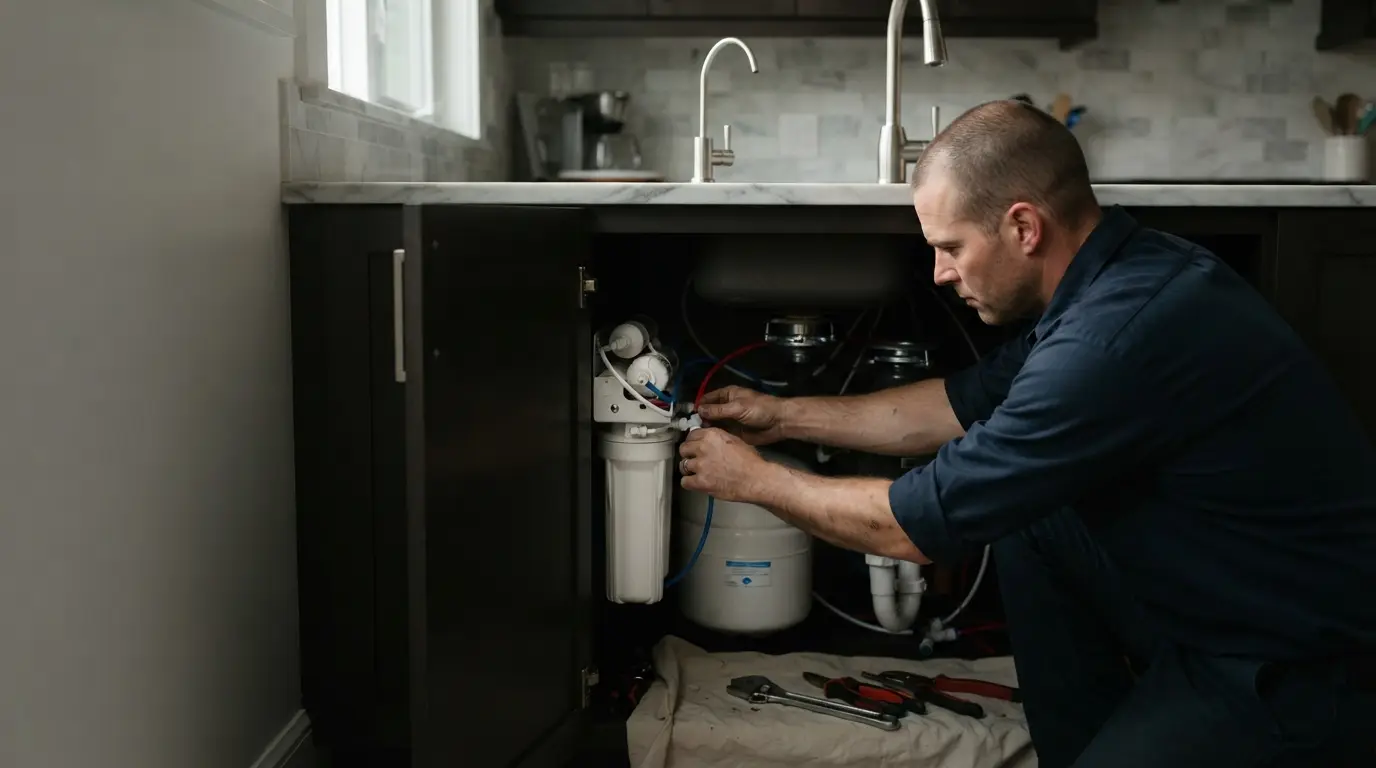
An under-sink RO system gives you a separate tap for drinking and cooking water and can greatly reduce nitrate, uranium and many other dissolved contaminants when maintained.
Typical cost
Before we test, any figure is an estimate only. Price depends on:
You approve a written price before installation.
Get a written price: (833) 733-2357Hardness, iron, nitrate and uranium each call for different equipment.
More people means a larger softener.
A softener, filter and RO together cost more than one alone.
Basements with a floor drain are simplest.
Certified well tests are priced separately.
Benefits
Far less scale to scrub.
Water heaters and dishwashers lose less to scale.
RO cuts nitrate and other dissolved contaminants.
Iron and manganese removed before they reach the sink.
Nitrate has no taste, smell or colour, so only a test shows it. Infants who drink formula made with high-nitrate water are most at risk. If your well tests high, reverse osmosis at the kitchen sink is the usual household fix; a softener and carbon filter do not remove nitrate. Boiling does not remove it either and actually concentrates it. We install and maintain RO systems sized for your family and recommend retesting the treated water to confirm it is working.
Omaha (213,023 homes), Lincoln (128,449 homes) and Grand Island deliver water that meets standards, but it is usually hard. Scale builds in water heaters, dishwashers and on glass shower doors. A softener sized to your household takes care of that. Some families also want a carbon filter for chlorine taste or RO for drinking water. We test before we recommend anything, so you only buy what helps.
Around Grand Island, Kearney, Hastings, Lexington and Columbus (10,303 homes), both city and private wells draw from shallow aquifers under intensely farmed land. Hardness is high and nitrate is a concern in many rural wells. A typical setup for a farmhouse here is an iron filter if needed, a softener for the whole house and RO at the kitchen sink.
Nebraska hard water leaves a layer of scale inside tank water heaters, tankless heat exchangers, dishwashers, washing machines and coffee makers. That layer makes heaters burn more fuel, burns out electric elements and clogs small valves. A properly sized softener cuts the buildup, and we recommend flushing tank heaters once or twice a year and descaling tankless units annually even with softened water.
Some Nebraska aquifers carry naturally occurring uranium or arsenic, and a few town water systems have had to add treatment for them. Private well owners need a certified lab test to know. If either shows up, reverse osmosis at the kitchen sink is a common household solution for drinking and cooking water, and we retest after installation to confirm it is working.
If your well has tested high for nitrate or bacteria, or the water has changed suddenly, switch to bottled water for drinking and baby formula.
Find any past test results and your city's annual water quality report, and clear the area where the main or well line enters the basement. Then call us.
Softener and filter installs may need a plumbing permit in Omaha, Lincoln and other cities with plumbing codes, particularly when we add a drain or bypass. We file it where required, and our plumbers hold the local licenses each job requires.
Why choose us
What you can count on every time one of our plumbers comes to your door.
Every job is handled by a plumber who holds the license your state or city requires, backed by liability insurance.
Our plumber explains the problem and the options, and you approve a written price before any work begins.
Burst pipes, sewage backups and failed water heaters get priority scheduling, including nights and weekends.
We pull permits when the job needs one and schedule the inspection, so the work holds up when you sell.
Repairs and installations come with a written warranty on labor, on top of the manufacturer's warranty on parts.
Our pages and plumbers account for your area's water, soil, climate and the age of the homes around you.
Service area
We install water softeners and filtration in 593 Nebraska communities, including Kearney (14,750 homes) and Norfolk (11,786 homes). Find yours:
It depends on your hardness and iron levels, household size and the model. We test your water and give you a written price before installation.
Mostly replacement filters and an occasional membrane. We tell you the schedule and parts cost before you decide.
Basic hardness and iron checks are part of our recommendation. Certified lab tests for nitrate, bacteria or uranium are priced separately.
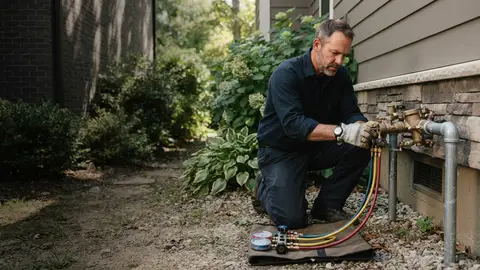
Where the main or well line enters the house, ahead of the water heater, with a bypass valve and a drain for regeneration.
No. Softeners remove hardness. Reverse osmosis at the kitchen sink is the usual way to reduce nitrate in drinking water.
We test the water, look at the plumbing where the line enters and then recommend equipment based on what the results show.
For most people, yes. Softening adds a little sodium. Anyone limiting sodium can drink RO water instead.
It is most dangerous for infants under six months. Use bottled water for formula until the well is treated and retested.
Usually a few hours, depending on the plumbing and how close a drain is.
One to two hours under the sink, a bit longer if we also connect a refrigerator or ice maker.
Check monthly and keep the brine tank about half full. Use depends on hardness and how much water you use.
At least once a year for nitrate and bacteria, and after flooding or any change in taste or colour.
Put it in bypass, close the main if needed and call us to repair it.
Most is, because nearly all of it comes from groundwater. Hardness varies by town and well.
No. Boiling concentrates nitrate. Use RO or another proven treatment, and retest to confirm it works.