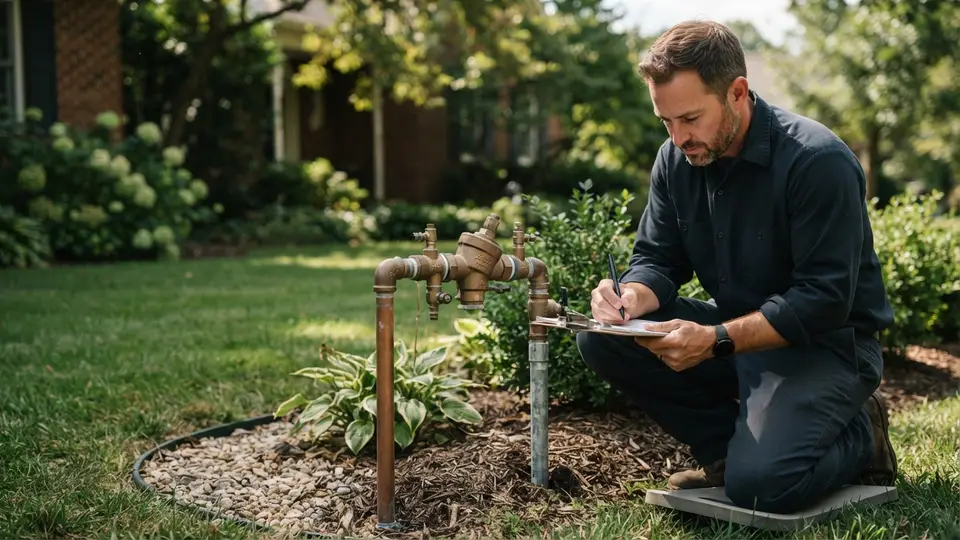
Reduced pressure zone (RPZ)
Typical use: Chemical, medical, commercial
Protection level: High hazard
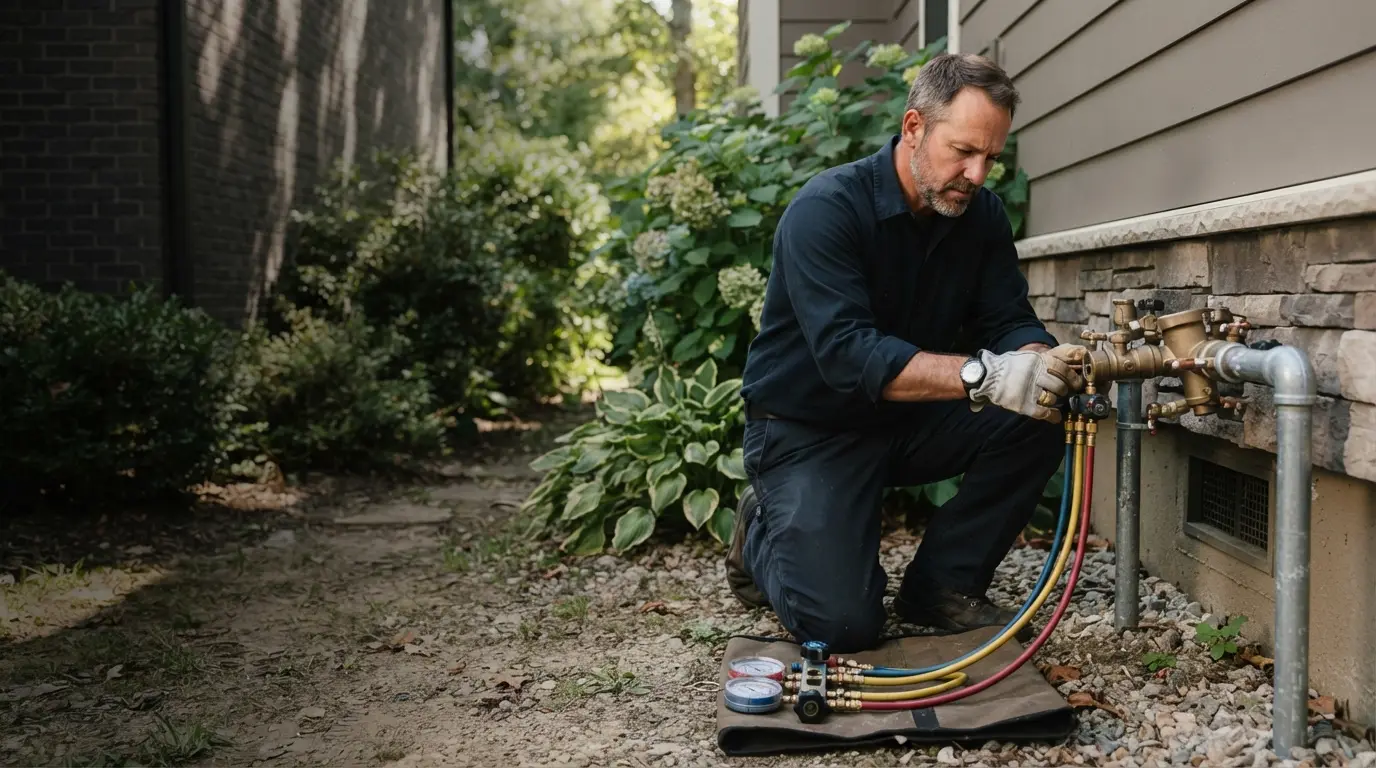
Backflow test due on your sprinkler system or business? We handle backflow testing and prevention in North Dakota. Our plumbers test backflow preventers, install new assemblies and repair or rebuild devices that fail, for homes with lawn irrigation, restaurants, offices, apartment buildings, farms and oil-field service yards. Backflow devices keep fertilizer, chemicals and dirty water from flowing back into the public supply or rural water system. In North Dakota, devices also have to survive deep cold, so where and how they are installed matters. We test, repair and file the report.
The service
Backflow happens when water reverses direction in a pipe, pulled by a drop in main pressure or pushed by a pump, boiler or chemical feeder. A backflow preventer stops it. The North Dakota plumbing code requires protection on hazardous connections, and cities such as Fargo, Bismarck and Grand Forks run programs that track testable devices. With 306,793 homes in our data and many farms and businesses on rural water, protection matters everywhere.
Backflow devices we test and install
Typical use: Chemical, medical, commercial
Protection level: High hazard
Typical use: Fire lines, irrigation
Protection level: Lower hazard
Typical use: Lawn irrigation
Protection level: Back-siphonage
Typical use: Outdoor faucets
Protection level: Basic residential
Why North Dakota
Irrigation devices left charged in fall crack in the first hard freeze.
Mineral deposits keep check valves from sealing.
Seals and diaphragms harden with age and temperature swings.
Rural water pumps and main breaks stress valves and springs.
Warning signs
Our process
Our certified tester connects a calibrated test kit, checks each valve against the required values, records the results and submits them to your city or water system.
We choose the device for the hazard and install it where it can be tested and protected from freezing, often indoors in the basement for irrigation systems.
We rebuild failed devices with new seals, springs and check parts, retest and file the passing result, or replace devices that cannot be rebuilt.
Typical cost
Any figure before we see the device is an estimate only. The main factors:
We give you a written price before we start.
Get a written price: (833) 733-2357Large RPZs take longer.
Several on one visit save time.
Parts and retesting after a failure or freeze.
Farms and remote sites add travel.
Piping, freeze protection and permits.
Benefits
Contamination stays out of the mains.
Reports filed on time.
Proper winterizing every fall.
Current records on hand.
West Fargo (16,560 homes), Horace, Lincoln and the newer parts of Fargo and Bismarck have many homes with in-ground sprinklers. In North Dakota, irrigation backflow devices are often installed in the basement, where they are protected from frost, rather than outdoors. Each fall the system is blown out and the device drained. We test devices in spring, repair those damaged by freezing and help set up proper winterizing.
A backflow device holding water when the first hard freeze arrives will crack, sometimes within one night. Outdoor devices must be fully drained and their test cocks opened in fall, and indoor ones need the irrigation line beyond them blown out. We drain and winterize devices, replace frozen ones in spring and relocate outdoor devices indoors where the layout allows.
Buildings with five or more units hold 50% of Fargo homes and 44% of Grand Forks homes, and many have fire sprinkler lines and boilers that need devices. Restaurants, dental offices, clinics and car washes in Bismarck, Minot and Fargo connect equipment needing high-hazard protection. We test every device on a site in one visit where possible and keep records current for inspectors.
Farms across the state connect to rural water systems for livestock, chemical mixing and sprayer filling, and oil-field service yards around Williston (15,107 homes), Watford City and Dickinson use water for equipment washing and mixing. These high-hazard uses need reduced pressure devices or air gaps. We install and test them and advise when a separate supply makes more sense.
Much of rural North Dakota is served by regional rural water systems, which deliver treated water across long distances to farms and small towns. These systems protect their lines by requiring backflow protection at farm and commercial connections. If a farm also has a private well, the well and the rural water line must never be cross-connected. We look for cross-connections and separate or protect the systems as required.
Even homes without irrigation have connections that can let water flow backward. A garden hose left in a bucket of fertilizer or a stock tank can siphon back if pressure drops, and boilers with chemical treatment, water softener drains without an air gap and in-floor heat systems with automatic fill valves all need proper protection. We add hose bibb vacuum breakers, check boiler fill lines and softener drains and correct any cross-connection we find during a visit.
Keep your test notice and make sure we can reach the device, including any in the basement. Unlock enclosures.
Do not adjust or take apart the device. If it is pouring water, close the valves on each side if it is safe, then call us.
New backflow installations usually need a plumbing permit and approval from the water system. We file both and submit the first test report. Our plumbers hold North Dakota State Plumbing Board licenses.
Why choose us
What you can count on every time one of our plumbers comes to your door.
Every job is handled by a plumber who holds the license your state or city requires, backed by liability insurance.
Our plumber explains the problem and the options, and you approve a written price before any work begins.
Burst pipes, sewage backups and failed water heaters get priority scheduling, including nights and weekends.
We pull permits when the job needs one and schedule the inspection, so the work holds up when you sell.
Repairs and installations come with a written warranty on labor, on top of the manufacturer's warranty on parts.
Our pages and plumbers account for your area's water, soil, climate and the age of the homes around you.
Service area
We test and install backflow devices in 406 North Dakota communities, including Bismarck (35,361 homes) and Minot (23,956 homes). Find yours:
It depends on the device type, its size, how many devices we test on one visit and distance. You get a written price before we start.
It depends on the damage. A cracked body usually means replacement; if a rebuild is close in cost, we show you both prices.
Yes. Filing the report with your city or water system is part of our testing service, and you get a copy.
A certified tester connects a test kit, opens and closes valves in a set order and records pressure readings for each check.
We explain what failed, repair or replace it, retest it and file the passing report before your deadline.
In North Dakota it often is, in the basement where it is protected from frost. We can relocate outdoor devices where the layout allows.
Yes. Fertilizer, chemicals or dirty water can flow back into the supply. Working devices stop that from happening.
Stop drinking it, use bottled water and call your water system. We can test your devices to rule out a failure.
Usually under an hour per device. Farms and sites with several devices take longer.
Most cities and water systems require testable devices to be tested every year. They send notices and set the schedule.
Have the system blown out and the device drained with its test cocks opened before the first hard freeze. We can do this for you.
Yes. Inspectors, insurers and buyers may ask for them, and we keep a record of your test dates too.
Farm connections used for livestock, chemicals or sprayers usually need an RPZ or an air gap. We install and test them.
They must not be cross-connected. We find and separate cross-connections and install protection where required.
Close the valves on each side if it is safe. We put active leaks ahead of routine tests and keep you updated on timing.