Meter and pressure tests
Best for: Confirming a leak
How it works: Watches for flow or pressure loss

Water bill climbing, or a wet spot on the basement wall? We handle leak detection and repair in North Dakota. Our plumbers find hidden leaks in walls, ceilings, basement floors and buried service lines, repair them and handle burst and frozen pipes, which are the most common leak calls in a North Dakota winter. Leaks here often start in an outside wall on a subzero night, in a pipe under a manufactured home or in an old galvanized line in a farm-town house. We locate the source with pressure, acoustic and thermal testing before we open anything.
The service
Leak detection means tracing escaping water to its source. Most of North Dakota's 306,793 homes in our data have basements, so supply lines run along the basement ceiling and up through outside and inside walls. In winter, pipes in outside walls are the weak point. A thermal camera is especially useful here, because cold spots and wet spots both show up clearly against a heated house.
How our plumbers find leaks
Best for: Confirming a leak
How it works: Watches for flow or pressure loss
Best for: Walls, ceilings, cold spots
How it works: Shows wet and frozen areas
Best for: Basement floors and yard lines
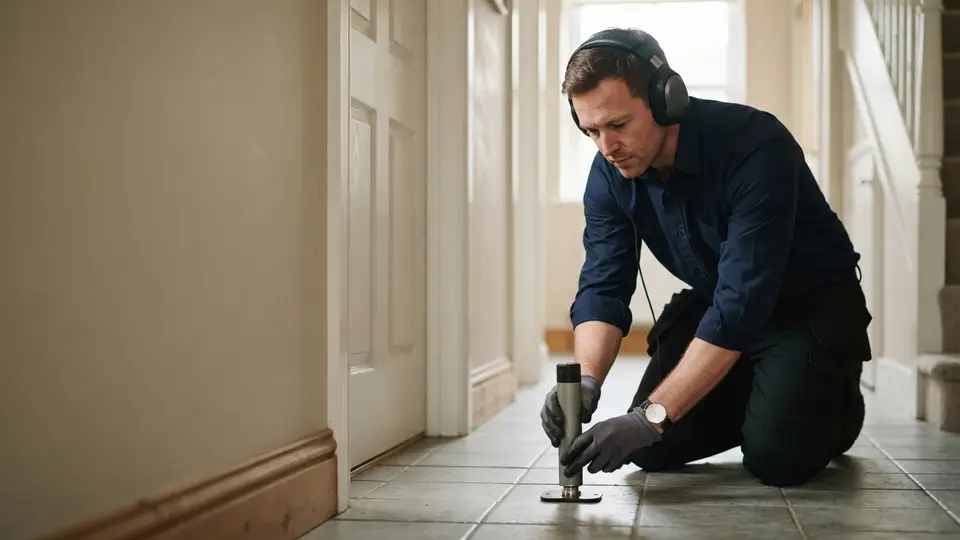
How it works: Hears water escaping
Best for: Tracing the wet area
How it works: Measures dampness in drywall and wood
Why North Dakota
Subzero nights and wind chills split pipes in outside walls and crawl spaces.
Older farm-town homes still have steel lines that rust from inside.
Mineral buildup wears valves and fittings.
Moving soil stresses service lines and basement penetrations.
Warning signs
Our process
We check the meter, isolate parts of the system and use thermal imaging and listening gear to mark the leak before cutting.
We open the smallest practical area, replace the damaged pipe or fitting, pressure test it and leave the area ready for patching.
We stop the water, cut out the split, install new pipe and check every line that ran through the same cold wall or space.
We thaw the line safely with electric or warm-air equipment, test it under pressure and then insulate, add heat cable or reroute it inside the heated space.
Typical cost
Any figure before we test is an estimate only. Costs depend on:
We give you a written price before repairs start.
Get a written price: (833) 733-2357Walls, floors or underground.
One split or several.
Old galvanized may need more than a patch.
Deep service lines and frozen ground.
After-hours calls and rural trips.
Benefits
We cut where the leak is.
Leaks stop sooner.
Cold spots found and fixed.
Notes and photos for claims.
On the coldest North Dakota nights, pipes in outside walls, over garages and in unheated porches freeze first. The leak often shows only when the pipe thaws and water starts running. 65% of Jamestown homes and 74% of Grafton homes were built before 1980, many with little wall insulation. We repair the split and move or protect the pipe so the next cold snap does not repeat the damage.
Manufactured homes make up 14% of Mandan homes, 9% of Lincoln homes and 8% of Minot homes. Their supply lines run under the floor behind skirting, where heat tape and insulation are the only protection. When the tape fails, lines freeze and split. We find the break, replace damaged pipe with PEX, install new heat tape and close gaps in the skirting.
Buildings with five or more units hold 50% of Fargo homes, 44% of Grand Forks homes and 58% of Watford City homes. A leak in one unit shows up in the unit below. We test the units above, trace the water path and work with managers so the right pipe gets fixed and tenants are disturbed as little as possible.
36% of Tioga homes and 25% of Williston homes stand vacant on a typical day, many between workers or tenants. An empty home with the heat turned down can freeze in a cold snap, and a burst pipe can run for days. We winterize vacant units, install low-temperature and leak alerts and repair freeze damage for owners and managers.
North Dakota water services are buried deep to stay below the frost line. A leak in one can surface as a wet spot in the yard in spring, a damp basement wall where the line enters or just a high bill. We locate the leak with listening equipment, then repair the line or replace it, coordinating with the city or rural water system for the curb stop.
Close the main shutoff, usually in the basement where the line enters. Turn the water heater down if hot water is leaking.
Turn off power to wet areas if you can reach the panel safely. Never use an open flame to thaw a pipe. Move belongings and call us.
Most leak repairs need no permit. Repiping or replacing a water service usually does, from your city or the state, and we file it. Our plumbers hold North Dakota State Plumbing Board licenses.
Why choose us
What you can count on every time one of our plumbers comes to your door.
Every job is handled by a plumber who holds the license your state or city requires, backed by liability insurance.
Our plumber explains the problem and the options, and you approve a written price before any work begins.
Burst pipes, sewage backups and failed water heaters get priority scheduling, including nights and weekends.
We pull permits when the job needs one and schedule the inspection, so the work holds up when you sell.
Repairs and installations come with a written warranty on labor, on top of the manufacturer's warranty on parts.
Our pages and plumbers account for your area's water, soil, climate and the age of the homes around you.
Service area
We find and fix leaks in 406 North Dakota communities, including West Fargo (16,560 homes) and Dickinson (11,902 homes). Find yours:
It depends on where the leak hides, the equipment needed and distance. We give you a written price before we start testing.
Yes. Once we find the source, we explain the repair options and give you a written price for the one you choose before any work begins.
Many policies cover sudden freeze damage if the home was heated. Check your policy, and we provide notes and photos for the claim.
We isolate lines with pressure tests, then use thermal imaging and moisture meters to mark the wet or frozen area before opening the wall.
We confirm water is escaping, ask when the signs began and isolate parts of the system to narrow the search quickly.
Yes. We use electric or warm-air thawing equipment, never open flames, then test the line under pressure for splits.
It can be. Wet drywall can sag and fall, and water near light fixtures is a shock risk. Shut off water and power to the area.
Close the main shutoff, turn off power to wet areas if safe and call us. Then move belongings out of the water.
Usually one to two hours for a typical home. Apartment buildings and buried service lines can take longer.
A single split takes a few hours. Several frozen lines in a manufactured home or older house can take most of a day.
Keep heat steady, let a faucet drip on the coldest nights, open cabinets on outside walls and check heat tape every fall.
Yes, especially in rentals and homes that sit empty. Sensors alert your phone before a frozen pipe becomes a flooded basement.
That pipe likely runs in a poorly insulated outside wall or near a draft. We reroute or insulate it so it stays warm.
Yes. Deep service lines can leak from age, shifting clay or a bad joint. We locate the leak acoustically before digging.
We put burst pipes and frozen lines ahead of routine work. Shut off the water, call us and we keep you updated on timing.