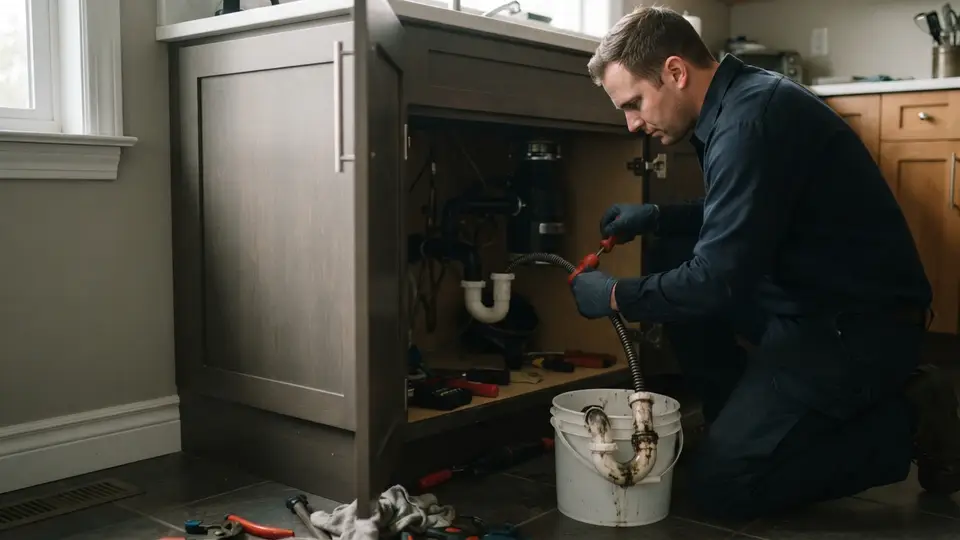
Hand and closet augers
Used for: Sinks, tubs, toilets
What it does: Clears clogs near the fixture
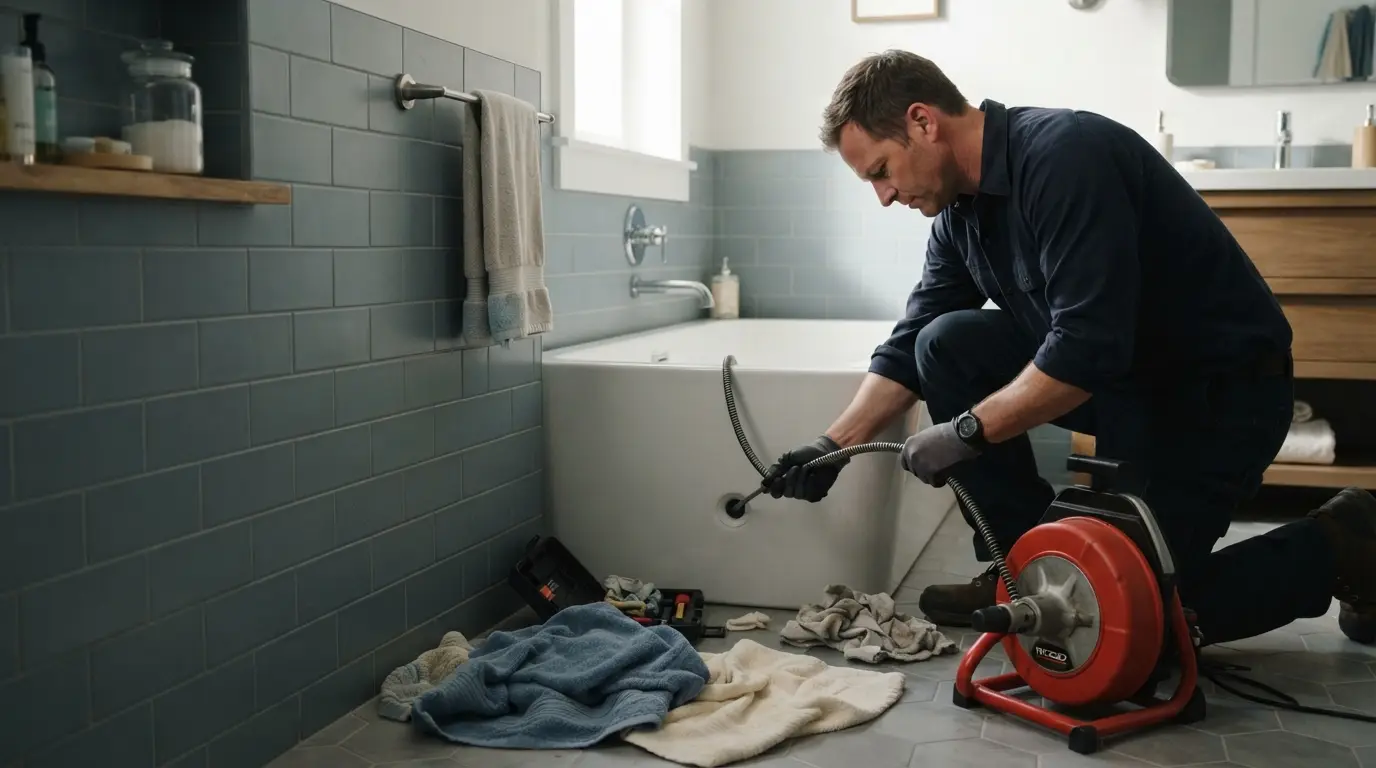
Floor drain backing up in the basement, or a kitchen sink that will not drain? We handle drain cleaning and clog removal in North Dakota. Our plumbers clear sinks, tubs, toilets, laundry lines, basement floor drains and main sewer lines in houses, apartment buildings, student rentals, restaurants and crew housing. North Dakota drains face cottonwood and elm roots, clay soil that shifts and cracks old pipe, grease that sets hard in cold basements and sewer lines that freeze when frost reaches them. We clear the line, run a camera through it and show you the cause.
The service
Most of North Dakota's 306,793 homes in our data have basements, with a floor drain near the furnace and water heater and a main that leaves the house well below the frost line. 47% of homes were built before 1980, when cast iron and clay were standard. Valley City's median home dates from 1962 and Grafton's from 1972. When the main clogs, water appears at the floor drain first.
Drain cleaning equipment we use
Used for: Sinks, tubs, toilets
What it does: Clears clogs near the fixture
Used for: Mains and floor drains
What it does: Cuts roots and packed debris
Used for: Grease and ice
What it does: Scours and thaws the line
Used for: Repeat clogs
What it does: Finds roots, breaks and bellies
Why North Dakota
Shelterbelt and boulevard trees send roots into clay and cast iron joints.
Red River Valley clay moves lines out of alignment and creates low spots.
Grease hardens quickly in lines running through cold basements.
Shallow or poorly insulated lines can freeze in long cold spells.
Warning signs
Our process
We use the basement cleanout or floor drain, run a cutter sized to the pipe toward the street or septic tank and flush the line to confirm it runs freely.
When a clog keeps returning, our camera finds the root entry, offset or belly, and we repair that section or recommend lining.
Jetting clears grease, sludge and fine roots. In winter we use warm water to open lines with ice in them. We check older pipe with the camera first.
Typical cost
Until we see the line, any figure is an estimate only. Price depends on:
You approve a written price before we begin.
Get a written price: (833) 733-2357One fixture costs less than the main.
Missing cleanouts add work.
Jetting, thawing and camera work add to cabling.
Broken or sagging pipe needs repair.
After-hours calls and rural trips cost more.
Benefits
No more water at the floor drain.
Camera video you can keep.
Clean, repair or line.
Roots and grease cut back properly.
Fargo (63,807 homes), West Fargo, Grand Forks and Wahpeton sit on the heavy clay of the old Lake Agassiz bed. That clay swells when wet and shrinks when dry, shifting basement floors and the drain lines beneath them. Joints separate and low spots form. We camera the line after clearing it and show you where it has moved, so you know whether cleaning is enough or a section needs repair.
In a long stretch of subzero weather, frost can reach sewer lines that were laid too shallow, run under driveways where snow is cleared or leave the house through an unheated space. A slow trickle from a running toilet can freeze into a solid plug. Drains work one day and stop the next. We open frozen lines with warm water jetting or steam and help you find and protect the cold spot.
Buildings with five or more units hold 50% of Fargo homes and 44% of Grand Forks homes, and renters occupy 56% of Fargo homes with North Dakota State University nearby and 54% in Grand Forks with the University of North Dakota. Shared stacks clog with grease and debris, and a lower unit backs up first. We clear lines for managers and jet mains between semesters.
Williston (15,107 homes) and Watford City grew fast during the Bakken boom, and buildings with five or more units hold 58% of Watford City homes. Crew housing and apartments with many residents per unit see heavy drain use. Some fast-built lines were laid without enough slope. We clear and camera these lines and fix sags that cause repeat clogs.
65% of Jamestown homes, 71% of Valley City homes and 59% of Devils Lake homes were built before 1980. Many have cast iron drains and clay sewers under mature trees. Roots and scale build up over decades. We clear the line, camera it and recommend repairs only where the footage shows they are needed.
Stop running water, including the washer and dishwasher. If a toilet is rising, close the valve behind it.
Skip chemical drain openers; they rarely clear a main and can burn whoever opens the line. Do not pour boiling water into a frozen drain. Call us.
Clearing a drain needs no permit. Replacing a sewer line or drain section usually does, from your city or the state, and we file it. Our plumbers hold North Dakota State Plumbing Board licenses.
Why choose us
What you can count on every time one of our plumbers comes to your door.
Every job is handled by a plumber who holds the license your state or city requires, backed by liability insurance.
Our plumber explains the problem and the options, and you approve a written price before any work begins.
Burst pipes, sewage backups and failed water heaters get priority scheduling, including nights and weekends.
We pull permits when the job needs one and schedule the inspection, so the work holds up when you sell.
Repairs and installations come with a written warranty on labor, on top of the manufacturer's warranty on parts.
Our pages and plumbers account for your area's water, soil, climate and the age of the homes around you.
Service area
We clear drains in 406 North Dakota communities, including Bismarck (35,361 homes) and Minot (23,956 homes). Find yours:
It depends on which drain is blocked, how we reach it, whether thawing or jetting is needed and distance. You approve a written price before we start.
When grease, roots or ice keep closing a line, yes. Jetting cleans the full pipe wall, so the drain stays open much longer than after cabling.
Yes. On older lines and in shifting clay it often saves money by showing exactly which section has moved or broken before anyone digs.
We cable through the floor drain or the nearest cleanout toward the street or septic tank, flush it and camera the line if clogs keep returning.
We open the cleanout, clear the blockage, flush the line and run the camera to find out whether roots, grease, ice or a sag caused it.
Yes. We show you the camera video of roots, offsets, sags or buildup and explain what each repair option would fix.
We advise against them. They seldom clear a main, can harm older pipe and leave caustic water for whoever opens the line next.
Yes. It carries bacteria and viruses. Keep people and pets away, avoid contact and stop using water until the line is cleared.
Most fixture clogs take under an hour. A rooted or frozen main with jetting and a camera inspection can take a few hours.
We book the earliest time we can and put sewage backups and frozen drains ahead of slow drains. We keep you updated on timing.
Many need cleaning every year or two. If roots return faster, a liner or section repair usually costs less over time.
Stop using water and call us. Do not pour boiling water or use a torch. We thaw the line with warm water jetting or steam.
Red River Valley clay swells and shrinks, shifting pipes under basements and yards. That creates sags and separated joints that catch waste.
Yes. We clear stacks and mains for managers, schedule jetting between tenants and keep records of each visit.
Many homes built before the 1960s do. Clay joints let roots in, so we camera the line before recommending repairs.