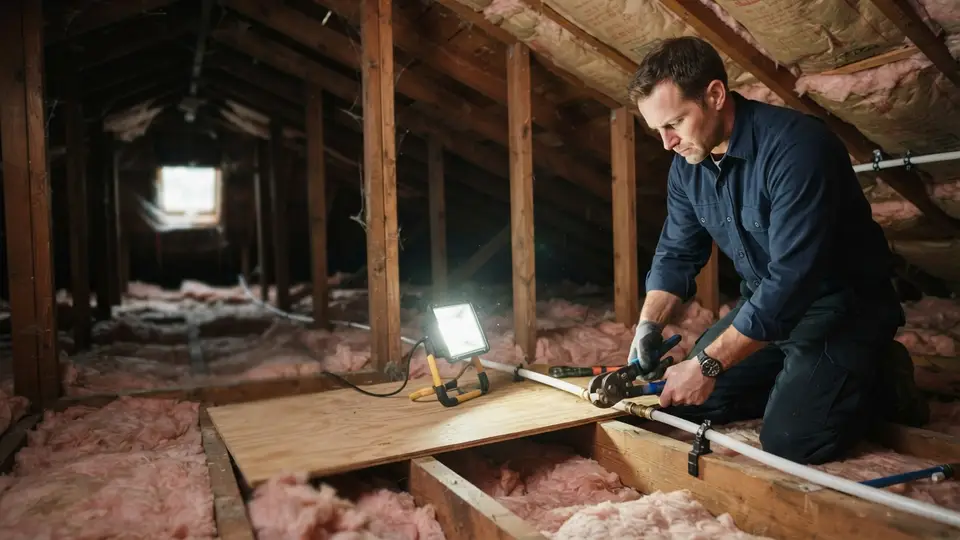
Spot repair
When it fits: One leak in sound pipe
Trade-off: Small floor opening
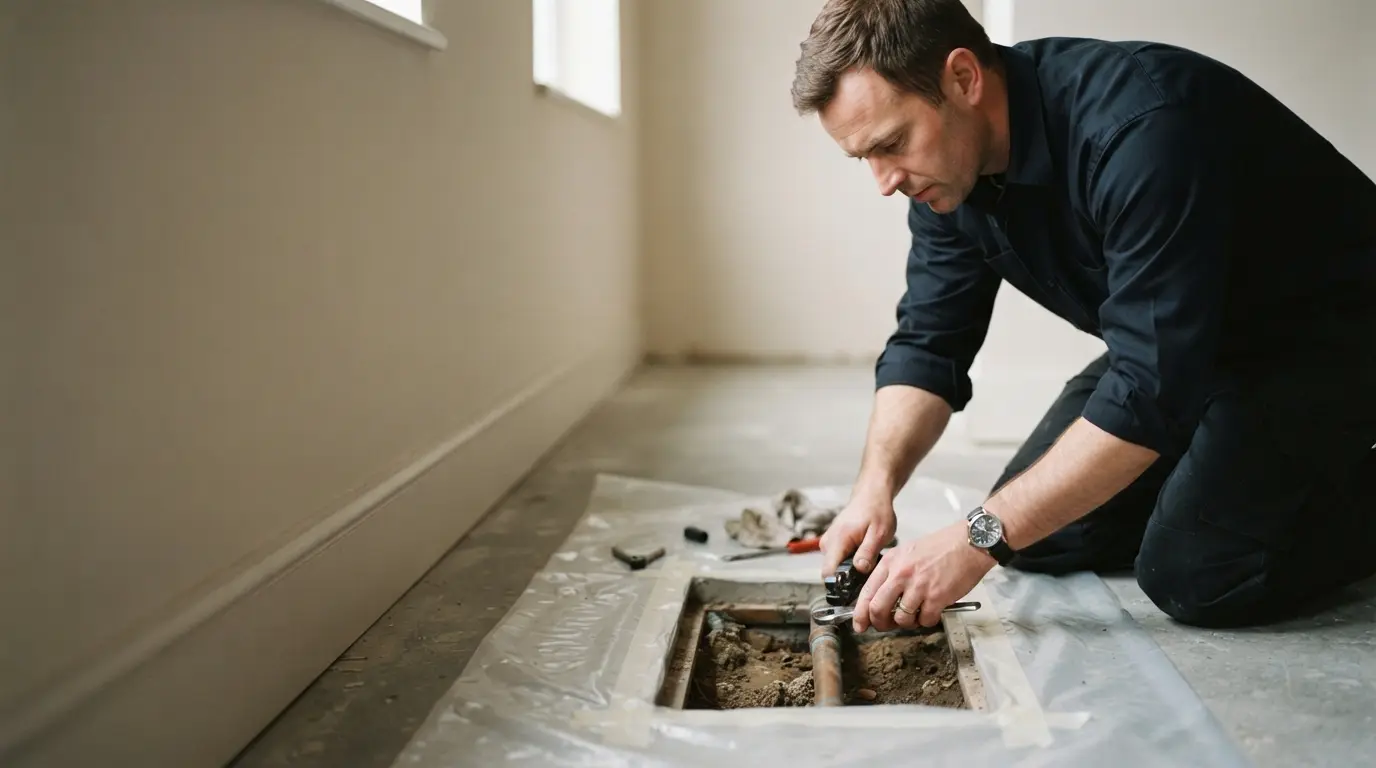
Warm spot on the basement floor, or a heated floor losing pressure? We handle slab leak repair in North Dakota. Our plumbers locate leaks in water lines and radiant heating tubing buried in concrete basement floors, garage slabs and slab-on-grade homes, repair them through a small opening or reroute them, and check the rest of the system. In North Dakota the slab is usually the basement floor, and many newer homes and garages have in-floor heat. Shifting clay and freeze-thaw cycles put stress on everything buried in concrete, so we find the exact spot before we cut.
The service
A slab leak is a leak in a pipe running in or under a concrete floor. In North Dakota that usually means the basement floor, where the water service enters, drain lines run and supply lines sometimes pass to a bathroom or bar. 33% of the state's 306,793 homes were built since 2000, and many newer homes in West Fargo, Horace and Lincoln have radiant heating tubing in basement and garage slabs. Townhouses and crew housing in the oil patch often sit on slabs on grade.
Slab leak repair options
When it fits: One leak in sound pipe
Trade-off: Small floor opening
When it fits: Old or failing pipe
Trade-off: New line along walls or ceiling
When it fits: Leak in heating tubing
Trade-off: Locate and repair or isolate the loop
When it fits: Several leaks on one run
Trade-off: Replaces the run entirely
Why North Dakota
Valley clay swells and shrinks, moving basement floors and the pipes in them.
Garage and slab-on-grade floors move with freeze-thaw cycles.
Tubing nicked during construction or by later drilling can fail years later.
Scale and mineral wear thin copper at fittings.
Warning signs
Our process
We separate the plumbing from any radiant heating loops, pressure test each, trace the lines under the floor and pinpoint the leak with acoustic and thermal tools.
We cut a small opening in the concrete, expose the pipe or tubing, repair the damaged section, pressure test it and patch the floor.
When the buried pipe is worn out, we abandon it and run new lines along the basement ceiling or inside walls, leaving the floor intact.
Typical cost
Any figure before we find the leak is an estimate only. Costs depend on:
We give you a written price for the plumbing before work starts.
Get a written price: (833) 733-2357Under finished floors costs more.
Radiant loops need their own approach.
Tile, carpet and finished basements.
Each has its own price.
Flooring is usually separate.
Benefits
Wet clay moves more.
Radiant leaks waste energy.
Constant fresh water corrodes systems.
Finished basements dry sooner.
Radiant heating in basement floors and garages is popular in North Dakota's cold climate, and many homes in West Fargo (16,560 homes), Horace and Lincoln have it. When a loop leaks, the boiler loses pressure and keeps adding fresh water, which corrodes the system. We find the leaking loop with pressure tests and thermal imaging, repair it through a small opening and return the system to the right pressure.
In Fargo (63,807 homes) and Grand Forks, basement floors crack and heave as the clay underneath moves. Supply and drain lines in the floor move with it. A leak under a basement floor can soak the clay further and make the movement worse. We repair the leak, check nearby lines and recommend rerouting supply lines overhead where floors move a lot.
Watford City, where the median home dates from 2013, Williston and Stanley added many townhouses, apartments and crew housing on slabs on grade during the Bakken boom. Buildings with five or more units hold 47% of Williston homes. Some lines went in quickly in winter conditions. When we find a slab leak in these buildings, we check other units built at the same time.
Many North Dakota homeowners heat their garage or shop with radiant tubing in the slab, and farms use heated shops for equipment. Garage slabs face road salt, heavy vehicles and frost heave at the edges. We locate leaks in these slabs, repair them and recommend protecting tubing near doors where the slab moves most.
Minot AFB, where renters occupy 100% of homes, and Grand Forks AFB have family housing built mostly since 2000. We work with housing managers and residents on leaks in slab and basement homes nearby, and with landlords in Minot (23,956 homes) who rent to military families.
Many North Dakota families finish their basements with carpet, vinyl plank and drywall, which hides a slow leak in the floor until the flooring is soaked. We pull back only the flooring needed, locate the leak precisely and repair or reroute the line. We also check whether the leak has reached the drywall and let you know what can be dried and what should be replaced.
Close the main water valve if you see water. If an in-floor system keeps losing pressure, note how often the boiler refills.
Move belongings off the wet area, take photos and keep water away from outlets. Do not drill into the floor. Call us.
Reroutes and line replacements usually need a permit from your city or the state. We file it and schedule the inspection. Our plumbers hold North Dakota State Plumbing Board licenses.
Why choose us
What you can count on every time one of our plumbers comes to your door.
Every job is handled by a plumber who holds the license your state or city requires, backed by liability insurance.
Our plumber explains the problem and the options, and you approve a written price before any work begins.
Burst pipes, sewage backups and failed water heaters get priority scheduling, including nights and weekends.
We pull permits when the job needs one and schedule the inspection, so the work holds up when you sell.
Repairs and installations come with a written warranty on labor, on top of the manufacturer's warranty on parts.
Our pages and plumbers account for your area's water, soil, climate and the age of the homes around you.
Service area
We repair slab leaks in 406 North Dakota communities, including Bismarck (35,361 homes) and Dickinson (11,902 homes). Find yours:
It depends on where the leak is, whether it is a water line or heating loop and the floor finish. You approve a written price before we begin.
Sometimes. In a basement, running a new line along the ceiling is often simple and avoids future leaks in old pipe. We price both.
Many policies cover access and resulting damage but not the pipe itself. Check your policy, and we provide notes and photos for the claim.
We separate water and heating lines, pressure test each, trace the pipe path and listen and scan to pinpoint the leak.
Yes. We find the leaking loop, repair it through a small opening and restore the system to the correct pressure.
We pressure test the line or loop, patch the concrete and confirm the meter or boiler pressure holds steady.
Yes, over time. Water soaks the clay under the floor, which can make it swell and move the slab.
Water near the furnace, water heater or electrical outlets is a hazard. Shut off water and power to the area and call us.
A spot repair usually takes most of a day including detection. A reroute can take one to two days.
Usually one to three hours. Homes with several radiant zones can take longer to test.
Keep water away from the foundation, soften hard water and check the meter yearly. Never drill into a heated floor blindly.
A leak in a radiant loop or buried heating line is a common cause. We test the heating system separately to find it.
They are less common than in slab states, but we see them in basement floors, heated garages and slab-on-grade homes.
They can, especially near doors where the slab moves with frost and vehicles. We locate and repair the tubing.
Shut off the main and the power to the wet area, then call us. We put active leaks ahead of routine work and keep you updated on timing.