Hardness
Where common: Most of the state
Treatment: Water softener
Scale on every faucet, or orange stains from iron? We handle water softeners and filtration in North Dakota. Our plumbers install water softeners, iron and sulfur filters, whole-house carbon filters and reverse osmosis drinking water systems for homes on city water, rural water and private wells. North Dakota water is among the hardest in the country in many areas, and groundwater often carries iron, manganese and high sulfate, which can give water a bitter taste. We test your water first and recommend only the equipment that fixes what is actually in it.
The service
North Dakota's 306,793 homes in our data get water from city plants, regional rural water systems and private wells. City and rural water is treated to meet standards, but much of it is still hard. Private well water, more common on older farms, is the owner's responsibility and often carries iron, manganese and sulfate as well as hardness. A water test is the starting point.
North Dakota water issues and fixes
Where common: Most of the state
Treatment: Water softener
Where common: Wells and some small systems
Treatment: Iron filter or oxidizing system
Where common: Many groundwater sources
Treatment: Reverse osmosis for drinking water
Where common: Some wells
Treatment: Sulfur filter or aeration
Why North Dakota
Glacial till and outwash add calcium, magnesium and iron.
Many aquifers carry high sulfate, which can cause a laxative effect.
Older shallow wells may pick up nitrate from fields and feedlots.
Cities on the Red and Missouri treat river water that changes with the seasons.
Warning signs
Our process
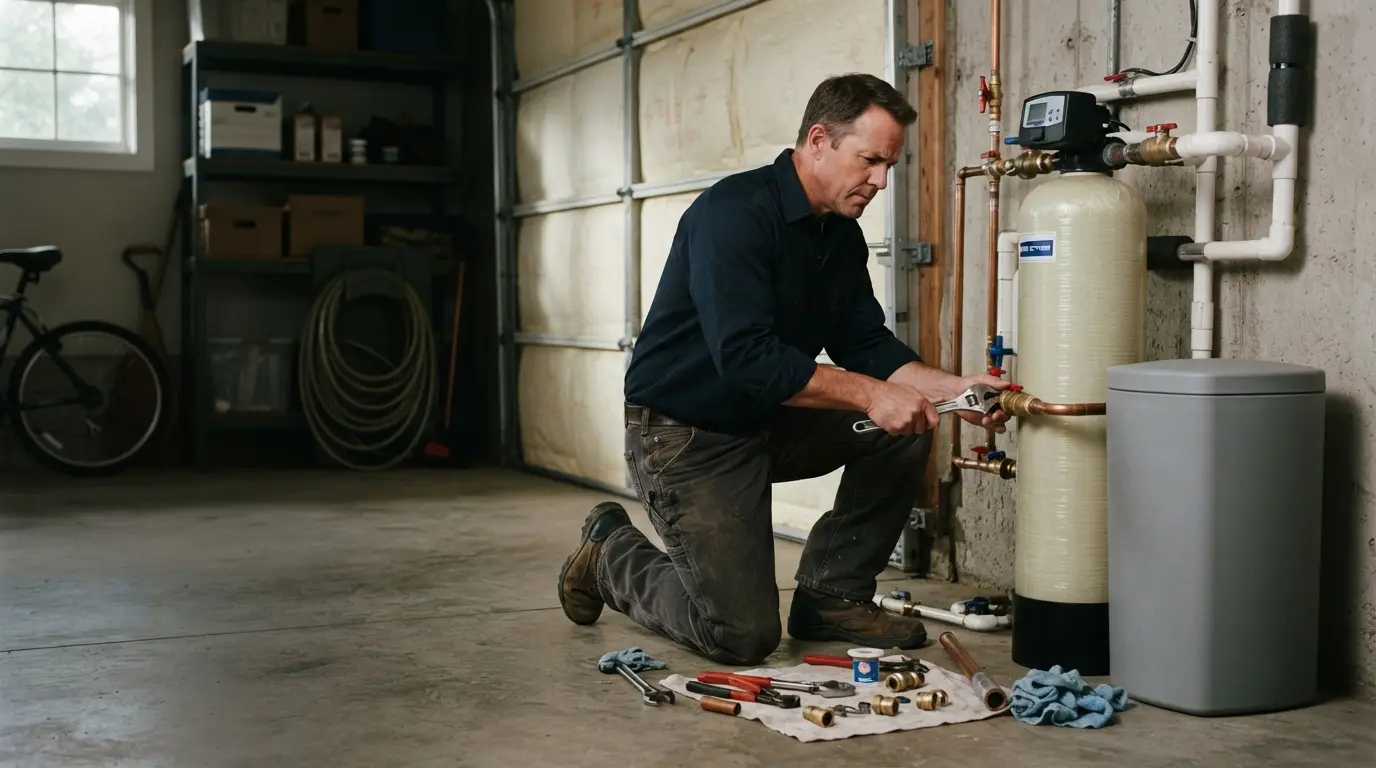
We size the softener from your hardness and household use, install it in the basement with a bypass, connect the drain with an air gap and program regeneration to save salt.
We install iron, manganese, sulfur or carbon filters ahead of the softener in the order your test calls for.
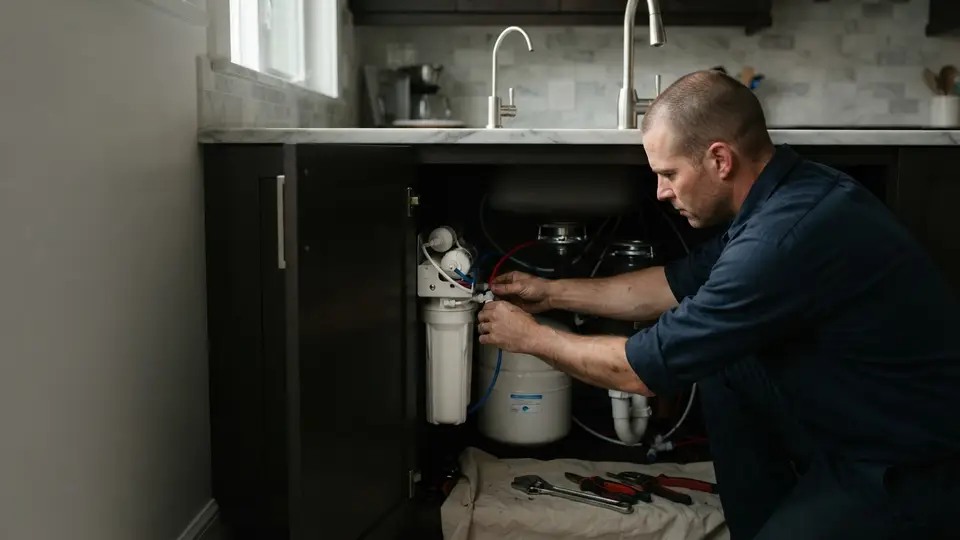
We install an under-sink system with its own faucet that removes sulfate, nitrate and most dissolved minerals from drinking water.
Typical cost
Any figure before we test your water is an estimate only. The main factors:
You approve a written price before we install.
Get a written price: (833) 733-2357Each issue needs its own treatment.
Larger homes need larger systems.
Iron, sulfur and hardness may each need a unit.
Basement layout and drain access.
Salt, filters and membranes.
Benefits
Less scale in the tank.
No white crust or iron stains.
Sulfate removed at the tap.
Treatment matched to a real test.
From Jamestown (7,704 homes) and Valley City to Dickinson and Devils Lake, water across North Dakota is hard enough to scale a water heater in a few years. Even some cities that soften their water at the plant deliver water harder than many homeowners like. A softener protects water heaters, dishwashers and fixtures and makes cleaning easier. We test first so it is sized correctly.
Much of North Dakota's groundwater carries high levels of sulfate and dissolved solids, which give water a bitter taste and can cause a laxative effect in people and animals not used to it. A softener does not remove sulfate. A reverse osmosis system at the kitchen sink does, giving you better-tasting water for drinking and cooking. We test, explain the numbers and install the right system.
Older farmsteads and rural homes around Carrington, Beulah and across the state may still use private wells, sometimes alongside rural water for the house. Shallow wells near fields or livestock can carry nitrate, which is a particular risk for infants. We review lab results, install treatment certified for what is present and recommend a follow-up test.
Fargo (63,807 homes), Grand Forks and Bismarck treat river water, and the taste and hardness can vary through the year. Many homeowners still choose a softener to protect appliances, and some want filtered drinking water. We test your tap water and recommend a softener, a carbon filter or reverse osmosis depending on what bothers you most.
Buildings with five or more units hold 50% of Fargo homes and 58% of Watford City homes. In multi-unit buildings, scale shortens the life of every water heater in the building. We size and install building softeners and set up simple maintenance schedules for managers, with bypasses so service continues during upkeep.
Williston (15,107 homes), Watford City and the Bakken towns draw on a mix of Missouri River water through regional systems and local groundwater. New homes and apartments there often arrived without any treatment, and owners notice scale in kettles and showers within the first year. We test the water, install softeners sized for the building and add drinking water filters where taste is a concern.
Iron leaves orange stains on fixtures and laundry, and manganese leaves black specks and a metallic taste. A softener can handle small amounts of iron, but higher levels foul the resin and need a dedicated filter ahead of it. Some wells also carry iron bacteria, which leave slimy deposits in toilet tanks. We match the filter to your test results and set up a cleaning schedule that keeps the system working.
Gather your latest well test or your water system's annual report. If a test shows a health risk, switch to bottled water for drinking and cooking.
Clear space in the basement near where the main enters, close to a drain and outlet. Then call us to schedule a test.
Some jurisdictions require a plumbing permit for treatment equipment tied into the water supply and drain. We check with your city or the state and file what is needed. Our plumbers hold North Dakota State Plumbing Board licenses.
Why choose us
What you can count on every time one of our plumbers comes to your door.
Every job is handled by a plumber who holds the license your state or city requires, backed by liability insurance.
Our plumber explains the problem and the options, and you approve a written price before any work begins.
Burst pipes, sewage backups and failed water heaters get priority scheduling, including nights and weekends.
We pull permits when the job needs one and schedule the inspection, so the work holds up when you sell.
Repairs and installations come with a written warranty on labor, on top of the manufacturer's warranty on parts.
Our pages and plumbers account for your area's water, soil, climate and the age of the homes around you.
Service area
We install softeners and filters in 406 North Dakota communities, including Bismarck (35,361 homes) and Minot (23,956 homes). Find yours:
It depends on your water hardness, household size and the model you choose. You get a written price after we test your water and look at the basement.
Usually, because it treats only drinking water at one sink. Whole-house systems treat every gallon entering the home.
Salt for the softener, replacement filter cartridges and reverse osmosis membranes on a regular schedule.
We test for hardness, iron, sulfate and other concerns, review any lab report and recommend only equipment that addresses the results.
We shut off the water, install a bypass and the treatment units, connect the drain with an air gap, set the controls and test the water.
No. A softener removes hardness. Reverse osmosis at the kitchen sink removes sulfate for drinking and cooking water.
Only a lab test can say. North Dakota wells can carry nitrate, bacteria or arsenic, so test regularly and treat as needed.
Use bottled water for drinking and infant formula, call us to install certified treatment and retest after it is running.
Most take a few hours. Multi-stage systems for iron, sulfur and hardness can take most of a day.
Right after installation and the first regeneration. Existing scale fades over the following weeks.
Check the brine tank monthly. With very hard water, many households add salt every few weeks.
At least every year or two, and after flooding or any change in taste, smell or color.
Often, yes. Many North Dakota cities deliver hard water. We test your tap water so you know before you buy.
High sulfate and dissolved solids are common in North Dakota groundwater. Reverse osmosis removes them for drinking water.
We schedule as soon as we can and help you choose treatment quickly. We keep you updated on timing until it is in place.