Clay soil and slab movement
Much of eastern Kansas sits on clay that swells when wet and shrinks in drought. That movement cracks drains under slabs and stresses water lines. We find the leak and repair or reroute the line.
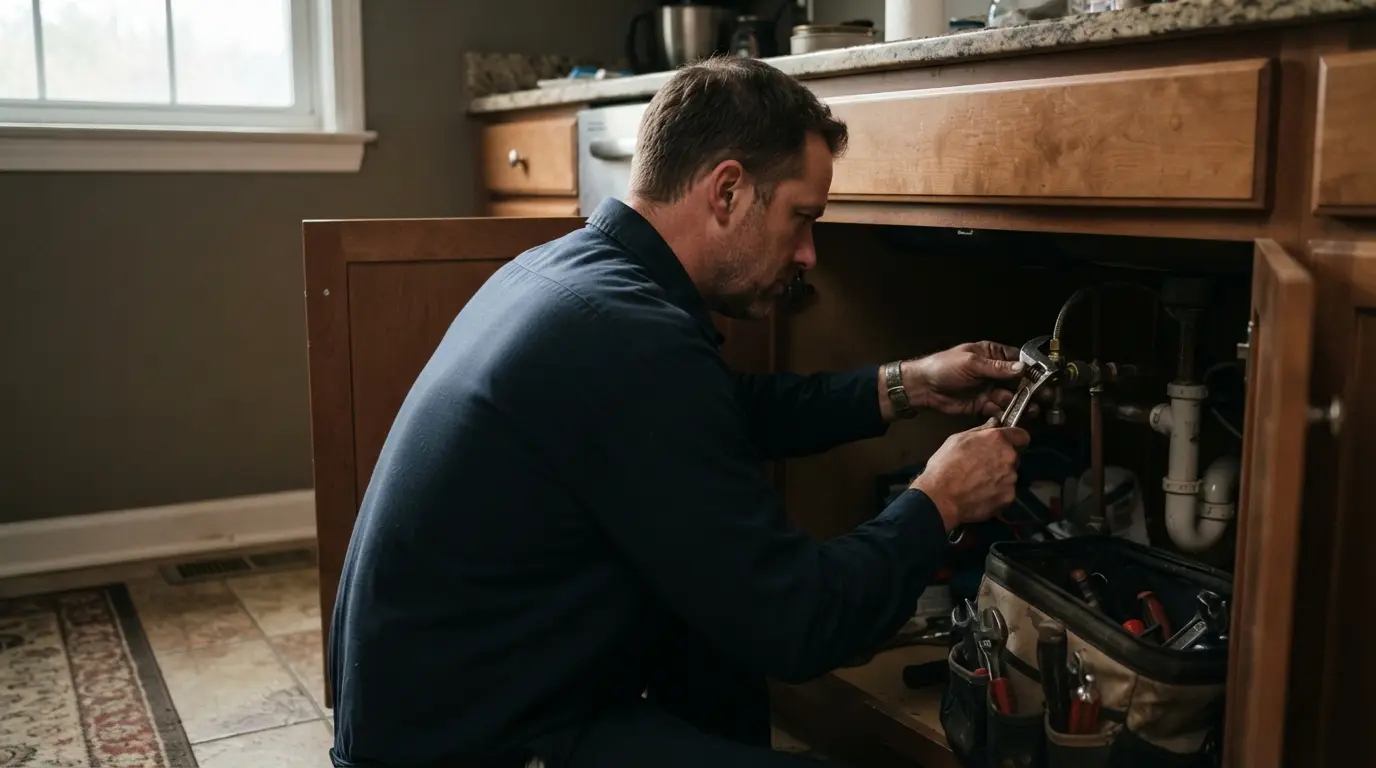
Shifting slab, hard water or a sewer backing up in a storm? Our plumbers in Kansas find the cause and repair it. We work across the Johnson County suburbs, older Kansas City, Kansas neighborhoods, Wichita and its growing ring of towns, Topeka, the college towns of Lawrence and Manhattan, and the meatpacking and farm towns of western Kansas. Kansas plumbing faces swelling clay soils, mineral-heavy water, sudden freezes and violent spring storms. Here is what we fix and where we work.
Plumbing in Kansas
Our Census data covers 2,493,872 Kansans living in 1,099,303 homes across 740 places. 57% of those homes were built before 1980, but the range is wide. In Kansas City, Kansas, 76% of homes predate 1980, in Hutchinson 79% and in Prairie Village 83%. Newer suburbs tell another story: the median home in Maize was built in 2011 and in Spring Hill in 2007.
Utility gas heats 69% of Kansas homes and electricity 27%. Renters occupy 36% of homes statewide, rising to 56% in Lawrence and 57% in Manhattan, home to the state's two largest universities.
Counts from the U.S. Census Bureau 2024 Gazetteer.
Explore our servicesWhat our plumbers see
Much of eastern Kansas sits on clay that swells when wet and shrinks in drought. That movement cracks drains under slabs and stresses water lines. We find the leak and repair or reroute the line.
Kansas water is often hard, and some sources carry sulfate or iron. Scale shortens water heater life and clogs fixtures. We install softeners and filters after testing.
Heavy spring rain overloads older city sewers and pushes water into basements. We clear lines and install backwater valves where allowed.
Arctic fronts can drop temperatures fast. Pipes in crawl spaces, garages and outside walls freeze. We thaw, repair and protect them.
Clay and cast iron sewer lines in older neighborhoods crack and fill with roots. We camera, clean and replace them.
Farmsteads and small towns rely on wells, rural water districts and septic systems. We service pressure tanks, pumps and septic systems.
Our services
Each service page covers how we handle that work in Kansas homes and businesses.
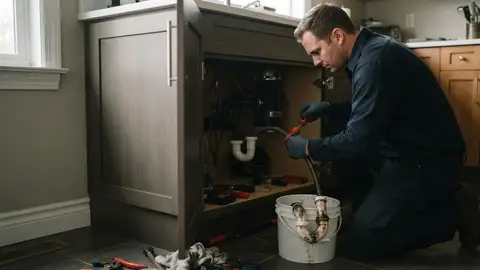
Sewer Line Repair & Replacement
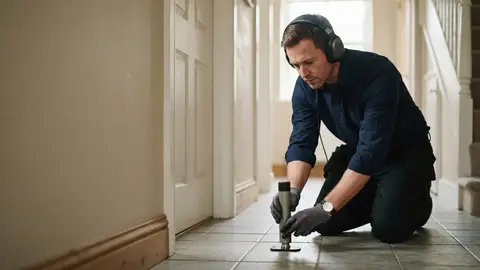
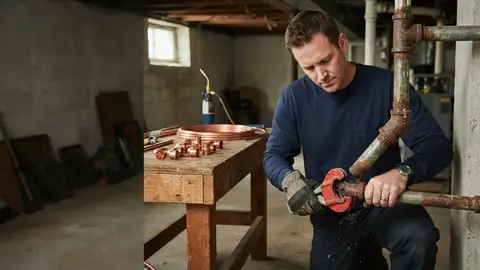
Repiping & Water Line Replacement
Gas Line Repair & Installation
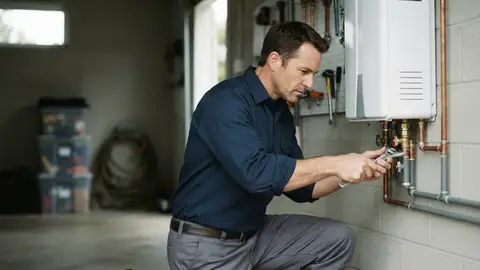
Water Heater Repair & Replacement
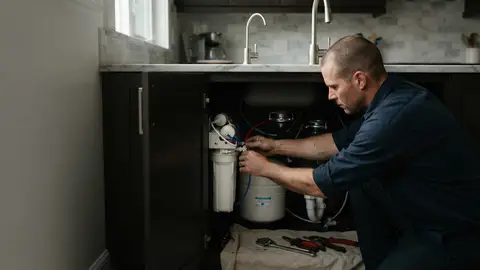

Toilet, Faucet & Fixture Repair
Sump Pump Repair & Installation
Across the state
Homes and main places: Overland Park (89,079 homes), Olathe, Kansas City, Shawnee, Lenexa
What our plumbers see: Postwar suburbs, older city cores, clay soil
Homes and main places: Wichita (176,411 homes), Derby, Hutchinson, Newton
What our plumbers see: Hard water, slab homes, storm damage
Homes and main places: Topeka (59,868 homes), Lawrence, Leavenworth
What our plumbers see: Older housing, student rentals, river flooding
Homes and main places: Manhattan, Junction City, Salina (20,864 homes), Emporia
What our plumbers see: Military and campus rentals, rural septic
Homes and main places: Garden City, Dodge City, Liberal, Hays
What our plumbers see: Manufactured homes, wells, mineral-heavy water
Homes and main places: Pittsburg, Coffeyville, Independence
What our plumbers see: Older homes, vacant houses, aging mains
Kansas does not issue a statewide plumbing license. Cities and counties license plumbers and contractors and adopt their own plumbing codes, so requirements in Wichita, Johnson County and a small western town can differ. Our Kansas work is done by plumbers holding the licenses each jurisdiction requires.
Permits come from the city or county building department. Water heater replacement, repiping, sewer and water line work and gas piping usually need one. We pull the permit and schedule the inspection, and confirm local rules for every job.
Wichita draws from Cheney Reservoir and the Equus Beds aquifer, eastern cities use rivers and reservoirs, and western Kansas relies heavily on groundwater from the High Plains aquifer. Many sources are hard, and some carry sulfate, iron or nitrate. Rural water districts serve many farms and small towns. Private well owners should test their water regularly.
Homes beyond sewer use septic systems regulated by county sanitary codes under Kansas Department of Health and Environment guidance. Tight clay soils in the east limit how fast drain fields absorb water. Confirm local requirements with your county; we handle permits on repairs we perform.
Kansas City, Kansas grew around rail yards and packing houses, and 76% of its homes predate 1980. Inner-ring suburbs like Roeland Park (91%) and Prairie Village filled with postwar ranches. These homes often have galvanized supply, cast iron drains under slabs or basements and clay laterals under mature trees. We camera sewers, repipe in stages and repair cracked drains.
Buildings with five or more units hold 32% of homes in Lawrence and 31% in Manhattan. Near Fort Riley, renters occupy 50% of homes in Junction City and 65% in Grandview Plaza, and Leavenworth (48% rented) sits beside Fort Leavenworth. Turnover is constant. We handle repairs and turnovers for owners and managers; tenants should report problems to their landlord, who arranges our visit.
Manufactured homes make up 9% of housing in Dodge City, 8% in Garden City and 24% in Hugoton. Their supply lines run under the floor behind skirting, where wind-driven cold reaches them quickly. We repair those lines, replace heat tape and connect homes to city mains, wells and septic systems.
Many small Kansas towns have lost population, and empty houses are common: 27% of homes in Belleville, 27% in Eureka and 21% in Coffeyville are vacant in our data. A house with no heat can freeze and burst pipes in a single cold night. We winterize vacant homes, repair freeze damage and help owners bring old houses back into use.
About 69% of Kansas homes heat with utility gas, and the share is higher in places like Liberal (79%) and Prairie Village (80%). Older homes often have gas lines extended many times. We repair leaks, add lines for ranges, dryers and generators and pressure test every system. If you smell gas, leave the home and call your utility first.
When an arctic front is forecast, open cabinets on outside walls, drip faucets and disconnect hoses.
Test the sump pump and backup before storm season and clear gutters and downspouts.
Water the soil near your foundation in drought to limit clay shrinkage around buried pipes.
Drain sprinklers and outdoor faucets and flush the water heater.
Service area
Our largest Kansas service areas by population:
Every Kansas place in our data, grouped by county:
Allen County
Anderson County
Atchison County
Barber County
Barton County
Bourbon County
Brown County
Butler County
Chase County
Chautauqua County
Cherokee County
Cheyenne County
Clark County
Clay County
Cloud County
Coffey County
Comanche County
Cowley County
Crawford County
Decatur County
Dickinson County
Doniphan County
Douglas County
Edwards County
Elk County
Ellis County
Ellsworth County
Finney County
Ford County
Franklin County
Geary County
Gove County
Graham County
Grant County
Gray County
Greeley County
Greenwood County
Hamilton County
Harper County
Harvey County
Haskell County
Hodgeman County
Jackson County
Jefferson County
Jewell County
Johnson County
Kearny County
Kingman County
Kiowa County
Labette County
Lane County
Leavenworth County
Lincoln County
Linn County
Logan County
Lyon County
Marion County
Marshall County
McPherson County
Meade County
Miami County
Mitchell County
Montgomery County
Morris County
Morton County
Nemaha County
Neosho County
Ness County
Norton County
Osage County
Osborne County
Ottawa County
Pawnee County
Phillips County
Pottawatomie County
Pratt County
Rawlins County
Reno County
Republic County
Rice County
Riley County
Rooks County
Rush County
Russell County
Saline County
Scott County
Sedgwick County
Seward County
Shawnee County
Sheridan County
Sherman County
Smith County
Stafford County
Stanton County
Stevens County
Sumner County
Thomas County
Trego County
Wabaunsee County
Wallace County
Washington County
Wichita County
Wilson County
Woodson County
Wyandotte County
How it works
We ask what you see, how old the home is and whether you should shut off the water or gas now.
Burst pipes, sewage backups and gas odors are scheduled ahead of routine work.
Camera inspection, pressure testing or leak location shows the real cause.
We explain the options; work starts only after you agree.
The repair is tested, and we arrange inspection when a permit applies.
Have a plumbing problem in Kansas?
Call Expert Plumber Now and tell us what is happening. We’ll send a licensed plumber.
Pricing
Every job is priced after we see it. These factors make the biggest difference:
Lines under concrete take more work to reach.
Galvanized, cast iron and clay often need replacing.
Scaled heaters and fixtures may need replacing.
Wells and septic add parts and travel.
Fees vary by city and county.
Evening and weekend calls cost more.
You receive a written price before work begins.
Season by season
Spring storms bring heavy rain, hail and tornadoes across Kansas. Power outages stop sump pumps, and flash flooding overloads sewers in Topeka, Emporia (71% of homes built before 1980) and Pittsburg (66%). We install battery backup pumps and backwater valves, and after a storm we check water heaters and gas appliances exposed to floodwater.
Why choose us
What you can count on every time one of our plumbers comes to your door.
Every job is handled by a plumber who holds the license your state or city requires, backed by liability insurance.
Our plumber explains the problem and the options, and you approve a written price before any work begins.
Burst pipes, sewage backups and failed water heaters get priority scheduling, including nights and weekends.
We pull permits when the job needs one and schedule the inspection, so the work holds up when you sell.
Repairs and installations come with a written warranty on labor, on top of the manufacturer's warranty on parts.
Our pages and plumbers account for your area's water, soil, climate and the age of the homes around you.
Our plumber looks at the problem, the pipe material, access and permits, then gives you a written price. Nothing starts until you approve it.
They can. Lines under slabs or in heavy clay take longer to reach. We often offer rerouting as an option when it avoids breaking concrete.
We ask what is happening, tell you what to shut off and schedule our plumber, with burst pipes, sewage and gas problems first. We keep you updated on timing.
Yes. We pull permits from your city or county building department and schedule inspections, following the local code where you live.
Leave without using switches or phones inside and call your gas utility or 911 from outside. We repair the piping once it is safe.
A like-for-like swap usually takes a few hours. Changing location, fuel or venting takes longer, and an inspection may follow.
Keep the heat on, open cabinets on outside walls, disconnect hoses and drip faucets during the coldest nights. Insulate pipes in garages and crawl spaces.
Stay away from water near electrical equipment, stop using water if a sewer is backing up and call us. Flooding gets priority scheduling.
No. Cities and counties handle plumbing licenses and codes. Our plumbers hold the licenses required where they work.
Many Kansas water sources are hard, and some carry sulfate or iron. We test your water before recommending a softener or filter.