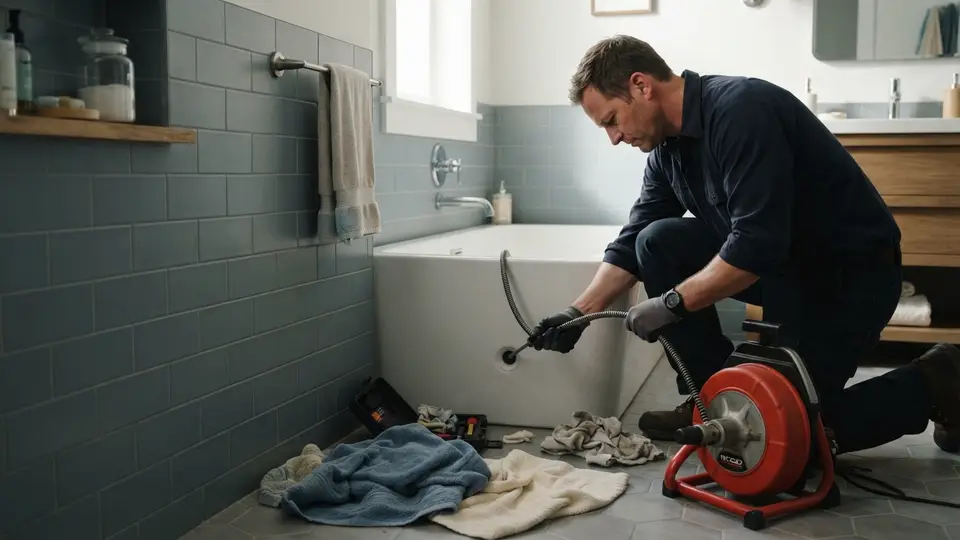
Small drum auger
Used on: Lavatories, tubs, toilets
Why it works: Reaches traps without scratching fixtures
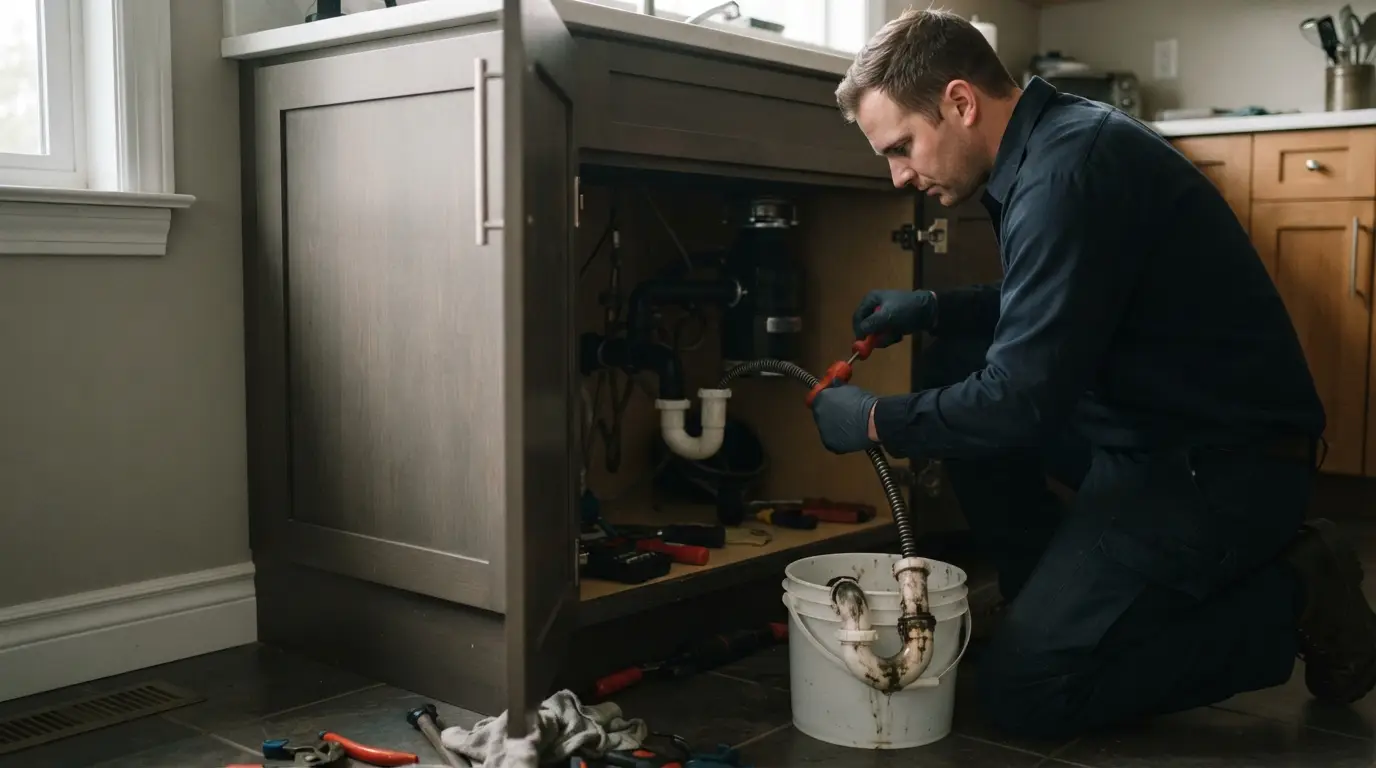
Shower draining slowly, or the main backing up after a storm? We handle drain cleaning and clog removal in Kansas for houses, rentals and restaurants. Kansas drains deal with mineral scale from hard water, roots working into clay laterals, and cast iron under slabs that cracks as clay soil swells and shrinks. We clear the blockage, run a camera to show you why it happened and recommend a repair only when the line actually needs one.
The service
There are 1,099,303 homes in our Kansas data, and 57% went up before 1980. In Kansas City, Kansas, 76% of homes predate 1980, in Hutchinson 79% and in Prairie Village 83%, so cast iron and clay drains are everyday finds. Olathe, with a median build year of 1994, has mostly plastic drain lines that clog from grease, wipes and debris rather than roots.
How we open Kansas drains
Used on: Lavatories, tubs, toilets
Why it works: Reaches traps without scratching fixtures
Used on: Main sewer lines
Why it works: Shears roots at clay joints
Used on: Grease and mineral buildup
Why it works: Washes the pipe wall clean
Used on: Lines that keep clogging
Why it works: Finds breaks, bellies and offsets
Why Kansas
Hard water and sulfate leave crust inside iron pipe that traps food, soap and hair.
Elms, maples and hackberries in older neighborhoods push roots into clay sewer joints.
Expansive clay moves drains under slabs and in yards, creating low spots and cracks.
Heavy rain fills older city sewers and pushes water back toward basements.
Warning signs
Our process
We open the line at an accessible cleanout, run the right size cable through the clog and test with plenty of water.
If the same drain keeps stopping up, we camera it and replace or line the cracked, sagging or rooted section.
A high-pressure hose scours grease and scale from the pipe. Old cast iron gets a camera check first so we know it can handle the pressure.
Typical cost
Drain cleaning figures are estimates only until we see the line. These factors set the price:
We explain the choices, and you approve a written price before we start.
Get a written price: (833) 733-2357A fixture trap is quicker than a main line.
No cleanout means working through a toilet or roof vent.
Jetting and camera work cost more than cabling.
Cracked or sagging pipe needs repair.
Evening and weekend calls cost more.
Benefits
Scale and roots are fully removed.
The main line keeps flowing.
You see the condition of the line.
Sludge and odor leave the pipe.
Many Kansas ranch homes sit on slabs with cast iron drains buried underneath. As clay soil swells after rain and shrinks in drought, those drains can crack or settle into a belly. Waste collects in the low spot and clogs return quickly. A camera shows the problem, and we can repair it through a small floor opening or reroute the drain if the damage is long.
Wichita has 176,411 homes in our data, many built in the decades after World War II. Hard water there leaves heavy scale in kitchen and laundry lines, and clay laterals under older streets collect roots. We jet scaled lines, cut roots and show you camera footage so you know whether cleaning will last.
In Kansas City, Kansas and older Johnson County suburbs, many homes have basements with a floor drain tied to the main sewer. During heavy storms, older public sewers can fill, and water rises through that floor drain even when your line is clear. We find out which problem you have, and where allowed, a backwater valve can keep city sewer water out.
Renters occupy 56% of homes in Lawrence and 57% in Manhattan, and larger buildings hold 32% of Lawrence housing. Busy shared kitchens and bathrooms clog often. We clear drains for owners and managers and can jet building mains during summer break.
Restaurants in Wichita, Topeka (59,868 homes) and Overland Park send fats, oils and grease down their drains daily. We jet kitchen lines, clear floor drains and work with your interceptor pumping schedule.
In Garden City, where 8% of homes are manufactured, and in Dodge City and Liberal, drain lines in manufactured homes run under the floor and can sag or freeze. Mineral-heavy groundwater also leaves scale in sinks and showers. We clear and repair these lines and replace sagging sections with properly supported pipe.
On acreages and rural homes, slow drains throughout the house often mean the septic tank is full or the drain field is waterlogged. We check the tank level before cleaning so you are not paying to clear a line that is not clogged. If the tank is the issue, we pump it and look at the outlet filter on the same visit.
If a floor drain is rising or several drains are slow, stop running water, laundry and the dishwasher. Shut off the toilet supply if the bowl is filling.
Avoid chemical drain openers; they harm old pipe and make the line dangerous to open. Keep children and pets away from wastewater, then call us.
Drain cleaning does not need a permit. Pipe replacement usually does, and we pull it. Our plumbers hold the licenses your city or county requires.
Why choose us
What you can count on every time one of our plumbers comes to your door.
Every job is handled by a plumber who holds the license your state or city requires, backed by liability insurance.
Our plumber explains the problem and the options, and you approve a written price before any work begins.
Burst pipes, sewage backups and failed water heaters get priority scheduling, including nights and weekends.
We pull permits when the job needs one and schedule the inspection, so the work holds up when you sell.
Repairs and installations come with a written warranty on labor, on top of the manufacturer's warranty on parts.
Our pages and plumbers account for your area's water, soil, climate and the age of the homes around you.
Service area
We clear drains in 740 Kansas communities. Choose yours:
The price depends on where the clog is, how we reach it and which equipment it takes. A bathroom sink costs much less than a main line, and you approve a written price first.
When grease or mineral scale keeps closing the line. Jetting removes the buildup a cable leaves behind, so the drain stays open much longer.
Yes, it is priced as a separate item. On older or repeat-clog lines it often saves money by showing exactly where the problem is.
Our plumber opens the nearest cleanout, runs a cable with a cutting head through the line and flushes it to confirm full flow.
Yes. We run a camera after cleaning and show you the video, including roots, cracks or sags that may need repair.
We can work through a toilet opening or roof vent. Adding an outdoor cleanout makes future cleanings faster and easier.
We advise against it. Chemicals can harm old pipes and leave caustic water that can burn anyone who opens the line.
Yes. It can carry harmful bacteria. Keep people and pets out, avoid contact and stop using water until the line is cleared.
Most fixture drains take less than an hour. Main lines, root cutting and jetting can take a few hours with camera time.
We schedule as soon as we can, with backups ahead of routine calls, and keep you updated on timing.
Many clay laterals with roots need cleaning every year or two. If roots return faster, a repair may cost less over time.
It slows new mineral buildup in drains and fixtures. Existing scale still needs to be cleaned out.
Stop using water and call us. Storm backups get priority, and we check whether the cause is your line or the city sewer.
Clay soil moves as it wets and dries, which can crack or sag cast iron drains under the slab and trap waste.
Hard water leaves scale inside old iron drains, which narrows them and catches debris, so clogs can return faster.