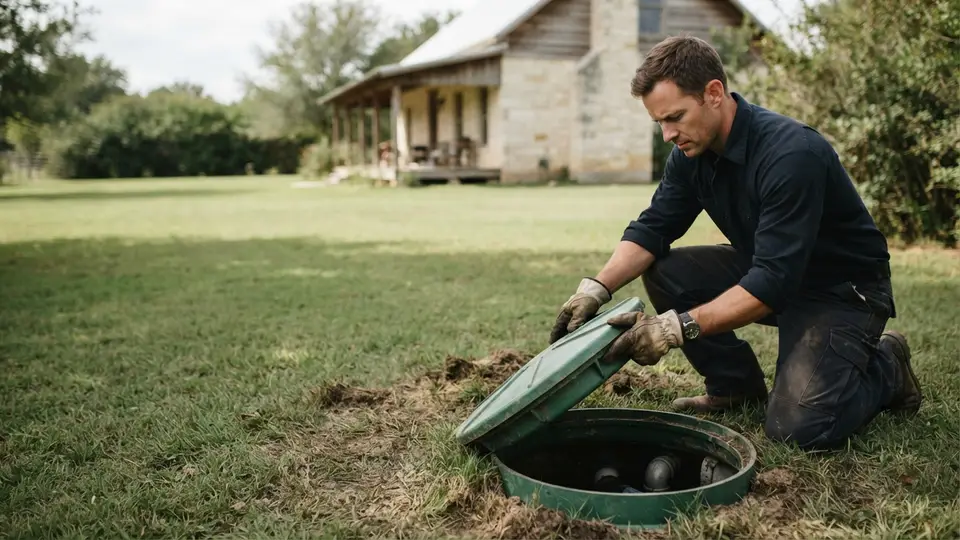
Septic tank
Purpose: Separates solids from liquid
Typical issue: Sludge buildup, broken baffles
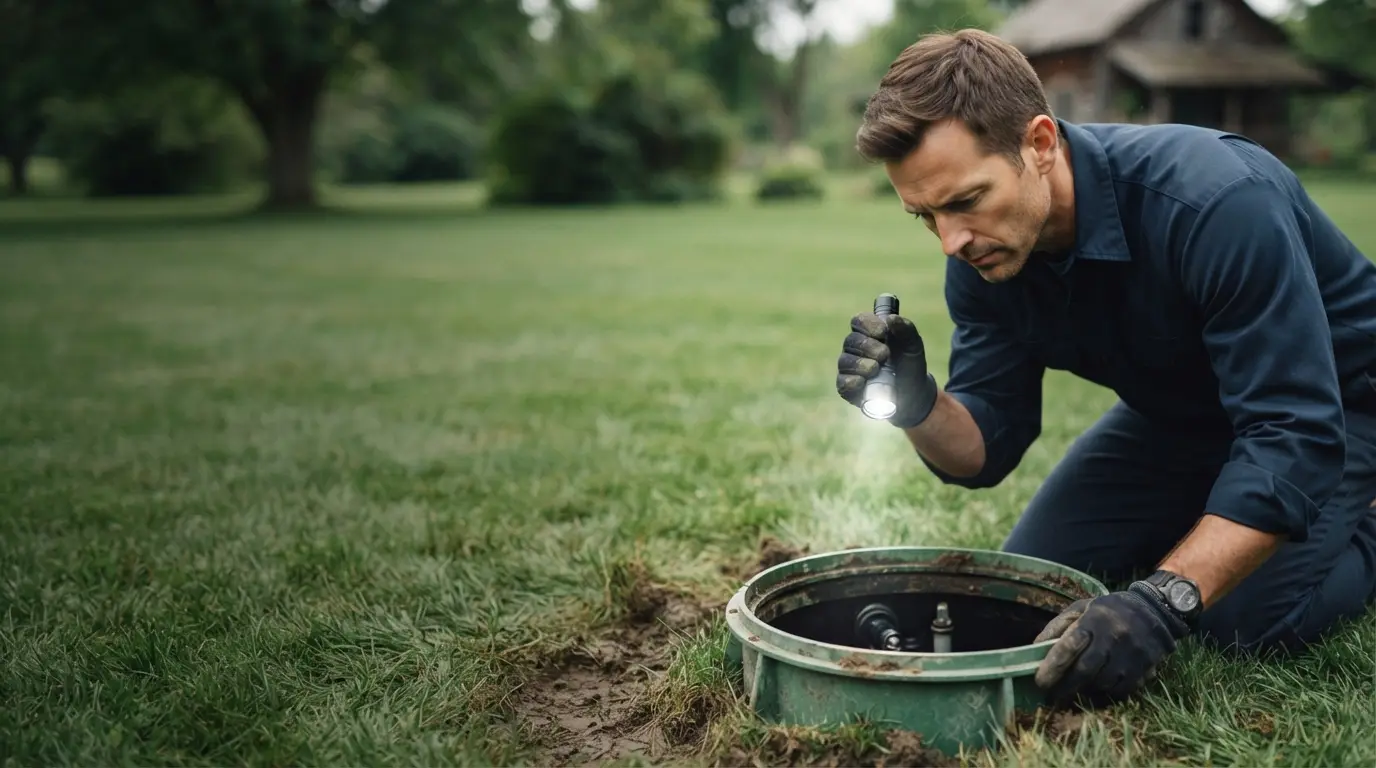
Septic alarm going off, or soggy ground over the field? We provide septic tank services in Kansas for acreages, farmsteads and homes outside city sewer. Kansas septic systems face tight clay soils in the east, which absorb water slowly, and long dry spells followed by heavy storms across the state. We pump and inspect tanks, test the lateral field and repair or replace the parts that have failed, working with your county on permits.
The service
Our data covers 740 Kansas cities and towns, but many homes just beyond their limits rely on septic. Growth around Olathe, Spring Hill (median built 2007), Gardner and Basehor has put new homes on acreages with septic systems. A typical system has a tank and a lateral field; some lots need a lagoon, mound or aerobic unit because of soil.
Septic components we service
Purpose: Separates solids from liquid
Typical issue: Sludge buildup, broken baffles
Purpose: Keeps solids out of the field
Typical issue: Clogging, slow drains
Purpose: Spread effluent into soil
Typical issue: Saturation, root intrusion
Purpose: Treats effluent in a pond
Typical issue: Weeds, low levels, fencing
Purpose: Doses effluent to the field
Typical issue: Float or pump failure
Why Kansas
Dense clay in eastern Kansas absorbs effluent slowly, so fields fill up during wet periods.
Heavy spring rains saturate soil and overload laterals after dry spells.
Trees and shrubs near the field send roots into lateral lines.
Sludge that is not pumped flows into the field and clogs the soil.
Warning signs
Our process
We uncover the lids, pump the tank, inspect the baffles and clean the outlet filter.
We measure sludge and scum, check the inlet and outlet, inspect pumps and alarms and probe the field for saturation.
We repair broken lines and distribution boxes and replace failed laterals following the design your county approves.
Typical cost
Any figure before we inspect is an estimate only. These factors decide the cost:
You approve a written price before work begins.
Get a written price: (833) 733-2357Larger tanks and buried lids take longer.
Lagoons, mounds and pumped systems differ.
Baffles and filters cost less than new laterals.
Clay, rock or tight access slow excavation.
Permits and inspections vary.
Benefits
Pumping keeps solids out of laterals.
The tank has room to work.
Records support inspections.
Proper treatment keeps wells cleaner.
Unincorporated parts of Johnson, Leavenworth and Miami counties have many acreages on septic, close to fast-growing cities like Olathe (54,594 homes) and Gardner (8,472 homes). Some counties in the metro run their own septic permit and inspection programs and may require inspections when a home sells. We work with the county, pump for inspections and complete required repairs.
Small towns and rural homes around Wichita, including areas near Maize (median built 2011), use septic on larger lots. Sandy soils in parts of south central Kansas drain faster than eastern clay, but that also means poorly treated effluent can reach groundwater sooner. Regular pumping and inspection protect your well and the aquifer.
In parts of Kansas with tight soil, some homes use a wastewater lagoon instead of a lateral field. Lagoons need the right water level, mowed banks, no trees nearby and a fence to keep children and animals out. We service the tank and piping that feed the lagoon and can advise when a lagoon is not working properly.
Farmhouses and homes in small towns like Eureka, where 91% of homes predate 1980 and 27% are vacant, may have very old systems: steel tanks, short laterals or a tank with no field at all. When an old house changes hands or comes back into use, we inspect what is there and explain whether repair or replacement is needed.
Most rural Kansas homes have a well or rural water connection near the septic system. A failing field can affect groundwater, so we look at the distance between the well and the field during inspections. Testing your well for bacteria and nitrate on a regular schedule is a good habit.
Long Kansas droughts dry clay soil until it cracks open. Effluent can then run down those cracks instead of filtering slowly through the soil, and roots from nearby trees reach farther into lateral lines looking for water. When the rain returns, the clay swells shut and the same field can suddenly flood. A field that works in one season and fails in the next often has one of these problems. We look at the history of the system along with its current condition before recommending repairs.
Buyers, lenders and county offices often ask when the tank was last pumped and what work has been done. We leave a written record after each visit with the tank size, condition, repairs and the date we suggest for the next pumping. Keep it with your home papers; it makes the next inspection or sale go faster. If you never received records from a previous owner, our first visit starts a new file for the system.
Use as little water as possible if drains are slow or the alarm is on. Hold off on laundry, baths and the dishwasher.
Keep vehicles and people off wet areas over the field. Never open a tank or lean over an open lid; the gases are dangerous. Then call us.
Kansas counties regulate septic systems through local sanitary codes, and new systems or major repairs need a county permit. We work with your county and arrange inspections. Our plumbers hold the licenses your county requires.
Why choose us
What you can count on every time one of our plumbers comes to your door.
Every job is handled by a plumber who holds the license your state or city requires, backed by liability insurance.
Our plumber explains the problem and the options, and you approve a written price before any work begins.
Burst pipes, sewage backups and failed water heaters get priority scheduling, including nights and weekends.
We pull permits when the job needs one and schedule the inspection, so the work holds up when you sell.
Repairs and installations come with a written warranty on labor, on top of the manufacturer's warranty on parts.
Our pages and plumbers account for your area's water, soil, climate and the age of the homes around you.
Service area
We service septic systems in rural areas around these Kansas communities:
It depends on tank size, lid depth and access for the truck. We give you a written price before pumping.
It depends on the system type and how much we need to uncover and test. County-required inspections may follow a set format.
Repairing a few lines costs far less than a new field. We test the field and price the repair that will actually last.
We uncover the lids, pump the tank, check baffles and the outlet filter and give you notes on the system and when to pump next.
Yes. We pump and inspect systems for sales where counties require it and complete repairs the report calls for.
Yes. We trace the line from the house with a locator or probe, and county records sometimes help.
Yes. Tank gases can be deadly, and old lids may collapse. Leave opening and pumping to us.
A failing system can affect groundwater, especially if the well is close. Test your well regularly and fix septic problems promptly.
Usually an hour or two once lids are uncovered. Buried lids add digging time.
Often a few days after the county approves the design, depending on weather and soil.
Many homes need pumping every three to five years. Tank size, household and a garbage disposal affect the schedule.
Most systems do not need them. Pumping on schedule and keeping harmful items out of drains matter much more.
Stop using water and call us. Backups are scheduled ahead of routine work, and we find out whether the tank, filter or field is the cause.
Heavy rain saturates clay soil, leaving no room for effluent. Fields that fail after most storms often need repair or redesign.
Some do, especially where soils absorb water poorly. Lagoons need proper water levels, mowing and fencing to work safely.