Black steel
Common location: Basements, garages, older homes
What to know: Strong, threaded joints can loosen
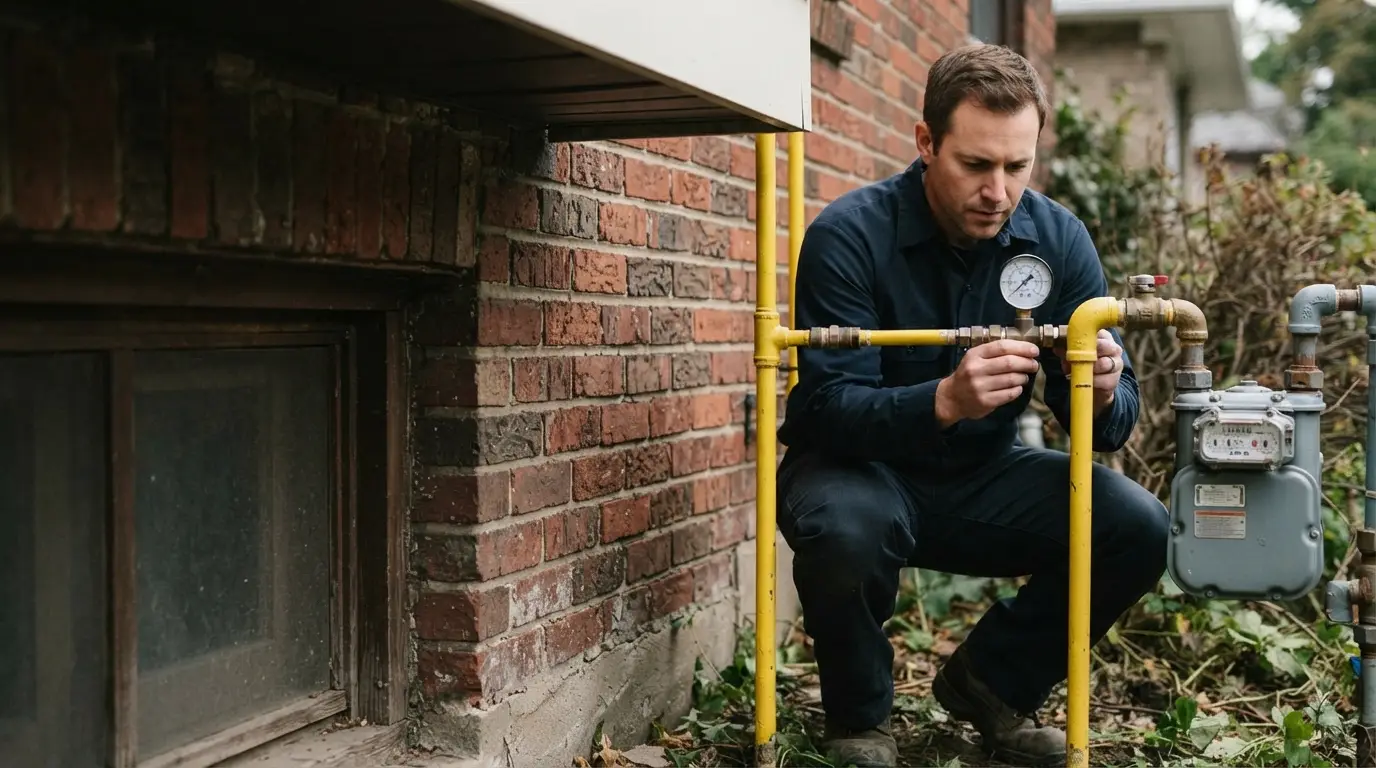
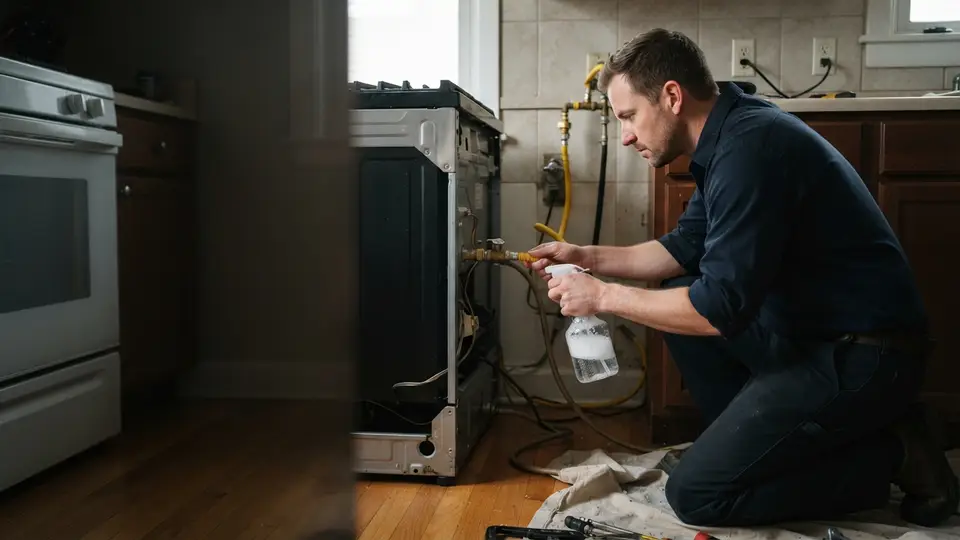
Gas odor by the furnace, or a new line needed for a range? We handle gas line repair and installation in Kansas for natural gas and propane systems. Most Kansas homes heat with gas, and older houses often have black iron piping that has been extended and patched for decades. Shifting clay soil can also stress buried yard lines. We fix leaks, add lines for new appliances and generators and pressure test every system. If you smell gas right now, leave and call your gas utility first.
The service
69% of the homes in our Kansas data heat with utility gas. In Prairie Village the share is 80%, in Leawood 79% and in Liberal 79%. Propane serves farms and some towns, including 11% of homes in Osawatomie and 7% in Kechi. The gas utility owns the service up to the meter; the piping beyond it belongs to the property owner.
Gas pipe materials in Kansas homes
Common location: Basements, garages, older homes
What to know: Strong, threaded joints can loosen
Common location: Newer homes and additions
What to know: Needs proper bonding for lightning
Common location: Buried runs to outbuildings
What to know: Underground use only, with tracer wire
Common location: Some propane systems
What to know: Limited uses under code
Why Kansas
Threaded joints in older piping loosen and the sealant dries out.
Expansive clay can strain buried lines to garages, shops and grills.
Steel pipe in damp basements, crawl spaces or soil rusts over time.
Flexible appliance connectors crack when appliances are moved or age out.
Warning signs
Our process
After the utility makes the site safe, we locate the leak with a detector and bubble tests, replace the faulty section and pressure test.
We calculate the load, size the pipe and install new lines with shutoff valves for additions, garages and outdoor living spaces.
We connect ranges, dryers, water heaters, furnaces, fireplaces and generators and test every joint.
Typical cost
Any figure before we see the job is an estimate only. These factors set the price:
You approve a written price before we start.
Get a written price: (833) 733-2357Long runs through finished areas take more labor.
Generators and tankless heaters need larger pipe.
Trenching to outbuildings adds cost.
Steel and CSST differ in cost and labor.
Gas work generally needs a permit and inspection.
Benefits
Every system is checked for leaks.
Appliances get enough gas.
Work meets local code.
Bonding and venting are verified.
Ice storms in winter and severe storms in spring can cut power for days in parts of Kansas. A standby generator needs a gas line large enough to run at full load while the furnace and water heater also run. We size the line, coordinate with the utility about the meter, install the line and shutoff and test it with your electrician. A generator that starts but stalls under load is often a sign the gas line is too small.
In Kansas City, Kansas (76% of homes built before 1980) and older parts of Wichita (176,411 homes), gas piping often runs through basements and crawl spaces with fittings decades old. Some homes still have capped lines to appliances that are long gone, or lines that were never capped properly. We inspect, cap and replace sections as needed during any gas job.
Newer homes in Maize (median built 2011), Shawnee and other growing towns often use corrugated stainless tubing. Kansas sees frequent lightning, and this tubing must be bonded to the electrical grounding system to reduce damage from nearby strikes. We check bonding during gas work and add it where it is missing.
On farms and in some small towns, propane tanks supply heat, water heaters and ranges. The propane company usually owns or maintains the tank and first regulator, while the house piping and appliance connections are the owner's responsibility. We repair and extend that piping, set up second-stage regulators and test the system.
Patios in Johnson County and Wichita suburbs often add gas grills, fire pits and heaters, and many rural owners heat shops with gas. We trench buried polyethylene lines with tracer wire, transition to steel above ground and add shutoffs at each appliance. In Dodge City (9,782 homes) and other western towns, we also run lines to shops and outbuildings.
Gas appliances that are poorly vented or damaged can release carbon monoxide, which has no color or smell. Kansas homes are closed up tight in winter, which raises the risk. Install CO alarms on every level and near bedrooms. We check venting and combustion air whenever we connect or service a gas appliance.
If you smell gas, leave immediately and call your gas utility or 911 from outside. Do not use switches, phones, lighters or anything that could spark.
Once the utility has made the area safe, call us for the repair. Never attempt gas piping work yourself.
Gas piping work in Kansas cities generally requires a permit and inspection, and the utility may need to restore service afterward. We pull permits and coordinate inspections. Our plumbers hold the licenses your city or county requires.
Why choose us
What you can count on every time one of our plumbers comes to your door.
Every job is handled by a plumber who holds the license your state or city requires, backed by liability insurance.
Our plumber explains the problem and the options, and you approve a written price before any work begins.
Burst pipes, sewage backups and failed water heaters get priority scheduling, including nights and weekends.
We pull permits when the job needs one and schedule the inspection, so the work holds up when you sell.
Repairs and installations come with a written warranty on labor, on top of the manufacturer's warranty on parts.
Our pages and plumbers account for your area's water, soil, climate and the age of the homes around you.
Service area
We repair and install gas lines in 740 Kansas communities, including Shawnee (27,653 homes). Find your city:
It depends on where the leak is, how much pipe needs replacing, access and the permit. We give you a written price before work begins.
The price depends on distance from the existing line, the route through walls or floors and permit fees. We quote it after seeing the space.
Generators often need larger pipe, and sometimes the utility must upgrade the meter. We calculate the full load and price it in writing.
We find the leak, repair or replace the faulty part, pressure test the system and arrange inspection so service can be restored.
Yes. We trench buried lines, add shutoffs and connect grills, fire pits and patio heaters safely.
Many appliances can be converted with the manufacturer's kit. We check the model and handle the conversion and testing.
Leave without using switches or phones and call your gas utility or 911 from outside. Call us once the area is safe.
On every level of the home and outside sleeping areas. Test them monthly and replace them as the manufacturer recommends.
Short appliance lines often take a few hours. Generators, long runs and buried lines may take a day or more, plus inspection.
Usually a few hours, depending on the repair and inspection. We coordinate with the utility to restore service.
Once a year for the furnace and water heater is a good habit, along with checking connectors when you move appliances.
Yes. Old connectors can crack. We install new ones whenever we connect or move an appliance.
Call us. Gas outages in freezing weather are scheduled ahead of routine work so we can repair the line and restore heat.
Expansive clay can strain buried lines and connections, especially to outbuildings. We use proper materials and bedding to reduce stress.
When properly bonded to the grounding system, it is much better protected from lightning. We verify bonding during gas work.