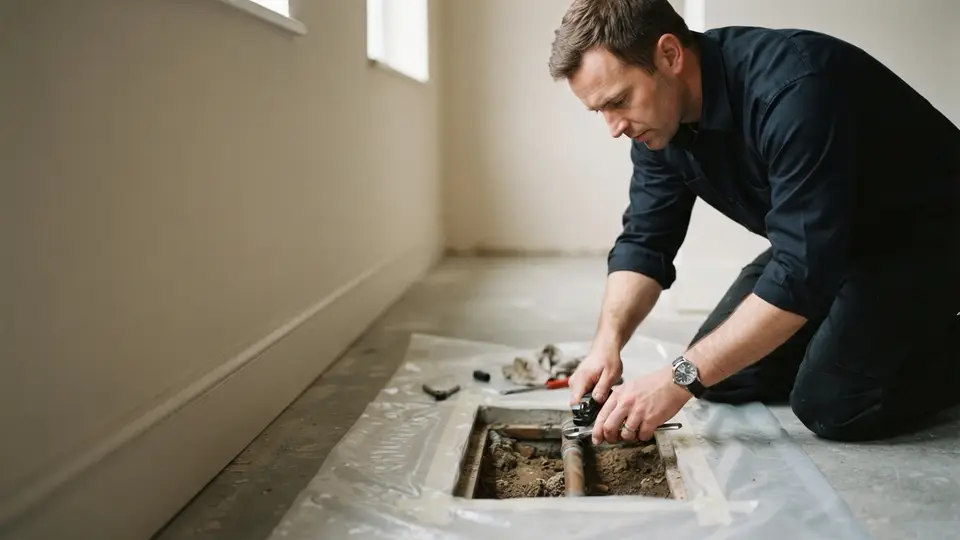
Direct access
Method: Open the slab at the leak
When it fits: Single leak, good pipe elsewhere
Hot spot on the floor, or a water bill that keeps rising? We handle slab leak repair in Kansas for homes and businesses. Slab ranches are common across Kansas, and the expansive clay under them swells after rain and shrinks in drought. That movement, along with hard water and age, wears out copper and cast iron under the concrete. We locate the leak precisely, then repair it through a small opening or reroute the line so the floor stays intact.
The service
A slab leak is a break in a water or drain line beneath a concrete floor. Wichita (176,411 homes), Derby and Salina have many slab ranches from the 1950s onward, and newer suburbs like Maize (median built 2011) and Goddard (median built 2005) include slab homes and townhomes too. Older slabs usually have copper supply lines; newer ones often use PEX.
How we fix slab leaks
Method: Open the slab at the leak
When it fits: Single leak, good pipe elsewhere
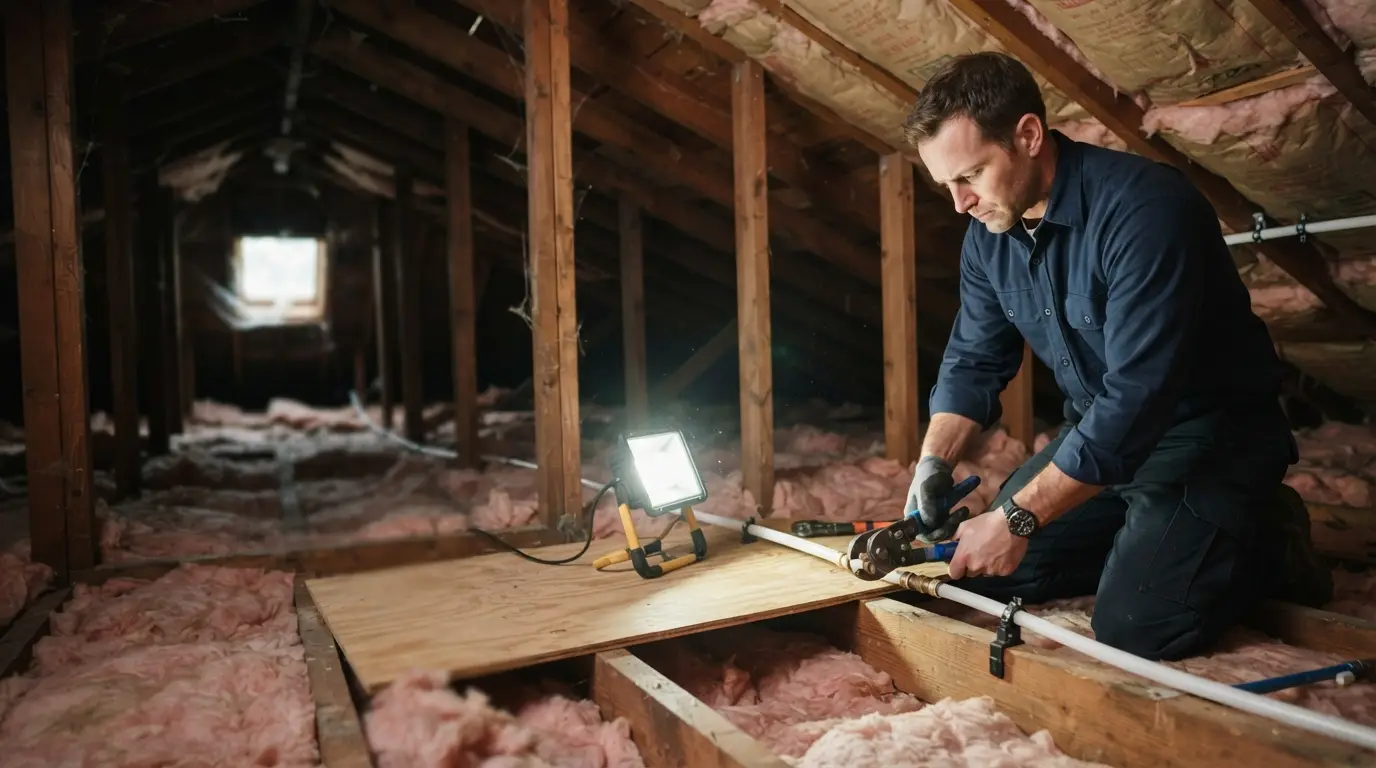
Method: New line through attic or walls
When it fits: Worn pipe or costly flooring
Method: Coat or line a drain from inside
When it fits: Cracked drains that hold shape
Method: Replace all supply lines
When it fits: Repeated leaks
Why Kansas
Clay that swells and shrinks moves the slab and the pipes inside or beneath it.
Hot water lines expand and contract, rubbing against concrete and gravel until they wear through.
Hard or mineral-heavy water and age can thin copper from the inside.
Cast iron drains under older slabs corrode and split.
Warning signs
Our process
We separate hot, cold and drain systems with pressure tests, then pinpoint the leak with ground microphones and thermal imaging.
We cut a small, neat opening, replace the damaged section, test it and patch the concrete.
We abandon the leaking line and run new PEX or copper through the attic, walls or crawl space, so the floor stays untouched.
Typical cost
Any figure before we find the leak is an estimate only. These factors set the price:
You approve a written price before we start.
Get a written price: (833) 733-2357Leaks under cabinets or tubs take more work.
Rerouting costs more upfront but avoids floor damage.
Tile and hardwood cost more to restore.
Several leaks may point to repiping.
Reroutes and repipes may need one.
Benefits
Water under a slab can soften clay.
Hot water leaks waste water and energy.
Mold and odors stay away.
We price repair and reroute side by side.
Eastern and central Kansas have a lot of expansive clay. After a wet spring the soil swells and lifts parts of the slab; during a dry summer it shrinks and the slab settles. Pipes crossing those areas bend and strain. Keeping soil moisture steady around the foundation with good drainage and sensible watering in drought reduces movement. We look for signs of soil movement when we find a leak, because they may affect the best repair.
If a slab line has leaked once because of age or wear, the rest of it is likely in similar shape. Rerouting replaces the whole run with new pipe that is easy to reach later. Kansas ranches usually have attic space for this, and the work avoids breaking tile, hardwood or carpet. We price both options so you can choose.
Most Olathe homes, 54,594 in our data, have basements, but slab townhomes, ranch homes and commercial buildings are also common. In basement homes, the main drain and sometimes supply lines run under the basement floor and can leak there. We use the same detection tools and repair methods.
In Garden City, Hays and Salina, where 71% of homes predate 1980, mineral-heavy water adds to wear on copper under slabs. We test water when we find repeated leaks and may suggest treatment along with the repair.
Some Kansas homes, garages and shops have radiant heating tubes in the slab. A leak causes pressure loss and damp areas. We test each loop, find the leaking circuit and repair or isolate it. Shops and garages with floor heat often have long loops, so we test them one at a time to avoid breaking more concrete than needed.
Restaurants, offices, shops and warehouses across Kansas sit on slabs with water and drain lines running to restrooms, kitchens and floor sinks. A leak there can raise costs for months before it shows. We locate the leak, plan the work around your hours and choose between repair and reroute based on how the space is used.
A hot water slab leak forces the water heater to keep refilling and reheating. If your gas heater seems to run all day, or an electric heater trips its breaker or runs up the power bill, the leak may be on the hot side under the floor. Closing the cold supply valve on the heater for an hour and watching the meter is a quick clue: if the meter stops, the leak is likely on the hot side. We confirm it with pressure tests before any work.
With all fixtures off, check whether the water meter is moving. If water is surfacing on the floor, close the main shutoff.
If the floor is warm, turn off the water heater. Move rugs and furniture off damp spots and take photos. Then call us.
Spot repairs often need no permit, while reroutes and repipes may. We pull permits when required. Our plumbers hold the licenses your city or county requires.
Why choose us
What you can count on every time one of our plumbers comes to your door.
Every job is handled by a plumber who holds the license your state or city requires, backed by liability insurance.
Our plumber explains the problem and the options, and you approve a written price before any work begins.
Burst pipes, sewage backups and failed water heaters get priority scheduling, including nights and weekends.
We pull permits when the job needs one and schedule the inspection, so the work holds up when you sell.
Repairs and installations come with a written warranty on labor, on top of the manufacturer's warranty on parts.
Our pages and plumbers account for your area's water, soil, climate and the age of the homes around you.
Service area
We repair slab leaks in 740 Kansas communities, including Derby (11,026 homes) and Hays (9,702 homes). Find your city:
It depends on the leak location, the repair method and the flooring above. We give you a written price after finding the leak and before cutting any concrete.
Often, yes, when the old line is likely to leak again or the floor is expensive to replace. We price both options so you can compare.
Many policies cover access and resulting damage but not the pipe itself. Check your policy; we provide documentation.
We pressure test each system to isolate the leak, then use ground microphones and thermal imaging to mark it on the floor.
Usually small, often under two feet across, because we pinpoint the leak first. Rerouting avoids opening the floor at all.
Yes. Cast iron drains corrode and crack. A camera inspection shows the damage, and we repair or line the pipe.
It can. Water under the slab can soften or wash out soil. Repairing the leak promptly limits the risk.
It is a sign of a hot water leak. Turn off the water heater to save energy and avoid scalding water surfacing, then call us.
Most direct repairs are done in a day, with time for the patch to cure. Reroutes can take one to two days.
Usually the same day. We restore water once the repair is tested, even before the concrete patch cures.
Keep water pressure normal, maintain even soil moisture around the foundation and treat very hard water.
If the pipe is old or worn, more leaks are likely. Rerouting or repiping can prevent repeated repairs.
Close the main shutoff and call us. Active leaks are scheduled ahead of routine work, and we keep you updated on timing.
Expansive clay soil swells and shrinks with moisture, moving slabs and stressing pipes beneath them.
Drought can. As clay dries and shrinks, the slab settles unevenly, which can strain and crack pipes underneath.