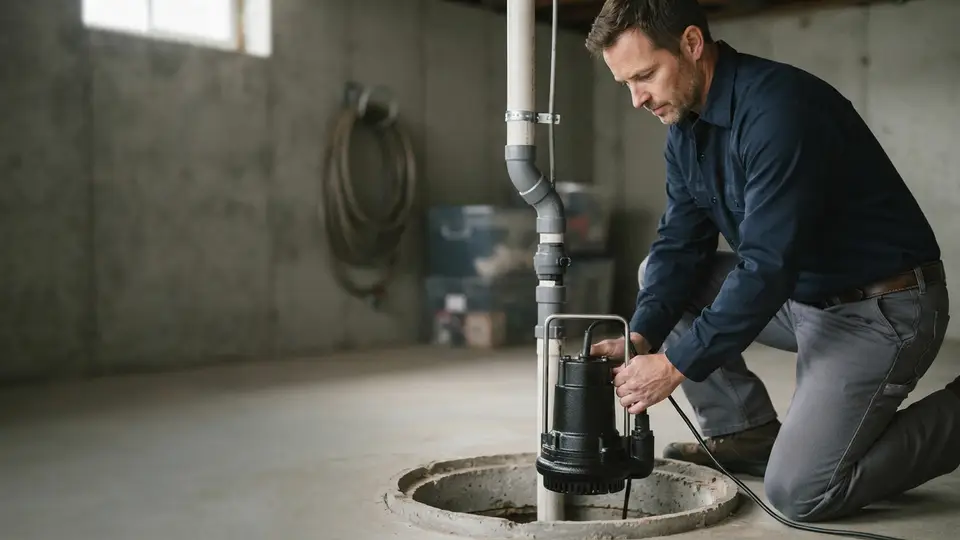
Submersible pump
How it works: Sealed motor sits in the pit
Best for: Finished basements, quiet operation
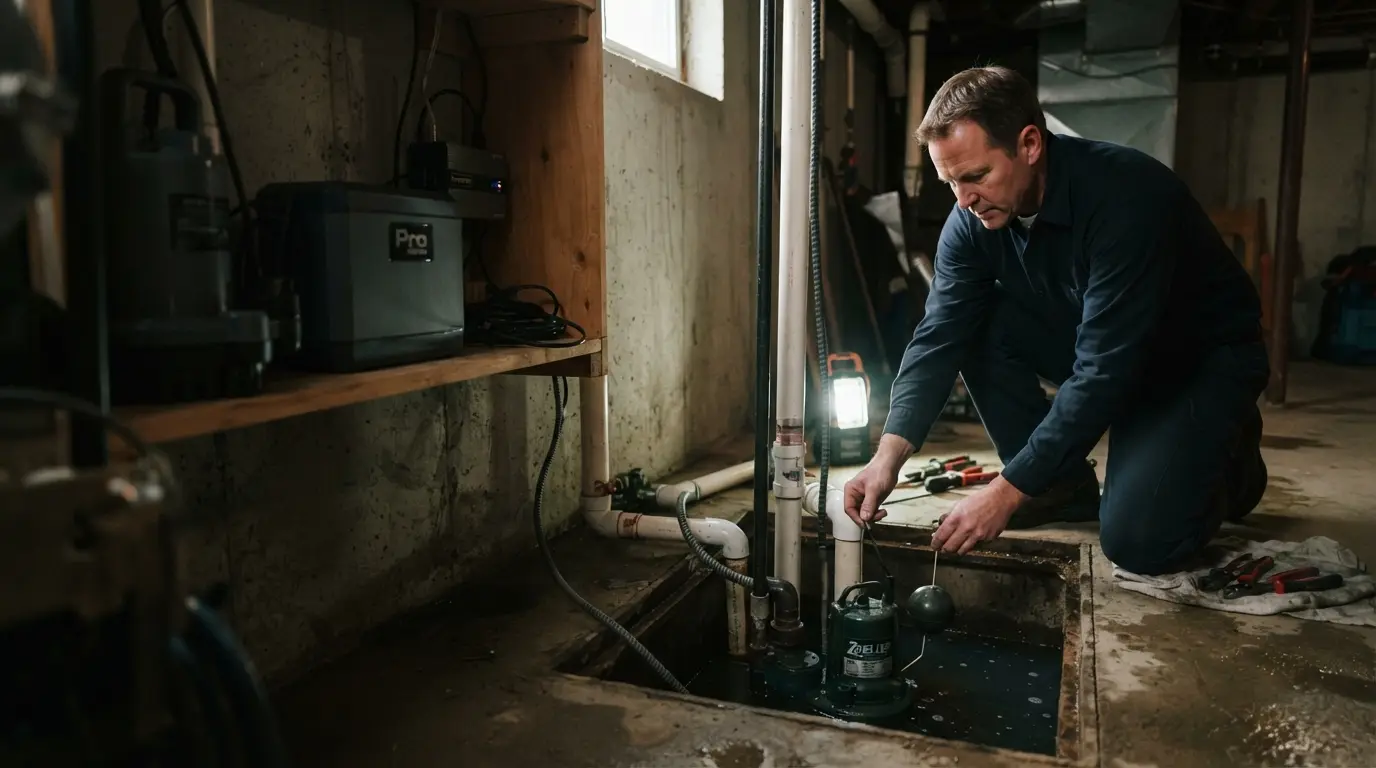
Basement wet after a storm, or a pump that hums and quits? We handle sump pump repair and installation in Kansas for homes with basements and crawl spaces. Eastern Kansas clay holds water against foundations, and spring storms can drop inches of rain in an evening while knocking out power. A working pump and a backup are what keep that water off the floor. We repair or replace pumps, fix discharge lines and add backup protection.
The service
Basements are standard in the Kansas City suburbs, including Overland Park (89,079 homes), Olathe (54,594 homes), Shawnee and Lenexa, and common in Topeka, Lawrence and Manhattan. Most newer basements have a sump pit fed by drain tile around the footings. Slab homes in Wichita and western Kansas rarely have them, but crawl space homes sometimes do.
Sump pump choices
How it works: Sealed motor sits in the pit
Best for: Finished basements, quiet operation
How it works: Motor on a column above the pit
Best for: Small pits, easy service
How it works: Second pump on a battery
Best for: Storms and power outages
How it works: Primary and backup in one unit
Best for: Basements that have flooded before
Why Kansas
Heavy thunderstorms send large volumes of water into the drain tile quickly.
Severe weather knocks out power just when the pump is needed most.
Dense clay holds water near the foundation, keeping pumps running for days.
Floats catch on the pit wall or cords and stop the pump from starting.
Warning signs
Our process
We test the pump, switch and check valve, clean the pit and replace failed parts.
We size the pump to your water flow, install new pits when needed and route discharge lines safely away from the house.
We add a battery-powered backup pump with an alarm so water keeps moving during outages.
Typical cost
Any figure before we inspect is an estimate only. These factors determine the cost:
You approve a written price before we start.
Get a written price: (833) 733-2357A switch or check valve costs less than a pump.
Heavier inflow needs a stronger pump.
Extra equipment adds cost.
Cutting concrete takes more labor.
Long or buried lines add work.
Benefits
Water leaves before it reaches the floor.
Backups keep running without power.
Dry spaces stay healthier.
Alarms alert you before damage.
Kansas storm season brings heavy rain, hail and high winds, often with power outages. A basement can flood within hours if the pump stops. A battery backup keeps pumping during most outages, and a generator inlet can power the main pump for longer ones. We help you choose a backup sized for how much water your pit takes in.
In Overland Park, Olathe, Shawnee (27,653 homes) and Lenexa (25,751 homes), many homes have finished basements with sump pits in closets or utility rooms. Pumps in these homes run often in spring. We replace aging pumps before storm season, add backups and alarms, and check that discharge lines are not freezing or dumping water next to the foundation.
In Kansas City, Kansas (76% of homes built before 1980), Topeka (59,868 homes) and Emporia, older basements may have no pit, a shallow crock or a floor drain connected to the sewer. Many cities do not allow groundwater into the sanitary sewer. We can cut in a proper pit, install a pump and route the discharge outside.
Discharge water that drains back toward the house simply cycles through the pump again. In winter, a buried discharge line can freeze and block the flow. We slope lines, extend them well away from the foundation and add a freeze-relief outlet so water can still escape near the house if the main line freezes.
Renters occupy 56% of homes in Lawrence and 57% in Manhattan, and many older rental houses have basement apartments. A failed sump pump there can damage tenant belongings. We service pumps for owners and managers and recommend alarms that alert both tenant and owner.
A high-water alarm sounds when the pit fills above normal, giving you time to act. Wi-Fi monitors send alerts to your phone, useful for rentals or when you travel. We install and test both types.
Some Kansas homes have crawl spaces that collect water after storms. Standing water there raises humidity, rots framing and draws pests. A small sump pump in a low corner, along with a vapor barrier, keeps the crawl space drier. We install pumps and discharge lines suited to tight crawl spaces.
Standard homeowner policies often exclude damage from a failed sump pump or a sewer backup unless you add water backup coverage. It is usually an inexpensive addition and worth asking about if you have a finished basement. We document pump failures with photos and notes to help with a claim, and we can tell you whether the water came from groundwater, a failed pump or the sewer, since policies often treat those differently.
Check that the pump is plugged in and the breaker or GFCI outlet has not tripped. Gently lift the float to see if the pump starts.
Do not stand in water near electrical cords. Move belongings off the floor and photograph damage. Then call us.
New pits, drain tile and discharge changes may need a permit, and many cities limit where sump water can drain. We follow local rules and pull permits where required. Our plumbers hold the licenses your city or county requires.
Why choose us
What you can count on every time one of our plumbers comes to your door.
Every job is handled by a plumber who holds the license your state or city requires, backed by liability insurance.
Our plumber explains the problem and the options, and you approve a written price before any work begins.
Burst pipes, sewage backups and failed water heaters get priority scheduling, including nights and weekends.
We pull permits when the job needs one and schedule the inspection, so the work holds up when you sell.
Repairs and installations come with a written warranty on labor, on top of the manufacturer's warranty on parts.
Our pages and plumbers account for your area's water, soil, climate and the age of the homes around you.
Service area
We repair and install sump pumps in 740 Kansas communities. Find your city:
It depends on the pump type and capacity, the pit, discharge routing and any backup. We give you a written price before starting.
For basements that have flooded before or finished basements, usually yes. Storms that bring heavy rain often cause power outages too.
Yes. Cutting concrete, digging and connecting drain tile take more time than swapping a pump. We price it separately.
We test the pump, float and check valve, clean the pit and inspect the discharge, then recommend repair or replacement.
We measure how quickly water enters the pit and how high and far the pump must push it, then choose the right capacity.
Yes. We cut and dig a pit, connect drain tile where possible and route discharge outside.
Not if water may reach outlets or cords. Shut off basement power from a dry location or wait for help.
Many Kansas cities do not allow it. We route discharge outdoors according to local rules.
A pump swap in an existing pit usually takes a few hours. New pits or backup systems take longer.
Many last around seven to ten years, less with heavy use. Replacing old pumps before storm season helps prevent failures.
At least twice a year, especially before spring storms. Pour water into the pit until the pump starts and stops.
Slope it to drain, keep the outlet clear of snow and add a freeze-relief fitting near the house.
Call us. Failed pumps during storms are scheduled ahead of routine work, and we keep you updated on timing.
Clay soils hold water against foundations, and heavy storms raise groundwater quickly. Pumps remove it before it seeps in.
Usually not, but some crawl space homes do. We check drainage and recommend a pump only if water collects.