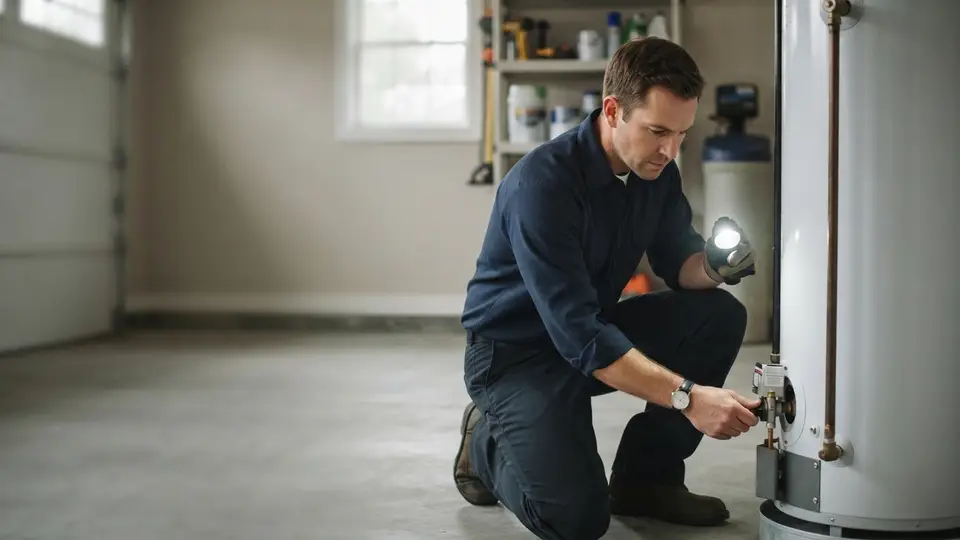
Atmospheric tank
Fuel: Natural gas or propane
Where it fits best: Basements and garages with a flue
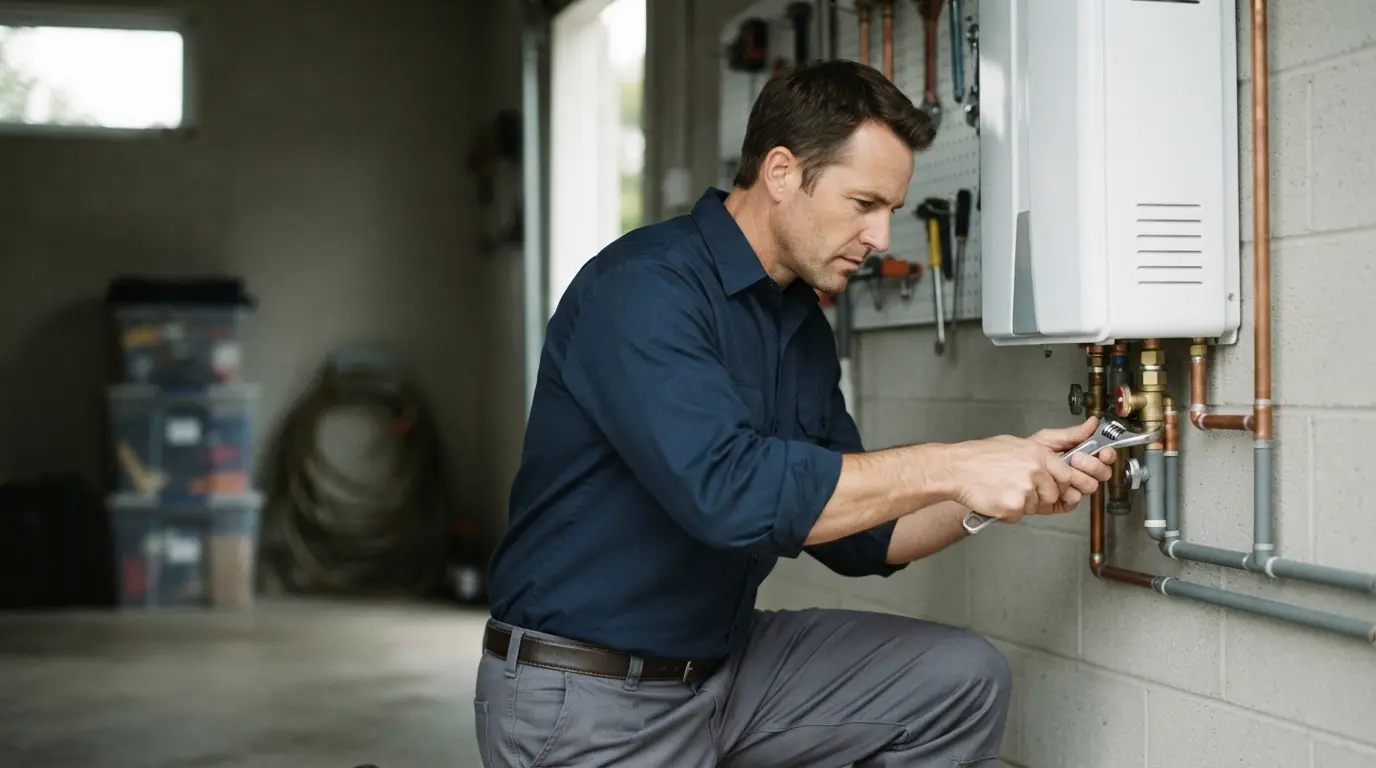
Cold showers, or a tank rumbling and leaking in the garage? We handle water heater repair and replacement in Kansas. We work on gas, electric, propane and tankless units. Kansas water is often hard, and some areas add sulfate that speeds corrosion, so tanks fill with sediment and wear out early. Heaters in garages and attics also face cold drafts in winter and heat in summer. We diagnose the problem, repair it when that makes sense and install a properly sized, vented replacement when it does not.
The service
Utility gas heats 69% of the homes in our Kansas data, and most of those homes also heat water with gas. The share reaches 80% in Prairie Village, 79% in Leawood and 79% in Liberal. Electric heat serves 27% of homes, and propane is more common in small towns, with 11% of Osawatomie homes and 8% of Valley Center homes using it.
Heater types we service and install
Fuel: Natural gas or propane
Where it fits best: Basements and garages with a flue
Fuel: Natural gas or propane
Where it fits best: No usable chimney, sidewall vent
Fuel: Electricity
Where it fits best: All-electric homes
Fuel: Gas, propane or electric
Where it fits best: Space savings, steady hot water
Fuel: Electricity
Where it fits best: Basements and large utility rooms
Why Kansas
Minerals settle on the tank bottom and insulate the water from the burner, causing noise and overheating.
Some Kansas water carries sulfate, which can wear anode rods faster and cause a rotten-egg smell.
Heaters in garages and attics work harder in winter and are hard to inspect.
Tanks that are never flushed fill with sediment and fail sooner.
Warning signs
Our process
We check burners, thermocouples, igniters, gas valves, elements and thermostats, replace failed parts and test the relief valve and venting.
We size the heater to your household, set it on a drain pan where needed, connect fuel and venting, add an expansion tank and remove the old unit.
We install tankless units with correctly sized gas lines and venting and set up isolation valves for yearly flushing.
Typical cost
Any figure before we see the heater is an estimate only. The final price depends on:
You approve a written price before we start.
Get a written price: (833) 733-2357Parts cost less than a new heater.
Tankless and heat pumps cost more upfront.
Attic and tight closet installs take longer.
Upgrades add cost.
Expansion tanks, pans and platforms may be needed.
Benefits
Sized for your household.
Venting is checked and corrected.
Permits and inspections handled.
Expansion tanks and anodes protect the heater.
Many Kansas slab homes put the water heater in the garage, and some put it in the attic. Garage gas heaters must be raised off the floor in most codes to keep the flame away from fuel vapors, and attic units need a drain pan piped to a safe spot. When we replace one, we check these details and suggest moving an attic heater to a safer location if the house allows it.
In parts of Kansas, especially homes on wells, hot water can smell of sulfur. Often the anode rod reacts with sulfate and bacteria in the water. Changing to a different anode, treating the water or flushing the tank usually solves it. If the smell is in cold water too, the source is the water supply, and filtration may be needed.
Tankless heaters save space and provide steady hot water, but they need a larger gas line and new venting, and winter groundwater is cold, so sizing matters. Hard water also means yearly descaling. In homes with large families or a big tub, we may suggest a high-capacity tankless or a tank instead. We give you an honest comparison.
Renters occupy 56% of homes in Lawrence and 57% in Manhattan. Heaters in rental housing run hard and are often small for the number of tenants. We repair and replace them for owners and managers and can size heaters to cut complaints about running out of hot water.
Wichita's 176,411 homes include many 1950s and 1960s ranches with heaters in garages or utility closets. Hard water there builds sediment quickly. We recommend yearly flushing and check gas connectors and venting during every service.
In Garden City, Liberal and other western towns, groundwater can be high in minerals. Heaters there scale up fast and anode rods wear out sooner. We check the anode during service, flush the tank and suggest treatment when we see heavy buildup.
When a home has a check valve or pressure regulator, heated water has nowhere to expand, and pressure rises. That makes the relief valve drip and wears out the tank. An expansion tank absorbs the extra volume. Many Kansas codes now require one with a new heater, and we install it as part of the job. We also check the incoming pressure, since a failing regulator can cause the same dripping and strain on every fixture in the house.
If the tank is leaking, close the cold water valve above it and turn the gas control off or switch off the breaker.
If you smell gas, leave and call your gas utility from outside. Do not open the relief valve. Then call us.
Most Kansas cities require a permit for water heater replacement. We pull it and schedule the inspection. Our plumbers hold the licenses your city or county requires.
Why choose us
What you can count on every time one of our plumbers comes to your door.
Every job is handled by a plumber who holds the license your state or city requires, backed by liability insurance.
Our plumber explains the problem and the options, and you approve a written price before any work begins.
Burst pipes, sewage backups and failed water heaters get priority scheduling, including nights and weekends.
We pull permits when the job needs one and schedule the inspection, so the work holds up when you sell.
Repairs and installations come with a written warranty on labor, on top of the manufacturer's warranty on parts.
Our pages and plumbers account for your area's water, soil, climate and the age of the homes around you.
Service area
We repair and replace water heaters in 740 Kansas communities, including Overland Park (89,079 homes) and Garden City (10,798 homes). Find your city:
It depends on the heater type and size, location, venting and code updates. We give you a written price before starting work.
Repair is usually better for a younger heater with a failed part. A leaking or very old tank is better replaced. We explain both options.
Yes, usually, because of larger gas lines and new venting. It can last longer and use less energy over time.
We shut off fuel and water, drain and remove the old heater, set the new one, connect everything, test it and haul the old unit away.
We consider household size, bathrooms, large tubs and appliances, and cold winter groundwater temperatures.
Often, yes, if there is space in a garage, closet or basement. Moving it reduces the risk of ceiling damage from leaks.
Leave the home without using switches and call your gas utility or 911 from outside. We repair the problem once it is safe.
It can signal high pressure, overheating or a worn valve. Never plug it; call us to find the cause.
A standard tank swap usually takes a few hours. Tankless installs or relocations take longer.
Many tanks last about eight to twelve years. Hard water and skipped flushing shorten that.
Once a year is a good habit, more often if your water is very hard.
Yes. Softened water leaves less sediment, helping the heater run efficiently and last longer.
Close the cold supply valve, turn off fuel or power and call us. Leaking heaters are scheduled ahead of routine work.
Sulfate and bacteria can react with the anode rod. A different anode, water treatment or flushing usually fixes it.
Gas heaters in garages are usually raised off the floor and protected from vehicles, per local code. We check this on every install.