Basement backups
Floor drains in St. Louis and Kansas City basements back up when the lateral is rooted or the public sewer surcharges in a storm. We clear the line, find the cause and fit backwater valves where they help.
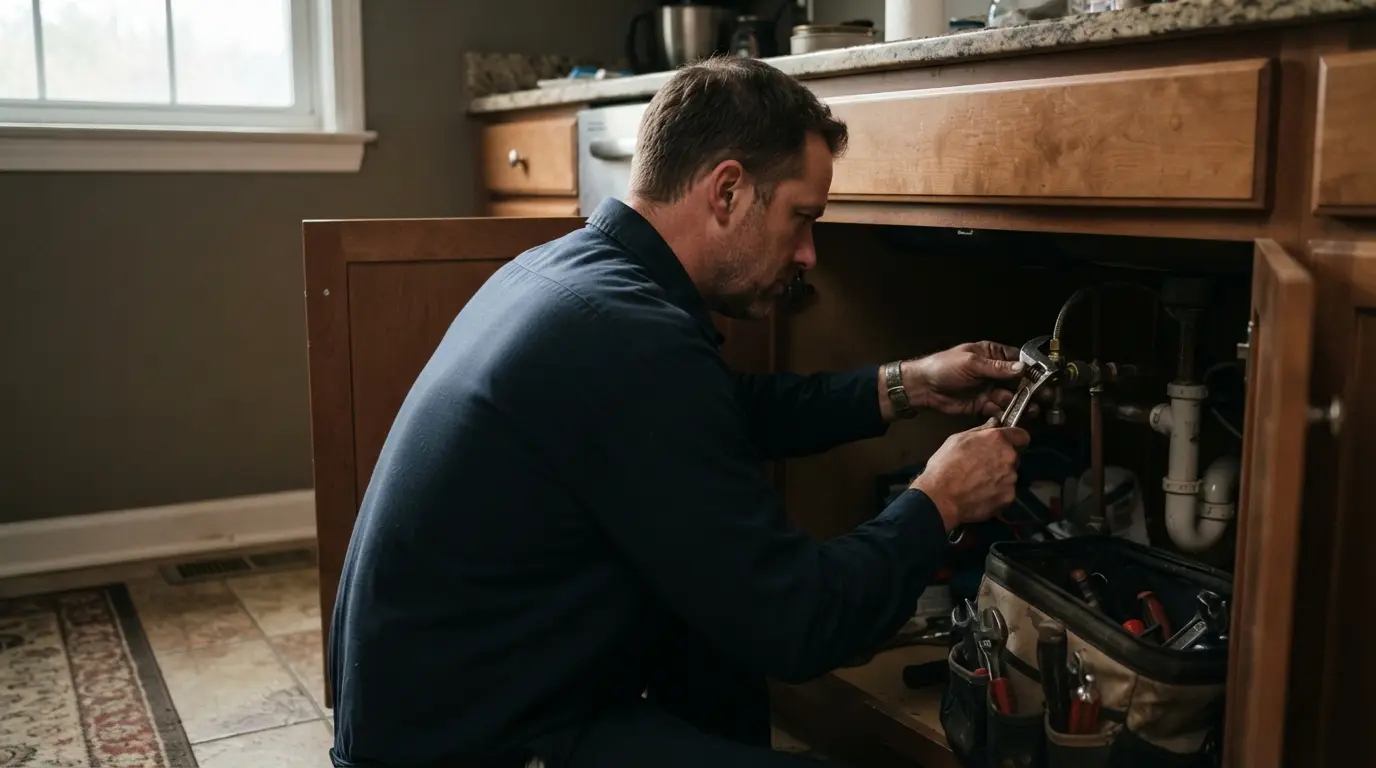
Basement drain backing up, or a pipe split in a January freeze? Our plumbers in Missouri find the cause and fix it, with a written price before work starts. We work in St. Louis and its county suburbs, the Kansas City metro, Springfield and the Ozarks, Columbia and Jefferson City, St. Joseph in the northwest and Cape Girardeau in the southeast. Missouri plumbing means old brick homes on cast iron and clay sewers, basements that take on water, hard winters, rocky Ozark ground under septic systems and lake cabins that sit empty for months. Here is what we fix and where.
Plumbing in Missouri
Our Census data covers 4,408,124 Missourians living in 2,024,277 homes across 1,082 places in 115 counties and the independent city of St. Louis. 58% of those homes were built before 1980 and 33% before 1960. In the city of St. Louis the median home dates from 1938, and 86% of its homes predate 1980. Ferguson reaches 91% and Florissant 90%.
Growth since 2000 is concentrated in St. Charles County and the outer Kansas City suburbs. The median home in Wentzville was built in 2008, and in O'Fallon in 2000. Statewide, 20% of homes are that recent.
Utility gas heats 60% of Missouri homes and electricity 36%. Renters occupy 38% of homes, with 55% in St. Louis and 56% in Springfield. In the rural Ozarks, propane matters more: it heats 57% of homes in Houston in Texas County.
Counts from the U.S. Census Bureau 2024 Gazetteer.
Explore our servicesWhat our plumbers see
Floor drains in St. Louis and Kansas City basements back up when the lateral is rooted or the public sewer surcharges in a storm. We clear the line, find the cause and fit backwater valves where they help.
Brick bungalows and four-family flats from before 1950 still drain through cast iron stacks and clay laterals full of root intrusions. We camera, repair and replace them.
Arctic air reaches every part of the state. Lines in crawl spaces, garages and north walls split, and we repair them and add protection.
Spring rain and heavy summer storms push groundwater into basements. We repair, replace and back up sump pumps.
With gas heating most homes, we repair and replace gas water heaters, venting and the gas lines that feed them.
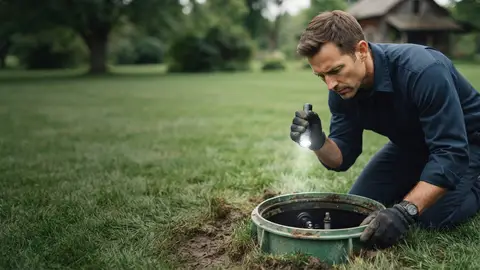
Thin, rocky soil over fractured limestone makes septic systems harder to get right. We pump, inspect and repair them.
Our services
Each page below explains how our plumbers handle that work in Missouri homes and businesses.
Sewer Line Repair & Replacement
Repiping & Water Line Replacement
Gas Line Repair & Installation
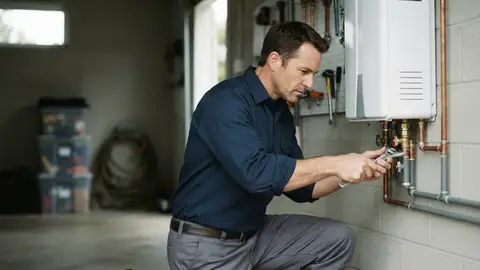
Water Heater Repair & Replacement
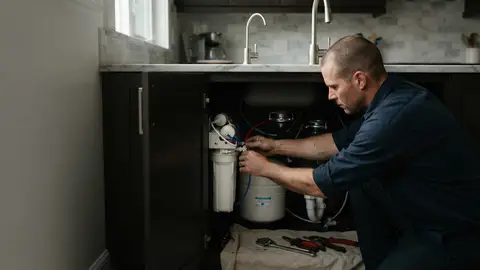

Toilet, Faucet & Fixture Repair
Sump Pump Repair & Installation
Across the state
Homes and main places: St. Louis (174,111 homes), Florissant, University City, Kirkwood
What our plumbers see: Century-old brick homes, combined sewers, basement backups
Homes and main places: O'Fallon (36,206 homes), St. Charles, St. Peters, Wentzville
What our plumbers see: New subdivisions, water heaters, sump pumps
Homes and main places: Kansas City (245,346 homes), Independence, Lee's Summit, Raytown
What our plumbers see: Postwar ranches, rooted laterals, freeze damage
Homes and main places: Springfield (84,761 homes), Nixa, Ozark, Branson, Joplin
What our plumbers see: Karst ground, septic, hard well water
Homes and main places: Columbia (56,054 homes), Jefferson City, Sedalia, Rolla
What our plumbers see: College rentals, older downtowns, rural wells
Homes and main places: St. Joseph (33,255 homes), Cape Girardeau, Sikeston
What our plumbers see: Old river-town housing, flooding, clay sewers
Missouri has no single statewide plumbing license. Licensing and permits are handled locally: Kansas City, the city of St. Louis, St. Louis County and many other cities and counties run their own licensing, codes and inspections, while some rural counties have few plumbing rules at all. Our plumbers hold the local licenses each job requires where they work.
Where a permit is required, typically for water heater replacement, sewer lateral work, repiping and gas piping, we pull it and schedule the inspection. In St. Louis County and the cities that follow its code, that means county plumbing inspectors; in Kansas City, the city's own inspectors. If a rule in your town is unclear, we confirm it with the local office before work starts.
St. Louis and Kansas City treat water drawn from the Missouri and Mississippi rivers, while Springfield, Columbia and many smaller towns rely on reservoirs and deep wells. Groundwater across much of the state is hard, and private wells in the Ozarks often leave scale on fixtures and heating elements.
Older parts of St. Louis, served by the Metropolitan St. Louis Sewer District, and older Kansas City neighborhoods have combined sewers that carry storm water and sewage in the same pipe. During heavy rain those pipes can surcharge and push water back toward basements. Outside the cities, onsite wastewater systems fall under the Missouri Department of Health and Senior Services and county health departments. We work with each of them as a job requires.
Southern Missouri sits on limestone and dolomite riddled with springs, caves and sinkholes. Soil is often thin and stony, so septic effluent can reach fractured rock and the groundwater below quickly if a system is undersized or failing. Many Ozark homes also draw from private wells in that same rock. Around Rolla, Houston and the lake country, our plumbers pump and inspect tanks, repair distribution lines and replace well pumps and pressure tanks. When a drain field fails in shallow soil, we explain the repair options your county health office allows before you commit to one.
St. Louis has 174,111 homes, and the brick houses, two-family flats and four-families of its older neighborhoods carry original cast iron stacks, galvanized supply pipe and clay sewer laterals. 17% of homes in the city are vacant, and pipes in empty houses freeze and burst unnoticed. Homes in University City (85% built before 1980) and the north county suburbs are of similar age. We replace corroded supply lines with copper or PEX, repair cracked stacks and line or replace laterals out to the public sewer.
Much of Kansas City, Independence and Raytown was built after World War II. The median home in Raytown dates from 1962 and in Independence from 1967. These ranches and split-levels often have basements with floor drains, clay or Orangeburg sewer laterals under mature trees and gas water heaters near the end of their service life. We clear and camera laterals, replace sections that have collapsed and swap out aging heaters with properly sized venting.
Around Lake of the Ozarks, 57% of homes in Osage Beach and 50% in Lake Ozark are vacant at any given time, mostly second homes and rentals used in summer. Branson (37% vacant) has similar seasonal housing tied to tourism. Water left in empty cabins freezes in winter, and leaks run for days before anyone sees them. We winterize and reopen lake homes, repair freeze damage, service septic systems and grinder pumps and fix fixtures in short-term rentals between guests.
Renters occupy 51% of homes in Columbia, 61% in Rolla and 54% in Warrensburg, all home to universities. Buildings with five or more units hold 27% of Columbia homes. Student housing wears out faucets, toilets and disposals quickly. We work with landlords and property managers, and we schedule larger repairs during summer and winter breaks.
Service area
Our largest Missouri service areas by population:
Every Missouri place in our data, grouped by county:
Adair County
Andrew County
Atchison County
Audrain County
Barry County
Barton County
Bates County
Benton County
Bollinger County
Boone County
Buchanan County
Butler County
Caldwell County
Callaway County
Camden County
Cape Girardeau County
Carroll County
Carter County
Cass County
Cedar County
Chariton County
Christian County
Clark County
Clay County
Clinton County
Cole County
Cooper County
Crawford County
Dade County
Dallas County
Daviess County
DeKalb County
Dent County
Douglas County
Dunklin County
Franklin County
Gasconade County
Gentry County
Greene County
Grundy County
Harrison County
Henry County
Hickory County
Holt County
Howard County
Howell County
Iron County
Jackson County
Jasper County
Jefferson County
Johnson County
Knox County
Laclede County
Lafayette County
Lawrence County
Lewis County
Lincoln County
Linn County
Livingston County
Macon County
Madison County
Maries County
Marion County
McDonald County
Mercer County
Miller County
Mississippi County
Moniteau County
Monroe County
Montgomery County
Morgan County
New Madrid County
Newton County
Nodaway County
Oregon County
Osage County
Ozark County
Pemiscot County
Perry County
Pettis County
Phelps County
Pike County
Platte County
Polk County
Pulaski County
Putnam County
Ralls County
Randolph County
Ray County
Reynolds County
Ripley County
Saline County
Schuyler County
Scotland County
Scott County
Shannon County
Shelby County
St. Charles County
St. Clair County
St. Francois County
St. Louis County
St. Louis city
Ste. Genevieve County
Stoddard County
Stone County
Sullivan County
Taney County
Texas County
Vernon County
Warren County
Washington County
Wayne County
Webster County
Worth County
Wright County
How it works
We ask what you are seeing, when the house was built and whether water or gas should be shut off right away.
Burst lines, sewage in the basement and gas odors are booked ahead of routine work.
A sewer camera, pressure test or leak locator shows what actually failed.
We lay out the options, and nothing begins until you agree.
Every repair is tested, and we arrange any inspection your city or county requires.
Have a plumbing problem in Missouri?
Call Expert Plumber Now and tell us what is happening. We’ll send a licensed plumber.
Pricing
We price a job only after we have seen it. These are the factors that move the price most:
Cast iron, galvanized and clay pipe often need replacing, not patching.
Open basements are easier to work in than tight crawl spaces.
Long or deep sewer runs to the street take more digging.
Fees and inspections differ between Kansas City, St. Louis County and rural counties.
Ozark limestone can slow trenching for sewer and septic work.
Night and weekend calls cost more than weekday visits.
You get a written price, and you approve it before any work begins.
Season by season
Disconnect hoses, close and drain outdoor faucets and keep crawl spaces and garages above freezing.
Test the sump pump before the rainy season and check that the discharge drains away from the foundation.
Watch for basement backups during thunderstorms and have rooted laterals cleaned before they block.
Flush the water heater, winterize lake and seasonal homes and locate your main shutoff.
Why choose us
What you can count on every time one of our plumbers comes to your door.
Every job is handled by a plumber who holds the license your state or city requires, backed by liability insurance.
Our plumber explains the problem and the options, and you approve a written price before any work begins.
Burst pipes, sewage backups and failed water heaters get priority scheduling, including nights and weekends.
We pull permits when the job needs one and schedule the inspection, so the work holds up when you sell.
Repairs and installations come with a written warranty on labor, on top of the manufacturer's warranty on parts.
Our pages and plumbers account for your area's water, soil, climate and the age of the homes around you.
We look at the problem, the pipe material, how easy it is to reach and any permit required, then give you a written price. Work starts only after you approve it.
Depth, length, trees and whether the street must be opened all change the work. A camera inspection shows us these details before we price the job.
We ask what is happening, tell you what to shut off and book our plumber, with burst pipes, sewage backups and gas odors first. We keep you updated on timing.
Yes. Where your city or county requires a permit, we pull it and schedule the inspection. Rules differ between Kansas City, St. Louis County and rural areas.
Leave the house without touching switches, then call your gas utility or 911 from outside. Once the utility has made it safe, we repair the piping.
A straight swap of a gas or electric tank usually takes a few hours. Moving it, changing fuel or adding a tankless unit takes longer.
Keep the lateral clear of roots, and ask us about a backwater valve. In areas with combined sewers, a valve helps stop storm surges coming back.
Yes. We pump, inspect and repair septic tanks and lines, and we follow the rules set by your county and the state health department.
Yes. Missouri licenses plumbers locally, so our plumbers hold the city and county licenses each job requires where they work.
Close the main shutoff, switch off the water heater and move valuables away from the water. Then call us so we can repair the break.