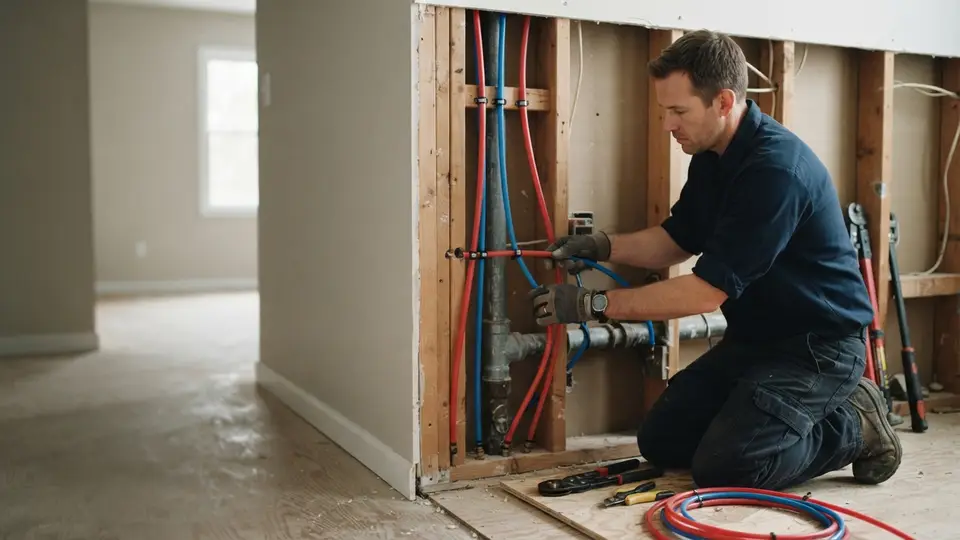
Galvanized steel
Found in: Homes before about 1960
What we do: Replace with copper or PEX
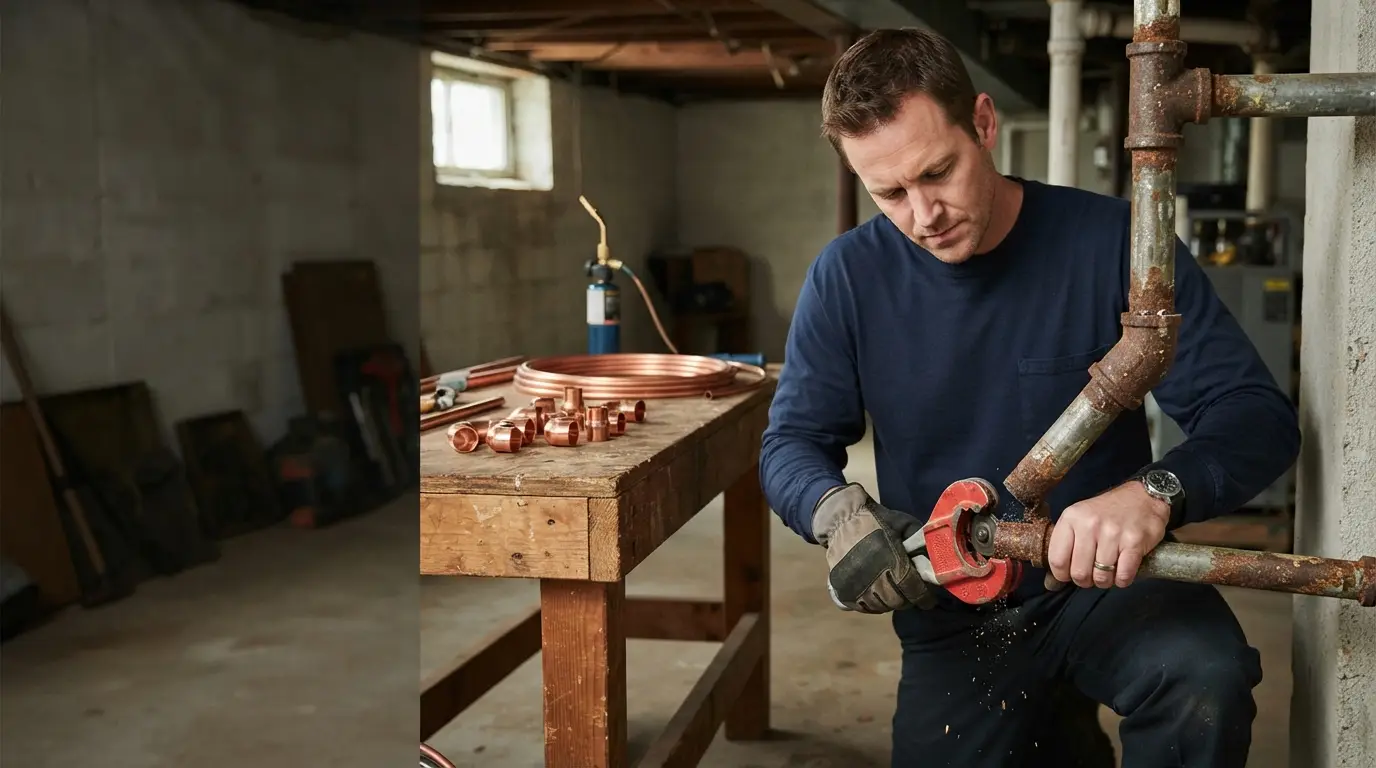
Rusty water from the tap, or pressure that fades on the second floor? We handle repiping and water line replacement in Missouri. Our plumbers repair failing pipe sections, replace every supply line in a house and repair or replace the service line from the meter to your basement. Many Missouri homes still have galvanized steel from the early and middle twentieth century, early copper worn thin by hard water or service lines of lead or galvanized. We plan the work room by room, explain the options and give you a written price before we start.
The service
33% of the 2,024,277 homes in our Missouri data were built before 1960. In St. Louis the median build year is 1938; in University City it is 1949 and in Webster Groves 1952. Homes from those years were plumbed with galvanized steel, sometimes with lead service lines, and many have since had copper added in patches. Galvanized narrows with rust until a full flow becomes a trickle.
Pipe materials we replace and install
Found in: Homes before about 1960
What we do: Replace with copper or PEX
Found in: Some older city homes
What we do: Replace with copper or approved plastic
Found in: 1950s to 1980s homes
What we do: Repair or replace thin sections
Found in: Some 1978 to 1995 homes
What we do: Replace before fittings fail
Found in: Our repiping choices
What we do: Chosen to suit the house and budget
Why Missouri
Galvanized steel installed eighty or a hundred years ago has rusted from the inside.
Scale from mineral-rich water narrows pipes and wears fittings.
Copper joined directly to galvanized corrodes quickly at the joint.
Pipes in outside walls and crawl spaces that froze once often fail again.
Warning signs
Our process
For a single bad section, we cut out the damaged pipe, replace it and add a dielectric union where copper meets steel.
We run new supply lines to every fixture, working from the basement wherever we can, and open walls only where pipes must be reached. Most homes stay livable during the work.
For a leak in the service line between the meter and house, we locate and repair the damaged section.
We replace old galvanized or lead service lines by trench or by pulling new pipe through a bored path, below frost depth.
Typical cost
Figures before we inspect the house are estimates only. These factors decide the final price:
You get a written price before work begins.
Get a written price: (833) 733-2357More fixtures and floors mean more pipe and labour.
PEX usually costs less than copper.
Open basements make the job easier than plaster walls or crawl spaces.
A long line from the street adds digging.
Repiping usually needs a permit and inspection.
Benefits
Full-diameter pipe delivers water to every floor.
No more rust from corroded steel.
New pipe and fittings end the cycle of patches.
Buyers and insurers prefer homes without galvanized or polybutylene.
In St. Louis (174,111 homes), many brick houses and two-family flats still have original galvanized risers. Thick masonry walls make some runs harder, but basements and old chases give us routes. 17% of the city's homes are vacant, and buyers who rehab them often repipe completely. The city has also been replacing lead service lines; if your line is lead, ask your water provider about any program before we price the private side.
Independence (median build year 1967), Hazelwood and many Kansas City neighborhoods were built when galvanized was giving way to copper. Some homes have both. We test pressure at several fixtures, look at every visible pipe and tell you whether the remaining galvanized can be replaced on its own or whether the copper is also near its end.
Some homes and manufactured homes built from about 1978 to 1995 have grey polybutylene supply pipe. It can fail without warning, especially at fittings, and many insurers ask about it. If we find polybutylene, we recommend replacing it with PEX, and we can usually do it in a day or two because PEX bends around corners and needs fewer joints.
St. Joseph (74% of homes built before 1980), Cape Girardeau (18,745 homes) and Sedalia (median build year 1964) have Victorian and early twentieth-century houses with plaster walls. We plan routes through closets, basements and floor cavities to protect plaster and trim, and we open walls only where there is no other way.
If you are buying a house built before 1960 in St. Louis, Kansas City or an older county seat, the supply piping is worth a close look before closing. We check what material runs from the meter to the house, what is in the basement and whether past repairs mixed metals. A short visit can tell you whether the home needs a few sections replaced or a full repipe, which helps you plan your budget or negotiate.
If a pipe is leaking, close the main shutoff and turn off the water heater. Collect water in buckets and move belongings away from the leak.
If you suspect a lead service line, run cold water for a few minutes before drinking or cooking, and use a certified filter until it is replaced. Then call us.
Repiping and service line replacement usually need a permit in Kansas City, St. Louis, St. Louis County and most cities, and some need a utility inspection at the meter. We pull the permits and schedule inspections. Our plumbers hold the local licenses each job requires.
Why choose us
What you can count on every time one of our plumbers comes to your door.
Every job is handled by a plumber who holds the license your state or city requires, backed by liability insurance.
Our plumber explains the problem and the options, and you approve a written price before any work begins.
Burst pipes, sewage backups and failed water heaters get priority scheduling, including nights and weekends.
We pull permits when the job needs one and schedule the inspection, so the work holds up when you sell.
Repairs and installations come with a written warranty on labor, on top of the manufacturer's warranty on parts.
Our pages and plumbers account for your area's water, soil, climate and the age of the homes around you.
Service area
We repipe homes in 1,082 Missouri communities, including Kirkwood (12,978 homes) and Springfield (84,761 homes). Find yours:
It depends on the size of the house, the number of fixtures, the pipe material and access. We inspect first and give you a written price.
PEX usually costs less and installs faster, especially in older homes. Copper costs more but suits some layouts and owners prefer it.
Yes. The service line is priced separately from inside repiping because it involves digging or boring from the meter to the house.
We route pipe through basements, closets and floor cavities and open walls only where needed, keeping openings small and neat.
Usually, yes. We restore water at the end of each day in most homes and tell you in advance when it will be off.
We test pressure, check every visible pipe and the service line and plan a route before giving you a written price.
Rust is not usually a health risk, but old galvanized can hold lead from past service lines. Testing tells you for sure.
Lead is dull grey, soft and scratches to a shiny silver. We can check where the line enters your home.
A typical house takes two to five days, depending on size and access. Inspection and wall patching follow.
Most are finished in a day. Long lines, rock or a street connection can add time.
Copper and PEX installed today should last decades with normal water pressure and reasonable water quality.
If your water is hard, a softener reduces scale on new pipe and fixtures. We test your water and advise you.
Close the main shutoff, switch off the water heater and call us. We repair the break first and plan the rest afterward.
Yes. Many homes built before about 1960 still have galvanized supply lines, often mixed with later copper patches.
Most do, including Kansas City and St. Louis County. We pull the permit and schedule the inspection.