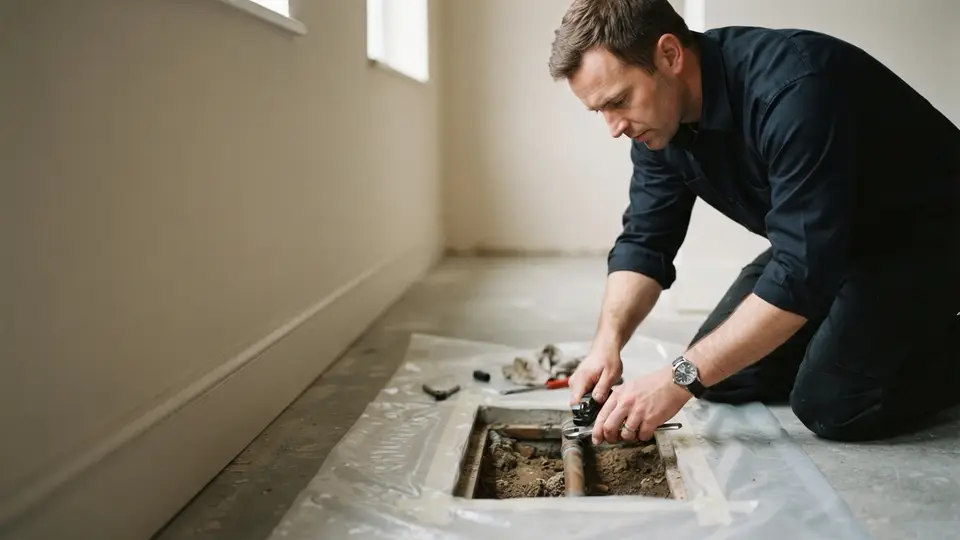
Spot repair
How it works: Open the floor at the leak and replace the section
When it fits: One leak in otherwise sound pipe
Warm spot on the floor, or water seeping up through the basement slab? We handle slab leak repair in Missouri. Our plumbers locate leaks in water lines and drains beneath concrete, repair them through a small opening or reroute the line above the slab. In Missouri we see slab leaks in ranch homes on slab foundations around Springfield and the Kansas City suburbs, in basement floors where supply lines were run under the concrete and in older homes with cast iron drains beneath the floor. We show you the options and give you a written price before we cut.
The service
A slab leak is a leak in a pipe running in or under a concrete floor. In Missouri that means either a house built on a slab-on-grade foundation, common in newer ranch homes around Springfield, Nixa and the southern Kansas City suburbs, or a basement where water lines or drains run beneath the basement floor. Homes in Nixa have a median build year of 2000, and in Raymore 2002; many from those decades used copper under the slab.
Slab leak repair options
How it works: Open the floor at the leak and replace the section
When it fits: One leak in otherwise sound pipe
How it works: Run new pipe through walls or ceilings and abandon the old line
When it fits: Older copper, repeat leaks
How it works: Replace all supply lines above the slab
When it fits: Several leaks or aging pipe throughout
How it works: Line a cracked drain from inside
When it fits: Cast iron drains under the floor
Why Missouri
Clay soils across western and central Missouri move with wet springs and dry summers, flexing pipes beneath concrete.
Copper that rubs against concrete, rock or rebar as it expands with hot water wears through over years.
Minerals and water chemistry can pit copper from inside.
Old drain lines under basement floors rot along the bottom.
Warning signs
Our process
We isolate hot and cold lines, pressure test each one and use acoustic and thermal tools to pinpoint the leak to within a small area of floor.
We cut a neat opening, replace the damaged section, pressure test the line and patch the concrete. Floor coverings are restored by a finish contractor.
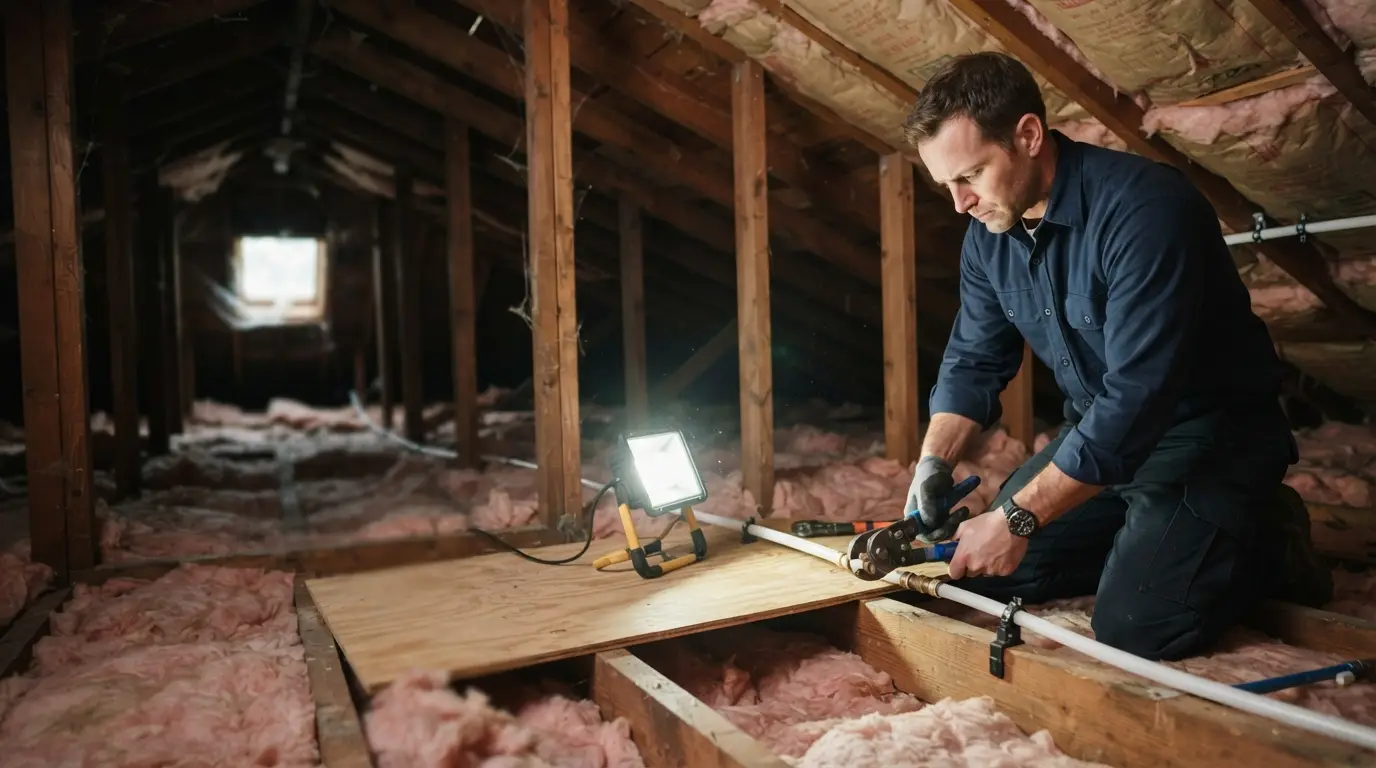
Instead of breaking the floor, we can run new PEX or copper through walls, attic or basement ceiling and disconnect the leaking line for good.
Typical cost
Any figures before we locate the leak are estimates only. These factors decide the price:
We give you a written price for each option before any work begins.
Get a written price: (833) 733-2357Under a kitchen island costs more to reach than under an open floor.
Spot repair, reroute and repipe differ widely.
Tile and hardwood take more care to open.
Old copper often has more weak spots.
Drain repairs under slabs can need lining.
Benefits
Constant water under concrete softens the soil beneath it.
A hot water slab leak wastes both water and energy.
Carpet, wood and cabinets stop soaking up water.
A reroute removes the old line for good.
Springfield (84,761 homes) and its growing suburbs of Nixa, Ozark (median build year 2002) and Republic have many slab ranches. Ground here often has chert and limestone close to the surface, and pipes laid on rocky fill can wear through where they rub. Joplin (25,398 homes) rebuilt many homes after the 2011 tornado. We find leaks in these homes and often recommend rerouting because the slab is hard to open without damaging new floors.
Raymore, Belton and Grandview (median build year 1973) have a mix of slab homes, split-levels and houses with partly finished basements. Clay soil in these areas shrinks in hot, dry summers and swells in spring rain. That cycle moves concrete and strains pipes beneath it. When a home has had one slab leak, another often follows in the same old line, which is why we price a reroute alongside a spot repair.
Across St. Louis County, O'Fallon (36,206 homes) and Wentzville, many homes have basements, and the main water line or some drains run under the basement floor. Water seeping from floor cracks is often blamed on groundwater, but a pressure test shows whether it is a supply leak. If the sump pit fills even in dry weather, that is a clue we check too. We tell you whether the water is from the plumbing or the ground.
If the leak is on a hot water line, turn off the water heater. If water is coming up or the meter spins fast, close the main shutoff.
Pull back wet rugs and move furniture so the area can dry, and photograph the damage for insurance. Do not break up concrete yourself; you can hit the pipe or electrical lines. Then call us.
Rerouting or repiping often needs a plumbing permit, and we pull it where your city or county requires one. Our plumbers hold the local licenses each job requires. Many insurance policies cover access and resulting water damage but not the pipe itself; we give you notes and photos for your claim.
Why choose us
What you can count on every time one of our plumbers comes to your door.
Every job is handled by a plumber who holds the license your state or city requires, backed by liability insurance.
Our plumber explains the problem and the options, and you approve a written price before any work begins.
Burst pipes, sewage backups and failed water heaters get priority scheduling, including nights and weekends.
We pull permits when the job needs one and schedule the inspection, so the work holds up when you sell.
Repairs and installations come with a written warranty on labor, on top of the manufacturer's warranty on parts.
Our pages and plumbers account for your area's water, soil, climate and the age of the homes around you.
Service area
We repair slab leaks in 1,082 Missouri communities, including Columbia (56,054 homes) and Belton (11,041 homes). Find yours:
It depends on where the leak is, the repair method and the flooring above it. We locate the leak first, then give you a written price for each option.
Often it is close in price, and rerouting avoids damage to floors. It also removes the old line, so another leak in it no longer matters.
Many policies cover access and resulting damage but not the pipe. Coverage varies, so check your policy. We document the leak for your claim.
We pressure test each line, then use acoustic sensors and thermal imaging to narrow the leak to a small area before cutting the floor.
We run new pipe through walls, the attic or basement ceiling, connect it to the fixtures and cap the old line under the slab.
Yes. Cast iron drains under older floors crack and rot. A camera inspection shows drain damage, which we repair or line.
It can be. Water under a foundation can wash out soil, and wet floors near outlets are an electrical risk. Shut off water and call us.
Yes. Damp carpet, padding and drywall grow mould quickly. Dry the area fully once the leak is stopped.
A spot repair often takes most of a day. A reroute takes one to two days depending on the house layout.
We shut water off only while connecting new pipe and restore it as soon as possible, usually the same day.
Keep pressure moderate, treat very hard water and consider rerouting old copper after the first leak.
Yes. With all fixtures off, the meter should not move. A moving dial is often the first sign of a hidden leak.
Close the main shutoff, turn off the water heater and keep away from electrical outlets near the water. Then call us right away.
Yes. Water lines and drains often run under basement floors, and leaks there can look like groundwater seeping in.
Many are slab ranches built over rocky fill. Pipes rubbing against chert and limestone, and seasonal soil movement, wear them through.