Black iron
Where it is: Most basements and older homes
What to watch: Loose or corroded threaded joints
Faint gas smell near the furnace, or a new range waiting for a gas line? We handle gas line repair and installation in Missouri. Our plumbers repair leaking gas piping, run new lines for ranges, dryers, water heaters, fireplaces, grills and generators, and connect appliances safely. Gas heats most Missouri homes, and many basements still have black iron piping from the original build, flexible connectors from decades ago and fittings loosened by years of vibration. In the Ozarks, propane fills the same role. We find leaks, fix them, pressure test the system and give you a written price first.
The service
Utility gas heats 60% of Missouri homes. In St. Louis County it is higher: 85% in Ballwin, 84% in Concord and 83% in Florissant. In Raytown it reaches 82%. Outside the gas networks, propane takes over; it heats 57% of homes in Houston, 47% in Thayer and 42% in Mountain View. Most homes use black iron pipe in the basement with flexible connectors to appliances. Newer homes may use corrugated stainless steel tubing.
Gas piping we work with
Where it is: Most basements and older homes
What to watch: Loose or corroded threaded joints
Where it is: Many newer homes
What to watch: Proper bonding and protection
Where it is: Behind appliances
What to watch: Old uncoated brass types should be replaced
Where it is: Underground runs
What to watch: Damage from digging
Why Missouri
Threaded joints in decades-old basement piping loosen and leak.
Old uncoated brass connectors behind ranges and dryers crack with age.
Freeze-thaw and shrinking clay stress buried lines to garages and grills.
Fence posts and landscaping can strike buried lines if utilities are not marked first.
Warning signs
Our process
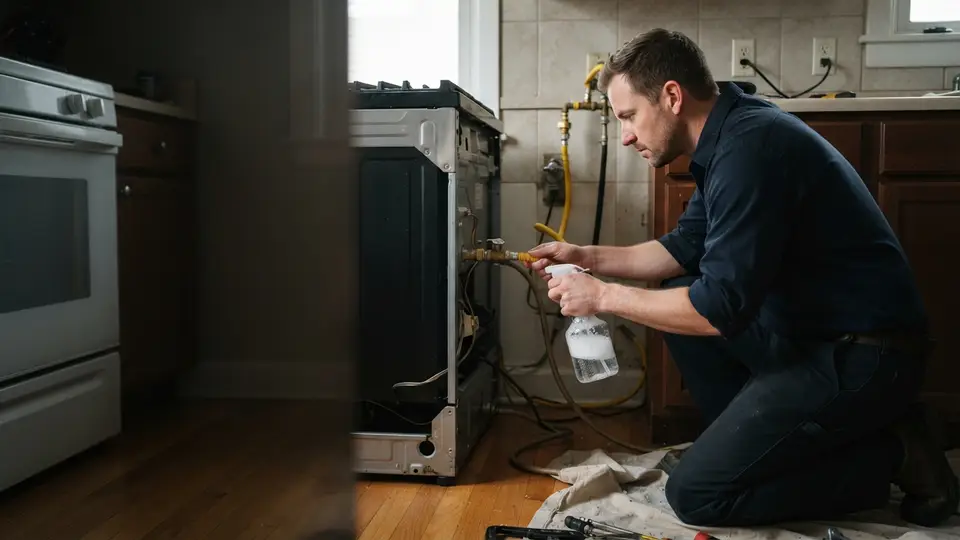
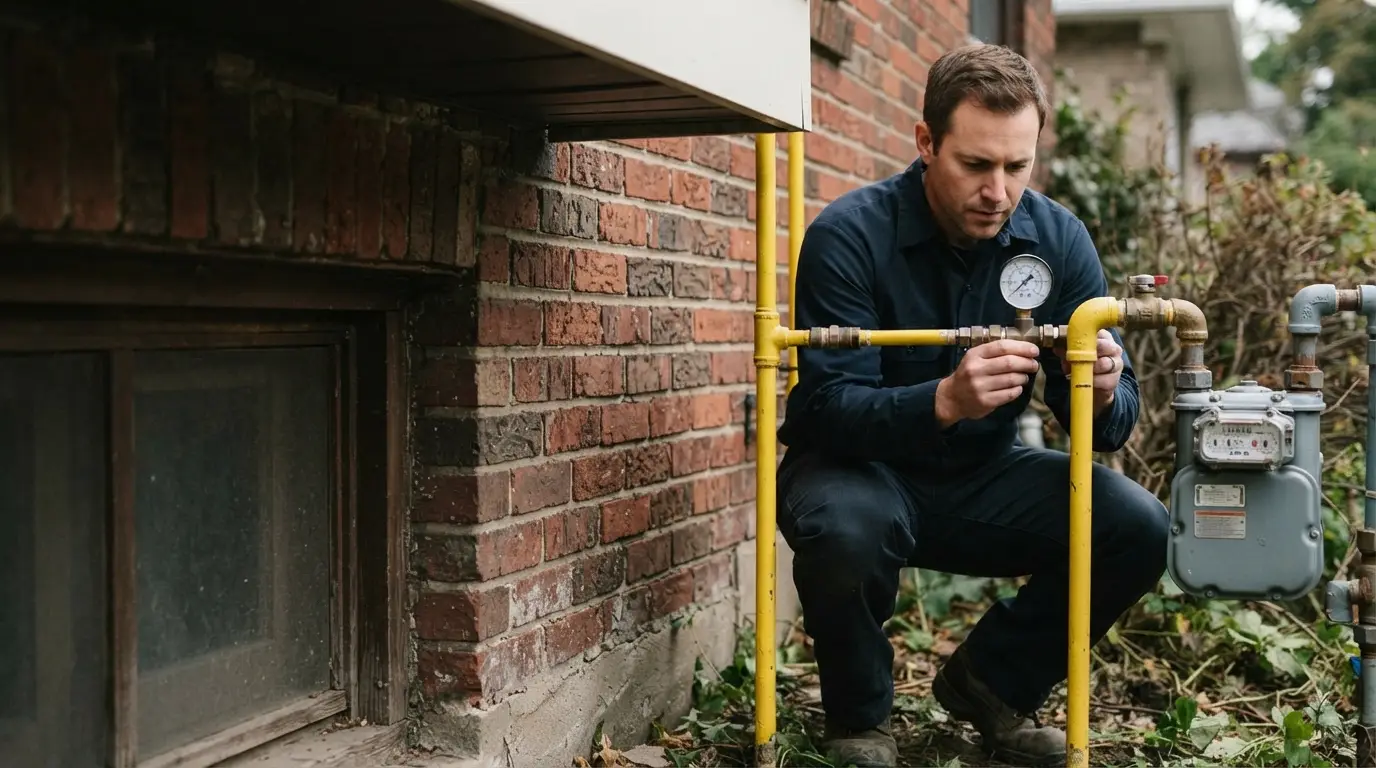
We find the leak with a detector and soap test, repair or replace the failed section, then pressure test the system before restoring gas.
We size new lines for every appliance on the system, run them in black iron or CSST and install shutoff valves at each appliance.
We connect ranges, dryers, water heaters, fireplaces, grills and generators with new connectors and check for leaks and proper venting.
Typical cost
Any figures we give before seeing the system are estimates only. These factors decide the price:
We give you a written price before we start.
Get a written price: (833) 733-2357A leak at a connector costs less than one inside a wall.
Longer runs need more pipe and labour.
Large appliances may require upsizing.
Buried lines need trenching.
Required for most gas work.
Benefits
Every repair and new line is pressure tested.
Appliances get enough gas to burn properly.
Outdated connectors and valves replaced.
Permits and inspections documented for resale.
In St. Louis (174,111 homes), Affton (83% of homes built before 1980) and older Kansas City neighborhoods, gas piping often grew piece by piece: a dryer added in the 1970s, a new furnace in the 1990s, a range moved in a remodel. Pipe sizes may no longer match what the appliances need, and old connectors may still be in place. We trace the system, check sizing and replace outdated connectors and valves.
In Rolla only 25% of homes use utility gas, and in the hill counties to the south many homes run on propane from a tank in the yard. Propane is heavier than air and pools in low spots, such as basements and crawl spaces. We repair and install propane piping inside the home and connect appliances. The tank and regulator at the tank are usually serviced by your propane supplier, and we coordinate with them.
Homes in Wildwood (13,391 homes) and the newer suburbs often add outdoor kitchens, gas fire pits and standby generators. Each needs a line sized for its load, buried at the right depth and protected where it rises above ground. A standby generator in particular needs a large supply. We check meter capacity with your utility, size the line and install it with permits.
Gas appliances that burn poorly or vent badly can produce carbon monoxide, which has no smell. In Missouri basements, water heaters often share old chimneys with furnaces, and blocked or undersized flues can push gases back into the home. Every home with gas appliances should have working CO alarms on each level. When we install or repair gas piping, we check the appliance venting too.
Many Missouri homeowners switch a range, dryer or water heater from electric to gas when they remodel. Before we run a new line, we check that the existing piping and meter can carry the added load. Adding a big appliance to an old, undersized system can starve the furnace on cold mornings. Where needed, we upsize the main run, then install the new branch with its own shutoff and pressure test the whole system.
If you smell gas, leave the house immediately and call your gas utility or 911 from outside. Do not try to find the leak yourself.
Once the utility has made the home safe, call us to repair the piping. For a new line or appliance hookup, clear access to the meter, appliance and basement piping before we arrive.
Gas line installation and most repairs need a permit and inspection in Missouri cities and counties that regulate plumbing. We pull the permits and schedule inspections, and the utility may need to verify before restoring service. Our plumbers hold the local licenses each job requires.
Why choose us
What you can count on every time one of our plumbers comes to your door.
Every job is handled by a plumber who holds the license your state or city requires, backed by liability insurance.
Our plumber explains the problem and the options, and you approve a written price before any work begins.
Burst pipes, sewage backups and failed water heaters get priority scheduling, including nights and weekends.
We pull permits when the job needs one and schedule the inspection, so the work holds up when you sell.
Repairs and installations come with a written warranty on labor, on top of the manufacturer's warranty on parts.
Our pages and plumbers account for your area's water, soil, climate and the age of the homes around you.
Service area
We repair and install gas lines in 1,082 Missouri communities, including Independence (56,084 homes) and Kansas City (245,346 homes). Find yours:
It depends on where the leak is, the pipe type and access. We find the leak first and give you a written price for the repair.
Cost depends on distance from existing piping, pipe size and access. We look at your layout and give you a written price.
We list permit and inspection fees in your written price, so you see the full cost before work begins.
We use an electronic detector, a soap solution on fittings and a pressure test to find leaks in piping and connections.
We size the line, run pipe to the appliance, install a shutoff valve, pressure test the system and have it inspected.
Yes. We connect ranges, dryers, water heaters, fireplaces, grills and generators with new connectors and leak checks.
Leave immediately, avoid switches and phones inside and call your gas utility or 911 from outside.
Yes. Any home with gas appliances should have CO alarms on each level, tested monthly.
Many repairs take one to three hours, plus testing. Hidden leaks or replacement sections take longer.
Short indoor runs often take a few hours. Long or buried lines can take a day or more, plus inspection.
Have connections checked whenever you replace an appliance, and have an older system looked at every few years.
Yes. Old uncoated brass connectors can crack. We replace them with modern coated connectors.
Call us to repair the piping. Once it passes a pressure test and any inspection, the utility can restore service.
Yes. We repair and install propane piping and connect appliances inside the home, working with your propane supplier.
Most cities and counties that regulate plumbing do. We pull the permit and schedule the inspection.