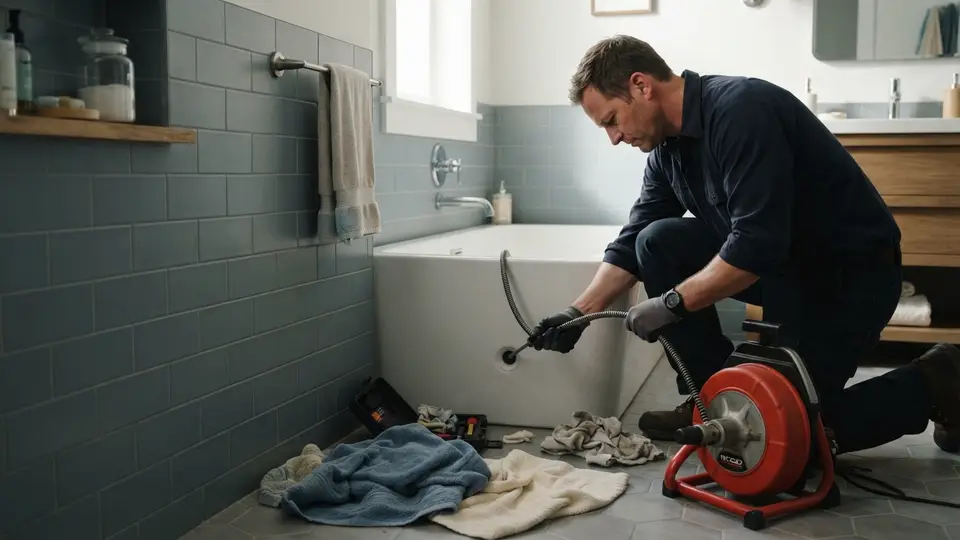
Hand auger
Best for: Sinks, tubs, toilets
What it does: Breaks up clogs near the fixture
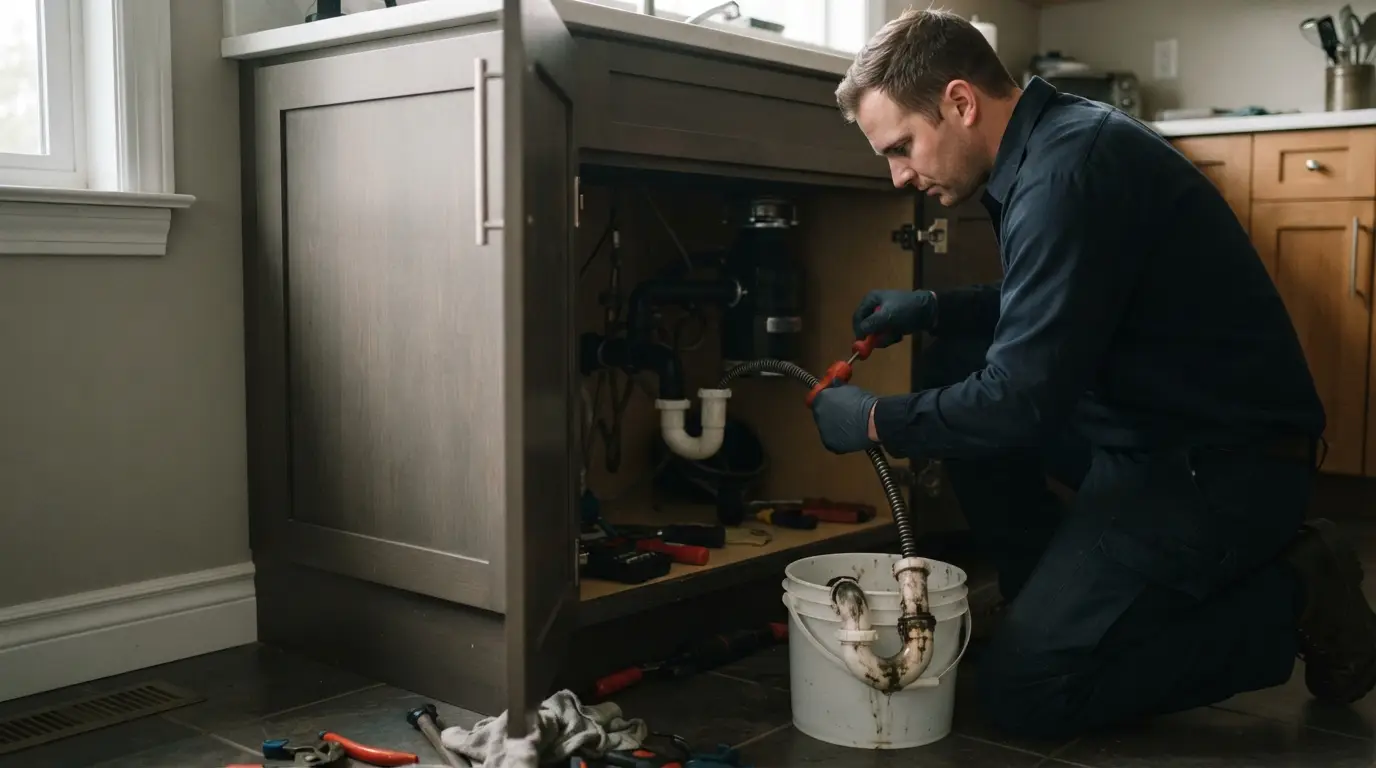
Water rising from the basement floor drain, or a sink that never drains right? We handle drain cleaning and clog removal in Missouri. Our plumbers clear kitchen and bathroom drains, laundry lines, floor drains and main sewer laterals in houses, flats, apartment buildings and restaurants. Missouri drains fight roots from big shade trees, century-old cast iron and clay pipe, grease from home and restaurant kitchens and storm surges in combined sewers. We clear the line, run a camera through it and show you what caused the trouble.
The service
Our Missouri data counts 2,024,277 homes, and 33% of them were built before 1960. In St. Louis the median home dates from 1938; in Ferguson 91% of homes and in University City 85% predate 1980. Those houses usually drain through cast iron inside and clay tile under the yard, with a basement floor drain as the lowest opening. Newer homes in O'Fallon, median build year 2000, have PVC drains that clog from grease, wipes and hair instead.
In a house with a basement, a blocked main usually shows up at the floor drain first. Water from the washer or a shower rises there because it is the lowest point between the fixtures and the street sewer.
The tools we use on Missouri drains
Best for: Sinks, tubs, toilets
What it does: Breaks up clogs near the fixture
Best for: Laterals and floor drains
What it does: Cuts roots and packed waste
Best for: Grease, scale, sludge
What it does: Scrubs the full pipe wall
Best for: Repeat clogs
What it does: Finds roots, breaks, offsets and sags
Why Missouri
Maples, oaks and sycamores along older streets send roots into every clay joint they can find.
Decades of scale and rust inside cast iron stacks and floor drains catch paper and grease.
Freezing ground and settling soil push clay sections out of line, leaving lips that hold waste.
Barbecue drippings and frying oil harden in cold basement lines and in restaurant kitchens.
Warning signs
Our process
We choose the right access point, often the basement cleanout or floor drain, run a cable sized to the pipe and then flush the line with a full volume of water to prove it is clear.
If a drain blocks again and again, we camera it, mark the problem spot and repair the broken section, root entry or sag so the clog stops returning.
A jetter scours grease, scale and root fibres off the pipe wall. We inspect old cast iron and clay on camera first, so we choose a pressure the pipe can take.
Typical cost
Any figures we give before seeing the drain are estimates only. The final price depends on:
We explain each choice, and you approve a written price before we begin.
Get a written price: (833) 733-2357A bathroom sink costs less than a main lateral.
A missing cleanout means going through a toilet or roof vent.
Jetting and camera work add to a basic cable cleaning.
Broken or collapsed pipe needs a repair.
Night and weekend visits cost more.
Benefits
The floor drain stops overflowing.
Roots and scale are cut back to the pipe wall.
Camera footage shows what failed and where.
You know whether cleaning is enough or a section needs replacing.
St. Louis (174,111 homes), Webster Groves (median build year 1952) and the north county suburbs have long clay laterals under mature trees. Many brick homes also have a basement floor drain tied straight into the main, and some older streets are on combined sewers. We clear the lateral from the basement cleanout, camera it to the public sewer and tell you whether the blockage is under the house, in the yard or at the connection.
Kansas City (245,346 homes) and Raytown, where the median home was built in 1962, are full of postwar ranches. Some laterals from that era are clay; some are Orangeburg, a fibre pipe that softens and flattens with age. Roots and flattening both cause slow drains that cleaning only helps for a while. When the camera shows Orangeburg, we explain replacement options and price them before you decide anything.
Renters occupy 55% of homes in St. Louis, 56% in Springfield and 51% in Columbia. Buildings with five or more units hold 27% of Columbia homes. In two-family flats and apartment buildings, one blocked shared line can back up into several units. We clear shared mains for landlords and managers and can jet them during summer break.
Barbecue joints in Kansas City, restaurants in Springfield and Joplin (25,398 homes) and busy kitchens in St. Louis send fat and food scraps into their drains every day. We jet kitchen lines and floor drains, clear the run to the grease interceptor and work early or late so the dining room stays open.
Outside city sewer service, many Missouri homes drain to septic tanks. If every fixture slows down together, the tank may be full or the lateral lines may be saturated. Cleaning the house drain will not fix that, so we check the tank level and outlet first. In rocky Ozark ground we also look for crushed lines where the tank meets the field.
St. Joseph (74% of homes built before 1980) and Cape Girardeau (18,745 homes) have historic neighborhoods with brick sewers in places, clay laterals and cast iron inside. After river floods and heavy storms, silt can settle in low sections of pipe. We flush and camera these lines and repair the sags and breaks that hold debris.
Stop the washer, dishwasher and showers. If a toilet is rising, close the valve behind it.
Skip chemical drain openers, which can harm old cast iron and splash anyone who opens the line. Keep people and pets away from dirty water and call us.
Cleaning a drain does not need a permit. Replacing or relining a lateral usually does in Kansas City, St. Louis County and most cities, and we file it and book the inspection. Our plumbers hold the local licenses each job requires.
Why choose us
What you can count on every time one of our plumbers comes to your door.
Every job is handled by a plumber who holds the license your state or city requires, backed by liability insurance.
Our plumber explains the problem and the options, and you approve a written price before any work begins.
Burst pipes, sewage backups and failed water heaters get priority scheduling, including nights and weekends.
We pull permits when the job needs one and schedule the inspection, so the work holds up when you sell.
Repairs and installations come with a written warranty on labor, on top of the manufacturer's warranty on parts.
Our pages and plumbers account for your area's water, soil, climate and the age of the homes around you.
Service area
We clear drains in 1,082 Missouri communities, from St. Louis to Joplin. Find yours:
It depends on where the clog sits, how we reach it and which method it needs. A sink costs far less than a main lateral, and you approve a written price first.
When grease or roots keep closing a line, usually yes. Jetting clears the whole pipe wall, so the drain stays open much longer than after cabling alone.
Yes. On old clay or cast iron laterals it often saves money, because it shows exactly which section needs work before anything is dug up.
We run a cable through the floor drain or nearby cleanout toward the street, flush the line and check it on camera if the clog keeps returning.
Yes. After cleaning we run the camera through the line and show you the roots, offsets, breaks or buildup we find, with a recording if you want one.
We can work through a toilet flange or roof vent. Adding a cleanout makes future cleanings faster, cleaner and usually less expensive for you.
We recommend against them. They can eat at old cast iron, and caustic water left in the line can burn whoever opens it later.
Yes. It carries bacteria and viruses. Keep people and pets away, avoid touching it without gloves and stop using water until we clear the line.
Most sink, tub and toilet clogs take under an hour. A rooted main with jetting and a camera inspection can take a few hours.
We book as quickly as we can and put sewage backups ahead of slow drains. We keep you updated on timing from the first call.
Often once every year or two. If roots return faster than that, a liner or spot repair usually costs less than repeated cleanings over time.
A dry floor drain trap is the usual cause; pouring water into it helps. If the smell stays, we check for cracked pipe or a vent problem.
They can. In heavy rain the public sewer may surcharge. A clear lateral and a backwater valve reduce the risk, and we can install the valve.
Many homes built before the 1970s do. Clay joints let roots in, and frost and settling can push sections out of line over time.
Stop using water anywhere in the house and call us. Water rising at the floor drain usually means the main lateral is blocked.