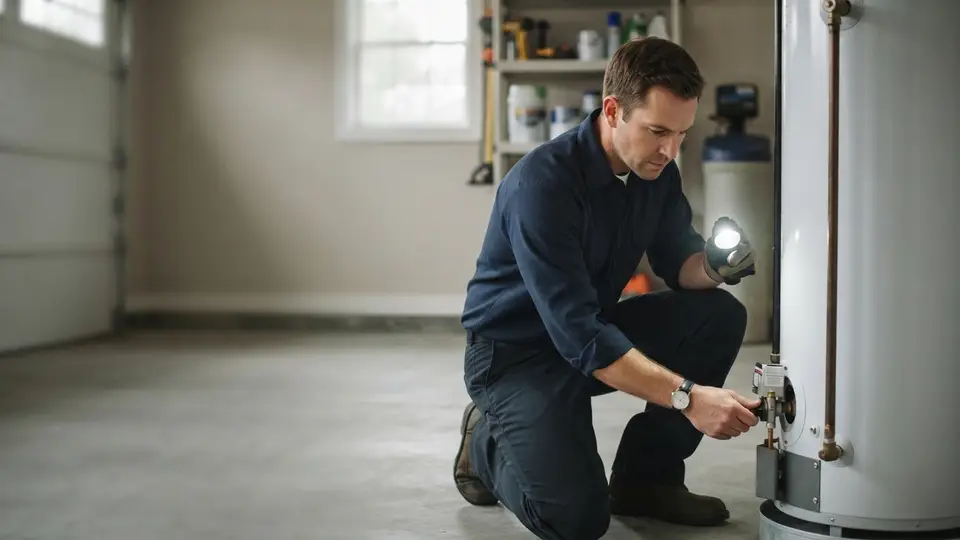
Gas tank
Common in: Most city and suburban basements
Things to know: Needs proper venting and combustion air
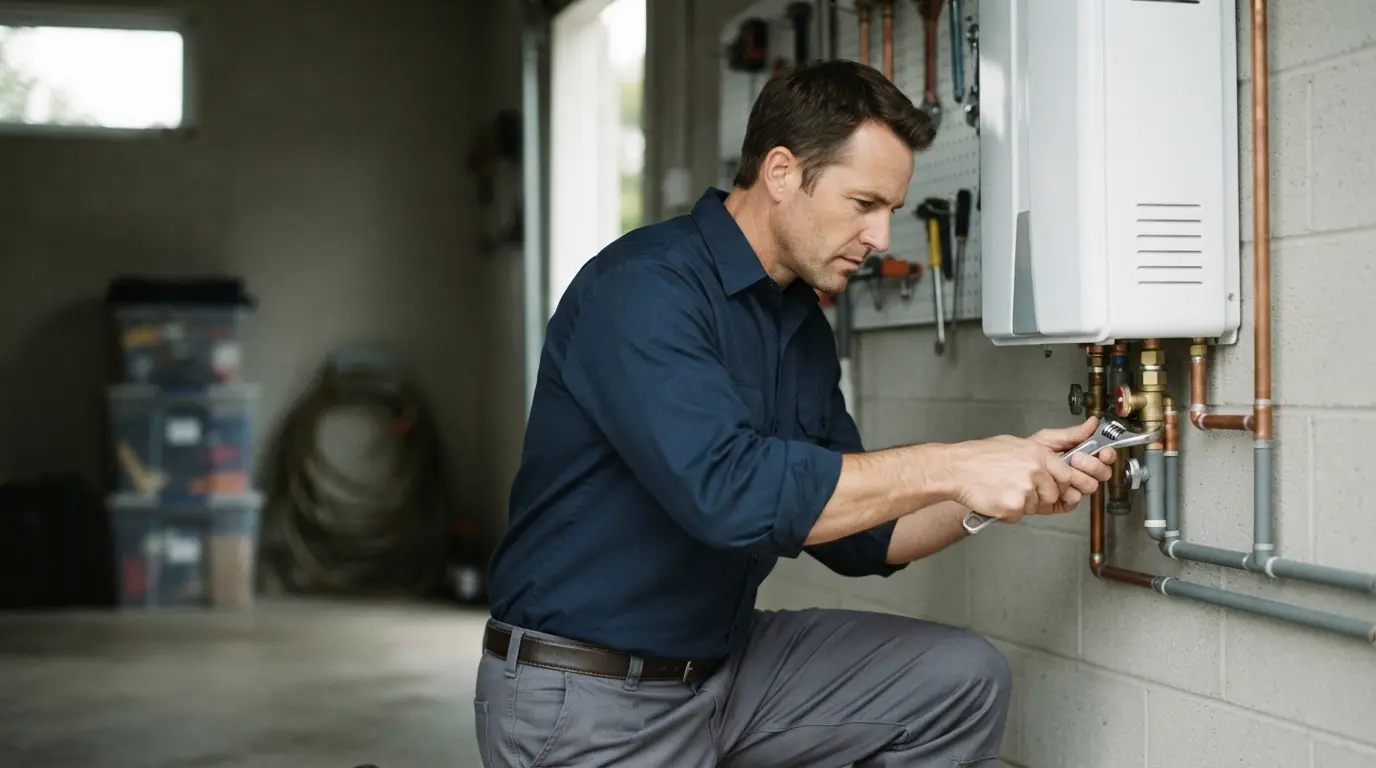
Showers going lukewarm, or water pooling around the tank? We handle water heater repair and replacement in Missouri. Our plumbers repair gas and electric tank heaters, install new ones sized to your household and install and service tankless units. Most Missouri heaters sit in a basement or utility closet, run on natural gas and work hard through cold winters, when incoming water is much colder. Hard water adds sediment that shortens their life. We diagnose the fault, explain whether repair or replacement makes more sense and give you a written price.
The service
Utility gas heats 60% of Missouri homes and electricity 36%, and water heaters usually use the same fuel. Gas reaches 83% of homes in Florissant and 85% in Ballwin. In Rolla only 25% heat with gas, and in Houston propane heats 57% of homes, so electric and propane water heaters are common in those areas.
Water heater types we work on
Common in: Most city and suburban basements
Things to know: Needs proper venting and combustion air
Common in: Rural homes and some apartments
Things to know: Elements and thermostats wear out
Common in: Ozark homes off gas lines
Things to know: Needs a propane-rated burner
Common in: Remodels and newer homes
Things to know: Needs a larger gas line and new venting
Common in: Basements with room around them
Things to know: Efficient electric option
Why Missouri
Minerals settle in the tank, cause rumbling and cut efficiency.
In January the heater must raise much colder water, and burners and elements work longer.
Older chimneys and shared flues in basements can let combustion gases spill.
Most tanks last about 10 to 12 years before the steel begins to rust through.
Warning signs
Our process
We test thermocouples, gas valves, igniters, elements, thermostats and relief valves, replace the failed part and check venting and the gas connection.
We size the new heater to your household, install it with a new relief valve, expansion tank where needed and correct venting, and haul the old tank away.
We check your gas line size and venting route, install the unit and flush it on a schedule to deal with hard water scale.
Typical cost
Any figures we give before seeing the heater are estimates only. These factors decide the price:
We give you a written price before we start.
Get a written price: (833) 733-2357A part costs far less than a new heater.
Tankless and heat pump units cost more than standard tanks.
Upgrades are sometimes needed.
Tight closets and crawl spaces take longer.
Most cities require one for replacement.
Benefits
Sized to your household, not a guess.
Combustion gases go outside, not into the basement.
Newer heaters waste less fuel.
A new tank with an expansion tank and pan protects the floor.
In St. Louis (174,111 homes) and Kansas City (245,346 homes), many water heaters share a brick chimney with the furnace. When the furnace is replaced with a high-efficiency model vented through the wall, the heater is left alone in an oversized flue that may not draft well. We check for backdrafting and fit a liner or new vent when the old chimney no longer works for the water heater.
In Rolla, Farmington (gas heats 32% of homes) and much of rural Missouri, water heaters run on electricity or propane. Electric tanks usually fail at elements and thermostats, which we can replace in one visit. Propane units need a burner and controls rated for propane. If you switch fuels, we handle the gas or electrical changes and the permit.
Homes in Lee's Summit (median build year 1994) and St. Charles County often have big tubs, several showers and a 50-gallon tank that struggles to keep up. We look at how much hot water you actually use and recommend a larger tank, a high-recovery model or a tankless unit, with the gas line and venting each would need.
Many Missouri homes have a pressure-reducing valve or a check valve at the meter, which closes the plumbing system. When water heats, it expands, and in a closed system that pressure has nowhere to go. The relief valve on the tank starts dripping, faucets spit and the tank wears faster. An expansion tank gives that extra water somewhere to go. We test the house pressure on every water heater visit and fit an expansion tank where the system needs one. We also check that the relief valve discharge pipe runs to a safe spot near the floor.
Renters occupy 55% of homes in St. Louis and 45% in Kansas City. In two-family flats and small apartment buildings, each unit often has its own small heater tucked into a closet or basement corner. Space is tight and venting is often shared. We replace heaters for landlords with units that fit the space, keep venting safe and schedule work so tenants are without hot water for as short a time as possible.
If the tank is leaking, close the cold water valve above it and turn the gas control to off or switch off the breaker for an electric heater.
Keep children away from the hot water and the relief valve pipe. If you smell gas, leave the house and call the gas utility from outside. Then call us.
Replacing a water heater usually needs a permit in Kansas City, St. Louis County and most Missouri cities, and gas work may need a separate inspection. We pull the permits and schedule inspections. Our plumbers hold the local licenses each job requires.
Why choose us
What you can count on every time one of our plumbers comes to your door.
Every job is handled by a plumber who holds the license your state or city requires, backed by liability insurance.
Our plumber explains the problem and the options, and you approve a written price before any work begins.
Burst pipes, sewage backups and failed water heaters get priority scheduling, including nights and weekends.
We pull permits when the job needs one and schedule the inspection, so the work holds up when you sell.
Repairs and installations come with a written warranty on labor, on top of the manufacturer's warranty on parts.
Our pages and plumbers account for your area's water, soil, climate and the age of the homes around you.
Service area
We repair and install water heaters in 1,082 Missouri communities, including Jefferson City (19,354 homes) and Cape Girardeau (18,745 homes). Find yours:
It depends on the type, size, fuel, venting and location. A standard gas tank costs less than tankless. We give you a written price first.
If the tank is under about 10 years old and not leaking, a repair usually makes sense. A leaking tank needs replacing.
Yes, because it often needs a larger gas line and new venting. It uses less fuel over time, which offsets some of the cost.
We drain and remove the old tank, set the new one, connect water, gas or power and venting, fill and test it, and haul away the old one.
Yes, where the plumbing system is closed by a check valve or pressure regulator. It protects the heater and pipes from pressure spikes.
Yes, if gas is available. We run the gas line, install venting and pull the permits the change requires.
A leak can flood the floor and cause electrical hazards near the heater. Shut off water and power or gas and call us.
Leave the house, avoid switches and call your gas utility or 911 from outside. We repair the heater once it is safe.
A straight swap usually takes a few hours. Venting changes, fuel changes or a tankless install take longer.
Most tanks last about 10 to 12 years. Hard water and skipped maintenance can shorten that.
Once or twice a year for a tank, and yearly for a tankless unit if your water is hard.
Yes. Less scale means less sediment in the tank and less buildup on tankless heat exchangers.
Call us. With very cold incoming water, a failed heater leaves no hot water at all, and we treat it as a priority.
Many older Missouri basements were built that way. A new furnace can leave the heater venting poorly, so we check draft.
Yes. Many rural homes are off the gas lines and use propane or electric heaters.