Gas leak repair
What it covers: Locating and repairing leaks at pipe, fittings, valves and connectors
Gas smell near the furnace, or a propane range waiting for a line? We provide gas line repair and installation in Delaware for natural gas and propane. Natural gas heats about half of Delaware homes, mostly in New Castle County and Kent County towns. Beyond the mains, rural and shore homes rely on propane for water heaters, ranges, fireplaces, generators and pool heaters. Older homes carry corroded black iron and outdated connectors. We find and repair leaks, run new lines and hook up appliances, and handle permits and testing.
The service
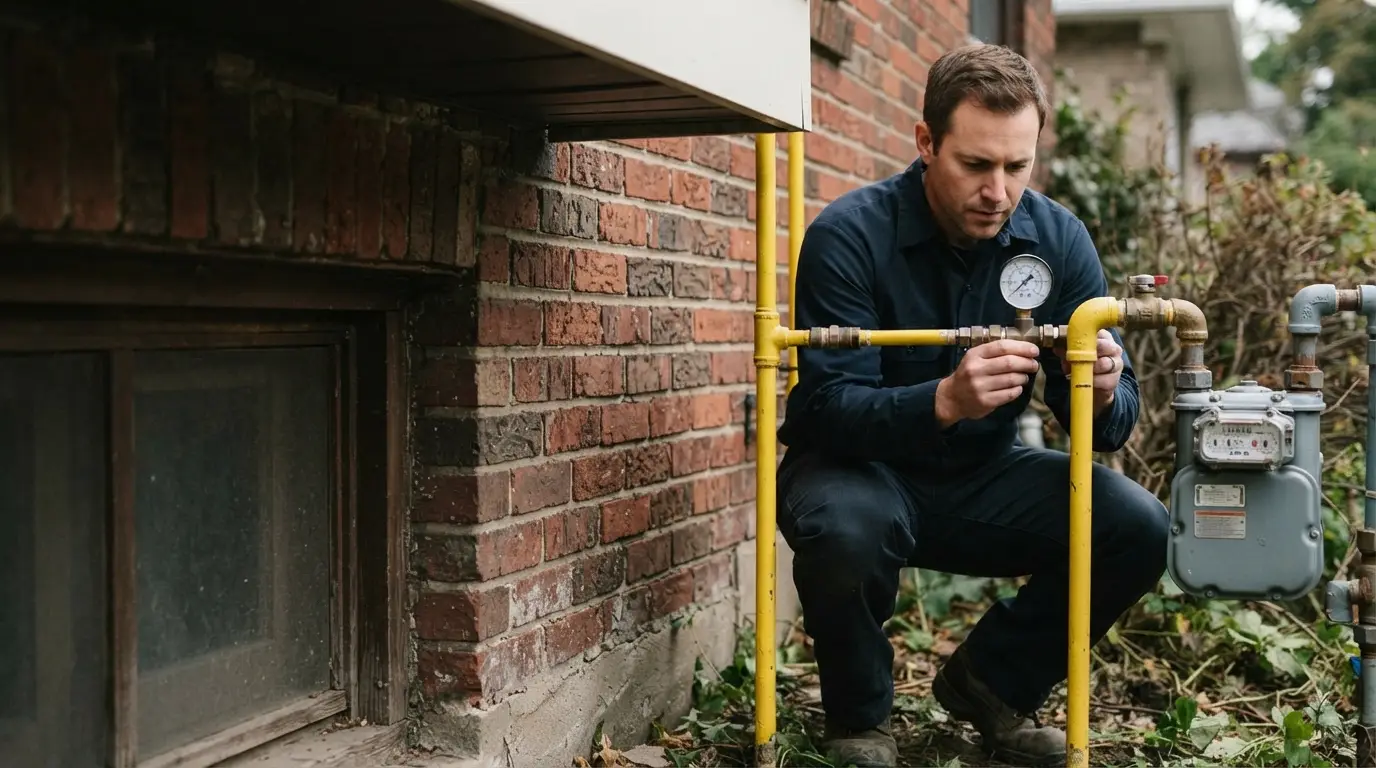
In our Delaware Census data, 47% of homes heat with utility gas and 5% with propane. Gas reaches 74% of homes in Elsmere, 76% in New Castle and 71% in Smyrna, but only 27% in Milford and 25% in Seaford. The gas utility owns the service line and meter, and propane suppliers usually own the tank and first regulator. The piping after that belongs to the owner, and that is where we work.
Our gas services
What it covers: Locating and repairing leaks at pipe, fittings, valves and connectors
What it covers: New lines for kitchens, additions, generators, pool heaters, fire pits and grills
What it covers: Furnaces, water heaters, ranges, dryers and fireplaces with shutoffs and approved connectors
What it covers: House piping from the supplier regulator to each appliance
Why Delaware
79% of Wilmington homes predate 1980. Black iron in damp basements and crawl spaces rusts, and old joints loosen.
At the shore, salt air corrodes exposed piping and fittings, and buried lines in wet, sandy soil corrode faster without proper coating.
Old uncoated brass appliance connectors can crack. We replace them whenever we find them.
Generators, tankless heaters, pool heaters and outdoor kitchens add load to lines that may be too small, starving appliances when several run at once.
Warning signs
Our process
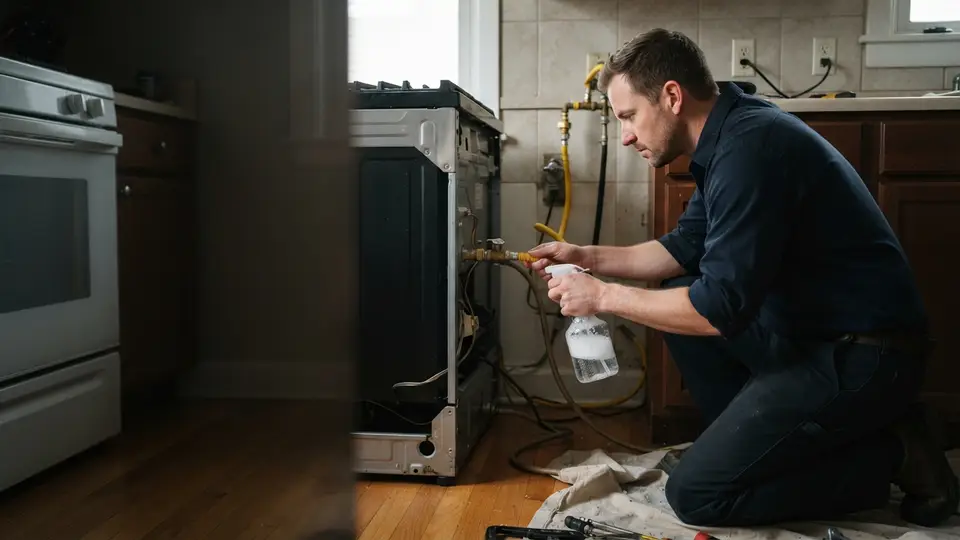
Once the site is safe, we pressure test the piping, locate the leak with an electronic detector and leak solution, and replace the failed component. The system is tested before gas is restored, and appliances are relit and checked.
We add up the load of every appliance, size the pipe for the run and the fuel, and install black iron, coated stainless tubing or approved buried pipe with proper support, bonding and coating. New piping is pressure tested and inspected.
Each appliance gets a shutoff, an approved connector and a sediment trap where required. We check for leaks and confirm flame and venting, with propane settings where needed.
Typical cost
You get a written price before work begins.
Get a written price: (833) 733-2357Long runs and finished spaces add labor.
Black iron takes more labor than flexible stainless tubing.
Trenching to a generator, pool or patio adds time.
Large appliances may need larger pipe or a meter or tank upgrade.
Required for most gas work.
After-hours leak repairs cost more.
Benefits
Proper fittings and testing prevent leaks.
Correct sizing gives every burner enough fuel.
Permits protect you with insurers and buyers.
Safe servicing later.
Many rural and shore homes use propane for cooking, water heating, fireplaces and generators, often alongside electric heat pumps. Propane is heavier than air and collects in low spots, so leaks in crawl spaces deserve special care. We install and repair house piping and appliance connections, and coordinate with your propane supplier when systems are added or changed.
Coastal storms and long outages lead many Delaware homeowners to install standby generators. Generators draw a large volume of gas, so the line, and sometimes the meter or propane tank, must be sized for them along with everything else in the house. We run the line to the generator pad, size it correctly and coordinate with the electrician, the utility or the propane supplier.
Shore homes often use propane or gas for outdoor kitchens, fire pits, pool heaters and tankless water heaters, with piping exposed to salt air and sun. We use coated tubing and fittings suited to the environment, protect exposed runs and check connections at the start of each season. When a home sits empty in winter, closing appliance shutoffs and having the system checked before the first summer use is a sensible routine.
Home inspections often flag old connectors, unsupported pipe, missing sediment traps or abandoned lines. We evaluate those items, test the system and give you a written price to correct them before or after closing.
If you smell gas or propane, get everyone out and call the utility or supplier first. Do not look for the leak or relight pilots. If they shut off your service, tell us so we can coordinate restoring it after the repair.
For new installations, gather appliance model numbers and locations so we can size the piping accurately.
Gas piping work in Delaware generally needs a permit and inspection from the county or town, and new piping must pass a pressure test. Our plumbers hold the Delaware licenses required for gas piping. We pull permits, run tests, schedule inspections and coordinate with the gas utility or propane supplier.
Why choose us
What you can count on every time one of our plumbers comes to your door.
Every job is handled by a plumber who holds the license your state or city requires, backed by liability insurance.
Our plumber explains the problem and the options, and you approve a written price before any work begins.
Burst pipes, sewage backups and failed water heaters get priority scheduling, including nights and weekends.
We pull permits when the job needs one and schedule the inspection, so the work holds up when you sell.
Repairs and installations come with a written warranty on labor, on top of the manufacturer's warranty on parts.
Our pages and plumbers account for your area's water, soil, climate and the age of the homes around you.
Service area
We repair and install gas and propane lines in 79 Delaware places, including Dover (16,448 homes). Choose yours:
It depends on where the leak is, how much pipe or how many fittings need replacing, access and permits. You get a written price after we locate the leak.
Distance, pipe size and whether the meter or propane tank must be upgraded drive the price. We quote it in writing first.
It depends on the distance, trenching and pipe size. Pool heaters use a lot of fuel, so sizing matters.
We pressure test the piping, then use an electronic detector and leak solution on joints and connectors to find the exact spot.
Yes. We install and repair house piping and appliance connections, and coordinate with your supplier for the tank side.
Yes. For new service, meter upgrades or restoring service, we schedule with the utility after our work passes testing.
Leave, avoid switches and phones inside and call your utility, supplier or 911 from outside. We repair the leak once it is safe.
Get everyone outside and call 911. Do not go back in until cleared, then have us check the appliances.
Many repairs take a few hours. Underground lines and generator hookups can take a day or more, plus inspection.
After the repair passes a pressure test and any required inspection. We coordinate a quick restart.
Usually yearly for furnaces and water heaters, with connectors checked at the same visit.
Propane is heavier than air and can collect in low spaces, so any leak there needs prompt attention.
Call us. We repair and test the piping, then arrange for service to be restored and relight appliances.
Our Census data shows about half of Delaware homes heat with utility gas, mostly in New Castle and Kent towns.
Generally, yes. We pull it from your county or town and schedule the inspection.