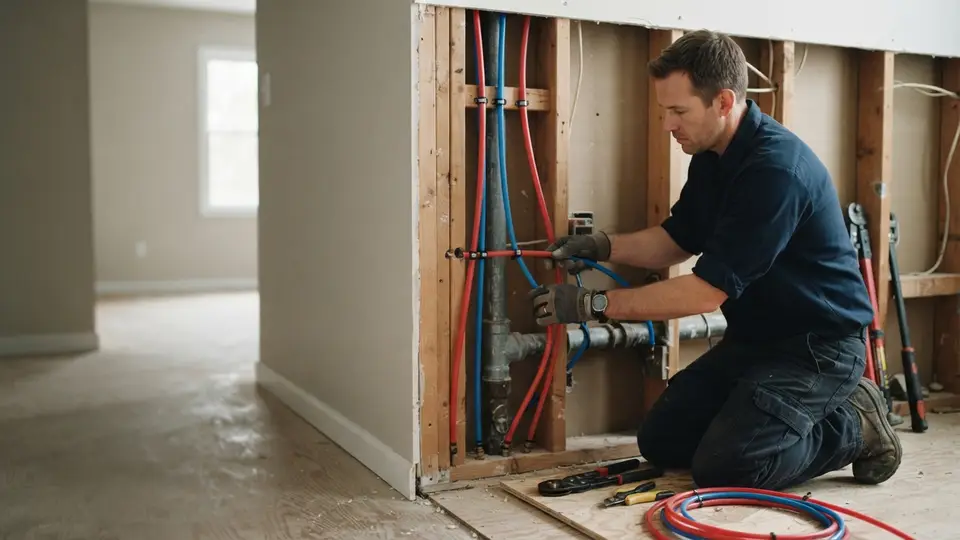
PEX
Typical use: Most repipes, especially with acidic well water
Why: Not corroded by low-pH water, flexible, fewer joints
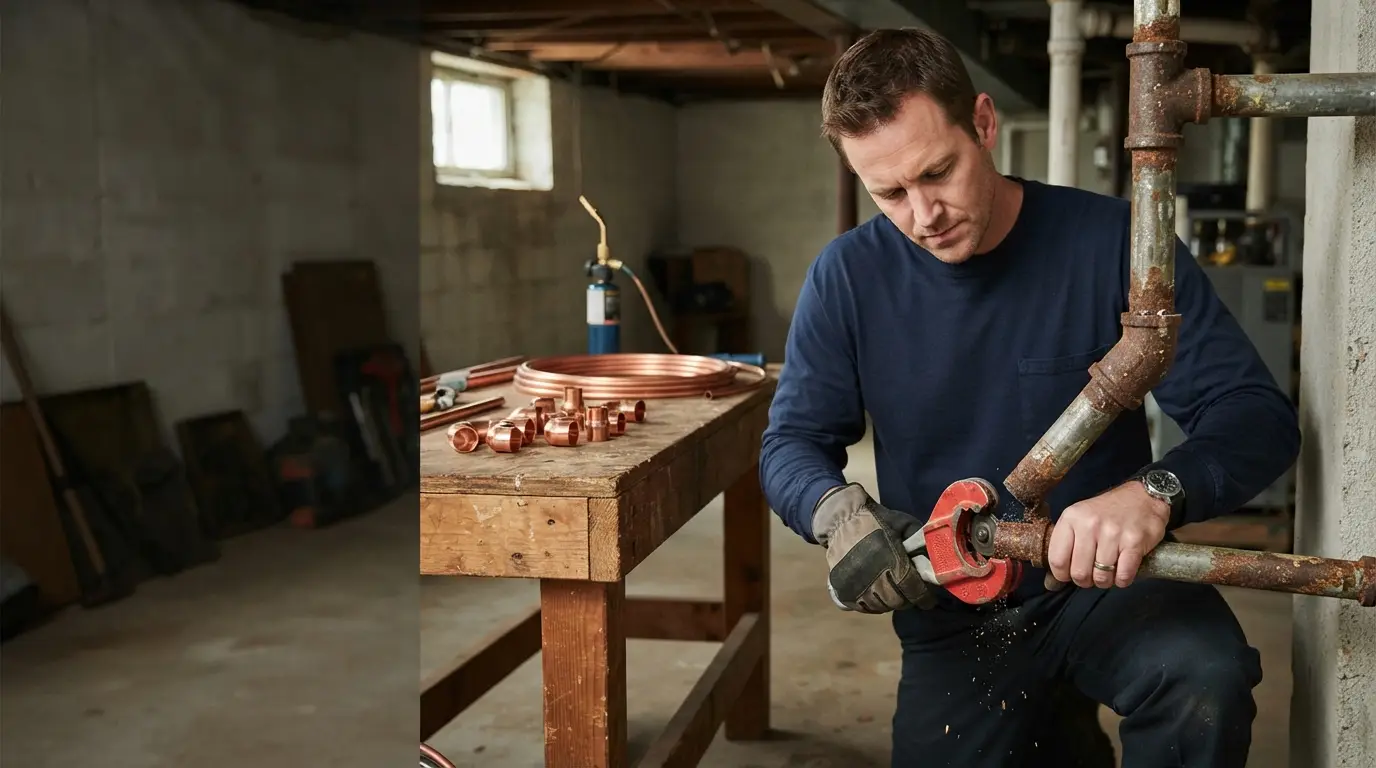
Rust in the bathwater, or another pinhole leak? Our plumbers handle repiping and water line replacement in Delaware for homes whose pipe is worn out. In New Castle County, many homes built before 1960 still carry galvanized steel or early copper. In Kent and Sussex, acidic well water eats through copper in much newer homes. Service lines from the curb or the well can be just as tired. We repair sections when that is enough, repipe whole homes when it is not, and replace buried service lines. Here is how.
The service
Pipe repair replaces a damaged section. Whole-house repiping replaces every hot and cold supply line from the main shutoff to the fixtures. Water line work covers the buried service line from the curb stop or the well to the house. Older homes, and well homes with corrosive water, often need all three.
Materials we use
Typical use: Most repipes, especially with acidic well water
Why: Not corroded by low-pH water, flexible, fewer joints
Typical use: Exposed runs and owner preference on city water
Why: Durable on non-corrosive water
Typical use: Curb or well to house
Why: Resists corrosion in wet, sandy soil
Why Delaware
28% of the homes in our Delaware data predate 1960. Wilmington's median home dates from 1946, and 88% of Elsmere homes and 94% of Wilmington Manor homes predate 1980. Galvanized supply lines from those years rust shut.
Many wells in Kent and Sussex produce low-pH water that dissolves copper from inside. Homes only 20 or 30 years old can develop pinhole leaks throughout.
Decades of patches leave galvanized, copper and plastic joined together. Mixed metals without the right fittings corrode faster.
Service lines in wet, sandy soil corrode and leak. A wet strip in the yard or a meter that keeps turning are the signs.
Warning signs
Our process
We check the pipe, fixtures, foundation type and best routes.
You approve material, routes, schedule and a written price.
We cover floors and finishes and keep openings small.
The old system keeps working until we switch over.
Each fixture gets a new shutoff; the system is pressure tested, flushed and inspected.
Openings are patched as agreed in the price.
Typical cost
You get a written price before work begins.
Get a written price: (833) 733-2357More bathrooms mean more pipe and labor.
Basements and crawl spaces are easier than slabs.
PEX often costs less than copper.
Openings need patching; we tell you how many.
Wet ground can slow excavation.
Most jurisdictions require one.
Benefits
New pipe restores flow everywhere.
No more rust from galvanized.
PEX resists corrosive water.
Each fixture can be isolated.
In homes with acidic wells, we repipe in PEX, which low-pH water does not corrode, and recommend treating the water with a neutralizer to protect the water heater, fixtures and any copper that remains. We also check the line from the well to the house and the pressure tank while we are on site, since a weak pump or waterlogged tank can mimic pressure problems.
Wilmington and nearby towns such as Claymont and Edgemoor (82% of homes before 1980) have many rowhouses and twins with narrow walls, shared party walls and tight basements. We route new lines through the basement and existing chases, use PEX to fish through old walls and plan openings where they are easiest to patch.
We trace the service line from the curb stop or well, check its material and depth, and replace it, often by pulling new pipe through with small pits rather than trenching the whole yard. New lines are pressure tested and inspected before backfill, and we coordinate with your water utility for work at the curb stop or meter.
A kitchen or bathroom renovation opens the walls that hide old supply lines, which makes it the least expensive time to replace them. We coordinate with your contractor so new pipe goes in before insulation and drywall, set valves and stub-outs for the new layout, and can repipe the rest of the house in the same project. That way the new kitchen is not fed by 60-year-old galvanized pipe that will start leaking in a few years.
Beach homes that have frozen and been patched more than once often have weak spots throughout. Repiping lets us move vulnerable lines out of cold crawl spaces and exterior walls, add drain-down valves so the system can be winterized quickly, and use PEX, which tolerates freezing better than rigid copper. We can schedule the work in the off-season so the house is ready for summer.
Not every home needs a full repipe. If most of the system has been replaced and one run of old pipe remains, we replace that run. We look at the whole system and recommend the smallest job that solves the problem for the long term.
Renters occupy 36% of Delaware homes in our data. For landlords, we can schedule a repipe between tenants or phase the work so an occupied home keeps water most of each day, with a clear schedule to share.
If old pipe leaks, close the main shutoff gently or switch off the well pump. Old gate valves can break if forced; if it will not turn, call us.
Note which fixtures have low pressure or discolored water, and clear access to the basement, crawl space or attic before our survey.
Repiping and service line replacement usually require a permit and inspection from your county or town. Our plumbers hold the Delaware licenses required, and we pull permits, schedule inspections and coordinate with your water utility.
Why choose us
What you can count on every time one of our plumbers comes to your door.
Every job is handled by a plumber who holds the license your state or city requires, backed by liability insurance.
Our plumber explains the problem and the options, and you approve a written price before any work begins.
Burst pipes, sewage backups and failed water heaters get priority scheduling, including nights and weekends.
We pull permits when the job needs one and schedule the inspection, so the work holds up when you sell.
Repairs and installations come with a written warranty on labor, on top of the manufacturer's warranty on parts.
Our pages and plumbers account for your area's water, soil, climate and the age of the homes around you.
Service area
We repipe homes in 79 Delaware places, including New Castle (67% of homes before 1980), Claymont (68%) and Seaford (54%). Choose yours:
House size, fixture count, foundation type, material and permits set the price. After surveying your home, we give you a written price.
Usually, yes. PEX costs less and installs faster, and it resists the acidic well water common in parts of Delaware.
Length, depth, what lies above the line, groundwater and the method set the price. We trace the line before giving a written quote.
Yes, in most cases. Water stays on except during short connection periods.
As few as the routes allow. Basement and crawl space homes need very few. We show you the plan first.
Yes. A new main shutoff and new stops at every fixture are part of our repipe.
Rust is mostly a nuisance, but older systems may have lead solder or fittings, and acidic water can raise copper levels. Repiping and testing address both.
No. Old valves can snap. If it will not turn, stop and call us.
Many homes take two to four days, plus inspection, depending on size and access.
Often one day; longer runs or wet ground can extend it.
PEX and copper installed correctly should last for decades, especially with treated water.
If it is acidic, yes. A neutralizer protects the water heater, fixtures and any remaining copper.
Shut off the main or well pump and call us. We repair the break, and the repipe goes ahead as planned.
Acidic well water in parts of Kent and Sussex dissolves copper from inside, even in homes only a few decades old.
Usually, yes. We pull it from your county or town and schedule the inspection.