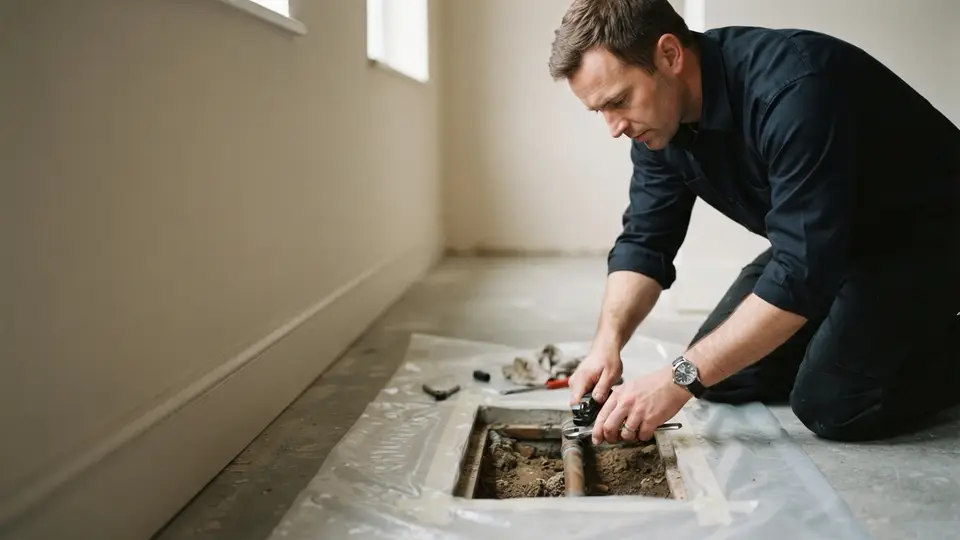
Direct repair
Best when: A single leak in otherwise sound pipe
What it involves: Small opening in the slab, repair, patch concrete and flooring
Warm patch on the kitchen tile, or water seeping up at the baseboard? We do slab leak repair in Delaware, locating first and opening as little as we can. Many of the homes built in Delaware since the 1990s, from Middletown and Smyrna to Millsboro and the beach communities, sit on concrete slabs with water lines under the floor. Older homes have lines under basement slabs. Sandy soil, a high water table and corrosive well water all affect those pipes. We find the leak, compare a direct repair with a reroute and give you a written price for each.
The service
A slab leak is a leak in a water or drain line under or inside a concrete floor. Hot water lines leak most often because they expand and contract each time hot water runs. In Delaware we see them in slab-on-grade houses and townhomes, in basement floors of older homes, and in garages and additions built on slabs.
Repair options
Best when: A single leak in otherwise sound pipe
What it involves: Small opening in the slab, repair, patch concrete and flooring
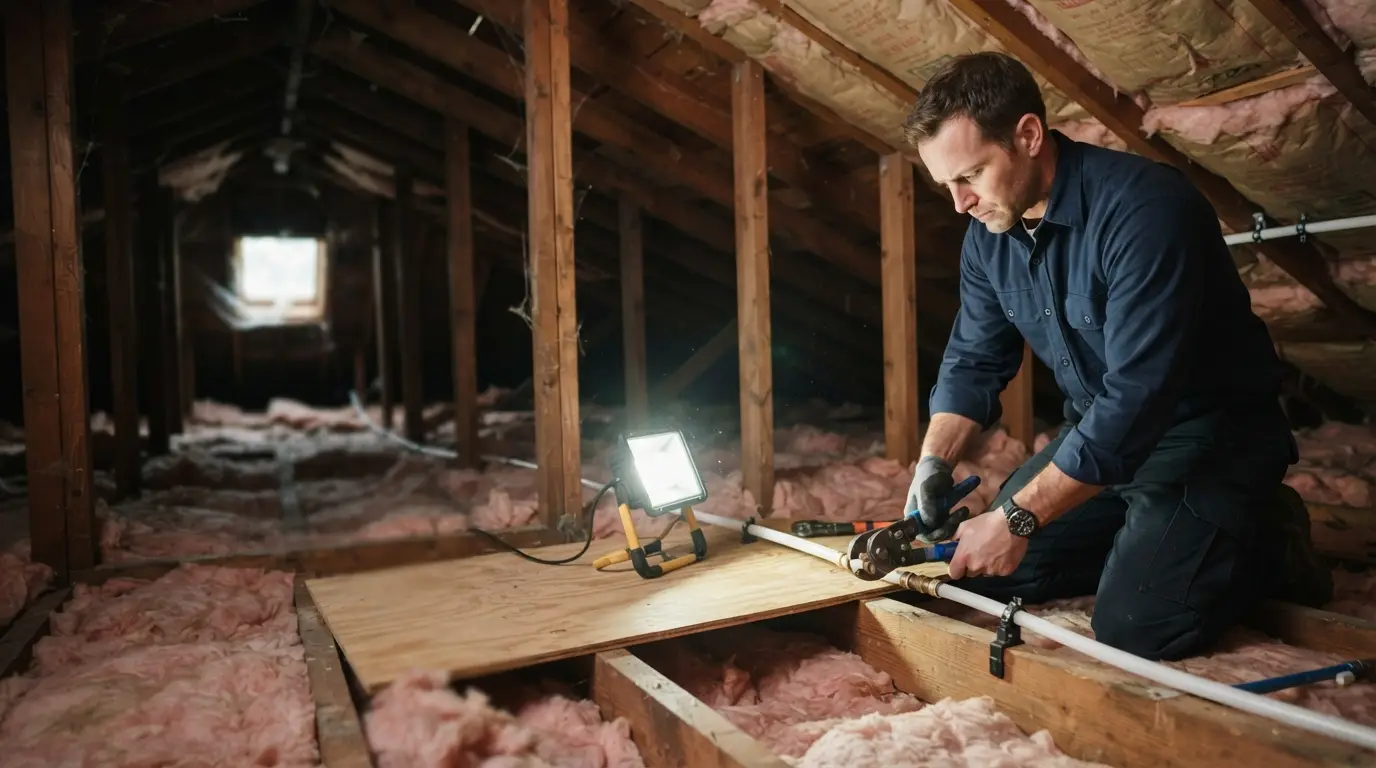
Best when: Older pipe, or a leak under cabinets or tile
What it involves: New line through walls, attic or ceiling; old line capped
Best when: Repeat leaks or corroded pipe throughout
What it involves: Replace supply lines, mostly overhead
Best when: Cracked drain under the slab
What it involves: Spot repair or a liner installed from inside
Why Delaware
Acidic well water in parts of Kent and Sussex County slowly dissolves copper from the inside. Under a slab, a pinhole can leak for months before anyone notices.
Where groundwater sits close to the surface, lines under slabs stay damp, which speeds outside corrosion. Sandy fill can shift as water moves through it.
Hot lines rub against concrete and gravel as they expand and contract. Over years, the wear becomes a leak.
Pipes kinked where they rise through the slab or nicked during construction can hold for years before they fail.
Warning signs
Our process
We check the meter or well pressure and test hot and cold lines separately.
Acoustic listening and thermal imaging locate the leak under the floor.
We give written prices for repair and reroute, based on pipe age, location and finishes.
Direct repairs open the slab at one spot; reroutes run new pipe above the floor.
We pressure test and recheck before leaving.
Typical cost
You approve a written price before work begins.
Get a written price: (833) 733-2357Under open floor is simpler than under cabinets or a tiled shower.
Reroutes avoid the slab but use more pipe.
Tile and hardwood cost more to patch than carpet.
Attics and single-story layouts make reroutes easier.
Reroutes and repipes usually need one.
Benefits
Water washing under a slab can erode fill.
Hot water slab leaks waste water and energy, or wear out a well pump.
Moisture wicking into flooring feeds mold.
Early leaks can be fixed before floors are ruined.
Much of Delaware's newer housing is on slabs. The median home in Middletown dates from 2005, in Smyrna from 2001, in Clayton from 2005, in Millsboro from 2012 and in Ocean View from 2006. Many of those homes use PEX under the slab, which resists corrosion, but older copper slab homes from the 1980s and 1990s in places like Dover and Milford are reaching the age when slab leaks become common.
Repairing a slab leak without fixing corrosive water means the next leak is a matter of time. In homes on wells, we test the pH, and if the water is acidic, we recommend a neutralizer to protect the rest of the copper. In some cases, rerouting or repiping in PEX, which acidic water does not corrode, is the more lasting answer.
In older northern Delaware homes, the water service often enters through the basement floor, and the building drain runs under it to the foundation wall. Corroded service pipe or a cracked cast iron drain under the floor can leak for a long time. A damp spot that never dries, water seeping up near the meter or a sewer smell near the floor drain are the clues. We test supply lines separately from drains and use a camera on the drain to find the source.
Policies differ on slab leaks. Some cover the cost of reaching the pipe and repairing water damage but not the pipe itself. We document the leak location, cause and repair with photos and notes so you have what your insurer asks for.
In low areas, groundwater can seep up through a slab or basement floor and look like a leak. A meter or well pressure test tells the difference before anyone breaks concrete; if it is groundwater, a sump pump may be the fix.
If the floor is warm, close the cold supply valve at the water heater to stop a hot-side leak. For cold-side or large leaks, close the main or switch off the well pump between uses.
Photograph warm spots, damp flooring and bills for your insurer. Do not break the floor yourself. Call us to locate the leak.
Small direct repairs often need no permit, but reroutes and repipes usually do, from your county or town. Our plumbers hold the Delaware licenses required, and we pull permits and schedule inspections.
Why choose us
What you can count on every time one of our plumbers comes to your door.
Every job is handled by a plumber who holds the license your state or city requires, backed by liability insurance.
Our plumber explains the problem and the options, and you approve a written price before any work begins.
Burst pipes, sewage backups and failed water heaters get priority scheduling, including nights and weekends.
We pull permits when the job needs one and schedule the inspection, so the work holds up when you sell.
Repairs and installations come with a written warranty on labor, on top of the manufacturer's warranty on parts.
Our pages and plumbers account for your area's water, soil, climate and the age of the homes around you.
Service area
We locate and repair slab leaks in 79 Delaware places, from Dover (16,448 homes) to Milford and the beaches. Choose yours:
It depends on the leak location, whether we repair or reroute, your flooring and permits. We give you a written price for each option before starting.
Often, especially when the leak is under cabinets or tile and there is attic access. We price both so you can compare.
After repeat leaks, or when acidic water has thinned copper throughout. A repipe in PEX ends the cycle.
We isolate the leaking line with pressure tests, then pinpoint it with acoustic listening and thermal imaging.
Usually a small opening over the leak, just large enough to repair the pipe.
Less often if they have PEX, but it happens, usually from construction damage or fittings. Copper slab homes are at higher risk.
Water running under a slab can wash out sandy fill and contribute to settling. Prompt repair limits the risk.
For short periods, usually. Close the valve to the leaking line between uses and call us.
Most direct repairs or reroutes are done in one or two days.
Usually on the first visit, often within a few hours.
Treat acidic water, keep pressure normal, manage drainage and consider a reroute after a first leak.
Watch for the well pump turning on when no one is using water, along with warm or damp spots on the floor.
Shut off the main or well pump and call us. Surfacing leaks get priority scheduling.
Low-pH water slowly dissolves copper pipe from the inside, eventually wearing pinholes, often under the slab where it is hard to see.
It depends on your policy. Some cover access and water damage but not the pipe. We document the leak to support your claim.